Podcast: Download (Duration: 46:45 — 53.8MB)
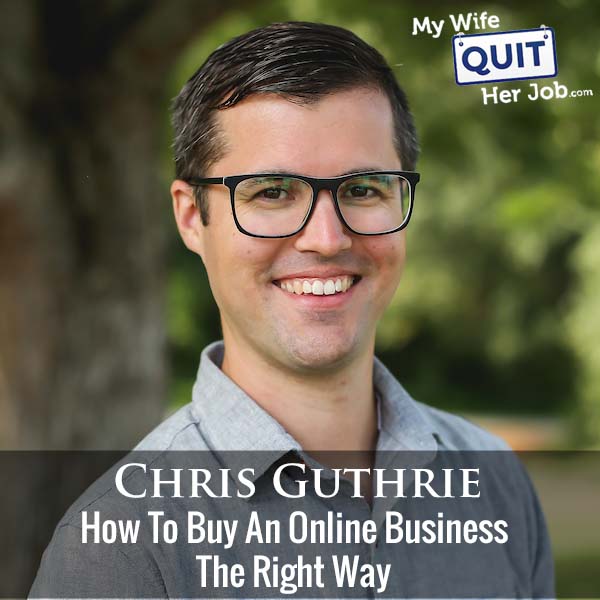
Today I’m happy to have my buddy Chris Guthrie back on the show. Now a lot has changed since I last interviewed him in episode 53.
For one thing, he’s bought and sold a bunch of businesses in the past 4 years and he recently joined Quiet Light Brokerage as well.
So today, we’re going to break down Chris’s process on how he selects businesses to buy.
Get My Free Mini Course On How To Start A Successful Ecommerce Store
If you are interested in starting an ecommerce business, I put together a comprehensive package of resources that will help you launch your own online store from complete scratch. Be sure to grab it before you leave!
What You’ll Learn
- Where to look for potential deals and how to find them
- The typical multiples for different types of online businesses
- How to vet good companies to buy
- Common mistakes when buying businesses for the first time
- When should you sell a business
Other Resources And Books
Sponsors
Klaviyo.com – Klaviyo is the email marketing platform that I personally use for my ecommerce store. Created specifically for ecommerce, it is the best email marketing provider that I’ve used to date. Click here and try Klaviyo for FREE.

Privy.com – Privy is my tool of choice when it comes to gathering email subscribers for my ecommerce store. They offer easy to use email capture, exit intent, and website targeting tools that turn more visitors into email subscribers and buyers. With both free and paid versions, Privy fits into any budget. Click here and get 15% OFF towards your account.
EmergeCounsel.com – EmergeCounsel is the service I use for trademarks and to get advice on any issue related to intellectual property protection. Click here and get $100 OFF by mentioning the My Wife Quit Her Job podcast.

SellersSummit.com – The ultimate ecommerce learning conference! Unlike other events that focus on inspirational stories and high level BS, the Sellers Summit is a curriculum based conference where you will leave with practical and actionable strategies specifically for an ecommerce business. Click here and get your ticket now before it sells out.
Transcript
But before we begin I want to thank Klaviyo helps brands build relationships across any distance delivering email marketing moments. Your customers will appreciate, remember and share in good times and bad. And since it is all driven by real-time e-commerce data, you can make sure every interaction feels more personal. Now when you have a 360 degree view of the customer the growth possibilities are endless. So visit klaviyo.com/mywife and try for free. That’s KLAVIYO.com/mywife. Now on to the show.
I also want to thank Privy who is also sponsored the show previously tool that I use to build my email list for both my blog and my online store. Now, what does privy do? Well Privy is an email list growth platform and they manage all my email capture forms and I use Privy hand-in-hand with my email marketing provider. Now, there are a bunch of companies out there that are managing email capture forms, but I like privy because they specialize in e-commerce. And right now I’m using preview display a cool Wheel of Fortune pop-up basically user gives their email for a chance to win valuable prizes in our store and customers love the gamification aspect of this when it implemented this form email signups increased by a 131%. Now, I’m also using their new cut pop up feature to recover a Abandoned carts as well. So bottom line Privy allows me to turn visitors into email subscribers, which I then feed to my email provider to close the sale so head on over to privy.com/steve and try it for free and if you decide to need some more advanced features use coupon code MWQHJ for 15% off. Once again, that’s privy.com/steve. Now on to the show.
Intro: Welcome to the My Wife Quit Her Job Podcast. We will teach you how to create a business that suits your lifestyle so can spend more time with your family focus on doing the things that you love. Here’s your host Steve Chou.
Steve: Welcome to the my wife quit her job podcast, Today, I’m happy to have Chris Guthrie back on the show. Now, Chris is someone who I interviewed back in episode 53 where we discussed his WordPress plugin business. But since then Chris has joined Quiet Light brokerage and the two of us got back in touch and my buddy Scott Valker’s event brand accelerator live and as it turns out in the past four to five years. Chris has bought and sold many businesses and made a ton of money in the process. And I know for a fact that many You out there listening to this would rather buy an existing business then start from scratch and start making money immediately.
So today what we’re going to do is we are going to break down Chris’s thought process on how he selects businesses to buy and will also take a closer look at the business selling process and why Chris has chosen to sell some of his businesses in the past as well. And with that welcome to show Chris. How you doing today man?
Chris: Steve, Thanks so much for the warm welcome. I’m doing well.
Steve: Yeah, welcome back. I mean catch us up what’s been going on in your life for the past five years and how you ended up a quiet light of all places?
Chris: Yeah. I mean the past five years, actually I guess five years exactly ago would be when I started a sales backer and then we’ve also just kind of during that time as well. We were doing Amasuite which is our research tool set for for selling Amazon and basically just like a lot of different software type stuff essentially five years ago and then moving forward up to the presence. I was actually looking for a much larger business to buy and I’ve been kind of going down that path got fairly close on moving forward that but I would have you been using the SBA program which we can talk about more details as well, and ultimately I just decided I was like well if I’m gonna buy this business it was going to be a personal guarantee for about 4 million dollars.
The deck component of that deal and I was like, you know, I just don’t feel like I want to take that big of a swing and when I’ve already built a decent amount of wealth up from running various online businesses over the years and so I was talking to my friends Brad Waylon who’s also broker at Quiet Light and he said, you know, you should just come on Quiet Light. You’ve been doing this stuff for years. I’ve known you for about 10 years and essentially ended up meeting up with Mark and Joe the two owners of The Brokerage. I’d already met them before in the past events by met up with them and in February of last year and at actually it was March. Yeah traffic and conversion summit though.
And Mark basically informally interviewed me, beer / pizzeria place. I love about midnight and then the say hey, we’re gonna bring you on the summer and so that’s, that was it.
Steve: so you’re working at quite light and yet you still run all these businesses and I think you just had a transaction late last year also, right?
Chris: Yeah. Yeah happy to tell you about that as well. Yeah. Basically I the way that works with Quiet Light is the only bringing on Brokers that have experience with with this process of building buying and selling kind of collection of every every side of the transaction. And so that’s why you end up with like people like myself or Brad. I know he’s done I think about 20 or so content transactions and then the way it works as well as we just take on the individual Brokers rather. They take on the amount of work that they can handle and then you know, they can pass their lead days or their their deals to other Brokers that have more availability at various times or they just bring on additional Brokers if they need to.
Steve: so, I know you’ve started a lot of your own businesses from scratch and you also bought existing businesses and you’ve sold existing businesses as well as your own. So I’d like to kind of focus on the buying process. So first of all, what were your motivations for just buying Business in the past versus starting from scratch?
Chris: Yeah. So very first real success. I had online was with building Amazon affiliate websites specifically just review type websites and I just kind of found that process of like, okay, I’ve got to create the content myself because at the time I didn’t have any money and I was just learning everything so I was doing all the concept myself and once I started doing it, you know, it always be like this time period where it would take before you can actually get anything ranking in Google and before you start to see results.
And so I just was like, what can I do to kind of just kind of go past that process and go a bit further ahead and that’s why I start to look towards buying and and I started doing some smaller Acquisitions, but I was buying stuff like in a five-figure ranges, like maybe eight years ago or so and.
Steve: Okay
Chris: And so then I started to decide okay. I need to actually have some more capital before I can really buy more stuff and that’s when I started doing, you know building more from scratch about five years ago or so and and then more recently So I start buying more well now they’ve have more capital available to deploy.
Steve: So back in the beginning. I guess if you were just to start doing this again. I don’t know if you’re in the market for buying and selling or starting from scratch today, but can you just kind of talk about your thought process? Like if you have the money would you always buy or like when do you buy versus start from scratch?
Chris: That’s a great question because you know when I would talk to people, you know, I’m 36 now. And so when I was first doing this about 10 years ago, that’s when I first left my my day job. I would always talk to people and they were further on in their careers and they have more cash and I’d say well, why would you you know, why wouldn’t you just write the content yourself? You can save money and I was like, yeah lacking the concept of obviously that they have not enough time to do that. So really I just kind of found that it really comes down to what it is that we’re at might in your career and the cash available and things like that.
Like for me the buying process is as more of like, okay, whatever they want to focus on what type of niche I want to get into. I want to get into whatever business on against your other and then going and going down that path. On the buying side, If you have just straight cash, then that’s obviously makes it a simple transaction. But now there’s programs that I wasn’t even aware of at the time and I don’t think were as really available for online businesses. But now you can use like the SBA loan program where you’re putting 10% down on a deal and then the rest is financed through the government essentially.
Steve: back when you were buying businesses. Would you have bought a business not knowing anything about it? If you’re a newbie, would you recommend someone buy or just start from scratch? Learn the ropes and then buy?
Chris: yeah, that’s a tough question. I think that I think it does depend a little bit on your skill set. So if what you’re doing your day job is somewhat related to a business that you might be interested in buying and it can make sense to just go straight into acquisition mode. If it’s something where you don’t have as much experience that it might make sense at least to try and start something from scratch to start right just to kind of get a better sense of the process.
Steve: Hmm
Chris: And also too it’s just your risk tolerance. Like, you know, if you sort of start an eCommerce business and let’s say you’re just launching products and Amazon. That’s something that you could start to get a feel for the platform everything. And then once you have that experience, then it’s much easier if you were to buy something to be able to feel like okay. I’ve already got some skills here to transfer so but I do think it really does depend too on just someone’s individual risk tolerance, their personal financial situation and their experience level.
Yeah. I think that if you have the experience and you Sure, go ahead and go and buy but for me personally, I always like to start something from scratch before I would really, understand and model before I would try and buy something in that same
Steve: And is this SBA loan that you were just talking about. It sounds great 10% down backed by the government. What are some of the particulars and what’s the catch?
Chris: Yeah, I mean the catch is that there are different requirements for a deal to be pre-approved. Like when we put something together to to list a sell through the Brokerage, we reached out to SBA lenders that we’ve worked with in the past to get stuff pre-qualified and So what they’ll look for is the look for at least a few years of tax returns. The business has to be filing separate tax returns that can’t be commingled and things like that. It also has to be a US based business, which is a bummer for some of our uk-based Sellers and others around the world. And then also too, they look for things that that could be problems with the business, right?
So when the lenders trying to approve a deal they’re looking to make sure that they’re not going to be left with an issue of holding some of that the
Steve: Sure, of course
Chris: I believe it now, I believe these are the particulars but I’m not a specialist on the program itself. But I believe the lenders really only hook for 25 percent. Whereas the federal government some hook for the 75% alone. But the interest rate is the, is prime plus 2.75% So it ends up around 7 percent right now and it’s a 10-year Loan program. So the you know, when we’re selling these online businesses their the multiples are usually you know, much lower than 10 of course.
And so then you’re able to run these businesses, pay the debt and then also be able to work towards, you know, trying to grow the business as well. Well, I’ll buy all buy, be able to get, just go with that first 10%.
Steve: It sounds too Good to be true. Actually just
Chris: yeah, I mean it is nice. That’s why I was looking to go down that path. The other thing that I will say this as well. It’s kind of nice as well. Especially if you’re more better verse is you can they rebalance the law or they automatically rebalance alone every annually, so if you wanted to pay that back the loan faster and you do that and then also lowers your payments, you know, rather than like if you do that with a mortgage
Steve: Right, the payment stay the same. Yeah. So
Chris: yeah, Exactly, so it’s great. It’s just there’s you know, there’s there’s different specifics about being able to approve that. I know there’s forms you’ve got to go through. I haven’t bought a deal personally using SBA yet. So I haven’t gone through the horse myself. But yeah, it’s a great option. Not every transaction is like Not every transaction is available to to be awesome like that but it opens up the buyer pool for us from what’s inside as well.
Steve: So back in the day when let’s I guess we can talk about like the last business that you purchased. What are some things that you look for when you’re buying?
Chris: yeah, that’s a great question. I’m always looking for especially if I can find it, just immediate low-lying fruit that I could do to improve. So like the last was what this like a second last business I bought. It was a content inside it was a smaller sale. I bought it for 75,000. I bought actually through Quiet Light before I joined on at the team. Now, it’s kind of like well, once you’re on the team, you can’t really buy buy from the stuff that’s coming through the brokerage.
Steve: Oh is that right? Okay, I didn’t know that.
Chris: Okay. Yeah, it’s just better to keep things separate keep the yeah to put those out to clients instead, but yeah, I basically just bought that site because I was like, well, I’m looking for something bigger, but you know, I’m obviously also as well looking for Additional cash flow and in the case of that side. It was just I could see there were some clear improvements to the out earnings that could be done. Like it was just using AdSense since like I need I could use ad Thrive or media Vine or one of these other newer ad platforms that can pay out a better RPMs for the for that things.
And also to look on the traffic side. So like I like it just you know, what can I do on the learning side? And what can I do on the traffic side to improve and if there’s like low-hanging fruit on both? That’s great. And also I try and think about you know, so what’s the long-term strategy could be in terms of after I’ve made those improvements. What can I do and now in some cases if it’s a smaller site and I don’t want to devote a lot of time to it. I might just do those low hanging fruit things and then just kind of you know, that’s it.
Steve: Yeah, right.
Chris: right exactly. But if it’s something that you see that has much more potential then obviously you’d want dive in deeper than that, but that’s kind of like a high level overview.
Steve: So everything you just described is what kind of depending on your experience like, you know about these ad networks. So for someone kind of brand new They wouldn’t necessarily know how to improve the site which kind of reinforces the idea to me that you should probably get some experience under your belt before you before you start buying.
Chris: Yeah, I mean that’s and that’s where I think that when I was talking about that earlier example, like if you wanted to buy an e-commerce business, well just you know go out and find something that you think that you could sell on Amazon and just relatively low commitment in terms of the amount of cash to to deploy certainly in comparison to buy something. It just gives them an experience that the platform and and see if you like What it’s like running that type of business, you know, and you can get at least a little bit of a sense and also some experience before you buy something. So I would I would say that that’s probably the better path
Steve: Are you allowed to talk about the particulars of your content set? I’m just kind of curious myself what the multiples are on content and I think you just sold that company, right?
Chris: Yeah. Yeah. I can I can share just like the general Niche. I just can’t share the specific URL. It was
Steve: yeah, that’s fine.
Chris: Yeah. It wasn’t on Automotive space. I bought sites like I bought a site in the gardening space years ago, and I didn’t know anything about gardening but I but the previous owner at new women that was actually knows. Yeah, but I’ve got a site in the garden space, but then I also have a site in the crafting space and the one the crafting space the woman that was helping me create content for that site. She knew someone that was also a gardener and so I had that person help create content for the gardening side. So it’s like I kind of just I don’t necessarily have to know a lot about the niche. I just kind of care more about what how it’s getting traffic house making money.
And so the same thing with this automotive niche. I don’t know anything about cars that much in particular but I do know about what it takes to to make money with a website. And so in that case I just basically did a lot of those improvements and after I saw pretty dramatic increase in earnings, actually the owner started to see the earnings up to the previous owner started see the earnings uptick. He was actually was going to pull the deal and so I just call them and say hey look, okay.
Steve: Whoa wait, I thought the deal was done like how how could he pull out?
Chris: So I’m going back. Like when I first bought it like when I first bought this deal I went yeah, I was talking to him and he was about to back out and I said, okay. Well, how about I just give you a revenue split, you know, I’ll give you a slightly more cash upfront and also just split like whatever the increase is over the Baseline a 50/50 with you and he already had like a much larger business that he was working on. And so I was like, you know, you’re obviously selling this because you have a much larger opportunity than this one and he was like, okay, let’s do that. And so I was able well to kind of help keep the deal on track and buy it from him. But yes, that was how I bought it and then when I sold it was just okay.
I did all these improvements and I saw pretty dramatic increase with the earnings by including adThrive and some other stuff that I was doing and so I don’t have to selling you’re basically almost exactly a year later to a friend of mine because yeah, it was okay that I’ve already recognized a lot of the improvements and this case this is a transaction where it was more of like a make the improvements get the more of a Buy and Hold type approach and then holding a pass a year I could could recognize the gains this capital gains long-terms tax treatment as opposed to ordinary income tax.
Steve: Are you allowed to talk about so what multiple did you buy for? You said you bought it for 75k.
Chris: I bought it, I think it was high to is 2s. I don’t even remember the specifics. I guess I should look that up ahead of time.
Steve: That’s okay. Is that typical for a Content? So I’m just kind of getting out trying to get an idea of what the multiples are for various Industries, I guess.
Chris: Yeah, you know, it’s not necessarily typical. It really is it’s tough because even when I talk to potential clients in the on the brokerage side, you know people ask well, what’s the multiple for this and it’s like well, I need to know more about the niche course. Yeah, the financial cetera. So they really do kind of kind of very but I’d say it fell within a somewhat typical range for that business and then ended up selling it for right around the same type of multiple as well. But because I approve the earnings it was like, okay. Well the number that’s being multiplied is much larger. So
Steve: so it was making let’s say twenty five thousand dollars in profit when you bought it roughly 30. 25
Chris: yeah, yeah.
Steve: and then you improved it. Can I ask you like what you built it to in just a year?
Chris: Yeah, it was up to about eight thousand a month when I sold it.
Steve: Oh, okay so dramatically so you basically tripled the profits.
Chris: Yeah, it might have been a little more than 25,000 when I first bought it in terms of the ranges at the time but what I had it at when I sold it was about yeah about 8,000 or so a month
Steve: and then when you sold it Did you get a similar multiple?
Chris: Yeah, it’s somewhat similar again. I wish I would have looked up all the earnings again.
Steve: oh no it’s okay, We were just looking for ranges here. I’m just curious
Chris: Yeah, Yeah, it was pretty similar on both sides. And I mean really it was like the main real win there was just that because I increase your earnings substantially. That’s really where I was able to make more money. It’s just because the the know the total number of us much larger than what it was in the past.
Steve: So can I ask you why you sold it? I mean you grew it so rapidly and at this point you’d already made back everything you paid for it. It sounded like it was generating money seemingly on it is very passive. Right? because it sounds like it was ad driven.
Chris: Yeah.
Steve: So what were your reasons for selling it?
Chris: I’m so glad you asked that because I think that’s one of the things that that experience and in hindsight. There are multiple times that they’ve been things that have been like that for me where I’ve had like a huge success and then it’s like okay. I’m not going to sell it because exactly what you just said, it’s you know, it’s not that much time and you know, everything’s great. It’s going to continue to be great. But what I found and experiences that things don’t always stay great and that sometimes especially if you have multiple different projects here running. It’s almost always better to sell because it just freezes up that that mental energy to focus it elsewhere. And so for me like this transaction was just I was still I was still at the time on the hunt for something much larger.
It was like, well, here’s something I can do for cash. So I know I can improve it and do these things to do it, but you know, I was looking for something bigger and so it’s just more that I’ve found that if you A lot of stuff going on that you just kind of at something ends up falling off somewhere. And so either stuff needs to be large enough for you to have a team of team that can help manage it full time or it’s just you’re gonna have issues sometimes and so for me, it’s just I’ve had stuff like that is like, well, here’s here’s something simple. I can lock in the win and coincidentally because I did sell to a friend of mine. He told me the other day that his earnings are even higher than I had it and I said well, okay that’s good for you. You know, I don’t want think of poorly.
Steve: Yeah. Sure. Of course. Course, so presumably let’s just assume that you got a 3X multiple again for this content site. I mean, you don’t remember the particulars, but it was probably between three and four, I would guess right?
Chris: Yeah.
Steve: All right, so that means that if you just held on to it for three more years. Passively you would have gotten that money back. Right?
Chris: Yes, but the ordinary I’m at a fairly High ordinary income tax rate. And so when I sold it I was able to do long-term capital gains, which will be 20% for me as opposed to, you know, it starts at 15 percent or well 0 depending on your income bracket and then 15 then 20 and so it actually would take a little bit longer than that turn back all of the money as well.
Steve: So can you kind of Define for the listeners out there who don’t understand how that works. So when you’re selling you’re not taking the lump sum. You’re allowed to amortize that and take long-term cap gains. Can you kind of explain that process?
Chris: Yeah. So again, I’ll say that obviously, I’m not an accountant and you need to talk to your your account in particular. But with almost every deal I’ve done I always try and make sure that if I’m going to sell it it’s almost always at least past the one your whole period I’ve never had something where I bought and then I sold it like less than a year. But when you do that you can you can do basically when you sell it and you’ve had it for more than a year. It would be something like, you know I came to a stock trade where you buy Shares and Tesla, you hold it for a year.
You’ve had some gains and then you sell those shares and if it’s after the one year mark, then you can qualify for a long-term capital gains. It supports, as opposed to ordinary income tax rate. And so the same thing applies to yeah a business where you’re selling it and so that’s kind of the process and so long term capital gains is its, you know, it starts at zero percent and I believe it stays that way until you reach a certain level of income. I don’t know exactly what it is
Steve: Yeah it’s okay
Chris: and then it’s 15% and then it’s 20% is the cap currently.
Steve: Yeah, I guess the main point here is that when you sell you get you get this lower tax rate, whereas when you’re running it, you have to pay ordinary income on all your gains for your business for the most part.
Chris: Exactly. And so the thing too is that you know, I immediately have that capital and it’s okay. I can use that cash right now for you know, whatever else it is. I want to do.
Steve: that’s actually was my next question. So when you went into selling this, did you already know what you were going to do with that money?
Chris: You know, I for me it was more just like okay. I want to lock in the Win and I want to have the cash available to just as a buffer to be able to use for anything. I want to be able to do and so it wasn’t something where I was like, I know immediately what I’m going to use the cash for it was more just a kind of have it at me to use it for the next transaction. I’m just going to use it for maybe like real estate or something else like that
Steve: All right. So how do you find your companies?
Chris: Yeah, so so I’ve done a lot of deals through just private type sales and finding people in In them directly and I’ve also just done, you know, like the most recent one was through just buying through quiet light brokerage just saying for the email list essentially and getting notified of all the different deals and also too you know, if you’re out looking to buy, you know, sign up for signing up for multiple different brokerage email lists and things like that. You can get a sense of what the deal flow looks like as well. But that’s
Steve: what do you get access to just from signing up like you obviously don’t get the financials right away you have to probably fill out an NDA or something. What does the process look like?
Chris: yeah the way we do it is, you know, you can see if you, right now if we just go to the website you can go to you don’t Click by the top of the just quietlightbrokerage.com and you click the buy Link at the top that will take you to every listing that we have and then it’s basically like an executive summary of what the business looks like. The multiples being sold out the revenue things like that and then you’d fill out your contact information and then you’d be able to get to sign an NDA. And then you’re given a details for that business.
And so that’s essentially the process but even as it is now you could just sign up for the email list just to get a sense of what comes through and that’s even something that would make sense. If you’re trying to get comfortable with the buying process or just what stuff is selling for what it’s looking like that’s a good kind of starting spot.
Steve: So like in real estate the seller pays all the fees. Is there any harm in going through a broker to buy?
Chris: No, actually because the the yeah, the sellers always the one paying the fees and so it’s the way we work is its hundred percent success based. So only if we sell is there a fee that goes through but yeah that fee is only applicable to the seller. So
Steve: as you’re looking through these listings and let’s say you fill out the NDA and you get more information in your experience. What are just some like red flags that you look for when you’re buying?
Chris: I think it’s just you know, I look for longevity of the business. I look for you know of growth opportunities. Like I mentioned the low-hanging fruit things like that. But a lot of its just at least in the buyer side initially, it’s just kind of where do I think I can take this business moving forward, you know, what are the competitive threats and we you know, we in the questionnaire that we put together we include things like, you know, where the competitors and things like that and and they’ll list out who they are.
And of course you would as a buyer. You don’t want to do your own due diligence to dive even deeper and look for it other competitors and things like that. But a lot of it’s just yeah for me. It’s just the initial part of life. Okay, what would I do with this business? If I owned it and how would I prove it and things like that?
Steve: So let’s break that. So, longevity. What do you mean by that does the business have to be around for X number of years?
Chris: Well, so I’d like I think it’s definitely a plus, especially I think this various to buy business model, right? So if it’s a Content website and you know, it’s been out and ranking for seven years. I’m talking to a friend of mine that has same situation right here. Yeah, that’s much more attractive to me than a like-for-like site that’s been around for three years. Right? And it’s just shows that it’s had slightly longer a staying power suppose as opposed to a shorter history. So things like history do help but it also is you know, sometimes with in e-commerce for instance, you can see eCommerce businesses that get ramped up and doing substantially well in early stages and so.
It really can vary by business model but longevity and just kind of I also just think like, okay. Well, what are they selling right? Okay, is it If I can see think of an example, if you’re selling something that’s that it’s based on a specific technology, but you but if you do research, you know that like another better technology is going to be coming out to potentially replace that
Steve: sure
Chris: Something like that would be an example, right? But that’s sort of what I would look at a little bit
Steve: just going back to your content site. Like there’s some risk factors was most of that traffic Google traffic?
Chris: Yeah. Yeah, exactly. And that’s and that I’ve had that happen right I’ve had sites were you know you’re making great money and all of a sudden you’re not not anymore.
Steve: Yeah. Okay. So I mean I guess most of the listeners aren’t e-commerce. So let’s talk about e-commerce a little bit. So let’s say you’re looking and you see Amazon businesses versus businesses that have their own e-commerce presence. Can you kind of comment on some of the things that you know buyers are looking for in both of those spaces?
Chris: Yeah, you know it’s interesting that you mentioned that example because I was just before we had our cause on a call with another buyer interested in one of the listings I’m selling right now. And you know, he was commenting that he doesn’t want to buy businesses that are just selling on Amazon. He’s only interested when they have you know, multiple different channels where they’re looking for, you know, if those got wholesale Channel, Shopify and Amazon for instance, but then also talk to buyers that because of the teams they built they have operational efficiencies around what they’re doing on Amazon and they have really good processes for building ranking products and things like that and they’re only interested in stuff that’s on Amazon.
So it’s really kind of again it varies the buyers and what they’re interested in. I would say that if you’re a business owner listening right now and you’re looking about how to maximize the value I’d say focus on the things that make you more comfortable if you think that, you know, being a hundred percent on Amazon is a risk then you do your best to try and scale up what you can on your Shopify store or you know equivalent platform that can help reduce that that business.
Steve: If you sell an Amazon or run any online business for that matter, you’re going to need a trademark to protect your intellectual property. Not only that but a trademark is absolutely necessary to register your brand on Amazon. Now, I used to think that any old trademark registration service would work and that could even try to register my own trademark by myself on the cheap, but I was dead wrong. Securing a trademark without a strategy in place usually results in either an outright rejection or a worthless unenforceable trademark. Now, that is why I work with Stephen Wiegler and his team from Emerge counsel. They have a package service called total TM, which provides the same attention to detail and process that large law firms do at a fraction of the price. Now for me personally, I like Emerge Council because of their philosophy, their goal is to maximize IP protection while minimizing the price. So before you decide to register a trademark by yourself or file for other I could protection such as a copyright or a patent, check out Emerge counsel first and get a free consult. For more information go to emergecouncil.com and click on the Amazon sellers button and tell Steve that Steve sent you to receive a $100 discount on the total TM package for Amazon sellers. Once again, that’s emergecounsel.com over at emergecounsel.com. Now back to the show.
Steve: So can we talk about multiples? Because I know everyone’s always interested in what you can buy and sell companies for. so for in Amazon business and I know there’s gonna be a lot of particulars here and depending on the size of the business that’s going to change too. But if you could just kind of provide some sort of range and where the breakpoints are in terms of Revenue of the business.
Chris: Yeah. I mean it’s and I know you kind of preface it with saying that there’s you know, what some of the pig you know that there’s a particular as they can make things different. I would say that to give a broad range and I will say that you can see e-commerce businesses as low as multiples in the two times range. And so that’s 2 times on the trailing 12 month. We call seller discretionary earnings. And so that’s basically you know what the business is earning but then there’s also things that you might be doing the business like let’s say there’s one owner and then there’s a one staff member that’s being paid and you’re paying yourself as an owner on the payroll.
Well, the way the industry is kind of align itself is that you can add back the value of one owner of working up to 40 hours a week back in the value of the business. So that payroll line item will be included down in the back schedule. And so we looked for expenses like that that the new owner wouldn’t have to pay for and then we include that in the ad back schedule after the net income line. And so add those together and that’s where we get the seller discretionary earnings.
Steve: So let me just translate what you just said just in case people out there don’t understand. Basically you’re allowed. So let’s say you’re paying yourself in your business. You are allowed to add your salary back into the value of the business as an ad back and up and ad back is basically ways that you can get money back and added to your valuation.
Chris: Yeah, exactly.
Steve: Okay, right. So you said as low as two which sounds really, is this for, what are the difference between Amazon versus your own e-commerce store?
Chris: Well, so let me just finish that thought on that was so I’d say let’s like to point something so like yeah, high twos low mid twos on up to you know. High fours high fives, it can really run the range I’d say that very common range can be in the 3s mid to low 3s High to high threes on seven-figure type transactions.
Steve: Yeah.
Chris: Once we start seeing larger multiples is when they start to get up to the range where you know, they could be it’s more like private Equity type buyers and things like that.
Steve: Is it like above seven figures then at that point or how big do you have to be to attract those type of buyers?
Chris: Yeah, that’d be more of like an eight-figure type range
Steve: Okay. Alright. So let’s take a million-dollar business. Let’s say. And can we talk about things that would drive it to the lower end of that range versus the higher end of that range, like what the different factors are?
Chris: I would say that the higher end of the range would be if there’s really strong year-over-year growth. We look at the growth transferability, the documentation. Those are kind of the things that we look at in terms of how easy it’s going to be for a new owner to take over the business. What type of opportunities just going to be to grow it. if you were to see like a this to businesses and you know once got somewhat declining revenue and you know, there’s you know, and so that’s going to indicate something that’s this, you know setting that wrong the wrong direction. Then that might be something that would drive it down to the you know, two timings.
Steve: Okay
Chris: exactly. Whereas if you’ve got your viewer growth of say 20% Okay, that’s nice. If you got your over year growth of 50 plus percent then that’s even better and so it can kind of shift in that regard and what I’d say too is that really, I can’t all have examples. I say it’s always like to really get evaluation and something completely nailed down. You have to talk with someone to get the specifics because every business is going to be different. So that’s where it’s like.
Steve: Well, let’s take your highest multiple transaction that you’ve done thus far. What were some of the characteristics that allowed it to go for such a high multiple.
Chris: Yeah
Steve: and don’t have to tell me about the company just tell me you don’t have to go into specifics, but just tell me what the characteristics were.
Chris: Well this one’s kind of the, in this case. It’s sort of an interesting business. the main thing was that they had a huge audience of people that been using this particular
Steve: like recurring Revenue?
Chris: Yeah. It was like recurring Revenue. They had like a huge audience around this company and the products that they were they were offering and it was also just there was a clear path where they’ve been hamstrung by just living off of the proceeds in the business and not really able not really devoting too much the resources back into to growth
Steve: I see
Chris: and so you know, and so we list the businesses. We listed it like a four times multiple and ended up selling it right about that that number actually so
Steve: So obviously you can’t have that with an Amazon business right having subscribers and recurring Revenue.
Chirs: Well, if you’re looking at the recurring Revenue side of things, you know, subscribe and say, those numbers are interesting to include, you know, if there’s a consumable Part of it in the business and so they actually can help drive up multiples as well because they know that even though it is Amazon and you know as much control over those customers there is some element of recurrent revenue from from those people.
Steve: I was just thinking in terms of an audience with this business.
Chris: Yeah. I mean that would be more of like a e-commerce business where they had you know other additional
Steve: I guess what I’m trying to get at is like how valuable is like having an email list and and you know SMS subscribers, for example
Chris: I would say that all those things kind of work together to help push the multiple up, but it’s not like something where it’s like oh because you have an email list with this many subscriber. Now you get this extra thing. It’s more of like, how does everything as a as a whole we’re together to drive the business forward. And then what is the growth look like for everything all together? Right? That’s kind of what helps to drive and look at the multiples
Steve: and that deal that you worked on. I mean, it sounds like that business had a lot of potential sold for high multiple. What were the reasons for that owner wanting to sell?
Chris: they’ve been working on it for like eight or nine years and I think it was just a case of
Steve: You don’t know.
Chris: Yeah, I mean, it’s some point unless you’re really interested in just doing the same thing for a really long time. Yeah, everyone gets to the point where they want to sell, I think
Steve: okay and just get a big cash out.
Chris : Yeah, because you know, then you get all that cash and you can decide you know in a lot of cases to these owners have all have another business. Like I’m the one I was on the collar today. He’s got other business already up and kind of going and he’s like, okay this one’s taken off and I’ve had the other one for seven years and it’s time to just You know sell that one and forget my attention and have a nice kind of financial event and kind of go from there.
Steve: I know Chris. You know, what I like about you is you don’t a lot of different things you’ve done SAS tools you’ve done e-commerce and you’ve done content. Can you kind of comment on the pros and cons of each one of those verticals from like a multiple standpoint and I guess how much work is involved?
Chris: Yeah. It’s a great question. yeah, I’ve done a lot. Yeah, I’ve done a lot of different models. I think that it’s I’d say that the highest multiples were probably be more likely on the south side of things.
Steve: Okay
Chris: just because there are a lot of the, the margins on SAS are just you know, in a lot of cases pretty incredible and then the growth potential is also, you know, if you find something that can really scale the business then you know, it’s just a question of how much cash you push back into it. To more forecast in the future
Steve: but Engineers are expensive too right? you need a support team. I don’t know. I’ve never run a SAS company before.
Chris: Yeah. No, of course. I think that’s the thing right? It’s I think that ultimately, I would say never never go into a business model just based on what multiple there might be four potential exit. You know, I think that it’s always makes more sense to go with go in the direction that’s most interesting to you. Like if you really like the idea of physical products brand and want to build something up and and you like being able to you know, you get Product samples, you can see that the tweaks you’re making with their suppliers to you know, come up with each products. That’s great head down that path if you like working with writers or creating cut the content yourself. Then something concentrated is makes more sense.
For me, It’s just sort of a natural progression going across different models and trying new things but I would say that the SAS tends to be higher multiples e-commerce and it’s a e-commerce in the content would follow behind that. But it also again it hate to say this going to said it so many times but it really does vary on like the specifics because that’s really what drives
Steve: the only thing we can really comment on ranges, right? So
Chris: yeah
Steve: I did a general framework there. What do you like about SAS vs e common, content? What are some of the cons I guess of SAS?
Chris: some of the cons I’d say is definitely the the technical side of things, you know, if there’s and this will vary based on what Niche you’re in, but you know, if you’re working and you’re building something that’s platform dependent in your in the shadow of a larger company then, what moves they make an influence how you have to make decisions in your business. You also have you know, the engineering side of things where you’ve got, you know, however many Technical Resources you have at your disposal and you know where you can focus their attention. The other content
Steve: Do you find marketing more difficult for a SAS business versus e-comm or content.
Chris: Definitely. Yeah, I think so.
Steve: why is that?
Chris: I think the challenge is that, sometimes it’s just finding those customers. Right? Like if you’re thinking of, I’m thinking of just buying my own SAS, it’s like okay, you know, how am I going to Market to people that are selling physical products on Amazon? Okay. Well, I do know that there’s lots of Facebook groups and things like that and I know there’s people with podcasts and things like, that have audiences and so I can go to those people and Market to them there but the marketing is, you know, it’s different than you know, if it’s an e-commerce business or a Content site and you’re just creating content that you’re trying to rank in Google and monetizing the traffic that comes through.
But the other kind of says well, it’s just yeah, I’d say that there’s a lot of competition and SAS as well. So, you know, if you find something that works well, then you’re likely to seek a competition come through as well.
Steve: What about on the content side? What are some of the cons there? That’s the, content is generally one of the more passive ways, right?
Chris: Yeah, I would say with content it’s you know, it’s sort of like, your biggest partner really with content is Google and a lot of ways, and so, you know, whether you want them to be your partner or not. They really are like this partner the background that you know, depending on the algorithm updates that come through you might like them or you might hate them. Yeah, we had a have a Converse brand with the former employee of mine and one of the things that’s because for him part of the way that I helped that him and wanted to end up hire him on full-time as he helped build like a Content site from scratch with me and I just kind of gave him the advice and what I wanted to do and so he took the those skills and applied it to creating content for the brand that we have.
And you know, there was an update where because we met he made a mistake of accidentally attributing the post that we have from medical professionals, the recruiting the content to his wife who’s a graphic designer. Google’s like, okay why this person is not qualified to comment on these medical things and so then ended up like Dramatically dropping the traffic in half, right?
Steve: Oh you got hit with the Medical Update. Yeah
Chris: Yeah, it says so but it was because it was like a an accidental misattribution on like the back end of our content management system of applying the wrong author to the article just threw like a tactical mistake essentially but yes going back to like the content side is you know, you’ve got Google as a huge partner and the algorithm updates and things like that. And so with content it’s always back to you know, the content you’re creating, how well is it served the intent of the person that searching for that content.
And then also like what is the backlink profile look like for your site, you know where you’re getting higher promoting your content and things of that nature. Content certainly were if you’re not Technical and you’re not as interested in doing physical inventory then content is a very attractive thing. That’s where I first started studying. I don’t have any money and I was just like, okay, how do I make money with having no money at all? And that’s why I went with content initially, you know that get it go
Steve: So I want to talk about you real quick. What are your future plans in terms of deals?
Chris: Yeah, right. Now I’m really focused just on the the broker side of things then also. I’m trying to think back to just like potentially new ideas as well. I’m looking at new software type businesses that I can start. I’m looking at, as well even if just new content type sites. I’ve met a few people. I went to the ad Thrive events after I sold that site. I was like, let me just go out to ad thrives, I can’t remember, we’re in Texas. I think it was Austin, or maybe it was Dallas, but I went to that ad Thrive event last year and I met a lot of people that had been running their sites for like eight years or so.
And it was like kind of interesting because I’ve never had a Content site really that I’ve had for that long and they were just still, you know, still passionate about what they were doing. And so, you know, it might be something along those lines as well kind of be inspired me to think about what’s like a bigger picture content-type play that I could do that I could see running for a long period of time. So I guess I’d say that I’m still kind of up in the air in terms of what my next steps are. I remain open to, you know new opportunities for buying things, but I’m also looking at new ideas as well and just trying to balance everything with what I’ve got as well.
Steve: it sounds like software is I mean, I’ve always known you as a software entrepreneur and it sounds like that’s where most of your interest lies.
Chris: Yeah. I mean, it’s software’s great. I mean, it’s just, you know you’ve asked about the cons earlier but like the pros when it was hospices like it’s really nice to know. Okay, especially when it’s recurring Revenue that it’s like okay. I know the very least I need to make this much money this month unless the chance and how dramatically increases. And so yeah software is fantastic.
And I, basically the very first business I ever sold was the content website back in 2010 and I used some of the cash from that content site sale to finance the first WordPress plugin that I did and then that kind of led to kind of going down some of the software path as well. So
Steve: And just to be clear you’re not a engineer or a developer yourself, right?
Chris: No, just more of a marketing sales type guy. So yeah
Steve: so you have like a technical co-founder for most of these projects?
Chris: Yeah, most of the time I have a partner in the cases that WordPress plugin. I hired someone that I went to a local WordPress Meetup in Seattle and then just said, has anyone know here that anyone know anyone that does WordPress plug-in development and then found Nick that way and then I’ve worked with him for like five, six years now or so, but yeah, and then and he’s a business partner, but that’s a lot of the times I’ve done that is just kind of partnering up that way.
Steve: So Chris, where can people find you for I guess advice in the buy and sell side over at quite light.
Chris: Yeah, I think the best way is to just send me send me an e-mail chris@queitlightbrokerage.com. I’m happy to get on call with people and just talk about you know, if they’re looking to buy and they want advice, you know, I can tailor that advice more specifically in that format than through a podcast. But yeah, I’m happy to talk to people that probably the best way to reach out.
Steve: All right, cool. Sounds good. Well Chris, I really appreciate your time man, this was very helpful.
Chris: Thanks, Steve
Steve: Hope you enjoyed that episode. Now starting a business from complete scratch is a grind and you can easily jump start the process by buying another business for sale. And if you can manage to just break even for three years then it’s going to be worth it. For more information about this episode go to mywifequitherjob.com/episode299.
And once again, I want to thank Privy for sponsoring this episode. Privy is the email capture provider that I personally use the term visitors into email subscribers. They offer email capture exit intent and site targeting tools to make it super simple as well. And I like Privy because it is so powerful and you can basically trigger custom pop-ups for any parameter that is closely tied your eCommerce store. Now, if you want to give it a try it is free so head on over to privy.com/steve. Once again, that’s P-R-I-V-Y.com/steve.
I also want to thank Klaviyo for sponsoring this episode, Klaviyo is my email marketing platform of choice for e-commerce Merchants. You can easily put together automated flows like an abandoned cart sequence a post purchase flow or win back campaign. Basically, all these sequences that will make you money on autopilot. So head on over to mywifequitherjob.com/klaviyo. Once again, That’s mywifequitherjob.com/klaviyo.
Now I talked about how I use these tools in my blog and if you’re interested in starting your own e-commerce store heading over to mywifequitherjob.com and sign up for my free six day mini-course just type in your email and I’ll send you the course right away. Thanks for listening.
Outro: Thanks for listening to the My Wife Quit Her Job Podcast where we are giving the courage people need to start their own online business. For more information visit Steve’s blog at www.mywifequitherjob.com
I Need Your Help
If you enjoyed listening to this podcast, then please support me with a review on Apple Podcasts. It's easy and takes 1 minute! Just click here to head to Apple Podcasts and leave an honest rating and review of the podcast. Every review helps!





Ready To Get Serious About Starting An Online Business?
If you are really considering starting your own online business, then you have to check out my free mini course on How To Create A Niche Online Store In 5 Easy Steps.
In this 6 day mini course, I reveal the steps that my wife and I took to earn 100 thousand dollars in the span of just a year. Best of all, it's absolutely free!