

Podcast: Download (Duration: 59:52 — 68.8MB)
You can start investing in real estate with very little money through house hacking: buy a single family home, duplex, triplex, or fourplex with an FHA loan at 3.5% down, live in it for a year, and rent out the other units or bedrooms. Brandon Turner started with a $80,000 house at roughly 3% down and has since acquired over $300 million in real estate while investing less than half a percent of his own capital.
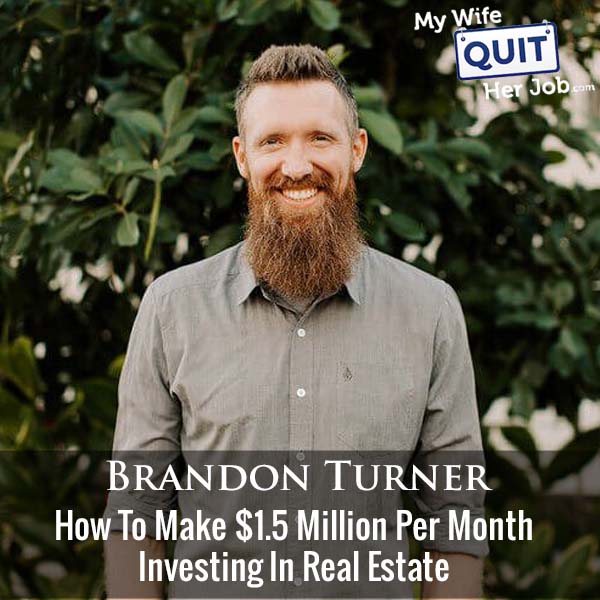
In this episode I sat down with Brandon Turner, former VP of Growth at BiggerPockets and founder of Open Door Capital, which owns over 4,000 units generating roughly $1.5 million a month in revenue.
Below is the full breakdown: how house hacking works, the four ways real estate generates returns, the vacation rental that produces $7,000 a month in profit, why he moved from doing deals himself to running a fund, and the visionary-integrator structure behind both BiggerPockets and Open Door Capital.
Get My Free Mini Course On How To Start A Successful Ecommerce Store
If you are interested in starting an ecommerce business, I put together a comprehensive package of resources that will help you launch your own online store from complete scratch. Be sure to grab it before you leave!
Table of Contents
Key takeaways
- House hacking needs 3.5% down. FHA loans cover 1-4 unit properties if you live there a year.
- Four ways real estate pays. Cash flow, appreciation, loan paydown by tenants, and tax benefits.
- One Maui vacation rental produces $7,000/month profit. Roughly five minutes of management per month.
- Massive income to passive income. Make money in business, then move it into real estate.
- Fund investors earn similar returns without the work. Brandon made 15% doing everything himself, same as passive investors made doing nothing.
- Visionary plus integrator is the growth unlock. This drove both BiggerPockets and Open Door Capital.
- Follow what fires you up. His kite and sunglasses ecommerce ventures failed because he did not care about them.
- “Does it make the boat go faster?” The filter he now runs every decision through.
What is house hacking and how does it work?
House hacking means buying a property with one to four units using a government-backed FHA loan at 3.5% down, living in it for at least a year, and renting the other units or spare bedrooms to cover your mortgage.
Brandon’s first deal: an $80,000 fixer-upper bought at roughly 3% down (about $3,000 plus closing costs) at age 20, with repairs financed on a credit card and a Home Depot how-to book. He rented bedrooms to coworkers, fixed it up, sold it, and cleared $20,000.
His second was a duplex where the other unit rented for $650 against a $620 mortgage. He lived free at 21.
It scales upward too. He currently lives in a $2 million three-unit property in Maui with an ocean view, renting the back house and keeping a downstairs unit available for Airbnb, which could cover the entire cost of living there.
The strategic value beyond the numbers: housing is 30% to 60% of most people’s expenses. Eliminating it creates room to take risks on a business, which is why he recommends house hacking first and building the online business second.
The four ways real estate makes money
Real estate generates returns four ways simultaneously, which is why it outperforms the stock market’s higher average appreciation.
- Cash flow. Money left over each month after all expenses. Brandon’s Maui Airbnb produces about $7,000 monthly, which alone would be financial freedom for many people.
- Appreciation. Roughly 3% per year historically. Good when it happens, and not something to bet on.
- Loan paydown. Your tenants pay off your mortgage. Brandon bought a fourplex the week his daughter was born, structured on an 18-year payoff. When she starts college the property will be worth roughly double what he paid and owe nothing, financed entirely by tenants.
- Tax benefits. Depreciation rules let real estate income offset other income. Brandon pays little to no tax on his real estate cash flow, and it also shelters his book royalties and other earnings.
The leverage is what makes the comparison to stocks misleading. Stocks average 6-7% annually with no leverage. Real estate averages 3% appreciation on an asset you control with 3.5% down, plus three other return streams.
Why vacation rentals cash flow like an ATM
A single Maui condo Brandon bought for roughly $750,000 produces about $7,000 per month in profit after management, utilities, and internet, requiring roughly five minutes of his attention monthly.
The property is in a condotel, a condo building that legally operates like a hotel with all units on short-term rental. He uses an assistant to handle management.
He bought a second one on the same model and expects similar numbers after rehab. The requirements are the right property, the right team, and a rehab done properly.
Should you buy real estate that loses money for appreciation?
Buying property that loses money monthly betting on appreciation works only for people with substantial income who can absorb the loss indefinitely.
A friend earning well over a million a year asked Brandon about a Southern California property with negative monthly cash flow. Brandon said yes for him specifically, because losing $1,000 a month over ten years is $120,000 against a property that would almost certainly appreciate far more than that in that market. It likely tripled in five years.
For everyone else the answer is no. If you are buying property while barely covering your own bills, a deal costing you $1,000 or more monthly is a recipe for disaster. Aim for break-even at minimum.
Massive income to passive income
The strategy Brandon recommends for anyone earning well is “massive income to passive income”: make money doing the thing you are genuinely good at, then move that money into real estate for generational wealth.
He gets calls from athletes and entertainers with the same concern. One professional wrestler put it directly: his career could end tomorrow with an injury or a contract cut, so he needs income that continues regardless.
The same applies to ecommerce owners. Make money in the business, then dump it into an investment that requires none of your time.
Why passive fund investors earn the same as active investors
Brandon analyzed a single-family house he had bought at a foreclosure auction, cleared of a deceased owner’s belongings, rehabbed, managed on Airbnb, then converted to a long-term rental, then sold after three years. His return was 15% annually, which is double the stock market.
Then he looked at friends investing passively in real estate funds. They were earning the same 15% while playing golf and running their own businesses.
That comparison is why he started investing in other people’s funds, and eventually built his own. The active work produced no return premium over the passive alternative.
How real estate funds and syndications work
A real estate fund pools money from investors to buy large properties, with investors holding limited partner positions that carry no legal liability beyond their invested capital.
The structure: you invest, say, $1 million and own a proportional share of an apartment complex. You cannot be sued for damages or losses. The maximum downside is your investment if the deal fails entirely.
The tradeoff is control. Limited partners have no operational say, which is the point. You receive a share of the cash flow annually (typically a few percent up to double digits depending on the deal), then get your capital back plus appreciation when the property sells in three to ten years.
Open Door Capital focuses on mobile home parks and apartment complexes, recently closing a $70 million apartment complex in Houston, and launches a new fund every few months.
The visionary and integrator structure
The single structural change behind both BiggerPockets’ growth and Open Door Capital’s is separating the visionary role from the integrator role, a framework from the books Traction and Rocket Fuel.
Most great companies have two people at the head: a visionary who sets direction and an integrator who executes. Trying to do both simultaneously fails, because they are entirely different skill sets.
BiggerPockets existed for eight years before Brandon joined. Josh had been operating as both visionary and executor. Bringing Brandon in as the integrator unlocked Josh’s visionary capacity, and that is what caused the growth.
Brandon then repeated it in reverse. At Open Door Capital he is the visionary and brought in an integrator to run operations, which is how the company went from zero to 4,000 units in three years. He genuinely does not know the exact unit count, because he does not run it.
Why his ecommerce ventures failed
Brandon took my ecommerce course, tried selling kites and then wooden sunglasses, and made essentially nothing. His own diagnosis is instructive.
He hired his brother, who had no ecommerce experience, to run the entire business while he worked 100-hour weeks at BiggerPockets. He could have afforded someone experienced.
The deeper problem was that he did not care about kites or wooden sunglasses. Without genuine interest, he could not provide direction, systems, or encouragement, and the business had no chance.
His conclusion: you do not have to love your product, and you do have to love the business of that thing. Follow the fire.
Why most real estate horror stories are execution failures
Most real estate horror stories reflect bad landlording rather than problems with real estate itself, the same way his kite business failing reflected his execution rather than a problem with ecommerce.
The data from the pandemic supports this. Even when evictions were banned and unemployment spiked, roughly 99% of his tenants paid rent. The single eviction he pursued was someone who had not lost their job and explicitly said they would extract as much free rent as possible.
Real estate also has an advantage over novel businesses: every problem you can encounter has been encountered by thousands of people before and is documented. Sourcing wooden sunglasses from China is an obscure problem. Getting a better mortgage rate is not, and 30 million American real estate investors can help.
The question that filters every decision
Brandon runs every decision through one question from the book The Gap and The Gain: does it make the boat go faster?
The story: the British rowing team was mediocre for a century, then won Olympic gold after their coach instituted that single filter.
Should I go to that party? Does it make the boat go faster? Should I eat this cheeseburger, or the chicken and broccoli?
Applied to his business, Open Door Capital is the boat. Starting an online membership does not make the boat go faster. Restarting a podcast eventually will, because it builds reputation and raises capital.
Frequently asked questions
How do you invest in real estate with little money?
House hacking. Buy a one-to-four-unit property with an FHA loan at 3.5% down, live in it for at least a year, and rent the other units or spare bedrooms. Brandon started with an $80,000 house at roughly 3% down. Partnerships are the other route: you find the deal, someone else provides capital.
What are the four ways real estate makes money?
Cash flow (monthly profit after expenses), appreciation (roughly 3% annually), loan paydown (tenants pay off your mortgage over 15-30 years), and tax benefits (depreciation rules that can offset other income). All four run simultaneously, which is why leveraged real estate can beat unleveraged stock returns.
Should you buy property that does not cash flow?
Only if you earn enough to absorb the monthly loss indefinitely. Losing $1,000 a month for ten years is $120,000, which a strong appreciating market may far exceed. For anyone not earning well into six or seven figures, aim for break-even at minimum.
How much can a vacation rental make?
Brandon’s Maui condo, purchased for roughly $750,000, produces about $7,000 monthly in profit after management, utilities, and internet, requiring roughly five minutes of his time each month. It depends heavily on location, the right property, and a proper rehab.
Is it better to invest in real estate yourself or through a fund?
Brandon earned 15% annually doing everything himself on one property (auction purchase, cleanout, rehab, Airbnb management, then long-term rental, then sale). Friends investing passively in funds earned the same 15% doing nothing. The active work produced no return premium.
What is a limited partner in a real estate fund?
An investor who provides capital and carries no legal liability beyond that capital. You cannot be sued for damages or losses, and the maximum downside is your investment. The tradeoff is no operational control. You receive annual cash flow plus your capital and appreciation when the property sells.
Should you start with real estate or an online business?
Brandon would start with real estate, specifically house hacking, because housing is 30-60% of most people’s expenses. Eliminating that cost creates the financial room to take risks on a business. Ultimately, go with whatever genuinely interests you, since his ecommerce ventures failed largely because he did not care about them.

