
Podcast: Download (Duration: 42:55 — 49.4MB)
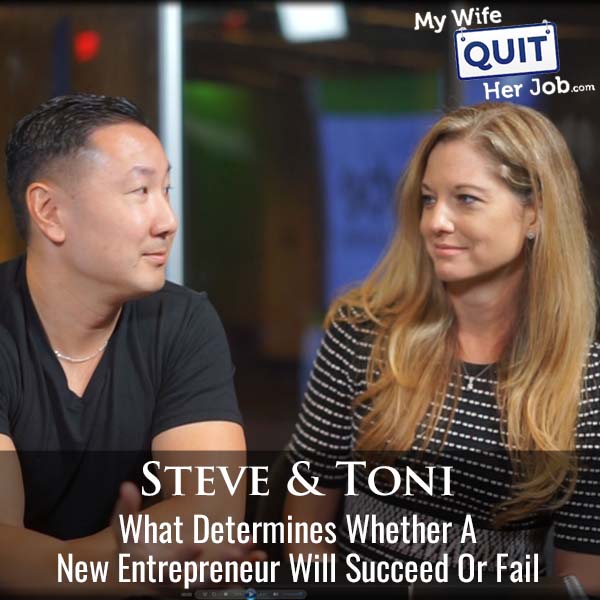
The single trait that predicts why some entrepreneurs succeed and others quit is the internal will to do the work when it stops being fun, and it turns out to matter far more than starting capital, experience, or having a great job. My co-host Toni Herrbach and I have taught almost 6,000 students across Profitable Online Store and Profitable Audience, and after analyzing the ones who ship versus the ones who stall, the pattern is unmistakable.
The counterintuitive finding is that a well-paying job can actually hurt your odds. Students with cushy tech-company salaries are our most risk-averse and most likely to never start, because the pain of losing weekend beach trips or giving up Friday night with friends outweighs the pain of their current job. Meanwhile, students who are down to their last dollar often outwork everyone else because they have to.
This is a straight breakdown of the personality, financial, and mindset traits we see separating successful entrepreneurs from stalled ones, based on 13 years of teaching.
Get My Free Mini Course On How To Start A Successful Ecommerce Store
If you are interested in starting an ecommerce business, I put together a comprehensive package of resources that will help you launch your own online store from complete scratch. Be sure to grab it before you leave!
Table of Contents
Key takeaways
- Internal will and pain threshold predict entrepreneurial success better than starting capital, tech skill, or industry experience.
- A cushy job is a double-edged sword: it gives you runway, but it also raises your quit threshold so high that most people never start.
- Having a secondary income (spouse, rental property, or day job) lets you take risks that a purely self-supporting entrepreneur cannot.
- Loving the process (SEO, PPC, listing optimization) beats loving the product every time. Product-only love without process love is the most common failure pattern.
- Integrators (people who execute) should generally not start their own businesses. They should join a visionary who has ideas but cannot ship.
- Reframe frustration as a challenge. Frustrated entrepreneurs quit; challenged entrepreneurs solve problems.
Does having money in the bank help or hurt when starting a business?
Having money in the bank helps in one specific way (it lets you absorb setbacks without shutting down) and hurts in another (it raises the pain threshold you need to hit before you actually start). The net effect depends on your personality and how you frame the runway.
Steve’s evolution on this is telling. For years he preached “keep the income coming in while you build,” because a full-time engineering job funded his family while Bumblebee Linens got off the ground. But watching students at high-paying tech companies (rhymes with “Oogle”) struggle to ever start convinced him that a cushy job can be an active handicap.
The rule: if your current job is comfortable enough that you don’t feel enough pain to sacrifice weekend beach trips, kid activities, or Friday nights, you will never build the business on the side. You need pain in the current situation greater than or equal to the pain of starting.
Why a secondary income stream is a hidden advantage
A secondary income stream (spouse, day job, rental properties, or an existing business) is a hidden advantage because it lets you take risks and absorb setbacks that a solo-income entrepreneur cannot afford. Toni credits her ability to build her jewelry business to having a husband whose income covered the household while her blog revenue temporarily dropped.
The clean example: when Toni started her jewelry business, she deprioritized her blog and its revenue dropped from about $100K/year to $50K to $75K during the transition. She could absorb that loss because household income was covered elsewhere. A friend in silicone baby products hit regulatory approval hurdles and had to walk away because she needed her income intact to pay bills.
If you do not have a spouse, look for cheaper equivalents. Rental income, a stable part-time job, or an existing business that runs on autopilot all serve the same function.
The goal is not the specific structure. The goal is the ability to say “no” to a bad customer or “wait” on a decision without going broke.
Why “bootstrapped with zero” also has hidden advantages
Being bootstrapped with zero has its own advantage: the pain of failure is so high that quitting is not an option, so the internal will is forged by necessity. Some of the most successful entrepreneurs we know (Kim Sorgius, Bob Lotich, Kyle Taylor of Penny Hoarder) started with almost nothing and outworked everyone.
Kim Sorgius spent her grocery money to attend a conference to learn how to start her blog. Kyle Taylor built and eventually sold Penny Hoarder for a reported ~$100M starting on the struggle bus.
Liz Saunders (event coordinator turned software founder) worked bar shifts to bridge to her first real gigs. None of them had capital, and all of them had a will that would not stop.
The tradeoff: bootstrapped-with-zero entrepreneurs cannot absorb setbacks like a counterfeiter hijacking their Amazon buy box. Toni dropped price to break-even for a week or two to reclaim her buy box; a broke seller cannot afford to do that. So zero-capital works, but it narrows your options at every decision point.
Why engineers and analysts are our hardest students
Engineers and analysts are our hardest students because they research every decision to death and treat starting a business as a well-scoped project with predictable outcomes, which it never is. Analysis paralysis kills their momentum before they publish a single piece of content or list a single product.
The pattern is consistent: they enroll in the course, then immediately ask “should I keep this quiet at work,” “what platform is best,” “which theme should I buy.” These are questions that only matter after you have a business. Steve is an engineer himself and recognizes the trap because he almost fell into it.
The fix is to force a public commitment on a short deadline. Publish one video by Friday, or list one product by month-end.
Do the thing before the research is complete. Every entrepreneur we know who broke out of analysis paralysis did it by shipping ugly.
Do you need to love your product to succeed?
You do not need to love your product to succeed, but you must love either the product or the process (SEO, PPC, listing optimization, email marketing). Loving only the product without loving the process is our most common failure pattern, because process work is where the daily grind actually lives.
Steve has zero personal interest in handkerchiefs, the flagship product at Bumblebee Linens. He loves the process: conversion optimization, ads, email flows, SEO.
That process love has powered a 15+ year business selling products he does not use. Brandon Young and his wife love the Amazon process so much they could sell almost anything.
The failure case: a seller with deep personal passion for the product but no interest in learning Shopify, ads, or Klaviyo. Nothing carries them through the technical friction, so they quit at the first setup obstacle. Passion for the product buys you a starting sprint, not a marathon.
Reframe frustration as a challenge (or you will quit)
Reframe technical frustration as a challenge you want to solve, because entrepreneurs who stay in “frustration mode” quit and entrepreneurs who flip to “challenge mode” keep going. This is not motivational fluff; it is the single mindset shift that separates most of our long-term successful students from the ones who disappear.
Toni’s frame when she was stuck moving a WordPress widget: “if I can figure this out, another mom out there is going to pay off her credit card debt because of what I teach.” Steve’s frame when he did not want to debug a broken printer: “this is going to let my kids print whatever they want and make money doing it.”
Jim Wang built Bargaineering into a life-changing exit because he loved the A/B testing challenge, not because he loved his day job or hated it. The topic (personal finance) was the vehicle. The process (SEO, testing, community) was the fuel.
Visionaries vs integrators: which one starts a business?
Visionaries (idea-generators) should start businesses; integrators (executors) should join a visionary’s business as the first hire. Integrators who try to start solo tend to build beautiful websites for products no one wants, because they can execute anything but do not know which thing to execute.
Toni’s example: a student built a gorgeous site with every form working, every automation running, and every design element polished, but the underlying niche and positioning were not viable.
Execution was flawless, but the vision was wrong. That store will not work no matter how well the checkout functions.
The corollary: if you are a natural integrator, your business needs a co-founder or client who is a natural visionary. Alternately, look for what is already working for other creators (like Jim Wang copying TikTok trends onto his channel) and integrate that. Copying at a strategic level is not plagiarism; it is applied integration.
The visionary weakness: no execution without hiring
Visionaries who cannot execute must be willing to hire, because their ideas die on the shelf otherwise. This is the single biggest reason visionaries fail: they generate ideas endlessly, never ship, and then blame the market instead of their own execution gap.
The tools have never been better. Fiverr, Upwork, overseas VAs, AI, no-code website builders, and AI-generated first drafts all lower the execution bar dramatically. A visionary today who cannot ship in 2024 could not have shipped in any prior era either, so the excuse of “I do not have the skills” no longer holds.
The playbook: write the vision, hand it to Fiverr or an overseas VA, and iterate. Toni’s own approach for anything she does not want to build herself. Steve’s counter-example (learning to fix his own printer instead of paying for service) is an outlier and not the recommended default.
The trap of the “I don’t know how to make money” question
The “I don’t know how to make money from this” question is a trap because monetization ideas appear once you start creating content and interacting with your audience, not before. Students who wait for a monetization plan before starting never start. Students who start and let the money reveal itself find opportunities they never would have predicted.
Pilar in Profitable Audience started with travel brochures for her own trips. Only after publishing did she discover that travel agencies globally wanted to buy them. The opportunity was invisible from the sidelines and obvious once she was in the market.
If you have a topic you can talk about and an audience you can reach, the money will show up in some form (courses, consulting, physical products, brand deals, ads, digital downloads, memberships). Trust that and start.
Rules for entrepreneurial success, based on 6,000 students
After teaching almost 6,000 students, the rules that reliably separate the entrepreneurs who succeed from the ones who quit are:
- Have a strong reason. The pain of your current situation must equal or exceed the pain of starting the business. Without that, you will quit at the first hard week.
- Love the product or the process. Not both is fine. Neither is fatal.
- Reframe frustration as challenge. Every technical obstacle is a puzzle for the person you serve, not a personal insult.
- Do not hire out what you cannot do yourself. You must be proficient enough to detect BS from any agency or contractor.
- Use every tool available. Fiverr, Upwork, overseas VAs, AI. What used to take a team and $50K now takes a laptop and a weekend.
- Read Start by Jon Acuff if you are stuck. The best book we have found for entrepreneurs who overthink and never ship.
Two books that fix the “cannot start” problem
If you cannot get started, read Jon Acuff’s Start. If you cannot finish what you start, read Finish.
Toni recommends both to overthinkers in our courses. Steve interviewed Jon Acuff on the podcast previously.
Start is the more important of the two for most stuck entrepreneurs, because it directly addresses self-doubt and the overthinking loop. The ironic footnote: most people do not finish Finish. If you only read one, read Start.
Frequently asked questions
Do I need money to start a business?
No, you do not need money to start most online businesses. Bootstrapped entrepreneurs starting with nothing (Kim Sorgius, Kyle Taylor of Penny Hoarder, Bob Lotich) have built and sold major businesses. What you need is time and internal will. Starting capital helps absorb setbacks but is not required to launch.
Is it better to start a business while working full-time?
Starting a business while working full-time is better if you can tolerate 12 to 24 months of side-hustle grind without burning out, because the income cushion lets you make patient decisions. It is worse if your job is comfortable enough that you never actually put in the side-hustle hours. Pain threshold matters more than schedule.
Do I have to love my product to succeed?
You do not have to love your product to succeed if you love the process (SEO, PPC, email marketing, listing optimization). Product love and process love are both viable paths. Loving neither is the failure case. Steve has run Bumblebee Linens for 15+ years without any personal interest in handkerchiefs, powered entirely by process love.
Are visionaries or integrators more likely to succeed as entrepreneurs?
Visionaries are more likely to succeed as solo entrepreneurs because they can generate the ideas the business runs on. Integrators (execution-focused people) are more likely to succeed as first hires inside a visionary’s business, because they can implement flawlessly but often struggle to choose what to build.
What is the single biggest predictor of entrepreneurial success?
Internal will (the refusal to quit when the work stops being fun) is the biggest predictor of entrepreneurial success. Skill, capital, and industry experience can all be acquired later. Will is the one input we cannot teach and the one that most reliably separates our successful students from those who stall.
How do successful entrepreneurs handle setbacks?
Successful entrepreneurs reframe technical and business setbacks as challenges to solve rather than as personal frustrations. Toni reframes WordPress bugs as “helping another mom pay off her credit card debt.” Steve reframes broken printers as “this will let my kids make money.” The reframe is not fluff; it is the mechanism that carries entrepreneurs through years of daily obstacles.
What are the best books for stuck entrepreneurs?
Jon Acuff’s Start and Finish are the best books for stuck entrepreneurs who overthink and never ship. Start addresses self-doubt and the overthinking loop; Finish addresses completion. If you only read one, read Start first, because most stuck entrepreneurs never get past the starting line.