Podcast: Download (Duration: 38:35 — 44.5MB)
Reddit citations in ChatGPT dropped roughly 86% in a single day, falling to under 1% of all AI mentions. The switch flipped around August 14, the same window in which Reddit joined the S&P 500, and Google is now citing Reddit far less too.
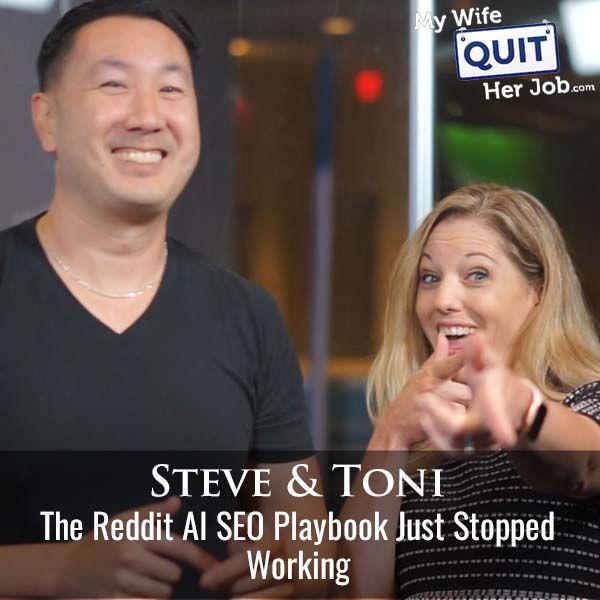
Toni Herrbach joins me to unpack why the Reddit AI SEO playbook stopped working and where AI shopping is heading next. We both promoted Reddit as a channel earlier this year, including a Sellers Summit talk and a podcast interview with a Reddit agency owner.
Ecommerce brands were paying $20,000 to $30,000 a month to game the platform. Freelancers on Upwork ran the same play at five to ten dollars per mention.
The pattern behind this repeats every few years. Something cheap and fast works on a platform, an entire industry grows around it, the platform closes the loophole, and every business that built itself on that channel loses its traffic overnight. Tumblr do-follow comment links and StumbleUpon both went the same way.
This post covers what actually collapsed, why Reddit was structurally exposed, which platforms AI is citing instead, and the changes in AI shopping that matter for sellers this quarter.
Get My Free Mini Course On How To Start A Successful Ecommerce Store
If you are interested in starting an ecommerce business, I put together a comprehensive package of resources that will help you launch your own online store from complete scratch. Be sure to grab it before you leave!
Table of Contents
Key takeaways
- Reddit AI search mentions fell about 86% overnight to under 1% of all citations.
- The drop coincided with Reddit joining the S&P 500 and reportedly reconsidering its Google licensing deal.
- Agencies charged $20,000 to $30,000 a month to place brand mentions on Reddit, and freelancers on Upwork ran the same play for five to ten dollars a mention.
- YouTube is now getting cited more by Google, while LinkedIn saw a similar AI-mention collapse.
- ChatGPT holds roughly 70% of consumer AI market share, and its referrals to my store rose to one to two percent of sales in six months.
- Adding AI-formatted content with FAQ schema moved my “handkerchiefs” ranking from 8.5 to 4 in six months.
- Amazon expanded its Shop Direct program to display outside websites in Amazon search results.
- Any tactic promising quick, cheap traffic tends to collapse the moment a platform notices, so build the assets a platform cannot revoke.
How much did Reddit AI search mentions drop?
Reddit AI search mentions fell roughly 86% in a single day, dropping to under 1% of AI citations. The change flipped on around August 14, and Reddit’s Google citations dropped in parallel.
Reddit joined the S&P 500 in the same window. The company is also reportedly considering ending its Google licensing deal to launch a Reddit-only AI search product, which is currently a rumor rather than a confirmed plan.
Reddit’s AI presence was built on licensing. It has paid deals with Google and OpenAI, and it is suing Anthropic and Perplexity for scraping without a deal.
That structure made the drop possible in a way organic traffic never is. When a platform sells its data through licensing, the buyer can turn the spigot off.
How were sellers gaming Reddit for AI mentions?
Agencies were charging $20,000 to $30,000 a month to plant brand mentions in relevant subreddits, using aged accounts with real karma to make the posts look genuine. AI would then scrape those threads and cite them as authentic user opinions.
The freelance version was much cheaper. Upwork had a large supply of seasoned Reddit accounts renting themselves out at five to ten dollars per mention.
Case studies looked real. The Reddit agency owner I interviewed showed sales lifts sustained for roughly a year across multiple clients.
The point was never Reddit traffic. Brands paid for the AI overview and ChatGPT mentions the threads generated, and the human Reddit audience was a bonus.
Was the Reddit AI SEO effort wasted?
Sellers who went all in on Reddit did lose the AI leverage overnight, and the human audience is still there. Reddit as a platform still has active users, so brand mentions still surface to real readers.
The dependency is what hurt. Businesses that treated Reddit citations as their AI visibility strategy lost that channel in a day.
We promoted the tactic ourselves earlier this year. A Sellers Summit talk and a podcast interview with a Reddit agency both walked through the playbook, and both aged badly within months.
Why do platform gamification playbooks always collapse?
Cheap, fast, and easily scaled tactics always collapse because the platform eventually notices the pattern and closes it. Toni and I have watched this cycle three times now, and it plays out the same way each time.
Tumblr had do-follow comment links a decade ago. Leaving polite, relevant comments on popular Tumblrs with a link back to your site produced real backlinks until the platform changed the setting.
StumbleUpon was the same story earlier. Coordinated stumbling drove real traffic until the platform tightened detection.
Reddit fits the same shape. The playbook worked, an industry grew around it, and the platform closed the door.
Ranking on Google is the outlier here. Traditional SEO worked for roughly twenty years, and the fast tactics inside it still get penalized on a regular schedule.
Which platforms are AI models citing now?
YouTube is now getting cited more heavily by Google, and LinkedIn saw a Reddit-shaped collapse of its own. The overall citation graph is shifting away from platforms full of low-effort user-generated content.
LinkedIn added an AI-generated label to slow its own AI spam problem. The platform reduces reach on posts marked as AI-generated, which acknowledges how much of the feed is now machine-written.
AI-written comments carry their own signal. Toni and I both see obvious AI phrasing in comments people leave under our posts, which reads as spam even when the poster meant well.
Original content still works when the human voice survives. Dictating your thoughts and letting AI clean up the transcript keeps your voice in the finished text, which reads differently than fully generated posts.
How do consumers actually use AI to shop?
ChatGPT leads consumer AI usage by a wide margin, with roughly 70% market share, and shoppers use it for research more than for direct purchase. Traffic from ChatGPT to my store converts noticeably better than average traffic.
The share of sales is still small. AI-attributed traffic accounts for one to two percent of revenue on both our stores, and that figure has grown quickly over the last six months.
Claude sees far less shopping search. My own use of Claude is almost entirely for work productivity, reporting, and analysis, and I search ChatGPT or Google for anything consumer.
Attribution stays hard. A shopper often researches on ChatGPT, then types your brand name into Google, so the ChatGPT-influenced sale looks like a branded Google sale in analytics.
Brand search volume is the useful proxy. If your brand searches are rising, AI research is doing part of that work whether analytics captures it or not.
How do you rank in AI search as an ecommerce store?
Publishing AI-formatted content with FAQ schema and a quick-summary intro produces measurable ranking gains within months. My handkerchiefs keyword moved from an average rank of 8.5 to 4 over six months of adding this content.
Prioritize questions your buyers actually type. Toni’s team leads with high-volume queries their audience is already searching, such as homeschool scholarship availability by state.
Write what you would have written anyway. This is not extra work when the topics are ones your audience genuinely needs, so the content investment pulls double duty.
Shopify reports agentic traffic separately. Their dashboard breaks out visits from ChatGPT, Perplexity, and Claude, and Google-mediated AI traffic still hides behind organic search referrals.
Digital PR still helps. Toni and I both ran scholarship programs on our stores that generated .edu backlinks, and the harder-to-measure benefit is the branded authority that follows.
Is AI going to shop for people?
Agentic shopping is coming, and the near-term version is human-in-the-loop rather than fully autonomous. A recent survey found shoppers are open to AI buying on their behalf as long as a final approval step remains.
Retailers are already testing the middle ground. Walmart now prompts returning shoppers to reorder their previous cart, and Thrive Market prompts customers when it thinks a delivery interval has elapsed.
Fully autonomous ordering has an obvious failure mode. An AI that cannot see whether the toilet paper is running low will overshoot the reorder unless the shopper checks the list first.
Steve’s use case is clear. Type a request into an AI, get a shortlist and a recommended pick with the best price, click yes, and the order lands.
Toni is more skeptical. Shopping is therapeutic for many people, and her daughters and mother genuinely enjoy the act, so the appetite for handing shopping to an agent varies more than the industry assumes.
The itinerary problem is worth watching. An AI-planned London trip her friend shared missed the real-world transit times between stops, which is the same trap AI shopping will hit when it lacks lived context.
Why is Amazon expanding Shop Direct?
Amazon Shop Direct now surfaces products from outside websites inside Amazon search results, effectively turning Amazon into a discovery engine that also handles checkout for other stores. Amazon has been blocking AI scrapers because it wants to be the shopping AI.
The early version had a real problem. Amazon scraped seller websites without permission, cached data went stale, and customers received order confirmations from Amazon email addresses when the site’s own prices no longer matched.
The current version is opt-in. Sellers control the data feed, which addresses the freshness and consent issues.
Right now it is free to participate. Amazon is running the program without fees to seed adoption, which is how every marketplace program starts.
Expect fees to follow. Amazon’s revenue is now largely advertising and referral-adjacent, so free enrollment stages become paid placement once volume is there.
Amazon search itself is worse than it used to be. The first 20 results in a category are ads, sponsored placements are visually indistinguishable on mobile, and Amazon has begun gating review access for accounts that browse reviews without purchasing.
What should sellers do this quarter?
Skip anything selling cheap, fast, guaranteed AI traffic, and invest instead in assets a platform cannot revoke. The Reddit collapse is the fourth reminder in a decade that quick tactics come with expiration dates.
Fix your site fundamentals first. Navigation, speed, and checkout stay valuable regardless of where the traffic comes from, and AI tools now let you rebuild a site in a weekend rather than four weeks.
Publish AI-formatted content on questions your buyers already type. FAQ schema and quick-summary intros produce measurable ranking gains in months.
Watch brand search volume as the visibility signal. Direct AI attribution is unreliable, and rising brand searches capture the research your buyers do on ChatGPT before they buy.
Get on Amazon Shop Direct while it is free. Free enrollment stages of Amazon programs rarely last, so early access is cheaper than late.
Google still holds the largest share of the pie. AI Overviews, AI Mode, and traditional search combined dwarf ChatGPT’s search volume, so ranking on Google remains the highest-leverage single investment.
Frequently asked questions
Why did Reddit AI search mentions drop 86%?
Reddit’s citations in ChatGPT fell to under 1% around August 14, in the same window that Reddit joined the S&P 500 and reportedly began weighing an exit from its Google licensing deal. Google is also citing Reddit far less than it did a month earlier.
Did the Reddit AI SEO strategy actually work?
Yes, until it did not. Agencies charging $20,000 to $30,000 a month showed real sustained lifts, and freelancers ran the same play at five to ten dollars per mention, so the tactic produced results for roughly a year before the collapse.
Which platforms are AI models citing now?
YouTube is getting more citations from Google, and LinkedIn saw a Reddit-shaped drop of its own. The trend is away from platforms flooded with low-effort user-generated content.
How do consumers use ChatGPT for shopping?
Most consumers use ChatGPT for research and go to Google or the brand’s site to check out, so ChatGPT-influenced sales often appear as branded Google traffic in analytics. Direct ChatGPT referrals now drive one to two percent of my store’s revenue.
How do you rank in AI search?
Publish content formatted with a quick-summary intro, an FAQ block, and schema, and prioritize questions buyers actually type. My handkerchiefs keyword moved from an average rank of 8.5 to 4 over six months of adding this content.
Is AI going to buy things for people?
Not fully yet, and shoppers are open to a human-in-the-loop version. A recent survey found buyers accept AI making the recommendation as long as they approve the final order.
What is Amazon Shop Direct?
Amazon Shop Direct surfaces products from outside websites inside Amazon search results, so Amazon acts as the discovery engine and the outside site handles the sale. The program is currently opt-in and free.
What should sellers do after the Reddit AI collapse?
Invest in assets a platform cannot revoke, including your own site, AI-formatted content on your buyers’ real questions, and community. Skip anything selling cheap, guaranteed AI traffic, since the Reddit playbook is the fourth version of this cycle in a decade.