
Podcast: Download (Duration: 46:09 — 53.1MB)
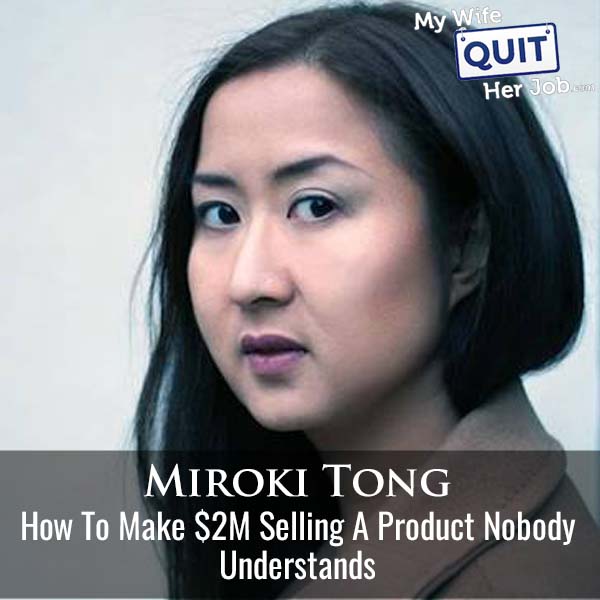
The way to launch a niche product on Kickstarter is to build a pre-launch email list, hire a crowdfunding marketing agency to scale Meta ads to 4-5x ROAS, and treat the campaign as three phases with a “simmering pot” middle you actively manage. On this episode of the My Wife Quit Her Job podcast, I sat down with Miroki Tong, co-founder and CEO of StoryEngineDeck.com, who has done exactly this three times.
Miroki and her co-founder Peter sell decks of creative writing prompt cards, a product most people cannot describe until they hold it. Their first Kickstarter asked for $50,000 and raised $250,000, and their second raised over $1 million and became the world’s most crowdfunded worldbuilding tool.
Today they still hit 4-5x return on ad spend on Meta at an under $10 cost per acquisition, and they refuse to use AI for anything creative.
Below is the playbook: how the first Kickstarter took off without a large audience, how they structure a 30-day campaign around the dead middle, how they hit 4-5x Meta ROAS on a niche product, and the mistakes that sink most creative-product launches.
Get My Free Mini Course On How To Start A Successful Ecommerce Store
If you are interested in starting an ecommerce business, I put together a comprehensive package of resources that will help you launch your own online store from complete scratch. Be sure to grab it before you leave!
Table of Contents
Key takeaways
- You can hit a million-dollar Kickstarter without a huge audience if the product is strong, the lead-gen starts weeks before day one, and the landing page and founder video are excellent. Story Engine had a small comic-convention audience when their first campaign 5x’d its $50K goal.
- Every crowdfunding campaign has a “simmering pot” middle. The first 72 hours and the last 72 hours drive most of the pledges. You have to actively scale ads down during the middle to avoid bleeding money, then scale them back up at the end.
- 4-5x Meta ROAS on a niche product is possible with fresh creative and by mining customer feedback (live-stream questions, ad comments, review comments) to write the next ad’s headline. Story Engine refreshes ads about monthly.
- Plan stretch goals BEFORE the campaign goes live. Peter invented stretch goals mid-campaign on both of Story Engine’s biggest launches and spent the next five years fulfilling them.
- Do not undervalue the ask. Budget every real cost (materials, marketing, artists, writers, shipping, fulfillment, and the 30% tariff surcharge on top) and price the campaign to pay all of it. Creators who eat surprise costs to keep backers happy go bankrupt.
- Long-form YouTube video is where a hard-to-explain product actually clicks. A single 15-minute how-to on one of Story Engine’s expansions is one of their best-performing videos.
Can you succeed on Kickstarter without a large existing audience?
You can succeed on Kickstarter with only a small existing audience, but the product, landing page, founder video, and pre-launch lead-gen all have to be excellent to compensate. Peter had a modest comic-convention following when he launched the original Story Engine deck for $50,000. It closed at $250,000 by day three or six, catching him so off-guard that he did not know how to fulfill it.
Miroki is direct about the trap: having an audience is not sufficient on its own. She knows creators with much larger followings who have run crowdfunding campaigns that raised nowhere near what Story Engine has raised.
The bar is a great product, a killer landing page, a strong founder story, proper lead-gen, and money spent on ads. Skip any one of those and even a big list will not save the campaign.
What is the structure of a successful 30-day Kickstarter campaign?
A successful 30-day Kickstarter follows a three-phase shape: a huge lift in the first 72 hours, a “simmering pot” middle where pledges naturally slow, and a second huge lift in the final 72 hours. This shape is normal, not a sign of failure, and the campaign needs to be built and managed around it.
The first 72 hours are what your pre-launch email list, launch-day ads, and lead-gen momentum are for. If you hit day one without immediate backers, prospects second-guess the campaign from the start.
The middle two weeks are the danger zone. Ads that were working on day one will start to underperform, and if you set-and-forget them, you will bleed money for ten straight days. Miroki’s team actively scales ads down during the middle, uses the time for creative pivots and course-corrections, and then scales ads back up for the final push.
How do you generate pre-launch leads for a Kickstarter campaign?
You generate pre-launch leads by running Meta and Google ads for lead capture in the weeks before launch, emailing every previous crowdfunding backer, working with a crowdfunding marketing partner like BackerKit, and building anticipation across your existing newsletter and social channels. Momentum has to be built before day one, not on day one.
Story Engine runs pre-launch ads that capture emails, then converts those leads into day-one pledges when the campaign opens. Because they have run multiple successful campaigns, they also message backers from previous projects on the Kickstarter platform (“Hey, I have a cool new project, come check it out”), which is one of crowdfunding’s compounding advantages.
They partner with BackerKit for a lot of the ad management. BackerKit started as a crowdfunding platform and grew a marketing arm; they take a percentage and their costs scale with success. If you are not already an ads expert, Miroki recommends hiring them over trying to run pre-launch ads yourself.
How do you achieve 4-5x ROAS on Meta ads for a niche product?
Story Engine hits 4-5x Meta ROAS on Meta at under a $10 cost per acquisition by letting Meta’s algorithm find their audience (no manual interest targeting), refreshing creative about once a month, and mining customer feedback for the next ad’s angle. They do not narrow-target; they let Meta optimize and put the effort into making better creatives.
The creative-refresh source is where most sellers under-invest. Miroki’s team reads three things constantly: direct reviews on the website, comments left on the ads themselves, and repeated questions in their live streams. Any question that keeps coming up is a signal they are failing to communicate something, and that failure becomes the headline of the next ad.
They also build the full creative arsenal for each launch: long-form video, short-form video, static images, catalog ads, long-copy text, short-copy text, and multiple call-to-action variants. Different formats hook different people at different moments; a viewer might be entertained by a short-form video first and then read a detailed static ad two days later before pledging.
How often should you refresh Meta ad creative?
Story Engine refreshes their Meta ad creative about once a month. That cadence works for them because their product is a physical deck sold on repeat launches; a store selling faster-moving or trend-driven products should refresh more often (I refresh weekly).
The refresh does not require inventing all-new concepts every time. It usually means new headlines, new hooks, new opening frames, and swapping in the questions that surfaced in the last month of customer feedback.
What are the biggest mistakes creators make on Kickstarter?
The two biggest mistakes are inventing stretch goals mid-campaign and undervaluing the funding ask. Both mistakes make the campaign “successful” on paper and then quietly kill the business over the following years.
Stretch goals are extra rewards you promise backers as the campaign blows past its funding target. Peter invented Story Engine’s stretch goals on the fly during both of the biggest launches (“I will make new lesson plans, I will design a cool new edition book, I will create this new guidebook”), and the team spent the next five years fulfilling them. Plan every stretch-goal tier before the campaign launches so you know exactly what you are committing to.
Undervaluing the ask is the other career-ender. Creators price the campaign to cover materials only and forget marketing, artists, writers, shipping, and fulfillment.
When tariffs hit in 2025 and 2026, many creators chose to eat the surprise 30% cost rather than pass it to backers. Miroki is direct about this: eating surprise costs to keep backers happy is not sustainable, and creators who do it go bankrupt.
What should be in the Kickstarter budget nobody remembers?
The costs most Kickstarter creators forget to budget for are marketing spend, artist and writer fees, shipping and fulfillment logistics, the “success budget” for what happens if the campaign 5x’s its goal, and any tariff or duty surcharge that could hit before the boat lands. Every one of these is real and every one of these has killed campaigns.
Build two budgets side by side. The lean budget is the bare minimum you need to succeed and ship the promised product; the success budget is what happens if you blow past the goal and now have to manufacture, package, and ship 6,000 units instead of 100.
More scale means more logistics, more coordination, more per-unit oversight, and more ways to accidentally ship late.
How does Story Engine sell a hard-to-explain product with content?
Story Engine sells a hard-to-explain product by combining short-form video (where Peter uses the deck live on camera to build a story mashup in 60 seconds) with long-form YouTube (where a single 15-minute how-to walks through one of the expansions in depth). The short form pulls people in; the long form gets them to actually understand the product and buy.
For a hard-to-explain product, the demo IS the pitch. Peter can whip out the deck on camera and generate a “tortured cowboy in a post-apocalyptic city where underground worms cause earthquakes” story in 60 seconds, and that demo does more marketing than any voice-over pitch could.
Their once-a-year in-person demo at GenCon (100,000+ attendees, North America’s largest tabletop RPG convention) works the same way: the second they demo the deck, it clicks.
The long-form video is what unlocks the harder sells. Their 15-minute deep-dive on the Culture Keyhole expansion is one of their best-performing videos precisely because it takes 15 minutes to properly show what the product does. Miroki thinks they should make one for every expansion.
Should you refuse to use AI to make your creative product?
Refusing to use AI for a creative product is a defensible marketing position in 2026, and it has become part of Story Engine’s brand. Every prompt is human-written, every image is licensed from a real artist or photographer, every marketing newsletter is written by a person, and they say so openly.
The reason it works as a position: AI-generated content is flooding every feed, and buyers are getting better at spotting it. In a market of AI-generated writing tools and AI-generated art, “made by humans” is a real differentiator, and buyers who care about creativity are willing to pay for it.
Miroki draws the Canva parallel: when Canva first arrived it democratized graphic design and helped every small business, then everyone got bored of the same soft-beige-arch aesthetic and the best graphic designers rose back to the top. The same cycle will hit AI content, and the creators who kept their craft intact will be waiting.
Frequently asked questions
Do you need an existing audience to run a successful Kickstarter?
No, but you need enough audience for a strong first 72 hours or the campaign will stall. Story Engine’s first campaign 5x’d its $50K goal with only a small comic-convention following, because the product, the landing page, the founder video, and the pre-launch lead-gen were all strong. Creators with much larger followings routinely run campaigns that raise less, because the fundamentals were weak.
What ROAS should I expect on Meta ads for a Kickstarter campaign?
Story Engine consistently runs 4-5x ROAS on Meta for their crowdfunding campaigns and their evergreen store, at a cost per acquisition under $10 per deck. That is exceptionally good for a niche product; more typical is 2-3x ROAS. Their edge is fresh creative refreshed monthly, no manual audience targeting (Meta finds the buyers), and mining customer feedback for every new ad’s angle.
How long is a typical Kickstarter campaign, and how does the funding flow?
A typical Kickstarter campaign runs about 30 days. Most of the pledges come in the first 72 hours and the last 72 hours; the middle two weeks are naturally slower, which is normal. Plan to actively scale ads down during the middle to avoid burning budget when conversion rates drop, then scale them back up for the final push.
Should I plan stretch goals before my Kickstarter launches?
Yes, plan every stretch-goal tier before launch. Making them up mid-campaign is how creators end up owing backers five years of extra fulfillment on rewards they never costed out. Story Engine did this on both of their biggest launches and it consumed years of team capacity.
Is it worth hiring a crowdfunding marketing agency like BackerKit?
Yes, if you are not already a paid-media expert. Agencies like BackerKit take a percentage of what they raise, which means their cost scales with your success rather than being a fixed spend you might not recover. They know the crowdfunding-specific patterns (three-phase funding shape, when to scale ads down, how to lead-gen before launch) that most general-purpose ad agencies do not.
What kind of video content works best for a hard-to-explain product?
Both short-form video (60-90 second live demos of the product in use) and long-form YouTube video (10-15 minute how-tos that walk through the product in depth) work, and the two complement each other. Short-form pulls new viewers in; long-form is what gets them to actually understand the product enough to buy. Story Engine’s best-performing YouTube video is a 15-minute deep-dive on a single expansion.