
Podcast: Download (Duration: 46:55 — 64.7MB)
Go to the Canton Fair knowing what you want to source, because the fair is far too large to browse. Walk it in two passes: a fast sweep collecting business cards with booth numbers marked, then a second day of real conversations with only the vendors worth your time.
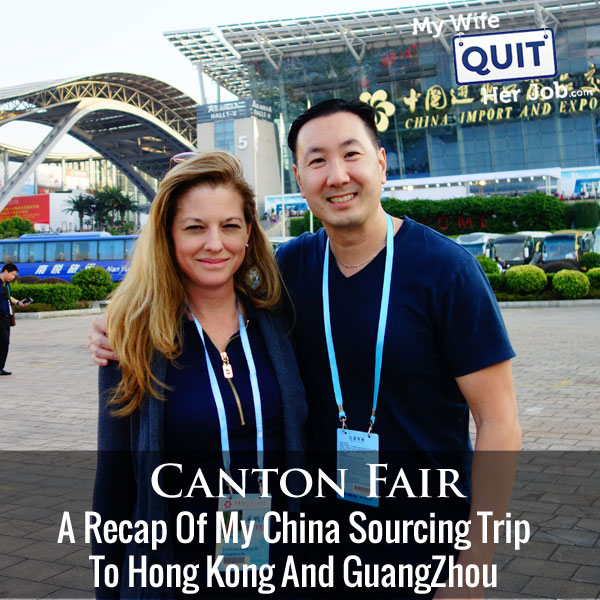
This was my third Canton Fair and fifth trip to China. My business partner Toni Anderson came for the first time, so this episode covers both the jaded perspective and the first-timer’s.
The headline finding was minimum order quantities. Toni was quoted as low as 120 pieces at the fair, against the 1,000-plus minimums we routinely see elsewhere, with pricing roughly 20% below comparable Alibaba quotes.
This episode covers flying in through Hong Kong to cut airfare, getting your badge and visa, where to stay and what to eat, how to work the halls efficiently, and why taxis are the one thing to avoid.
A note on timing: this is a 2017 trip. Specific hotels, flight prices, and fair logistics change, so verify current details before booking.
Get My Free Mini Course On How To Start A Successful Ecommerce Store
If you are interested in starting an ecommerce business, I put together a comprehensive package of resources that will help you launch your own online store from complete scratch. Be sure to grab it before you leave!
Table of Contents
Key takeaways
- Flying into Hong Kong and taking a two-hour train to Guangzhou cost about $830 versus $1,400 flying direct.
- The badge process runs through a pre-application, a letter of invitation, and then the badge itself, and the invitation is also what you need for your visa.
- A visa took about a week through a service without expediting, at roughly the cost of a passport.
- Work the fair in two passes: a fast sweep collecting cards with booth numbers, then targeted return visits.
- Minimum order quantities ranged from 120 pieces to 1,000 dozen for similar products, so ask several vendors.
- Fair pricing ran about 20% below Alibaba, largely because you reach manufacturers rather than middlemen.
- Nearly every booth had someone speaking usable English, so a translator was unnecessary.
- Take the free hotel shuttles and avoid taxis, which were the only genuinely difficult part of the trip.
How do you get to the Canton Fair cheaply?
Fly into Hong Kong and take the train to Guangzhou. Direct flights to Guangzhou ran about $1,400 during the fair, while Hong Kong was around $800 with a $30 train ticket on top.
The train takes about two hours and is genuinely comfortable. We both slept on it.
Toni had never been to Asia and found the process straightforward. Even as a first-time traveler, the Hong Kong route was easy enough to recommend on the savings alone.
Hong Kong is worth the stop on its own. Two of our vendors live there, and we built in a sightseeing day.
Timing can stack multiple shows. Global Sources runs in Hong Kong just before the Canton Fair, and the Hong Kong Mega Show falls in the same window, so a single trip can cover all three.
How do you get a Canton Fair badge and a China visa?
Work through the fair’s official website in sequence: pre-application, letter of invitation, then badge. The site is hard to navigate because nothing is labeled the way an American or European visitor expects.
The invitation does double duty. You need it for your badge and for your visa application.
Qualifying is not the hard part. You essentially state that you are coming, and nobody gets turned down.
Visas run through one of a small number of Chinese consulates. Toni used a service because the nearest consulate was far from her, and the total cost was comparable to a passport.
Turnaround was about a week without paying for expediting. Start six weeks out anyway, since procrastinating on this is a bad idea.
Ask for the ten-year visa. Both of us got one, which covers a decade of annual trips.
Where should you stay for the Canton Fair?
Stay near a good shopping mall rather than at the hotel attached to the fair. The connected hotel is convenient and the food around the fair site is genuinely bad.
We stayed at the Aloft near the Taikoo Hui and Grandview Mall. The room was indistinguishable from the same chain in the US.
The mall solves the food problem. A food court with about 15 options plus sit-down Japanese, Italian, and other restaurants, all in an area that felt completely safe.
Proximity matters less than it sounds. Even staying at the attached hotel means a 15 to 20 minute walk to reach some sections.
Shuttles cover the gap. Our hotel and several others ran shuttles to the fair complex about every half hour, and we never waited in a line for one.
What should you eat at the Canton Fair?
Bring your own food. The fair’s food area is in a crowded basement, and both Toni and several other attendees we spoke with got sick from eating there.
Backpacks and even rolling suitcases are allowed inside. Packing protein bars or sandwiches for the day is entirely practical.
Drinks are fine to buy on site. Bottled water, soda, and tea are all safe purchases.
How do you work the Canton Fair efficiently?
Do a fast first pass collecting business cards, writing each booth number on the card, then return to only the promising vendors. We covered enormous ground in about four hours on arrival day using this method.
Toni finished day one with 15 to 20 cards. Day two became simple targeted visits about specific products and orders.
The reason to resist deep conversations early is breadth. Spending an hour at your first interesting booth risks never finding the vendor with better quality or wider range two aisles over.
Booths sit on a grid, so finding a marked booth number again is easy. Note the coordinates and you can navigate straight back.
Take a notebook and staple cards into it. Business cards leave almost no room for notes, which we relearned the hard way.
Photos are the fallback when you forget the notebook. Most booths allow it, so photograph the product next to its business card with the quoted price written on the card.
How big is the Canton Fair?
Large enough that getting between buildings takes a tram and 15 to 20 minutes. It runs multiple stories across many halls, and nothing prepares you for the scale.
Sections are organized by category, which makes it manageable. Textiles occupy one section, so a textile buyer can stay there for three days.
Cross-category overlap is worth knowing about. We found two key vendors in the accessories section selling products we would have classified as textiles.
Between three of us we covered maybe two thirds of the fair. Meeting up required budgeting 20 to 25 minutes just to walk to each other.
Should you go to the Canton Fair without a product idea?
No. Toni walked the sports and outdoor section for a colleague and was overwhelmed within the first row of vendors.
Shiny object syndrome is the specific failure mode. Everything looks appealing, dozens of booths sell near-identical items, and without a target you cannot evaluate any of it.
A general category is enough to make the trip work. Knowing you want to sell women’s clothing gives you sufficient direction.
We met a woman at a conference who had attended five times without ever sourcing a product. That seemed baffling beforehand and entirely plausible afterward.
What are Canton Fair minimum order quantities and prices?
Much lower than expected, and wildly variable between vendors. Toni was quoted minimums from 120 pieces up to 300, against the 1,000-plus minimums our existing vendors require.
The spread on similar products was striking. One vendor quoted us a thousand dozen while another selling something comparable wanted a few hundred pieces.
Pricing ran roughly 20% below what we knew from other channels. The gap was consistent rather than dramatic.
Middlemen explain much of it. Alibaba carries a lot of trading companies, and the fair puts you in front of actual manufacturers.
Quality and price tracked each other reliably. Toni’s jewelry background let her identify lower-grade leather immediately, and those items were priced accordingly.
Do you need to speak Chinese at the Canton Fair?
No. Toni does not speak any Chinese and found someone speaking English at every booth she visited.
The English was better than expected on technical points. Discussions about specific jewelry components and equipment went through without trouble, with one exception on a highly specific request.
Conversations skip the pleasantries entirely. You ask about pricing, minimum order quantities, and who else they supply, which saves considerable time.
Modification requests are handled on the spot. Asking how a product could be changed frequently produced an immediate quote.
Why you should avoid taxis in Guangzhou
Take hotel shuttles, the subway, or stay within walking distance. Taxis were the only part of the trip where either of us felt genuinely unsafe.
Having your destination printed in Chinese helps and does not solve it. I carried a card and used spoken Chinese, and drivers still took wrong turns and ran up fares.
One driver turned up his radio to avoid hearing directions. I tracked the route on Google Maps and had to repeat myself until he finally made a U-turn.
Map access is worth arranging in advance. A Verizon international plan gave us working Google Maps despite the usual restrictions, which caught that detour immediately.
Renegotiation after arrival is the worst pattern. One driver agreed to ten yuan off the meter and demanded twenty on arrival, then screamed at us from his car outside the hotel.
The fair’s black car service is the better option. It costs several times more, which still amounts to about seven dollars, and the drivers speak English.
Watch for bicycles as a pedestrian. Riders are numerous, frequently on their phones, and move between road and sidewalk without following either set of rules.
Should you bring cash to China?
Yes, and more than you would expect. A number of places declined credit cards, including train ticket counters and some restaurants.
Hong Kong and mainland China use different currencies. Plan for both rather than assuming a single regional currency.
Counterfeiting makes US-sourced cash the safer choice. We exchanged before leaving.
Reloadable cards cover specific situations. Hong Kong’s Octopus card handles transit, and one food court accepted only its own prepaid card bought with cash.
Is the Canton Fair worth the cost compared to Alibaba?
Yes, if you have a product idea. The whole trip came in under $5,000, which is modest against what sourcing consumes in time.
Speed is the real advantage. Alibaba sourcing means weeks of back-and-forth messages and waiting on samples, where a booth lets you handle every sample immediately.
Showing up signals commitment. Vendors treat someone who traveled to the fair differently than one message among hundreds.
Decisions compress dramatically. You can get a quote, evaluate samples by hand, and be ready to place an order by the time you land back home.
Orders get placed at the fair routinely. We did exactly that with existing vendors while reviewing their new products.
Booths advertise their customers, which is useful intelligence. Seeing Walmart or Kohl’s listed at a booth is a meaningful quality signal.
Vendors are remarkably open about who else they supply. They will name your competitors and tell you what is selling well, which is genuine market data.
Frequently asked questions
How much does a trip to the Canton Fair cost?
Under $5,000 for our trip including flights, hotel, and expenses. Flying into Hong Kong instead of Guangzhou saved roughly $570 per ticket.
How do you get a Canton Fair badge?
Apply through the official fair website, which walks you through a pre-application, a letter of invitation, and then the badge. The site is cumbersome and the process is not selective.
How long does a China visa take?
About a week through a visa service without expedited processing. Apply around six weeks out, and request the ten-year visa.
Do you need to speak Chinese at the Canton Fair?
No. Nearly every booth has an English speaker, including for technical product discussions, so a translator is generally unnecessary.
What are typical Canton Fair minimum order quantities?
They vary enormously. Quotes ranged from 120 pieces to a thousand dozen for comparable products, so ask multiple vendors before assuming a category minimum.
Is the Canton Fair cheaper than Alibaba?
Pricing ran about 20% lower, largely because the fair puts you in front of manufacturers rather than trading companies.
Where should you stay for the Canton Fair?
Near a large shopping mall rather than at the attached hotel, since food around the fair site is poor. Most nearby hotels run shuttles roughly every half hour.
Should you go to the Canton Fair as a beginner?
Only with a product category in mind. The fair is large enough that browsing without direction becomes overwhelming within a single aisle.