
Podcast: Download (Duration: 46:17 — 53.3MB)
Product sourcing in 2023 is a very different landscape than it was two years ago, and most sellers are still overpaying. Container rates have dropped from a peak north of $20,000 back to roughly $4,000, factories in China are quiet enough to negotiate again, and Mexico plus Section 321 has become a genuine alternative for direct-to-consumer brands. But China still wins for six and seven-figure ecommerce brands on most non-textile categories.
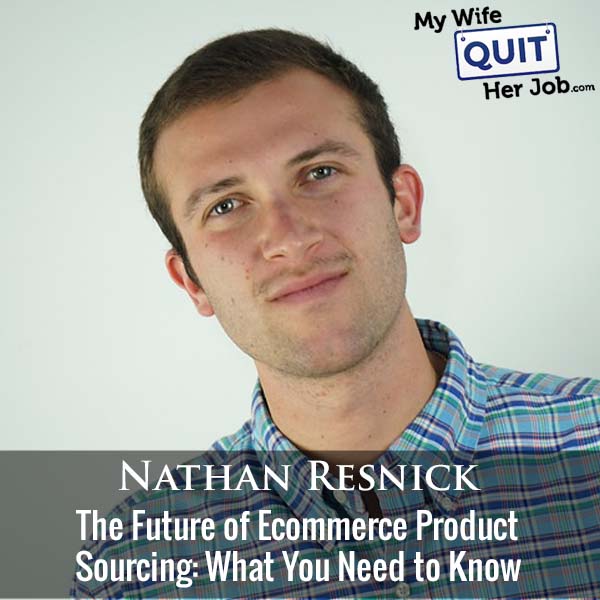
That is the read from Nathan Resnick, founder of Sourceify, who has been importing from China since 2010 and now sources across Vietnam, India, Pakistan, and Mexico for ecommerce clients. In this episode of the My Wife Quit Her Job Podcast, Nathan and I unpacked what has actually shifted in freight, pricing, factory relationships, and country-of-origin decisions.
Here is the current state of ecommerce product sourcing, mapped by category, country, and negotiation tactic.
Get My Free Mini Course On How To Start A Successful Ecommerce Store
If you are interested in starting an ecommerce business, I put together a comprehensive package of resources that will help you launch your own online store from complete scratch. Be sure to grab it before you leave!
Table of Contents
Key takeaways
- Freight rates have reset to roughly $4,000 per container, down from a $20,000+ pandemic peak.
- Chinese factory unit prices are up about 10% to 15% because of labor and materials, but demand has softened enough that prices should hold or drop in the next 2 to 3 years.
- China still wins for six and seven-figure ecommerce brands on most product categories thanks to small-to-mid factory density.
- Vietnam, India, and Pakistan work for large orders and specific niches (shoes, cutwork furniture, leather and sporting goods).
- Mexico plus Section 321 can save DTC brands 5 to 6 figures a year in tariffs by shipping under $800 per parcel from Mexico into the US.
- To renegotiate a price hike, quietly get a real quote from a second factory, then be transparent with your incumbent about the margin math.
What is the current state of ecommerce product sourcing?
Sourcing has normalized after two years of chaos. Container freight rates are back near pre-pandemic levels around $4,000, factory throughput has recovered, and demand-side softness means factories are less pushy on price than they were 18 months ago.
Nathan’s read on the aggregate market: unit prices in China rose roughly 10% to 15% over the past three years, driven by labor increases (workers rebalancing toward being closer to family post-COVID) and raw materials moving with inflation. Freight has resettled.
Looking forward, big-box retailers like Walmart are visibly over-inventoried on their public balance sheets, which cools order volume flowing back to factories. Nathan’s expectation is that unit prices should stay flat or trend down over the next two to three years, not up.
How much do freight rates cost per container in 2023?
A standard container has dropped from a pandemic peak of over $20,000 back to roughly $3,000 to $4,000. Nathan called out one container his team paid about $21,000 for during the peak, an amount that was almost unbelievable at the time.
The reset matters for landed-cost math. When ocean freight was $20,000 a box, moving production to Mexico looked obvious even at a 10% to 20% unit-cost premium. At $4,000 freight, the calculus tightens back up in China’s favor for most categories.
How do you negotiate an FBA factory price increase?
Quietly get a real quote from a second factory, then be honest with your incumbent about what you found and why the math no longer works. Nathan calls out that a substantial increase is anything above 10%, and once a rep gets 10% they will push for 15% and 20% on the next round.
The workflow he recommends:
- Never let the incumbent factory send your sample to another factory. That is a red flag and can burn your relationship. The Chinese factory community is small and everyone knows each other in a specialized product niche.
- Have your own team drive the sourcing. The person running it should sit in the US, not Asia, so information does not leak.
- Do proper diligence on the second factory. Business license records, audit reports, plus a spec-and-sample-based price request.
- Consider a real test run with the second factory. A 3,000 to 5,000 unit trial gives you a real quality signal and real leverage.
- Then go back to your incumbent, honestly. Tell them another factory quoted 10% less, you have already produced with them, and you cannot absorb the increase. Then invite them to keep the business.
Nathan’s default approach is transparency: the hackle culture in China can push you toward gamesmanship, but honest, direct conversations about margin usually get further than back-channel maneuvers.
Can better payment terms lower your unit cost?
Yes, offering a larger deposit upfront can lower your unit price by trading your cash-flow flexibility for a factory’s cash-flow relief. Standard terms are 30% down and 70% before shipment. If you can move to 50% down, some factories will cut 5% or more off unit price because you have unlocked their cash cycle.
Nathan’s caveat: this is a bad move in isolation because it consumes your working capital. It only makes sense when the unit-cost savings materially beats the cost of financing the difference elsewhere.
If you need to keep cash flexibility, US-based inventory finance solutions can bridge net-30 or net-60 exposure. That combination (bigger deposit to the factory plus inventory financing at home) can be net-positive.
China vs Vietnam vs Mexico: which country should you source from?
China still wins for most six and seven-figure ecommerce brands because it has the deepest bench of small-to-mid factories that will actually take your order. Nathan’s country-by-country breakdown:
| Country | Best for | Watch-outs |
|---|---|---|
| China | Technical products, most electronics, hardware, golf clubs, watches (Shenzhen hub), plus small-to-mid volume ecommerce runs | Geopolitical exposure, tariffs on many categories, hackle-culture negotiations |
| Vietnam | Shoes, apparel, furniture at Fortune 1000 scale (Nathan visited a 30,000-worker shoe factory producing for Clarks and Adidas) | Small-and-mid factories are thinner; large factories may ignore sub-100k-unit orders |
| India | Cutwork, craft-oriented furniture, sporting equipment | Quality control standards vary widely; no strong central directory |
| Pakistan | Leather goods, sporting equipment | Networking-led sourcing, few marketplace shortcuts |
| Mexico | Cut-and-sew apparel, bags and backpacks, leather, some electronics | Unit prices typically higher than China, but landed cost and lead times can win. Section 321 changes the math further |
Nathan’s expectation is that production continues to diversify away from China over the next several years, particularly for large orders and for brands worried about geopolitics. For a $500,000 to $5M ecommerce brand producing 10,000 to 100,000 units per run, China remains the default starting point.
What is Section 321 and how does it save DTC brands money?
Section 321 is a US customs rule that lets each parcel under $800 in declared value enter the country tariff-free. Brands like Taylor Guitars and other Fortune 1000 companies import product into Mexico, warehouse it there, and ship parcels one-by-one directly to US consumers to avoid paying import tariffs on those goods.
For a DTC ecommerce brand importing roughly $1M of product per year, avoiding tariffs on that flow can be a low-six-figure savings. The trade-off is running a Mexican fulfillment operation and rebalancing your unit-cost math (Mexican production tends to be pricier than China, but shorter lead times free up cash).
Fulfillment centers Nathan named in Mexico include Baja Fulfillment, IBEX, and Shipmonk (which recently opened a Mexican facility). You typically fly into San Diego and drive across the border to tour facilities. There is no clean directory of Mexican manufacturers, so networking through your fulfillment partner is the practical way to find factories.
How do you find factories outside of China?
Networking and import records, since there is no equivalent to Alibaba for Vietnam, India, Pakistan, or Mexico. Nathan’s two go-to methods:
- Reverse-engineer a comparable brand’s import records. Free tools like ImportYeti let you look up US-bound shipments by brand and see the exporter of record. Jungle Scout has a paid version. Import Genius and Panjiva also work but at higher price points.
- Hire a local sourcing agent. Especially outside China, most viable factory relationships come through an on-the-ground agent or someone with family ties in the country. For countries with a Chinese factory presence (Vietnam, Cambodia), some Chinese factories now run subsidiaries there to help clients dodge tariffs.
For Mexico specifically, start by talking to fulfillment centers you might use for Section 321 and ask if they know local factories. Then visit in person and try to see three to five facilities on the same trip.
Are US tariffs on China going away?
Nathan’s read is that tariffs remain politically stable in the near term. Neither party made a strong campaign issue of them in the midterms, and the strategic entanglement between the US and China (manufacturing capacity on one side, US debt held on the other) makes rapid reversal unlikely.
For sellers, the practical takeaway is to build a supply chain that assumes current tariff rates persist. If they drop it is upside. If they climb it is another push toward Vietnam, Mexico, and other lower-tariff origins.
Why is a downturn a good time to source and start a business?
Sourcing costs, ad costs, and hiring costs all soften in a downturn, which lowers the total cost of starting or scaling. Nathan and I both agreed on this: factories worried about demand negotiate better, CPMs drop when big brands pull back on ad spend, and talent gets cheaper.
Nathan’s aggregate call for the coming year is that factory prices should stay flat or come down because big-box retailers are visibly over-inventoried. That flows all the way down to the small and mid-sized factories most six and seven-figure ecommerce brands use.
The upside for founders: you get to lock in lower rates now and keep them as demand recovers.
Frequently asked questions
How much does a shipping container cost in 2023?
A standard container from China to the US costs about $3,000 to $4,000 in early 2023, down from a pandemic peak above $20,000. Rates have stabilized at roughly pre-pandemic levels.
How much have Chinese factory prices increased since 2020?
Roughly 10% to 15% on average, driven by labor cost increases and raw material inflation. Nathan expects prices to stay flat or trend down over the next two to three years as big-box retailer demand softens.
Is China still the best country to source ecommerce products from?
For most six and seven-figure ecommerce brands, yes. China has the deepest bench of small-to-mid factories willing to run 10,000 to 100,000 unit orders. For Fortune 1000-scale runs in shoes, apparel, or furniture, Vietnam is highly competitive.
What is Section 321?
Section 321 is a US customs rule allowing shipments valued under $800 per parcel to enter the US duty-free. DTC ecommerce brands can warehouse product in Mexico and fulfill parcels one-by-one to US consumers, avoiding tariffs on those goods entirely.
How do you find manufacturers in Mexico?
There is no strong central directory. The practical path is to talk to Mexican fulfillment centers (Baja Fulfillment, IBEX, Shipmonk), ask for local factory referrals, and then visit facilities in person. Fly into San Diego, drive across the border, and tour three to five plants on the same trip.
How do you find factories in Vietnam, India, or Pakistan?
Two paths: (1) look up a comparable brand’s US import records on ImportYeti (free) or Jungle Scout, then trace the exporter back to the factory; (2) hire a local sourcing agent or leverage a personal contact in-country. Alibaba and Global Sources have expanded coverage but remain thinner outside China.
Should you use import records like ImportYeti to find suppliers?
Yes. Import records are legitimate public data. Free tools like ImportYeti let you look up any US-bound shipment by brand name and see the exporter of record, which often is the factory. Larger tools like Panjiva and Import Genius parse the same data at a premium price.
How do you negotiate down a factory price increase?
Do not confront blindly. Quietly get a real quote from a second qualified factory, run a small test order (3,000 to 5,000 units) to verify quality, then go back to your incumbent with the honest margin math.
Ask them to match. Never let the incumbent factory ship your sample to the second factory.