
Podcast: Download (Duration: 58:25 — 67.1MB)
Selling supplements on Amazon now costs roughly $12,000 to launch a single product properly, broken down as $6,000 for a 1,000-unit production run, $3,000 for PPC, $3,000 for reviews and ranking, plus about $1,000 for external traffic. Mina Elias started his first product for around $1,000 in 2018, and he is direct that the same approach fails today.
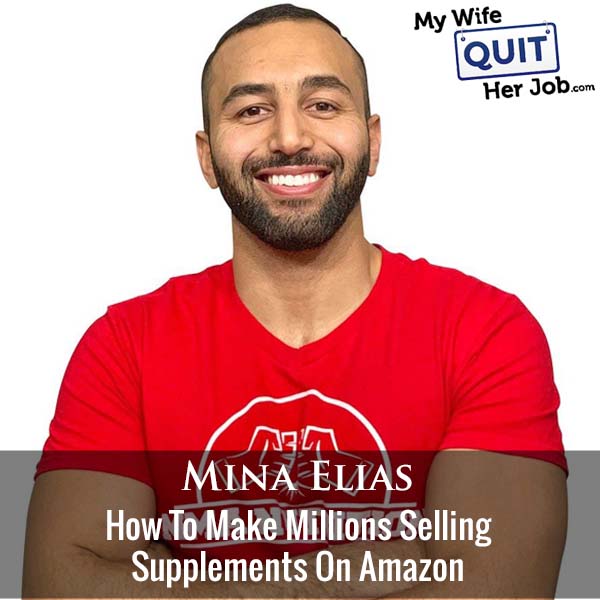
In this episode I sat down with Mina Elias, CEO of MMA Nutrition, an Amazon PPC agency owner and an MMA fighter. He built his electrolyte brand from a 100-unit first order after a conversation with his father in Egypt.
Below is the full picture: real supplement margins, how to find a manufacturer, the flavor mistake that cost him reorders, the inspection process, ingredient labeling risks, and his year inside Amazon Launchpad.
Get My Free Mini Course On How To Start A Successful Ecommerce Store
If you are interested in starting an ecommerce business, I put together a comprehensive package of resources that will help you launch your own online store from complete scratch. Be sure to grab it before you leave!
Table of Contents
Key takeaways
- Launching a supplement now costs about $12,000. The 2018 version of the same launch cost roughly $1,000.
- Supplement margins run 20% to 30%. A $25 product nets $6 to $10 after all fees and advertising.
- US manufacturing costs $5.50 per unit against $3 overseas. Shipping erases most of the gap.
- Flavor beats formula. Mina prioritized efficacy for years and it cost him reorders.
- Inspect every batch. A skipped inspection produced bags that burst in transit and a formula that tasted like fish.
- You have 60 to 90 days to prove a product. After that the sales history is locked in.
- Amazon Launchpad cost 5% of revenue for 12 months and delivered almost nothing beyond A+ content.
- The FDA regulates supplement labels and does not verify them. Buy from brands with third-party testing.
What it costs to launch a supplement on Amazon
Budget roughly $12,000 to $13,000 for a proper supplement launch today: about $6,000 for a 1,000-unit production run, $3,000 for PPC, $3,000 for reviews and ranking services, and around $1,000 for external traffic.
Mina’s 2018 launch cost about $1,000 all in. That covered $500 for the first 100 units, LLC filing fees, and basic graphics. A 200-unit reorder added another $1,000 before Amazon’s first payout arrived.
The change is that 100-unit test orders are no longer viable. Volume is now required from the start because the launch window itself demands aggressive spend.
His framing on this: there is no more testing on Amazon. You either go in hard or you stay out.
What supplement margins actually look like
A $25 supplement nets $6 to $10 in profit after all Amazon fees and advertising, putting margins in the 20% to 30% range.
The top of that range requires disciplined advertising. Aggressive PPC pushes you toward the $6 end.
This is comparable to most physical product categories, so supplements carry no special margin advantage despite the low raw ingredient cost.
The unit economics that got Mina started: a blend costing about $5 to produce was selling for $30 on Amazon. That spread is what convinced him a business existed.
US versus overseas supplement manufacturing costs
Mina’s product costs $5.50 per unit manufactured in the US against $3 overseas, and shipping adds roughly 50 cents per unit to the overseas figure.
His conclusion is that the remaining gap does not justify it for his volume, and he manufactures domestically 30 minutes from where he lives.
There is a regulatory floor worth knowing: supplements must be produced in an FDA-registered facility. Mixing ingredients in your kitchen and bagging them is not a legal shortcut, though a kitchen can be registered if you go through the process.
How to find a supplement manufacturer with no volume
Approach a raw ingredient supplier and ask them to pre-blend your formula, which sidesteps the minimum order quantities that contract manufacturers impose.
Standard supplement manufacturers quoted Mina a 3,000-unit minimum for a custom formula, roughly $12,000 he was unwilling to risk on an unproven product. Every one of them said the same thing.
His workaround: he asked one of his raw material suppliers to combine the five ingredients into a single blend instead of shipping them separately. The supplier agreed with no minimum and produced 100 units cheaply.
His long-term manufacturer came through a personal referral from someone at his gym. That relationship has repeatedly caught problems before they happened, which is worth more than any price quote.
Why flavor matters more than formula
Flavor outranks formula, because a supplement that tastes bad does not get consumed daily and therefore does not get reordered.
Mina prioritized efficacy for years on the assumption that customers cared most about what works. His own behavior contradicted it: the good-tasting supplements in his cabinet get taken every day, and the effective ones that taste bad get skipped.
The mistake in practice was over-constraining his manufacturer. He insisted on natural flavoring only, sucralose only, and a three-gram serving size with no filler room, which left no space to fix the taste.
The fix was flexibility. Reducing some ingredients and adding others that mellow bitter compounds produced a formula people actively praised, and the formula changes were minor.
There is also a right way to develop flavor. Send your base to a flavor house that formulates a matched flavoring, rather than ordering a raw flavoring and guessing at the percentage yourself.
How to inspect a supplement batch
Pull about 10 random units from across the boxes before they are sealed, then check each one visually, break the seal, confirm the scooper, mix it, and check color, smell, and taste.
If every sample passes, the batch is approved and packing continues. The cost of skipping this is permanent, because negative reviews from a bad batch never go away.
Mina learned this twice. His first 100 units shipped in bags he never drop-tested, and 50 to 60 of them burst in transit because a 12-inch drop was enough to open a seam.
The second time was subtler. His supplier’s wholesaler switched sodium bicarbonate from a mineral source to a marine source. Both are correctly labeled sodium bicarbonate, and the product started tasting like fish.
How to launch a supplement product on Amazon
Mina’s priority order is PPC first, ranking services second, external traffic third, all running simultaneously in the first 60 days.
PPC from day one. Spend at least $100 a day and accept it as a loss on paper. The spend buys keyword rankings, and rankings are what make later sales profitable.
Reviews from a personal list. He messages one contact a day from a list of about 100 people, reimbursing them for the purchase in exchange for a review. He states plainly that incentivizing reviews violates Amazon’s terms of service.
Search, find, buy after 20 to 30 reviews. Services like Rankbell have people search a mid-tier keyword around 5,000 monthly searches, find the product, and buy it, signaling relevance to the algorithm. This also sits outside Amazon’s terms.
External traffic to the Amazon listing. He recreates competitor ad structures from the Facebook Ad Library with 3D renders of his own product and sends the traffic straight to Amazon.
Why external traffic conversion rates do not hurt your listing
Amazon distinguishes external traffic from internal traffic and does not penalize a low conversion rate on the external side. It has stated it rewards external traffic.
The penalty applies to internal traffic. Shoppers arriving through Amazon search who fail to convert do signal a weak listing.
Mina targets a 1x return on ad spend for launch traffic and often gets less, which he treats as an acceptable investment. The goal is conversions and demand signals rather than immediate profit.
He runs Amazon Attribution alongside Amazon Associates affiliate links for double attribution, and optimizes campaigns on click-through rate before worrying about return.
The effect can carry a launch. On a women’s brand where influencers drove 20 to 50 units a day in the first weeks, Amazon maintained the ranking with almost no PPC.
The 60 to 90 day window on Amazon
A new product has 60 to 90 days to establish its sales history, and that history determines its trajectory permanently.
Mina’s Hydrolyte Energizer is his own counterexample. He considers it the best-tasting and most effective product he has made, and he launched it without aggressive spend on the assumption that quality would carry it.
It barely makes a profit today, and nothing he has tried since has fixed it.
Was Amazon Launchpad worth it?
Launchpad cost Mina 5% of revenue on every sale for 12 months and delivered only early access to enhanced brand content.
The program pitches itself as support for innovative new products, with promised benefits including deals, placement on the Launchpad storefront, founder features, email blasts, and free lightning deals.
What actually happened: his rep’s response time went from 24 hours to five days immediately after signup, then stopped entirely. Months later the rep resurfaced to say he had transferred teams and assumed a replacement had been assigned. None ever was.
He applied for deals every week and never received one. He applied for features repeatedly and never got one. He searched the Launchpad storefront for his own brand name and every related keyword, page by page to the last page, and never found his product.
Getting in required exaggeration. Rejected on his first application, he reapplied with an invented story about a chemist’s breakthrough tested in college, answered the interview questions the way he knew they wanted, and was accepted.
His retrospective assessment is that he was still in a silver bullet mentality and believed enhanced brand content alone would transform his sales. It did not.
Supplement labeling regulations and what they miss
The FDA regulates supplement labeling and does not verify that labels are accurate, which makes ingredient claims largely unpoliced.
Mina has direct knowledge of brands asking manufacturers to include ingredients not listed, or to list ingredients not included. Elderberry claims during its peak popularity were a common example.
The specific compound he flags is acesulfame potassium, a carcinogen that dramatically enhances flavor. Its presence explains supplements that taste unusually good, and it is frequently left off labels.
Mike Matthews of Legion Athletics documented the failure mode publicly: he told a manufacturer in advance he would third-party test the finished product, tested it, and found much of the stated formula missing.
The consumer guidance that follows: buy from retailers with enforced standards. Costco, Whole Foods, and Erewhon require third-party testing and documentation before stocking a product.
How to handle supply chain shortages in supplements
Keep a backup packaging format ready and formulate with blends rather than single ingredients, so a shortage does not stop production.
The container shortage hit Mina during a national supply crunch when no supplier had stock. He survived on 1,000 leftover bags from before he switched to containers.
Switching formats on Amazon is mechanical. Duplicate the ASIN with a new SKU, keep the new SKU inactive, ship bags into it, and flip the switch when the container SKU drops to about 10 units while swapping the listing images.
The ingredient version of the same problem was taurine during COVID. His fix was replacing the single taurine listing with an amino acid blend containing leucine, isoleucine, valine, glutamine, and taurine, so a shortage in any one can be absorbed by the others.
Taurine was there because electrolyte absorption requires either sugar or amino acids. The blend preserves that function while removing the single point of failure.
What it takes to compete in supplements now
Genuine differentiation is the requirement, because clean ingredients and natural formulations are claims every brand already makes.
Amazon remains the right platform despite the difficulty. The alternative is direct-to-consumer, where you pay for every visitor, and Amazon’s traffic arrives with high purchase intent already.
Mina’s revenue split is roughly 90% Amazon and 10% direct-to-consumer. Pricing is identical on both, since Amazon penalizes lower prices elsewhere, and subscribe-and-save at 20% off is the permitted way around it.
That discount works. His direct-to-consumer subscribe-and-save rate runs about 30%, helped by the cancel-anytime framing.
Frequently asked questions
How much does it cost to launch a supplement on Amazon?
About $12,000 to $13,000 today: roughly $6,000 for a 1,000-unit production run, $3,000 for PPC, $3,000 for reviews and ranking, and around $1,000 for external traffic. The same launch cost about $1,000 in 2018, and small test orders no longer work.
What are the profit margins on supplements?
Between 20% and 30%. A $25 supplement nets $6 to $10 after all Amazon fees and advertising, with the top of the range requiring efficient ad spend. That is comparable to most physical product categories.
Should you manufacture supplements in the US or overseas?
Mina pays $5.50 per unit domestically against $3 overseas, and shipping adds about 50 cents to the overseas cost. He considers the remaining gap too small to justify. Supplements must be produced in an FDA-registered facility either way.
How do you find a supplement manufacturer with a small order?
Ask a raw ingredient supplier to pre-blend your formula rather than approaching contract manufacturers, who typically require 3,000-unit minimums for custom formulas. Mina got his first 100 units this way after every manufacturer turned him down.
What matters more in a supplement, flavor or formula?
Flavor. A supplement that tastes bad gets skipped and never reordered, regardless of how well it works. Send your base to a flavor house rather than ordering raw flavoring, and stay flexible on formula so the flavor can be fixed.
Is Amazon Launchpad worth it?
Based on Mina’s 12 months in the program, no. It cost 5% of revenue on every sale and delivered only early access to enhanced brand content. His rep stopped responding, deal and feature applications were never approved, and his product never appeared on the Launchpad storefront.
Are supplement labels regulated?
The FDA regulates how supplements must be labeled and does not verify that labels are accurate. Undisclosed ingredients and missing stated ingredients both occur. Buying through retailers like Costco, Whole Foods, or Erewhon adds a third-party testing requirement.