
Podcast: Download (Duration: 52:48 — 60.7MB)
The most underused Amazon growth tactics are Amazon Posts (free, and capable of generating 20,000 to 200,000 impressions per image), nano and micro influencers at $50 to $400 per campaign, and packaging upgrades that raise perceived value enough to triple your price. Norm Farrar took a $16 knife from a $49 listing to $224 purely by changing the packaging and photography.
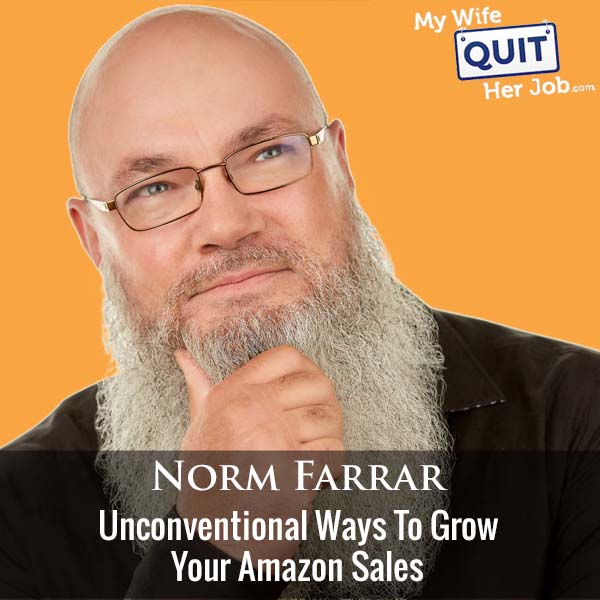
In this episode I sat down with Norm Farrar, a serial entrepreneur with 25+ years in product sourcing who has done over $100 million in sales between his own brands and his clients, to cover the tactics most Amazon sellers are ignoring while they fight over PPC bids.
Below is the full breakdown: the three-tier Amazon pricing structure and where to position, how packaging creates perceived value, the Amazon Posts strategy that lifts conversion rate, influencer sourcing and pricing by tier, brand ambassador programs, and the Google Business Profile play that most sellers have never set up.
Get My Free Mini Course On How To Start A Successful Ecommerce Store
If you are interested in starting an ecommerce business, I put together a comprehensive package of resources that will help you launch your own online store from complete scratch. Be sure to grab it before you leave!
Table of Contents
Key takeaways
- Packaging moved a $16 knife from $49 to $224. Same product, better box, better photography, wood instead of plastic for $3 more.
- Amazon has three price tiers. The bottom tier is where Chinese direct sellers fight for velocity with no profit. Do not compete there.
- Amazon Posts are free and drive conversion rate. Post 3-5 times a day for a month and watch conversion climb.
- Nano influencers cost $50-$400. Under 10K followers with real engagement beats a celebrity with none.
- Authority equals trust equals sales. A real website with content and Google presence makes your Amazon listing convert better.
- Brand ambassadors generate free user content at scale. One seller collected 6,000 user-generated images in a year, worth $300K-$600K.
- Google Business Profile is free and takes 3 scrolls of mobile real estate. Point the anchor URL at your Amazon store.
The 3 price tiers on Amazon and where you should position
Amazon listings cluster into three price tiers, and the bottom tier is a trap. In a typical category the tiers run roughly $19.99 to $49, then $49 to $124, then $124 up to $400. The bottom tier is dominated by Chinese sellers selling direct at no profit to manufacture sales velocity.
Most new sellers instinctively compete in that bottom tier because it looks like the easiest entry point. It is the hardest place to make money, because your competitors there are deliberately running at zero margin.
The middle and top tiers are where perceived value does the work. That is where packaging, photography, and brand presence justify a price that actually leaves you profit.
How packaging took a $16 knife from $49 to $224
Packaging took a $16 Damascus knife from a $49 listing to $224 in two steps, with no change to the underlying product cost beyond $3.
The original listing had the knife in a hard plastic clamshell with a cardboard insert, priced at $49. Step one was a proper package design and revamped listing photography, which moved the price to a range of $79 to $124 depending on season.
Step two was going back to the same manufacturer and asking what wood packaging would cost. The answer was $3 more per unit. With a wood presentation box, a designed inner and outer package, and a hammered finish instead of layered steel (same manufacturing cost), the same $16 knife listed at $224.
How to find your packaging differentiation on Amazon
Find your packaging differentiation by searching your main keyword, looking at page one, and cataloging what everyone else is doing visually. If every knife photo runs left to right on white, your opportunity is orientation or color. If everything is in a plastic clamshell, your opportunity is a box.
The same analysis applies to categories that seem impossible to differentiate. For bully sticks, a commodity dog chew, the differentiation was a fully animated package design carried consistently onto the website, replacing the iPhone photos and rippled plastic ziplock bags competitors were using.
Hire a real graphic designer and know when to use 3D renderings versus photography. Rippled thin plastic photographs badly no matter how good your camera is.
Why authority on your own website makes your Amazon listing convert
Authority equals trust equals sales. Buyers check your brand before purchasing anything they care about, and if your website looks legitimate with real content and Google presence, your Amazon conversion rate improves even though the sale happens on Amazon.
Most Amazon sellers think of themselves as brands when they are actually micro brands. Nobody recognizes the name yet, so the buyer does a quick check: search the brand, look at the website, look for content, look at whether the images across Google are consistent and professional.
If that check comes back clean, they buy. If they find nothing or find a thin one-page site, they scroll back to a competitor.
What are Amazon Posts and how do you use them?
Amazon Posts is a free social-feed feature at post.amazon.com available to any seller with Brand Registry. You upload images with captions, and they appear in feeds attached to your products and category. The impressions are free and they improve your conversion rate.
The strategy that works: post three to five times a day for a month. You will not see a direct sales lift, and you will see engagement and click-throughs accumulate, and then your conversion rate climb from something like 23% to 27% or 30%.
The reason it works is buried in the click path. Amazon deliberately made buying from a Post take four or five clicks: click the logo or image, click through the carousel, click the summary, click through to the product listing, then buy. Each click sheds roughly half the traffic.
That means anyone who reaches your product listing from a Post is extremely qualified. They clicked four times to get there. Conversion on that traffic is exceptional, and better conversion means Amazon rewards the listing with better organic placement and lower PPC costs.
What kind of images perform best on Amazon Posts?
Candid, unpolished images consistently outperform professional product photography on Amazon Posts. Norm’s single best-performing Post, which pulled 200,000 impressions in one week, was a photo of a woman holding a knife between her fingers with a slightly unhinged expression.
There was no text overlay and no styling. It was just an image with a caption, and it dramatically outperformed the polished shots.
The practical source for this content: put a tag request on your product insert. Ask buyers to tag you, no contest required. Then use an app like Repost to pull tagged images from Instagram into your Posts feed.
Sending free product to chefs and culinary students in exchange for tagged photos built an ongoing content pipeline for the knife brand.
Influencer pricing by tier: nano, micro, and celebrity
Influencer pricing runs roughly $50 to $400 for nano influencers (under 10,000 followers) and micro influencers (10,000 to 100,000 followers), while celebrity influencers command far more for brand awareness with much weaker engagement.
Nano and micro influencers work because their audiences actually trust them. Someone with 5,000 engaged followers converts better per dollar than a celebrity account where the relationship is purely parasocial.
TikTok is currently the best value for most product categories, with lower costs and higher organic reach than Instagram. YouTube still works well for products that benefit from demonstration. The right channel depends on your demographic and product, and TikTok is the default starting point.
How to spot a fake influencer before you pay them
Spot a fake influencer by reading the comments on their recent posts. If the engagement is all one- and two-word replies (“awesome,” “nice picture”) and strings of emoji with no substantive conversation, those are bots.
Check what they have actually posted, what the engagement looked like on each post, and whether the comment quality matches the follower count. A genuine 10,000-follower account has real conversations in the comments. A purchased account has emoji.
This is currently one of the biggest scams in the influencer space, and the check takes about two minutes per account.
How to approach an influencer without killing the deal
Approach an influencer by building a relationship first and leading with genuine interest in what they do, rather than pitching your product and your company. The most common failure mode is the entrepreneur’s ego arriving before the offer.
The sequence that works: find someone whose personality matches your brand, comment genuinely on their content over time, then DM them. Talk about what you like about their work before you talk about your product.
When you do negotiate, get a written agreement covering IP rights and usage: who owns the content, which channels you can repost it to, and for how long. Skipping that step causes real problems later.
Structure the compensation as commission or affiliate where possible. With Amazon’s Brand Referral Bonus paying you back a percentage on external traffic, offering an influencer 10% to 15% of sales makes them far more motivated than a flat fee.
How to build a brand ambassador program from repeat buyers
Build a brand ambassador program by going back to your repeat buyers, engaging them directly, and converting your happiest customers into content creators. They already love the product, which makes them the highest-hit-rate influencer pool you have.
The numbers from one seller running this well: 3,000 user-generated images collected between January and April, roughly 6,000 by year end. At $50 to $100 per image set from a paid influencer, that is $300,000 to $600,000 of content generated for free.
The response speed is the other benefit. When a false negative review hit one of his products, he asked his ambassador network for video responses and had 30 videos by the end of the weekend, deployable across social, Amazon Posts, and the listing.
Outreach rates by tier: cold influencer outreach converts under 10%. Outreach to existing happy customers converts closer to 25%. Full brand ambassadors (paid in product for ongoing content commitments) require contacting roughly 50 people to land one.
How to launch a product on Amazon without paying for reviews
Launch a product on Amazon by building your Posts feed and store followers before launch, running a modest discount to that warm audience, and layering PPC on top rather than relying on deep discounts to strangers.
The sequence: build out your Amazon Posts campaign to accumulate followers. Set up your Amazon storefront with a follow prompt. Run a small Facebook ad driving traffic to the storefront rather than the listing, with the launch discount as the hook.
Because that audience already follows the brand, a 10% discount works where a cold audience would need 50% or 70% off. You are paying for a discount rather than paying for rebates, which Amazon is fine with.
Run auto PPC campaigns for a few weeks first to learn which keywords convert, make adjustments, then scale manual spend on the winners. Do not dump money into PPC on day one.
The email capture trick that keeps Amazon happy
Capture emails from Amazon buyers by offering a free product on your website that is NOT listed on Amazon. Offering a PDF gets ignored. Offering a physical item they cannot get on Amazon converts, and it does not compete with your own listings.
The mechanics: a package insert drives buyers to your website, where they get a free item (a paring knife with the knife brand, a different soap scent with the soap brand) in exchange for their email. Because that specific item is not on Amazon, there is no reason for them to bounce back to Amazon to get it.
The long-term play is subscription. Amazon’s Subscribe and Save locks your price, and Amazon sends warnings if you adjust pricing on enrolled products. Running subscriptions on your own site gives you pricing control and recurring revenue.
Why every Amazon seller should set up a Google Business Profile
Google Business Profile (formerly Google My Business) is free, takes minutes to set up, and occupies roughly three scrolls of mobile screen real estate on a branded search. Most Amazon sellers have never created one.
What it gives you: immediate indexing of your brand, an image gallery, and an anchor URL you control. Point that anchor URL at your Amazon store, your Walmart listing, or your own site. Every time you use that anchor in a social post, podcast description, or piece of content, you are building external links that Amazon rewards.
You can also load FAQs, testimonials, categories, and a full brand description. The question-and-answer section maps directly to Google’s answer boxes, so structuring your blog content to match those question formats (short answer first, then detail) helps you capture that space.
One furniture store facing bankruptcy during COVID built out their Google Business Profile with consistent content and reached over 2 million visitors in a month, which the case study credits with saving the business.
Frequently asked questions
What are Amazon Posts and are they worth using?
Amazon Posts is a free social feed feature at post.amazon.com available to sellers with Brand Registry. It is worth using because the click path to purchase is four to five clicks deep, so anyone who reaches your listing from a Post is highly qualified. Posting three to five times daily for a month typically lifts conversion rate several points.
How much do Amazon influencers cost?
Nano influencers (under 10,000 followers) and micro influencers (10,000 to 100,000) typically cost $50 to $400 per campaign. TikTok is currently the best value channel for most product categories. Celebrity influencers cost far more and deliver brand awareness with much weaker engagement per dollar.
How do you increase perceived value on an Amazon listing?
Upgrade the packaging and photography. A $16 Damascus knife went from a $49 listing in a plastic clamshell to $224 by adding designed inner and outer packaging, a wood presentation box costing $3 extra, and professional listing photography. The product itself did not change meaningfully.
How do you spot a fake influencer?
Read the comments on their recent posts. Engagement that is all one- or two-word replies (“awesome,” “nice picture”) and emoji strings, with no substantive conversation, indicates bot followers. A genuine account with 10,000 followers has real discussions in the comments.
How do you get email addresses from Amazon customers?
Use a package insert to drive buyers to your website, where you offer a free physical product that is not listed on Amazon in exchange for their email. A PDF will not convert. A free paring knife or a different soap scent will, and because the item is not on Amazon, they have no reason to bounce back.
What is Google Business Profile and why should Amazon sellers use it?
Google Business Profile is Google’s free business listing product. For Amazon sellers it provides immediate brand indexing, roughly three scrolls of mobile search real estate, an image gallery, and an anchor URL you can point at your Amazon store. Using that anchor across your content builds the external links Amazon rewards.
Should you compete on price on Amazon?
No. The bottom price tier on Amazon is dominated by sellers running at zero margin to manufacture sales velocity, so competing there means competing against people who are deliberately not making money. Position in the middle or top tier and use packaging and brand presence to justify the price.