
Podcast: Download (Duration: 49:37 — 57.1MB)
High ticket dropshipping means selling expensive products, often several thousand dollars each, from established domestic brands that ship straight to your customer. You never buy inventory, and your job is marketing, sales, and customer service.
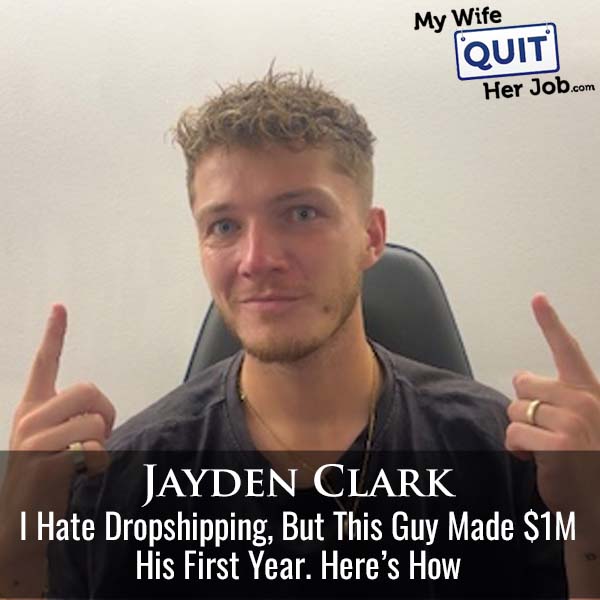
Jayden Clark used this model to build Woodlark Garden Luxury, a store selling pergolas, gazebos, and outdoor kitchens. It did $1 million in revenue in its first year, and he later sold it for $700,000.
I am usually not a fan of dropshipping, even though how to start a dropshipping store is probably the number one question I get. In this episode, Jayden walks me through his niche research, margins, supplier outreach, ad strategy, and returns, and by the end we agreed on pretty much everything.
Get My Free Mini Course On How To Start A Successful Ecommerce Store
If you are interested in starting an ecommerce business, I put together a comprehensive package of resources that will help you launch your own online store from complete scratch. Be sure to grab it before you leave!
Table of Contents
Key takeaways
- Work with established domestic brands. Jayden’s suppliers have often been in market for 5 to 20 years, so quality, returns, and warranties are handled properly.
- Pick the niche with data. Jayden launched a garden store for its high order values and cross-sell potential, even though he did not own a lawnmower.
- Expect about 25% gross margin. His store averaged 25% to 30% gross and roughly 13% to 17% net.
- Bid on high-intent keywords. He aims to get about 80% of his paid traffic from specific commercial searches, and he targets 10x to 20x return on ad spend.
- Talk to your customers. Between 20% and 50% of purchases involve at least one customer touch point, and leads convert far better than cold clicks.
- Returns are rare. High ticket return rates run 1% to 2%, so a generous 60-day policy wins more sales than it costs.
What is high ticket dropshipping?
High ticket dropshipping is selling expensive products from established brands in your own country, with the brand shipping each order directly to the customer. Jayden calls his version domestic branded high ticket dropshipping.
The suppliers are companies that have often been around for 5, 10, 15, or 20 years. They have a reputation to protect, real quality control, proper warranties, and a working returns process.
Your role in the value chain is advertising, marketing, and customer acquisition. You put no capital into inventory, and your customers still get a quality experience.
| Traditional dropshipping | High ticket dropshipping | |
|---|---|---|
| Product source | AliExpress or Alibaba, often trend-chasing | Established brands in the country you sell in |
| Quality control | Little to none | Backed by the brand’s reputation |
| Returns and warranties | Difficult, with frequent chargebacks | Handled properly through the brand |
| How customers buy | Impulse, driven by urgency and scarcity | Considered purchase with a long sales cycle |
| Orders you need | High volume of cheap orders | 10 to 30 transactions a month can be enough |
I have been critical of the traditional model for years, and I explain why in Is Dropshipping Dead? Jayden’s version fixes most of my complaints because the customer gets a real product from a real brand.
Why Jayden Clark chose high ticket dropshipping over DTC
Jayden chose high ticket dropshipping because it required no inventory investment and could run alongside his full-time job. He had spent about eight years in a corporate ecommerce role at one of the biggest companies in the UK, part of Comcast.
On a holiday with his now wife, he realized he could not keep living the whole year for two weeks off. He decided to build a business, though he had no idea yet what the vehicle would be.
He first looked at launching his own direct-to-consumer brand and was put off by the capital. He would have to pick a factory without knowing what good looked like, wait three to five months for stock, pay for warehousing, and pour every profit into the next, bigger order.
Jayden is risk averse, so quitting his job was never an option. A $30 product would mean managing a huge number of transactions on top of a full-time job.
He had already ruled out regular dropshipping because he did not want chargebacks, bad reviews, and customers complaining about quality. Domestic branded high ticket dropshipping was the first model that solved all of it, and he went all in.
How to choose a high ticket dropshipping niche using data
You choose a high ticket dropshipping niche using data by looking for four things: a strong average order value, customers who buy several products, a market dominated by physical retail, and brands that lag behind online.
Jayden picked pergolas, gazebos, and outdoor kitchens purely on that data, and he admits he was “a complete fraud” about it. His About Us page talked about his passion for creating beautiful outdoor spaces, while his own garden was a disgrace and he did not even own a lawnmower.
One of his friends took a photo of the garden and put it side by side with the About Us page. “Let’s hope no one ever sees this,” the friend told him.
Here is what made pergolas, gazebos, and outdoor kitchens stand out in the data:
- The average order value is strong. Individual items sell for thousands of dollars.
- One customer buys several products. Someone buying a pergola wants the full garden setup, including a fire pit, outdoor kitchen, and barbecue, so one acquisition cost can bring several orders.
- Physical retail dominates the market. Shoppers traditionally bought these products at garden centers and nurseries.
- Brands lag behind online. Manufacturers that made great aluminum pergolas for years sold through trade shows and garden designers, and COVID suddenly pushed them toward ecommerce.
That gap exists in most high ticket niches. Making a great pergola is a very different skill from being good at SEO, paid advertising, and conversion rate optimization, and in the garden niche the gap was wide enough for quick wins.
Jayden also chose a niche built around one customer profile. His buyers want to make the neighbors jealous, give the kids a place to hang out, or see more of their grandkids, so they need many different high ticket products.
High ticket dropshipping margins and profit per sale
A good high ticket dropshipping store should aim for about 25% gross margin, which usually leaves around 15% net after advertising. Jayden’s store averaged 25% to 30% gross and roughly 13% to 17% net, depending on performance.
Here is how Jayden breaks down a typical $2,500 sale:
| Line item | Amount on a $2,500 sale |
|---|---|
| Gross margin | About $500 to $750 |
| Average paid advertising cost per acquisition | About $200 to $300 |
| Net margin | Roughly 10% to 15% |
Some suppliers offered Jayden 40% margins, and he says those margins tend to level out. Minimum advertised price (MAP) policies stop retailers from discounting, so those chasing an edge spend the extra margin on gifts, installation, or more aggressive marketing.
Jayden says a new store is the least profitable it will ever be. You might sell $40K worth of product and break even, then sell $70K at a 10% margin a year later and $100K at 15% the year after.
Margins improve because suppliers move you up as you sell more, your paid advertising matures, and your SEO traffic grows. The more SEO traffic you earn, the lower your average acquisition cost.
How to find high ticket dropshipping suppliers
You find high ticket dropshipping suppliers by building a long list of domestic manufacturers and expecting most of them to say no. Jayden assumes a new business will win over maybe 10% to 20% of the suppliers it approaches.
That math is why he builds niches around a customer profile with many product categories. If you only sell saunas, there might be 30 good US manufacturers that sell through retailers, and you might sign six of them or only one or two.
If you target the person who loves at-home recovery, you can also sell cold plunges, compression gear, and massage equipment. Each category adds another 20 or 30 eligible suppliers, and from a list of 100 you should land at least 5 to 10, which is enough to launch.
It gets easier once you have skin in the game. When a customer calls about one sauna and mentions another brand, you can call that brand and say you have a live customer looking at their product.
Many of these brands already drop ship for retailers like Wayfair or Lowe’s, because moving huge, expensive products from warehouse to warehouse is inefficient.
The hard part is proving you are a serious player they can trust with their customers. Suppliers worry that you will quit six months in and leave them with an orphaned warranty claim, or that you will discount against their policy and annoy their other retailers.
You do not need prior experience to get approved. Present yourself as trustworthy and reputable, expect seven out of ten suppliers to say no, and know that some brands will only work with you after you have been running for three to six months.
When high ticket suppliers require a showroom
High ticket suppliers usually require a showroom in niches where buyers want to touch and test the product first, and some use the requirement as an easy filter for fly-by-night sellers. Jayden knows about a hundred business owners running this model in the US, and plenty of their niches have no showroom requirement.
Avoid products people want to touch and test before buying. E-bikes were popular for high ticket dropshipping about five years ago, and buyers want to test drive them, while a backyard shed is something people are comfortable judging online.
Some suppliers say a showroom is mandatory and then drop the requirement after you have been selling well for a year. To them, a physical location signals a real business.
How to vet high ticket products before you sell them
Trade shows are the best way to vet high ticket products, and most of these industries hold big ones at least once a quarter. You get to touch the products, and suppliers take you far more seriously when you meet them face to face.
Jayden did not attend his first trade show until four or five months after launch. Before that, he only worked with manufacturers he could verify had been in market for years, had sold to plenty of customers, and had positive reviews.
A brand that has only sold a product for one year could have a horrendous failure rate after three. A brand with 5, 7, or 10 years of good public reviews has a customer experience that has been stress tested.
Google Ads for high ticket dropshipping: targeting buyer intent
The best Google Ads strategy for high ticket dropshipping is bidding on specific commercial keywords that signal a buyer is close to purchasing. Jayden uses keywords as a proxy for intent, and he skips both Performance Max and Meta ads entirely.
Selling high ticket gives you one big advantage. Cost per click does not scale with product price, and Jayden has seen a $200 standing desk with higher CPCs than a $10,000 piece of equipment.
The disadvantage is that nobody impulse buys a $5,000 pergola. Urgency and scarcity tactics do not work on a considered purchase with a long sales cycle.
Generic terms like “pergola,” “pergola for sale,” “aluminum pergola,” and “pergola designs” have abundant traffic, and Google will happily push it to you in Shopping and Performance Max campaigns. A new store without strong remarketing and email flows has little chance of turning that traffic into profit.
Jayden flips it, aiming for about 80% of his traffic to come from hyper-targeted commercial searches like “12 foot by 8 foot aluminum pergola” or “electric roof aluminum pergola.” For saunas, that might be an infrared sauna for two people, one that fits a low ceiling, or a heavily insulated model for cold outdoor use.
Each search has little volume, so you need a lot of them. A store might have 50 to 100 products with 5 to 20 commercial keyword variants each, and Jayden compares it to “moneyballing” small pieces together.
The return on ad spend math demands it. At a 25% gross margin, you need at least a 4 to 1 return just to break even, and Jayden targets 10x, 15x, or even 20x.
How quality score lowers high ticket ad costs
Quality score lets Jayden win more traffic without bidding more, because Google’s ad auction blends your bid with your landing page relevance. When a keyword cluster gets decent traffic or converts a few times, he works that exact phrase into the product page.
A page built around “12 foot by 8 foot aluminum electric roof pergola” earns a better quality score than a competitor’s page built around a generic product name. Specific keywords plus relevant landing pages give him a bigger share of the traffic at the same bid.
Why high ticket dropshipping requires hands-on customer service
High ticket dropshipping requires hands-on customer service because Jayden estimates 20% to 50% of purchases involve at least one customer touch point. That might be an email, a WhatsApp message, live chat, or a phone call.
If you want to sit behind a computer and never talk to anyone, Jayden says this model is probably not for you. People spending thousands of dollars want to talk it through first.
Jayden handled customer service himself for at least the first year. On his newer stores, he still does it for three to six months before hiring, because those conversations reveal what customers ask, what worries them, and what stops them from buying.
Customers mostly want to feel that you have their question covered. If a buyer asks whether they can trim a pergola to fit under a roof overhang, the right answer is to say you will check with the manufacturer about the warranty and design impact and get back to them that afternoon.
Why leads and phone calls boost high ticket conversions
Leads matter so much in high ticket dropshipping because customers who contact you convert at a dramatically higher rate than those who only click through to a product page. Jayden puts phone, WhatsApp, email, and live chat on every page and actively encourages people to reach out.
He even runs click-to-call ads and tracks leads as a conversion action. Moving a customer into his own sales pipeline is cheaper and easier than relying on long remarketing flows.
Lead data also helps him judge slow campaigns. After 60 days, a campaign might look like it is breaking even while sales are still in the cycle, so strong lead numbers earn that keyword or ad group more time.
How to win high ticket sales when every dealer charges the same price
You win high ticket sales on traffic share, customer experience, and trust, because MAP pricing means every retailer charges about the same. Jayden actually prefers suppliers that enforce MAP well.
A high ticket buyer typically has double-digit touch points before purchasing. The more of those happen on your site, in your emails, and with your team, the better your chance of getting the sale.
Your offer can also stand out through a strong returns policy and an aftercare promise that you will help if something goes wrong. Jayden’s favorite trust builder is video reviews.
His team asks happy customers to WhatsApp a short video of themselves standing next to their new pergola. Jayden says each one is worth about 100 written reviews, and the clips make great retargeting ads and email content.
How to handle returns on high ticket dropshipping products
Jayden handles returns with a generous 60-day policy that covers return shipping and charges no restocking fee, because return rates on high ticket products only run about 1% to 2%. People think long and hard before spending this much, so returns are rare.
Each return still costs him about $200 to $500. He refunds the full purchase price and eats the payment processing fees, the acquisition cost, and the return shipping.
That risk reversal wins him more sales than the occasional refund costs. Returned products go back to the manufacturer, so he is not storing pergolas in his backyard.
Occasionally Jayden keeps a smaller returned item, like a fire pit or fire table. He films content with it and sells it as an unboxed unit at around 40% off, and the original photos also make his product page more unique to Google.
How to cross-sell high ticket products
The most effective way to cross-sell high ticket products is through conversations with your sales team. Jayden’s store averaged about 1.4 products per customer, which matters because people rarely come back to upgrade products built to last.
His team is trained to ask about the whole project when someone calls about a pergola. They ask whether there is a new patio, whether it will be a seating or dining area, and whether an outdoor kitchen, barbecue, or fire pit is planned.
The customer feels like the team cares about the finished space. The team also uncovers natural follow-ups, like sending links to barbecues in a matching aluminum color or fire pits sized to fit under the pergola.
Jayden also cross-sells through on-site bundles, remarketing, and post-purchase emails. The conversations still produce the best results.
Email marketing for high ticket products
Email marketing works for high ticket products through seasonal add-ons and authority content. Someone who buys a pergola in summer may want patio heaters when winter arrives.
Before the purchase, helpful emails build trust. Topics include how to measure your patio for the right size, what to ask your landscaper about the base, and how to clean the pergola after winter.
You learn these topics from customer calls and supplier conversations. One member of Jayden’s community selling gazebos in the US got asked how to anchor one on grass, so she called a local landscaping firm, got the answer, and turned it into content for her blog and email list.
Who handles installation for high ticket dropshipping orders
Customers arrange their own installation with Jayden’s high ticket dropshipping model. His team acts as an advisor, leaning on subcontractors and manufacturers for answers so it can guide the buyer.
Taking on installation would turn the store into a different business. Manufacturers have often seen every situation before and know how other customers solved it.
High ticket dropshipping hiring mistakes that burned out Jayden Clark
Jayden burned out on his first store because of three hiring mistakes: he held on to everything, trained new hires badly, and then abdicated. He hired four different people over time, none of them worked out, and he says all of it was 100% his fault.
He was checking ads, placing orders, and calling customers himself, and by the end, selling the store was a lifeline.
Being risk averse, Jayden had almost two years of his salary sitting in the business bank account before he quit his job. His wife later joined him after a corporate burnout of her own, and the two of them ran the store alone.
Today he runs two other stores, each with a full-time employee who manages sales and customer service. Fractional team members help too, like someone who spends two hours a day placing orders.
He now works alongside every new hire for a long time, listens to all their calls, and gives feedback. A previous high ticket guest on my show paid his salespeople commission, and Jayden says 1% to 2% on a $3,000 product is reasonable, though good training can get buy-in without it.
Who high ticket dropshipping is right for
High ticket dropshipping is right for people who are comfortable with delayed gratification, real relationships, and old-fashioned business work. Jayden says it is the polar opposite of traditional dropshipping, where someone imports AliExpress products, runs ads, and ignores the customer experience.
The model is fully remote. Jayden started his store in the UK and now lives in Barcelona, and he ran it alongside his full-time job for a year because 10 to 30 transactions a month can be enough to do okay.
There is almost no upfront cost for inventory, because you buy each product with your customer’s money. You only need some money for advertising early on.
Realistic high ticket dropshipping timeline
A realistic high ticket dropshipping timeline is about a month to build the store, two more weeks to the first sale, and six to nine months before the rewards show. Jayden’s first store grew faster, but here is the typical path he describes:
- Month 1: Build the store, then wait about two weeks for your first sale.
- First quarter: You make a handful of sales and may break even.
- Months 6 to 9: The rewards start to show.
- After that: Growth can hockey stick if you keep putting in the work.
Many people in Jayden’s community knew nothing about Google Ads or SEO when they started, and he believes those skills can be learned or borrowed. Nobody can lend you the willingness to keep showing up for a period measured in months and years.
Where to find Jayden Clark and the 1% Ecom Club
Jayden runs a community for high ticket dropshippers called the 1% Ecom Club. He also has a YouTube channel where he shares his strategies and shows his stores on screen.
I was introduced to Jayden by my friend Nick Loper of Side Hustle Nation. I went in expecting to disagree with him and came out on the same page on almost everything.
Frequently asked questions
Is high ticket dropshipping profitable?
High ticket dropshipping can be profitable with good suppliers, which typically allow about 25% gross margin and roughly 15% net after ad costs. Jayden Clark’s store averaged 25% to 30% gross and 13% to 17% net.
How much money do you need to start a high ticket dropshipping store?
You need very little upfront money for a high ticket dropshipping store because the supplier ships each order and you pay for the product with the customer’s money. Most of your early spending goes to advertising.
How do you get approved by high ticket dropshipping suppliers?
You get approved by presenting yourself as a trustworthy, reputable retailer who will follow the supplier’s pricing policies and stick around to support warranties. Expect about seven out of ten suppliers to say no at first, so build a list large enough that the remaining yeses still let you launch.
What ROAS do you need for high ticket dropshipping?
At a 25% gross margin, a high ticket dropshipping store needs at least a 4 to 1 return on ad spend just to break even. Jayden Clark targets 10x to 20x by bidding on long-tail commercial keywords.
What is a typical return rate for high ticket products?
High ticket products typically see return rates of about 1% to 2%, because buyers think carefully before spending thousands of dollars. That low rate lets a store offer a generous return policy as a risk reversal.
How long does it take a high ticket dropshipping store to become profitable?
A high ticket dropshipping store often breaks even in its first quarter and starts showing real rewards around months 6 to 9. Margins usually improve each year as suppliers give better terms and ads and SEO mature.