
Podcast: Download (Duration: 44:47 — 51.5MB)
The Amazon Influencer Program is a side hustle where you record short shoppable videos of products, Amazon places those videos on real product listings, and you earn a commission whenever a shopper watches your video and then buys a related product. You do not drive any traffic yourself; Amazon does.
Top full-time creators are pulling $10,000 to $15,000 a month, and you can apply with as few as 100 engaged TikTok followers.
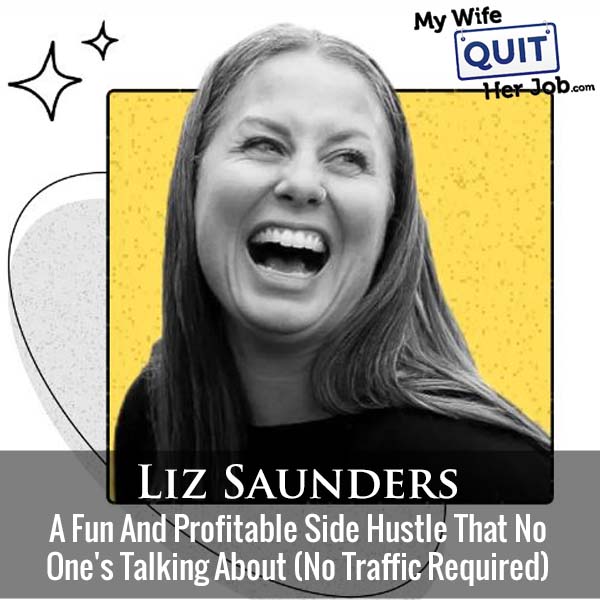
In this episode, my longtime friend Liz Saunders, founder of Fluencer Fruit and former chief of staff at Jungle Scout, walks through exactly how the program works, how to get approved, and how to pick product listings that actually convert.
Here is how the Amazon Influencer Program works, what it pays, how to get approved, and how to pick product listings that stand a real chance of earning.
Get My Free Mini Course On How To Start A Successful Ecommerce Store
If you are interested in starting an ecommerce business, I put together a comprehensive package of resources that will help you launch your own online store from complete scratch. Be sure to grab it before you leave!
Table of Contents
Key takeaways
- The Amazon Influencer Program is an offshoot of the Amazon Associates affiliate program. Your video content lives on Amazon (on product listings, in the Inspire feed, in Discover), so you do not need your own audience to earn.
- Top creators focused on buying-to-review are earning $10,000 to $15,000 a month, per Liz Saunders. Casual creators making a handful of videos are earning a few hundred to a couple thousand a month.
- You can apply with a TikTok, YouTube, Instagram business account, or Facebook business page. Liz has heard of approvals with as few as 100 engaged TikTok followers. Engagement matters more than raw follower count.
- You get commissions on last-touch attribution for one related product. Unlike Amazon Associates, you do not get a 24-hour cart. You get the next-click purchase in a related category.
- The top video carousel on a product listing has six shared spots for the brand and influencers. Videos in that top carousel do about eight times better than videos placed elsewhere.
- Sweet-spot listings: a product-listing rating around 4.4 or higher, open carousel spots, and no more than two other influencers already on the listing.
What is the Amazon Influencer Program?
The Amazon Influencer Program is an on-Amazon content program that pays creators a commission when shoppers buy a related product after watching their shoppable video, photo, or vertical short on an Amazon product page. It is an extension of the Amazon Associates affiliate program, but the content lives on Amazon itself instead of your own blog or social feed.
Liz calls it a “reverse influencer” model. Traditional influencers push their own audience to a brand; Amazon influencers upload video reviews and shoppable content to Amazon, and Amazon feeds shoppers who are already on the site to those videos.
You are earning a small percentage of traffic that Amazon is already generating for you.
Approved creators can upload shoppable videos, shoppable photos, vertical shorts under 30 seconds, and Amazon Live streams. Those pieces of content can appear inside the top video carousel on a product listing, in the Inspire feed inside the Amazon shopping app, and in the Discover feed.
How much can you earn on the Amazon Influencer Program?
Realistic earnings on the Amazon Influencer Program range from a few hundred dollars a month for casual creators to $10,000 to $15,000 a month for full-time creators who are buying products with intent to review, according to Liz. Her own personal-testing account has crossed $1,500 in a single month while she experiments with the format.
The full-time earners share a specific profile. They review higher-price products in the $100 to $1,000 range, they publish consistently, and they hunt for listings with open carousel spots instead of chasing volume. Liz points out that the creators pulling $10K to $15K a month “don’t spend a lot of time reviewing $10 widgets.”
Money comes from the same referral fee sellers already pay Amazon on every sale, so nothing extra comes out of the seller’s pocket per view. You earn on the next related product a viewer buys, whether it is the exact product you reviewed or a competitor in the same category.
How do you get approved for the Amazon Influencer Program?
You get approved for the Amazon Influencer Program by applying on Amazon’s site with a linked TikTok account, YouTube channel, Instagram business account, or Facebook business page. The application takes about 10 minutes, and Amazon’s automated system approves or rejects you almost instantly based on your follower count and engagement.
Amazon has never published a follower minimum. Liz was approved with 2,700 Instagram followers on a niche wellness account with strong engagement.
She has also heard of TikTok accounts with as few as 100 followers getting in when engagement was high, and she has seen 100,000-follower Facebook pages get rejected when engagement was low. Engagement wins.
If you get rejected on one platform, you can retry with a different platform. If your first channel is inactive, spin up a more engaged one on a different network and apply again.
Best platform to apply on right now
TikTok is the easiest platform to get approved on today, per Liz. The algorithm can put a small account in front of a real audience quickly, so engagement rates on small TikTok accounts look strong even at low follower counts. Facebook pages and Instagram business accounts both work, but they need active posting and visible engagement.
Step 1: Get onsite placement with three shoppable videos
Once your influencer application is approved, the real money unlocks after Amazon approves you for “onsite placement” (the ability to appear on product listings, in Inspire, and in Discover). To unlock onsite placement, you upload exactly three shoppable videos and wait for Amazon to review them.
Liz’s rule: upload three, not five. Amazon reviews every video with a fine-tooth comb, so five videos means five chances to get flagged.
Three is the minimum, so submit only three and keep each one short, simple, and clean.
You get three attempts at onsite-placement approval. Blow all three, and you are done with that lever, so treat the first submission like it counts.
What kills first-time onsite-placement applications
The most common rejection reasons Liz sees are all avoidable:
- Health or medical language. Anything that sounds like a health claim gets flagged. Words like “eco-friendly” or “bio-” also get caught even when they are not medical.
- Personal information in the background. Amazon’s AI reads license plates, addresses, QR codes, and even barcodes from old Amazon boxes in the shot. Clear the background.
- Mentioning price or discount. Videos have to be evergreen, and sellers can change prices at any time. No dollar amounts, no “on sale,” no coupons.
- Videos that are too long or too produced. Aim for around 45 seconds. Amazon allows six seconds and up, but shorter is safer for the first three.
Current approval turnaround is roughly two to three days, per Liz. Earlier in the program the wait was four to eight weeks, so this is a good moment to apply.
Step 2: Pick product listings that actually convert
Not every Amazon product listing is worth a video. Liz uses a small set of signals to decide whether a listing will actually earn, and the biggest one is the top video carousel on the product page.
The top carousel holds six shared slots for the brand and influencer videos combined. If the brand has uploaded a product video, that carousel unlocks and becomes a popup on the listing. Videos placed in that top carousel do roughly eight times better than videos placed elsewhere on the page, per Liz’s own data.
Her ideal listing has a brand video (so the carousel is unlocked), no other influencers on it, open slots, a listing rating around 4.4 or higher, and ideally is a sponsored listing so the brand is actively driving traffic.
Shoppable-video listing scorecard
| Signal | What to look for | Why it matters |
|---|---|---|
| Top carousel status | Unlocked (brand has a video), with open slots | Top carousel spots convert roughly 8x better than other placements. |
| Number of other influencers | Two or fewer already on the listing | Fewer competitors means a better shot at holding a top-carousel spot. |
| Listing rating | Around 4.4 or higher | Higher ratings correlate with better conversion on Liz’s own videos. |
| Sponsored listing | Yes, when possible | The seller is paying to drive traffic to the listing, which lifts your video views. |
| Product price | Higher-ticket items ($100 to $1,000+) | Full-time earners focus here. Commissions on $10 widgets do not add up. |
Liz built Fluencer Fruit, a Chrome extension, to pull all of these signals onto the Amazon search results, best-seller pages, and even wishlists so you can score listings without clicking into each one.
How Amazon Influencer commissions and attribution work
Amazon Influencer commissions run on what Liz describes as last-touch attribution with a one-click, related-product window. If a shopper watches your shade-tent video and then buys a shade tent (yours or a competitor’s), you earn a commission. If they buy a picnic basket or a TV next, you do not.
That is a big difference from Amazon Associates, where a click gives you commission on the entire cart for 24 hours. On the influencer side, you get exactly one purchase, and it has to be related to the product in your video.
Category matches like a treadmill to a competing treadmill brand count. Cross-category purchases like a TV or a picnic basket typically do not.
Both programs draw from the same referral fee the seller pays Amazon, so the seller does not double-pay. Whether both an Associates commission and an Influencer commission can pay out on the same sale is officially unclear, per Liz. Amazon has never confirmed.
Creative ways to source products without buying everything
If you do not want to bankroll every product yourself, there are three sourcing paths creators are using right now, per Liz:
- Products already in your house. This is where every new creator should start. Walk your house and film 45-second videos on anything you bought that has an Amazon listing (it does not need to have been purchased on Amazon, only sold on Amazon).
- Agencies that match sellers and influencers. Once you have some content history, agencies will match you with sellers who ship free product plus an additional commission on your onsite content. Different from Vine, where you cannot talk to the brand.
- Airbnbs, playgrounds, neighbor gear. Some creators are renting Airbnbs specifically to review the appliances, decor, and outdoor equipment inside. The rental is a business expense, and one weekend produces dozens of videos. Others film equipment at their neighborhood playground or a neighbor’s higher-end gear that they already have hands-on experience with.
Filming a product in a department store you have never used is against Amazon’s terms of service. People are doing it. It is a suspension risk, per Liz.
Content style: what actually converts on shoppable videos
The content that converts on the Amazon Influencer Program answers the questions a shopper had right before they bought the product. Liz says the winning format is “be yourself, answer questions you had before you bought this thing, and add one piece of constructive feedback so the video does not feel like a sales pitch.”
Common angles that work:
- Show the product to scale in your hand so shoppers can gauge real-world size.
- Unbox it and show exactly what comes in the box.
- Speak directly to the top FAQs on the product listing.
- Compare it briefly to a similar product a shopper might also be considering.
- Include one honest piece of constructive feedback (“I wish it did X differently”).
For format, Amazon now wants both horizontal and vertical content. Horizontal videos run one to five minutes and land on product listings; vertical shorts run under 30 seconds and feed the Inspire feed.
You can shoot horizontal in 4K and crop a shorter vertical from the same footage, as long as the vertical version is tighter and faster.
Why this matters for Amazon sellers, not just creators
Amazon sellers should care about the influencer program because influencers are the first legal, incentivized-review channel Amazon has offered since incentivized written reviews were banned in 2016. Influencers are FTC-compliant, Terms of Service-compliant, and (unlike Vine reviewers) you can actually talk to them and brief them.
If you sell on Amazon, the direct value of a tool like Fluencer Fruit is limited, but the underlying insight matters. Working with creators to produce shoppable videos for your listings is a way to fill your own top carousel with UGC content that converts better than brand video alone.
Frequently asked questions
What is the Amazon Influencer Program?
The Amazon Influencer Program is an extension of the Amazon Associates affiliate program that lets approved creators upload shoppable videos, photos, and vertical shorts directly to Amazon product listings. Creators earn a commission when a shopper watches their content and then buys a related product.
How much do Amazon influencers make?
Casual Amazon influencers typically earn a few hundred to a couple thousand dollars a month. Full-time creators who focus on reviewing higher-price products with open carousel slots are earning $10,000 to $15,000 a month, per Fluencer Fruit founder Liz Saunders.
How many followers do you need for the Amazon Influencer Program?
Amazon has never published a follower minimum. Approvals have gone through with as few as 100 engaged TikTok followers, and rejections have hit accounts with 100,000 low-engagement Facebook followers. Engagement matters more than raw follower count.
How does the Amazon Influencer Program work?
Approved creators upload shoppable videos to Amazon, and Amazon places that content on product listings, in the Inspire feed, and in the Discover feed. When a shopper watches a video and then makes a related-product purchase, Amazon pays the creator a commission out of the same referral fee the seller was already paying.
What is the difference between Amazon Associates and the Amazon Influencer Program?
Amazon Associates pays affiliates for driving off-Amazon traffic and gives credit on the entire cart for 24 hours. The Amazon Influencer Program pays creators for content that lives on Amazon itself, and credit is limited to one related-product purchase on the next click.
How do I get approved for onsite placement?
Once your influencer application is approved, upload exactly three short, clean shoppable videos and wait for Amazon to review. Keep videos around 45 seconds, avoid pricing, health claims, and personal information in the background. Approval is currently taking about two to three days.
Can Amazon sellers use the Amazon Influencer Program?
Sellers cannot upload their own content as influencers on their own listings, but they can partner with approved influencers to fill the top video carousel with shoppable UGC. Influencers are FTC and Amazon Terms of Service compliant and can be briefed directly, unlike Vine reviewers.