
Podcast: Download (Duration: 51:17 — 59.0MB)
To launch a product on Amazon today, you need to pick a niche category rather than a saturated one, budget most of your spend on tightly targeted exact-match PPC to feed the algorithm relevance signals, and accept that competitive categories now require six figures and sustained losses before you become relevant. The days of throwing up a listing and getting sales are over.
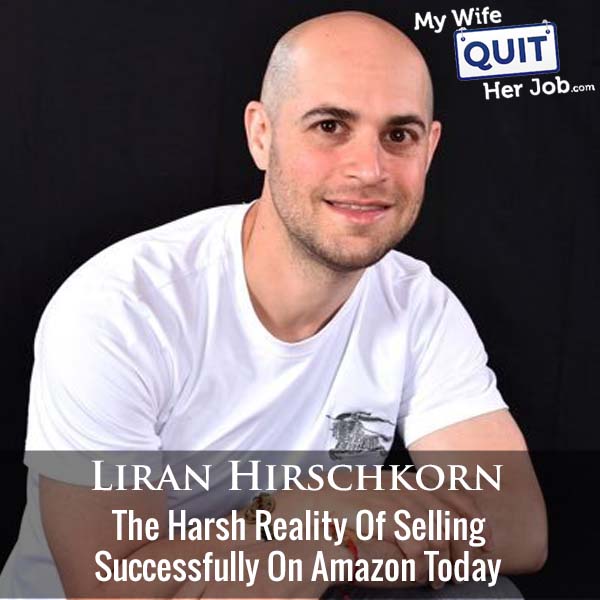
In this episode I sat down with Liran Hirschkorn, founder of Incrementum Digital, who has built multiple seven-figure Amazon brands and now runs an agency managing advertising for Amazon sellers. He has a clear read on what has changed and what still works.
Below is the full breakdown: what a realistic launch budget looks like now, why US sellers are gaining share against Chinese sellers, TikTok versus Instagram influencer economics with real rates, the PPC structure for a launch, and why user-generated content is about to matter much more on Amazon.
Get My Free Mini Course On How To Start A Successful Ecommerce Store
If you are interested in starting an ecommerce business, I put together a comprehensive package of resources that will help you launch your own online store from complete scratch. Be sure to grab it before you leave!
Table of Contents
Key takeaways
- Competitive categories now need six figures and sustained losses. You must build to 1,000 reviews before pricing at market.
- Niche categories still have easy wins. Irrigation timers, water filtration, and similar unglamorous spaces have terrible listings and no professional sellers.
- US sellers are gaining share against Chinese sellers. FBA inventory restrictions and Amazon’s crackdown on manipulation both helped.
- TikTok influencers cost $100-$300 at 50K-300K followers. Some post for free product alone.
- TikTok beats Instagram for Amazon sellers. Posts persist, organic reach is higher, and rates are lower.
- Follower count barely predicts views. A 20K-follower influencer sold 16 units of a silk eye mask for free product.
- Launch PPC should be tight exact-match with top-of-search placement. Teach the algorithm exactly which keywords you are relevant for.
- Stockpile user-generated content now. Amazon Posts will almost certainly open up to video.
How much does it cost to launch a product on Amazon now?
Launching into a competitive Amazon category now requires six figures plus a willingness to lose money for a sustained period. You need roughly 1,000 reviews to become relevant, and you have to price below market to get there.
A concrete example from the episode: a manufacturer of saline nasal sprays wanted to enter Amazon selling a two-pack at $16 when page one showed single units at $7 to $11, competing against Amazon Basics. That plan fails immediately. The viable version is a one-pack at $4.99 with excellent packaging and video, absorbing losses until the review count justifies market pricing.
Liran’s agency declines clients who do not understand this. As he put it, everyone has a plan until they get punched in the face. After a month of losing $25,000, most sellers stop.
Where the easy Amazon opportunities still are
The easy Amazon opportunities are in unglamorous niche categories that have not professionalized. Irrigation timers, water filtration components, and similar practical products still have terrible listings from brands that never took control of their Amazon presence.
If your budget is under $15,000 to $20,000, competitive categories are not viable, and these niches absolutely are. The work is in finding them, since they are not surfaced by the tools everyone else uses.
The contrast with 2015 is stark. Back then you could enter a competitive category with a mediocre listing and succeed. A seller Liran met in China described putting products up merchant-fulfilled directly from China and simply getting sales with no other effort.
Why US sellers are gaining market share against Chinese sellers
US sellers have been gaining market share against Chinese sellers for the first time, according to Marketplace Pulse reporting, for two structural reasons.
First, Amazon’s FBA inventory restrictions hurt Chinese sellers disproportionately. Many were shipping directly from China into FBA without US-based third-party logistics infrastructure, so storage limits hit them harder.
Second, Amazon’s crackdown on review manipulation removed a real advantage. Black-hat tactics still exist and are meaningfully weaker than they were.
The remaining Chinese advantage is speed on trends and sampling rather than raw cost. Many Chinese sellers are sourcing from factories rather than being factories, so their pricing edge is smaller than commonly assumed. Branding, marketing, and audience-building are where US sellers compete effectively.
TikTok versus Instagram for driving traffic to Amazon
TikTok beats Instagram for driving Amazon traffic because posts persist indefinitely, organic reach is substantially higher, and influencer rates are lower.
The Instagram problem is structural. Influencers resist feed posts because promotional content suppresses their reach and clutters their profile, so they push you toward Stories, which vanish in 24 hours. Getting real value requires booking a month of weekly Stories.
TikTok videos keep accumulating views for months. A follower on TikTok is worth less than a follower on Instagram because TikTok followings are easier to build, which means you pay less for equivalent or better results.
What TikTok influencers actually cost for Amazon products
TikTok influencers with 50,000 to 300,000 followers typically cost $100 to $300 per post, and some in that range will post for free product alone.
Instagram mega-influencers (roughly one to five million followers) run $3,000 to $5,000 for a month-long engagement of weekly Stories.
The recommended allocation for a first campaign: roughly $3,000 covering 20 to 30 posts across free and paid nano and micro influencers. Test a single mega influencer at $3,000 to $5,000 only if budget allows beyond that. Never put an entire influencer budget into one large placement.
Adding a per-sale commission on top of a low flat rate is worth doing. It costs nothing upfront and makes the influencer meaningfully more persuasive in the video.
Why follower count barely predicts influencer performance
Follower count barely predicts performance, which is why nano influencers frequently outperform much larger accounts on a cost basis. Liran has seen accounts with fewer followers generate 50,000 views while larger accounts generate 8,000.
The concrete case: a 20,000-follower influencer promoting a silk eye mask with a 50% coupon code sold 16 units from a single free-product post.
Liran’s own TikTok has almost no following and one video reached 4.7 million views. The algorithm distributes on content quality rather than audience size, which means a $100 creator can outperform a $5,000 one.
What to evaluate instead: comment quality, engagement rate, presentation style, and how naturally they incorporate products. Creators who make something entertaining that includes the product outperform creators who simply promote.
How to calculate an influencer’s real addressable audience
Calculate an influencer’s real addressable audience by discounting follower count for fake accounts, geography, and demographic fit before estimating potential sales.
The math on a 300,000-follower account: subtract 3% for fake followers, then take the 70% who are US-based, then the 70% who match your target demographic. The real addressable audience is around 200,000, not 300,000.
Tools that support this: Heepsy (about $50/month, and it filters for influencers with emails in their profile), Upfluence’s Chrome extension (free for 20 uses daily, gives demographics and authenticity data), and Insense.pro (around $400/month minimum, handles whitelisting for running ads from influencer profiles).
Pull contacts out of the platform and run outreach through your own email sequence rather than communicating in-app.
The PPC structure for launching a product on Amazon
Launch PPC should use a tight group of highly relevant keywords on exact match with top-of-search placement, rather than casting a wide net with broad match. The goal is teaching the algorithm precisely which keywords your product is relevant for.
The budget shape: roughly $100 to $200 per day on Amazon PPC, plus about $25 per day on Google text ads pointing into Amazon. Most of the budget goes to Amazon.
The launch sequence layers price incentives on top. Launch, then drop the price around day three or four, then add a larger coupon around day six or seven. You are deliberately losing money on both PPC and margin to generate velocity during the honeymoon period.
Velocity and conversion rate are the objective. Everything else follows from those two signals.
Why run Google ads into Amazon?
Run Google text ads into Amazon because the Amazon algorithm rewards external traffic with better organic ranking, and because Amazon cost-per-click continues to rise, making additional channels increasingly valuable.
Cost management matters here. Broad keywords in saturated categories can cost more on Google than on Amazon. The workaround is targeting long-tail terms that include “Amazon” in the phrase, which have real search volume and far less competition.
At launch specifically, Google is faster to deploy than influencer marketing. Influencer campaigns need roughly a month of research, outreach, and product shipping before anything goes live, while Google ads can run the day you launch.
Why influencer marketing works better after you have reviews
Influencer marketing works better on a product that already has reviews and social proof, because the traffic converts substantially better when it arrives at a credible listing.
The sequencing implication for a launch: use PPC and Google for the initial velocity push, build review count, then deploy influencer campaigns once the listing can convert the traffic they send.
Sending expensive influencer traffic to a zero-review listing wastes most of it. The visitor arrives, sees no social proof, and leaves.
Why you should be stockpiling user-generated content now
Stockpile user-generated content now because Amazon Posts currently supports lifestyle images with captions, and there is no obvious reason Amazon will not open it to video, at which point brands holding a UGC library will have a substantial head start.
Amazon has wanted social commerce to work for years, and they are clearly watching TikTok. TikTok’s influence on Amazon is already measurable: “TikTok leggings” was at one point among the top search terms on Amazon.
Where the content comes from: negotiate content usage rights into every influencer agreement. Standard practice is that the brand can reuse the video after the campaign.
What you can already do with it: compile influencer videos into listing videos, run video ads with them, and build a storefront page of testimonial videos. There is no practical limit on how many videos you can put on a storefront page.
Are search-find-buy rebates still worth the risk?
Search-find-buy rebates violate Amazon’s terms of service, and Amazon has not been visibly enforcing against them, which puts sellers in an uncomfortable position where competitors gain an advantage from a rule Amazon is not policing.
Liran’s agency stopped running them once the policy became explicit, because an agency carries liability for getting a client suspended. Individual sellers face a different risk calculation.
The practical read: risk appears low today, and Amazon knows exactly what is happening and can act at any time. Aggregators like Thrasio refuse these tactics entirely because they cannot afford a Wall Street Journal story about manipulation.
His recommendation is that the same budget produces better returns in influencer marketing, and 2022 is a year to return to fundamentals: A/B testing creative, copy, and advertising, and building an actual brand rather than stacking Amazon tactics.
Frequently asked questions
How much money do you need to launch a product on Amazon?
Competitive categories now require six figures plus sustained losses until you reach roughly 1,000 reviews. With under $15,000 to $20,000, target niche categories instead, where unprofessional listings still leave real opportunity.
What is the best PPC structure for an Amazon launch?
A tight group of highly relevant keywords on exact match with top-of-search placement, rather than broad match casting a wide net. This teaches the algorithm precisely which terms you are relevant for. Budget roughly $100-$200 daily on Amazon PPC during the honeymoon period.
Should you use TikTok or Instagram influencers for Amazon products?
TikTok. Posts persist indefinitely rather than vanishing in 24 hours like Instagram Stories, organic reach is higher, and rates are lower because TikTok followings are easier to build. Instagram influencers also resist feed posts because promotional content suppresses their reach.
How much do TikTok influencers charge for product promotion?
Roughly $100 to $300 for accounts with 50,000 to 300,000 followers, and some will post for free product alone. Instagram mega-influencers with one to five million followers run $3,000 to $5,000 for a month of weekly Stories.
Does influencer follower count predict sales?
Barely. Accounts with fewer followers frequently outperform larger ones, since TikTok distributes based on content quality rather than audience size. One 20,000-follower influencer sold 16 units from a single free-product post. Evaluate comments, engagement, and presentation style instead.
Why should Amazon sellers run Google ads?
The Amazon algorithm rewards external traffic with better organic ranking, and Amazon CPC keeps rising, so additional channels matter. Target long-tail terms that include “Amazon” in the phrase, which carry real search volume at far lower competition than broad category keywords.
Are search find buy rebates safe on Amazon?
They violate terms of service, and Amazon has not been visibly enforcing against them. Risk appears low today, and Amazon knows what is happening and can act at any time. Aggregators refuse them entirely for reputational reasons. Influencer marketing generally produces better returns on the same budget.