
Podcast: Download (Duration: 50:18 — 57.8MB)
Writing YouTube titles that get clicks comes down to layering proven psychological triggers onto your topic: curiosity, negativity, lists, authority, timeliness, beginner tips, timeframes, refuting an objection, comparison, and daily habits. Jake Thomas calls these the 10 spiciness factors, and curiosity appears in half of the high-performing titles he has catalogued.
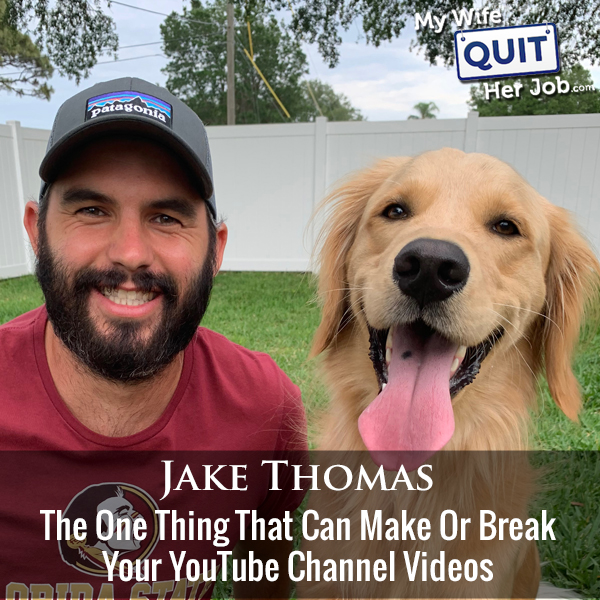
In this episode I sat down with Jake Thomas, founder of Creator Hooks, who reverse-engineers why people click on YouTube videos. I have been applying his techniques for 60 days and my channel is up 40% this month.
Below is the full breakdown: the 10 spiciness factors in order of frequency, the seven ways to build curiosity, why negativity works on YouTube and fails on Google, the hook score system, and his title-writing process end to end.
Get My Free Mini Course On How To Start A Successful Ecommerce Store
If you are interested in starting an ecommerce business, I put together a comprehensive package of resources that will help you launch your own online store from complete scratch. Be sure to grab it before you leave!
Table of Contents
Key takeaways
- Three emotions make people click: curiosity, fear, and desire. Strong titles combine curiosity with one of the other two.
- Curiosity appears in 50% of winning titles. Negativity appears in 36%, deep desire in only 13%.
- Negativity works on YouTube and hurts on Google. YouTube is a discovery platform, Google is a search platform.
- The same video framed negatively did 8x better. “Settings to turn off” hit 2 million views against 240,000 for “turn on.”
- Write 10 titles per piece, then pick. Run the topic through all 10 factors before choosing.
- Frameworks transfer across industries. A hunting podcast format worked verbatim for a fishing audience.
- One-word titles only work with an existing audience. Small channels need titles that evoke emotion.
- Three things drive a click: thumbnail, topic, and frame. Frame is the part you fully control.
The 10 spiciness factors for writing titles
The 10 spiciness factors, in order of how often they appear in high-performing titles: curiosity, negativity, list, authority, timeliness, beginner tips, timeframes, refuting an objection, comparison, and daily habits.
Curiosity, negativity, and list are the top three by a wide margin. Curiosity shows up in roughly half of everything Jake catalogues.
The method is mechanical rather than inspired. Take your topic, run it through each factor, and see which ones produce something natural.
Jake’s own origin for this: he was writing two YouTube titles, two blog post titles, and two email subject lines every day at a fishing company. After two years he ran out of ideas and started hunting for patterns instead.
Why frameworks transfer across completely different industries
Title frameworks work regardless of niche, because they operate on psychology rather than subject matter.
The moment Jake realized this: his boss at the fishing company heard about a hunting company’s podcast on newbie hunting gear that performed well. They copied the format exactly for newbie fishing gear.
That episode became their most downloaded podcast of the month and their most opened email.
The practical consequence is that you should be studying titles well outside your own space, then porting the structure over.
The 7 ways to build curiosity in a title
Seven mechanisms reliably create curiosity:
- Open a loop. Start a story without finishing it, so the only way to close it is to click.
- Negative lists. “10 iOS 15 settings you need to turn off” makes the reader ask why.
- FOMO. “The number one skill you’re missing to make running easier.”
- Unveiling a secret. Hidden apps, hidden features, anything with a whiff of scandal.
- Stopping something common or beneficial. “I stopped asking people to subscribe.”
- Contrast. Two conflicting ideas pitted against each other.
- Talking about the future. “Inflation is coming, do this.”
The stopping-something framework is worth singling out. “I stopped asking people to subscribe” and “we stopped telling people we’re debt free” both did seven to nine times their channel average, because each challenges an assumption the viewer holds.
How to use contrast in a headline
Contrast pits two opposing ideas against each other in a single title, and it is the hardest of the frameworks to execute.
The example that popularized it for Jake: “5 strange things your vagina does that are normal.” Strange against normal.
He ported that structure into a client’s military history channel as a failed weapon that the military loves, which became the best-performing title he had written for them. Other pairings that work: cheap things that are expensive, slow things that get you rich fast.
The mechanism is a double take. Contradiction makes the reader stop, which buys you the extra second needed to read the whole title and register the open loop.
Why negativity works on YouTube and hurts on Google
Negative framing outperforms on YouTube because it is a discovery platform where people scroll, and underperforms on Google because searchers want a positive answer to a question they already asked.
Look at the first page of Google results in most niches and negative posts are largely absent. Google has learned what searchers want.
The cleanest proof on the YouTube side comes from the Payette Forward channel. Their “iOS 15 settings you need to turn on” video hit 240,000 views against a channel average of 20,000 to 100,000, which was already a strong result.
The following week they published “iOS 15 settings you need to turn off.” Same formula, nearly identical thumbnail with a different facial expression. That video passed 2 million views.
Why negativity outperforms positivity
Jake’s explanation is evolutionary: the cost of ignoring a threat has always been higher than the cost of ignoring an opportunity.
His framing of it: if I tell you there are berries in that field, you might go pick them later. If I tell you there is a saber-toothed tiger over there, you listen immediately.
The same wiring shows up as loss aversion in business. A return on a completed sale stings more than never making the sale at all.
Negativity is a catch-all category here. It covers fear, loss aversion, and FOMO, all of which pull harder than an equivalent gain.
How to write titles that still rank on Google
Lead with the search term and append a spiciness factor to the end, which keeps the keyword prominent while adding a reason to click.
Jake’s golden retriever blog ranks for “black golden retrievers” with the title “The truth about black golden retrievers.” The keyword is intact and three words of framing do the rest.
The three factors that attach most cleanly to a search-optimized title: timeliness (“ecommerce SEO in 2021”), timeframes (“rank your store on Google in 30 days or less”), and beginner tips (“how to start an ecommerce store for beginners”).
The decision rule for whether to go negative: look at what already ranks on page one. If the top results are all straightforward how-to titles, Google has told you what it wants.
What the hook score measures
The hook score is a multiple of how a video performed against that channel’s recent average, which makes results comparable across channels of different sizes.
A channel whose recent videos average 10,000 views that suddenly posts one at 100,000 scored a 10x outperformance.
The reason it exists is that raw view counts are meaningless in isolation. A million views on a million-subscriber channel is unremarkable, and a million views on a 100,000-subscriber channel is a signal worth studying.
The known limitation: thumbnail and title cannot be separated. Jake works around it by studying hundreds of videos and looking for patterns that survive the noise, and by skipping channels where every video is a hit because nothing stands out to learn from.
The three things that make someone click a video
Three inputs drive the click: the thumbnail, the topic, and the frame.
Thumbnail catches the eye. Topic carries inherent demand, which is why a physical therapy channel will do well with almost anything about back pain.
The frame is the angle you wrap the topic in, and it is the part fully under your control. “The ugly truth about back pain” and “I got rid of my back pain after doing these three things” are the same topic with different frames.
Jake’s process for writing a title
Write roughly 10 titles by running the topic through each spiciness factor, then select based on what your audience actually wants most.
Walking through “how to potty train a golden retriever puppy”:
- Curiosity: “The number one thing that makes potty training your puppy easier”
- Negativity: “5 mistakes when potty training your puppy”
- List: “10 tips for potty training your puppy”
- Authority: “How Zak George potty trains a golden retriever puppy”
- Beginner tips: “How to potty train your puppy as a new puppy owner”
- Timeframes: “How to potty train your puppy in five minutes”
The selection is the art. In this case the audience’s overwhelming want is speed, so the timeframe angle wins. They do not care how a professional trainer does it.
How to apply these frameworks to ecommerce
The same triggers work in email subject lines, product descriptions, blog subheadings, and video intros, because they are psychology rather than platform tactics.
For product copy, lean on loss aversion by describing what the product helps the customer avoid rather than only what it helps them gain. Lists also convert well: “10 reasons why you should buy this.”
Timeliness maps directly onto seasonal copy. Rewriting fitness product copy around New Year’s resolutions on January 1 is the same lever as putting 2021 in a blog title.
Jake’s suggestion for testing: what Neil Patel calls the evil twin. If “how to do X” is working, try “the 5 mistakes when doing X” and see which pulls harder.
When to skip the frameworks entirely
A plain one-word or two-word title can outperform when the audience already knows and trusts you, or when everything around it is over-optimized.
Digital Marketer’s most-opened email subject line was a single lowercase word: copywriting. Deep desire plus total contrast against every other subject line in the inbox.
The caveat is scale. Emma Chamberlain’s one-word titles work because she has roughly 10 million subscribers, and “I’m so proud of my brother” works for a Paul brother because you already know who his brother is.
Without that existing audience, a title has to evoke emotion on its own.
Frequently asked questions
What makes people click on a YouTube video?
Three emotions: curiosity, fear, and desire. Most high-performing titles combine curiosity with either fear or desire. Curiosity appears in about half of the titles Jake Thomas catalogues, negativity in 36%, and deep desire in only 13%.
What are the 10 spiciness factors?
Curiosity, negativity, list, authority, timeliness, beginner tips, timeframes, refuting an objection, comparison, and daily habits, listed in order of how often they appear in winning titles. Run any topic through all 10 to generate title options.
Does negativity work in titles?
On YouTube yes, on Google no. YouTube is a discovery platform where scrolling viewers respond to negative framing. Google searchers want positive answers, and negative posts rarely appear on page one. The same video framed as “settings to turn off” got 2 million views against 240,000 for “turn on.”
What is an open loop in copywriting?
Starting a story without finishing it. “Here’s how you can get more views on YouTube” tells you a resolution exists without providing it, so the only way to close the loop is to click. It is the most fundamental of the seven curiosity mechanisms.
How do you write a title that ranks on Google and still gets clicks?
Lead with the exact search term and append a spiciness factor. “The truth about black golden retrievers” keeps the keyword intact and adds three words of framing. Timeliness, timeframes, and beginner tips attach most cleanly without disrupting the keyword.
What is a hook score?
A multiple showing how a video performed relative to its own channel’s recent average. A channel averaging 10,000 views with one video at 100,000 scored 10x. It makes performance comparable across channels of different subscriber counts.
Should you use one-word video titles?
Only with an established audience. Emma Chamberlain’s one-word titles work because roughly 10 million people already follow her. Smaller channels need titles that evoke emotion on their own, since nothing about the creator’s name is doing the work.