
Podcast: Download (Duration: 12:10 — 14.2MB)
The four ways to find suppliers for your online store are Google search (best for US-made goods and name brands), Alibaba or Global Sources directories (best if you have no travel budget), the Canton Fair in China (best time-per-dollar for touching real samples), and a sourcing agent (my personal go-to today). Each has a different cost, timeframe and quality profile, and picking the wrong one is how new sellers end up with a garage full of bad inventory.
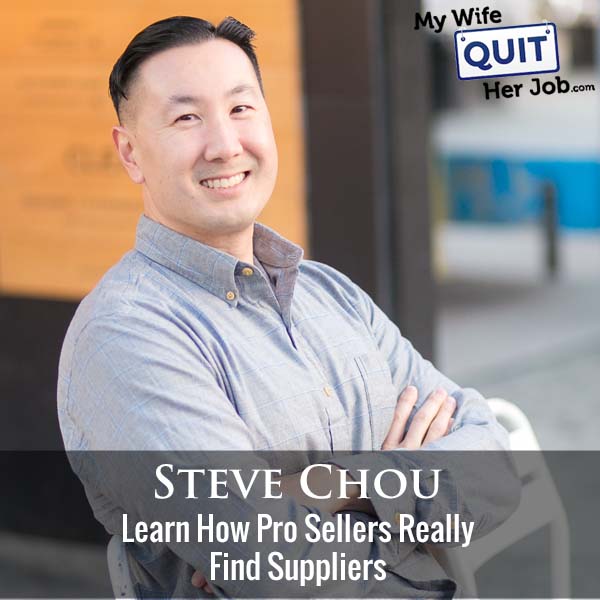
In this solo Family First Friday episode I walked through the exact process my wife and I have used since 2007 at Bumblebee Linens, from Googling our first hankie factory to flying to Canton and hiring dedicated agents in China, Vietnam and Mexico. I have used every method in this post with real money.
Here is the ranked playbook, from lowest budget to highest, plus how to actually vet a factory and what to expect on fees.
Get My Free Mini Course On How To Start A Successful Ecommerce Store
If you are interested in starting an ecommerce business, I put together a comprehensive package of resources that will help you launch your own online store from complete scratch. Be sure to grab it before you leave!
Table of Contents
Key takeaways
- You cannot buy name brands like Lego, Sony or Apple direct from the manufacturer. Google “[brand] authorized distributor” and expect to prove you have a real brick-and-mortar retail component.
- Google works well for USA-made goods, private-label supplements (“private label supplement manufacturer”), and food products (“private label food co-packer”). It works less well for generic private-label goods from Asia.
- On Alibaba, filter for “assessed suppliers” and only work with factories that have exported to your country for 5+ years. My handkerchief factory example: 5,500 sq ft, 16 years exporting.
- The Canton Fair is the largest wholesale trade show in the world: 25,000+ exhibitors, 190,000+ buyers, 60,000+ booths, 1.2 million square meters (about 218 football fields). Attendance is free; total trip cost usually under $5,000.
- Sourcing agents are the fastest way to find quality suppliers today. I use Jing Sourcing in China. Fees vary: 3-10% of order value (Jing), or $70-80/hour flat (Zignify).
- Relationships matter. One in-person meal with our Chinese factory permanently fixed a quality problem that email could not.
How to find a supplier for name-brand products (Lego, Sony, Apple)
You find a supplier for name-brand products by contacting the brand’s authorized distributor, not the brand itself. Large brands like Lego, Sony and Apple do not sell direct to consumers or small retailers. They use exclusive distributors as the middleman between the factory and the retail channel.
To find one, visit the manufacturer’s website or simply Google “[brand] authorized distributor.” For example, Google “Lego authorized distributor” and the first result is Toy House LLC, a real authorized Lego distributor. Distributors buy from the manufacturer in large quantities and resell in smaller batches, often with added services like technical support or warranties.
Be ready for a gate. Most large brands require you to have a brick-and-mortar retail component to your business before they will approve you as a wholesale buyer. A pure online resale account is usually rejected.
Method 1: How to find a supplier using Google (best for US-made goods)
Google is the best way to find a supplier when you want US-made goods, private-label supplements, or private-label food, and a weak choice for generic goods from Asia. Our very first supplier for Bumblebee Linens came from a plain Google search for “handkerchief manufacturer” back before we even had a store. We ordered 200 hankies (the MOQ) for our own wedding photos, loved them, and used the same factory when we launched the shop in 2007.
Where Google wins:
- Supplements: Search “private label supplement manufacturer” and you will surface plenty of US-based options. I would not source vitamins from China. Too much risk on what is actually in the capsule.
- Food: Search “private label food co-packer.” Co-packers are food manufacturers set up specifically to produce another brand’s product to spec.
- Custom clothing and small-batch USA-made: Google indexes the smaller domestic manufacturers that never bother listing on Alibaba.
Where Google struggles: generic private-label goods from Asia. Most of the strong factories there live on wholesale directories, not on the open web.
Method 2: How to find suppliers on Alibaba and Global Sources (best low-budget option)
Alibaba and Global Sources are your best low-budget option because they list tens of thousands of Chinese factories and let you filter, message and quote without leaving your desk. Both platforms are directories of Chinese factories. Alibaba sends inspectors into listed factories and publishes an “assessed supplier” report so you can see the factory before you ever contact them.
Here is how I actually vet a factory on Alibaba:
- Filter for assessed suppliers only. The recent handkerchief factory I pulled up had videos of the factory floor, inspection reports and production line reports on file.
- Only work with factories that have exported to your country for 5+ years. Export experience is the single best signal that they can hit spec and pass customs.
- Check the factory’s floor area. My example factory has 5,500 sq ft, which is a real operation.
- Ask for samples, price quotes, and MOQs directly through the platform.
Two things I always tell new sellers about Alibaba communication. First, come across as bigger than you are. Never say you are a newbie or that you are still figuring things out.
Put yourself in the supplier’s shoes: they would rather work with someone who knows what they are doing. Second, samples and revisions take weeks to ship. If you are iterating on design and packaging, a 10-day round-trip per revision adds up fast.
Why you should still visit the factory in person
You should still visit the factory in person because face-to-face relationships permanently upgrade quality and responsiveness in a way email never will. One of our early Alibaba suppliers gave us a great first shipment. Perfect packaging, excellent fabric, we were thrilled.
Then over time the quality started to slip and their replies slowed down.
We flew to China and visited the factory in person. Shared a meal, had a couple of drinks, met the owner face to face. The quality has never been poor since.
That is not a coincidence. Chinese business runs on relationships, and a physical visit is the shortcut to being taken seriously as a customer worth protecting.
Method 3: How to source from the Canton Fair (best time-per-dollar)
The Canton Fair is the best time-per-dollar way to find a supplier because you can meet hundreds of pre-vetted Chinese vendors in a couple of days, touch real product samples, and skip weeks of Alibaba sample rounds. It is the largest wholesale supplier trade show in the world, held twice a year in Guangzhou, China.
The scale is hard to overstate. Last year’s fair:
- 25,000+ exhibitors
- 190,000+ buyers
- 60,000+ booths
- 1.2 million square meters of exhibition space (about half a square mile, or roughly 218 football fields)
The fair is split into three phases because it is too big to run at once. Phase 1 is electronics, appliances, machinery, lighting, hardware, vehicles and building materials.
Phase 2 is consumer products, decorations and gifts. Phase 3 is textiles, garments, shoes, office supplies, bags, recreation, medical devices and health products.
Attendance itself is free. You will need a China visa plus airfare and hotel, and total trip cost usually stays under $5,000. In return you get to touch real samples, negotiate face to face, and often take a short train ride to actually see the factory.
Every supplier at the fair paid real money for a booth, which is a built-in quality filter: everyone you meet is an established player.
Method 4: How to hire a sourcing agent (my personal go-to today)
I hire a sourcing agent for most product sourcing today because they live in-country, speak the language, have factory contacts I could never reach, and handle sampling, negotiation, quality control and freight coordination end to end. A sourcing agent is a specialist who connects you with factories to produce your products.
What a good sourcing agent handles for you:
- Finds factories that are not listed on Alibaba or Global Sources.
- Visits the factory in person on your behalf.
- Negotiates in the supplier’s native language.
- Inspects samples and final production runs.
- Coordinates with freight forwarders and inspection companies.
I have used Jing Sourcing in China with excellent results, and I have separate agent contacts for Vietnam and Mexico. Countries like Vietnam and Mexico are extremely hard to source from without an agent because the factory ecosystem is not indexed the way China’s is.
How much does a sourcing agent cost?
Sourcing agents charge in three ways, and the right one depends on how you want to trade risk against upfront cost.
- Percentage of order value. Jing Sourcing charges roughly 3-10% of your final order value, with the percentage dropping as order size grows. You pay nothing if they cannot find you a supplier.
- Hourly flat rate. Zignify charges $70-80 per hour to find and negotiate with a supplier. You pay once, and the factory relationship is yours forever.
- Flat fee per product. Some agents quote a fixed price per product sourced.
Two trade-offs to know. Percentage agents like Jing often will not reveal the factory name, so you have to keep sourcing through them for reorders. Hourly agents like Zignify tell you the supplier and let you go direct, which also reduces the risk of kickbacks or backdoor pricing between the agent and the factory.
Which supplier-finding method should you use?
Use the method that matches your budget, your timeframe, and your product category. Here is how I would pick.
| Method | Best for | Cost | Speed to first sample | Quality risk |
|---|---|---|---|---|
| Google + authorized distributor | Name-brand resale (requires brick-and-mortar) | Free to search | Days | Low |
| Google direct | US-made goods, supplements, food co-pack | Free to search | Days | Low-medium |
| Alibaba / Global Sources | Private label from Asia on a tight budget | Free platform; sample fees vary | 2-6 weeks per revision | Medium (mitigate with assessed suppliers, 5+ year exporters, factory visit) |
| Canton Fair | Serious buyers touching hundreds of suppliers at once | ~$5,000 all-in for the trip | Same day (hand samples) | Low (booth cost is a filter) |
| Sourcing agent | Hard-to-source categories, Vietnam/Mexico, or hands-off sourcing | 3-10% of order OR $70-80/hr | 1-3 weeks | Low (agent inspects on the ground) |
Frequently asked questions
How do I find a supplier for my online store?
You find a supplier for your online store using one of four methods: Google (best for US-made goods, supplements and food), Alibaba or Global Sources (best low-budget option for Asia), the Canton Fair in China (best for touching real samples fast), or a sourcing agent (best for hands-off sourcing and hard-to-source countries).
Can I buy name-brand products like Lego wholesale?
You can buy name-brand products like Lego wholesale only through the brand’s authorized distributor, not from the brand directly, and most large brands require you to have a brick-and-mortar retail component to your business before they will approve you.
Is Alibaba safe for finding suppliers?
Alibaba is safe for finding suppliers when you filter to assessed suppliers, only work with factories that have exported to your country for 5 or more years, and eventually visit the factory in person to lock in the relationship. Assessed suppliers come with factory-floor videos, inspection reports and production line reports on file.
How much does it cost to attend the Canton Fair?
The Canton Fair costs nothing to attend, but total trip expenses for a US buyer usually run under $5,000 once you add a China visa, airfare and hotel. You get access to over 25,000 exhibitors and 60,000 booths in exchange.
How much do sourcing agents charge?
Sourcing agents typically charge either 3-10% of your final order value (dropping as order size increases) or a flat $70-80 per hour. Jing Sourcing uses the percentage model; Zignify uses hourly. Percentage agents often will not tell you the factory name so you keep coming back through them.
Where can I find suppliers in Vietnam or Mexico?
You find suppliers in Vietnam or Mexico by hiring a local sourcing agent, because the factory ecosystems in those countries are not indexed on wholesale directories the way China’s is on Alibaba. An in-country agent walks factories, negotiates in the local language, and gives you access to plants you would never reach cold.
Why should I visit my supplier in person?
You should visit your supplier in person because face-to-face meetings dramatically improve product quality and responsiveness over time, especially in China where business runs on relationships. In our own case, one factory visit with a shared meal permanently fixed a quality problem that months of email could not.