
Podcast: Download (Duration: 10:58 — 12.8MB)
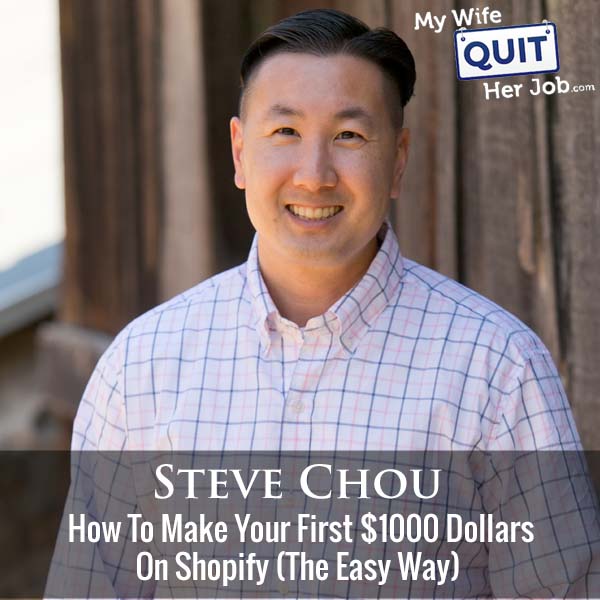
To make your first $1,000 on Shopify without paid ads, do two things in order. First, fix your website’s trust signals so shoppers actually check out (phone number, real address, free-shipping policy, testimonials, benefit-driven copy, PickFu-validated design). Then drive free targeted traffic from niche Facebook groups where your buyers already hang out, and run an evergreen Facebook Messenger giveaway to build an email list on autopilot.
This is a Family First Friday solo episode, drawn from what I have learned teaching Create a Profitable Online Store for 12 years. The number one problem new Shopify store owners have is not getting traffic; it is that the traffic they do get does not convert.
Here is the exact two-step playbook, the trust-signal checklist that has to come first, and the two free-traffic strategies that have gotten unknown stores to $1,000 a month.
Get My Free Mini Course On How To Start A Successful Ecommerce Store
If you are interested in starting an ecommerce business, I put together a comprehensive package of resources that will help you launch your own online store from complete scratch. Be sure to grab it before you leave!
Table of Contents
Key takeaways
- 99% of the time, a store with traffic and no sales has a trust problem, not a traffic problem. Fix the site first.
- Minimum trust signals: a phone number, a real physical address, a free-shipping policy, testimonials with photos on every page, and benefit-driven product copy.
- Validate the site with PickFu. About $25 gets you 50 real shoppers grading whether your store looks trustworthy enough to buy from.
- Free traffic strategy one: join niche Facebook groups, help people for three to four weeks, then soft-pitch your product. My friend Vivian Kay of Kinky Curly Yaki built her hair-extension brand past $1 million this way.
- Free traffic strategy two: an evergreen Facebook Messenger giveaway (built in ManyChat) collects email and Messenger subscribers for roughly $0.25 to $0.75 each and pays for itself with a post-giveaway offer.
- These two strategies alone are enough to make $1,000 a month, if your website is trustworthy first.
Why “no sales” is almost always a website problem, not a traffic problem
If you have driven any real traffic to a Shopify store and gotten zero sales, the problem is almost certainly your website, not your traffic. In 12 years of teaching new store owners, I have heard “5,000 visitors and no sales” and “lots of add-to-carts but no purchases” over and over, and 99% of the time the store is losing shoppers on trust before it ever gets a chance to sell them.
New stores start from zero trust. Nobody has heard of you. The first thing a shopper does is scan for signs you are a real business, and if the signals are not there, they leave.
Before you drive a single visitor from an ad or a Facebook group, get your site over the trust bar. Everything below assumes that.
Shopify trust-signals checklist (do this before you drive traffic)
The bare-minimum trust signals every new Shopify store needs are a phone number, a real physical address, a free-shipping policy, testimonials with photos, and copy that sells benefits instead of features. Get all five in place before you send anyone to your site.
Phone number, physical address, and free shipping
Shoppers who have never heard of your brand look for a way to reach a real human. If they cannot find a phone number and address, most will bail. Free shipping removes the last piece of hesitation on checkout for a small unknown store.
If you do not want your cell phone ringing, use a Google Voice number with an outgoing message that asks callers to text or email the store and promises a fast response.
Testimonials with photos on every page
People are lemmings. They need to see that someone else has already shopped in your store before they will risk it themselves. Give four close friends free product in exchange for a written testimonial, ask if you can use their photo, and paste those testimonials on every page (bonus points if any of them have real credibility or authority in your niche).
Benefit-driven product copy
Product descriptions have to sell the benefit, not list the feature. Explain why your store or product is different, and make sure a shopper can tell in one read why they should buy from you instead of the competition.
Validate the site with PickFu before spending a dollar on traffic
Once you think the site is ready, run a PickFu poll. For about $25 (with a coupon), PickFu shows your URL to 50 random shoppers and asks whether the store looks trustworthy enough to buy from and, if not, why. Within minutes you get 50 paragraphs of real feedback.
If most of the panelists say the store looks legit, you are ready to drive traffic. If they do not, fix what they flag before moving on.
Free traffic strategy 1: niche Facebook groups where your buyers already hang out
The fastest free-traffic strategy for a new Shopify store is joining the niche Facebook groups where your ideal customers already talk to each other and becoming a genuinely useful member of the community before you ever mention your product. There is a Facebook group for virtually every product category on earth, and the group members are pre-qualified buyers.
If you sell fishing supplies, there is a Facebook group full of fishermen. If you sell wedding accessories the way my wife and I do, there are dozens of active bridal groups.
The rule that makes this work: spend three to four weeks answering other people’s questions and helping members before you post anything remotely promotional. If you show up and start pitching, you will get banned. If you show up and help, the admins usually give you more leeway over time.
How to soft-pitch without getting banned
Once you are established in the group, the soft pitch is casual, not salesy. My wife and I sold wedding handkerchiefs, and I would ask what people were using as their “something blue,” then mention that we happened to make personalized blue hankies. That framing works in almost any niche.
A friend’s 14-year-old daughter used the same pattern with opossum enamel pins. She posted her designs in opossum-lover Facebook groups, mentioned her Etsy shop when people asked, and started making over $1,000 a month as a high schooler. My friend Vivian Kay used it to build Kinky Curly Yaki past $1 million by selling her hair extensions to women in Facebook communities.
Do not underestimate the power of a niche community with a real member who cares.
Free traffic strategy 2: an evergreen Facebook Messenger giveaway
The second strategy is an evergreen Facebook Messenger giveaway that collects email and Messenger subscribers on autopilot and pays for itself with a post-giveaway offer. Unlike a one-off giveaway, an evergreen Messenger giveaway runs on its own after you set it up once, so you can leave it live for months.
You build it in a chatbot tool like ManyChat, which handles collecting emails, picking winners and losers, and delivering prizes and consolation offers automatically.
How the giveaway funnel works, step by step
- Run a Facebook Messenger ad that sends people to your ManyChat bot.
- The bot asks if they want to enter. One tap makes them a Messenger subscriber.
- The bot asks for their email. Facebook Messenger pre-populates the email field on mobile, which lifts conversion.
- The bot immediately presents a related post-giveaway offer (a coupon or a related bundle) that pays for the ad spend.
- For 23 hours the bot randomly decides winner or loser based on odds you set in ManyChat. Dial the odds down if you are giving too much product away.
- Winners get sent to a redemption page. Losers get a consolation coupon.
- Every subscriber goes into a five-email post-giveaway sequence.
Always give away a product you actually sell. A “free iPad” giveaway attracts freebie hunters; a giveaway for a personalized handkerchief attracts people who genuinely want handkerchiefs.
Typical cost per subscriber on this funnel is $0.25 to $0.75 for both a Messenger and email subscriber, and the post-giveaway offer plus the follow-up email sequence should cover the ad spend.
The five-email post-giveaway sequence
Every new subscriber should flow into a short email autoresponder that keeps selling after the giveaway ends. A workable five-email sequence:
- A consolation coupon and an invitation to shop.
- Your brand story and unique value proposition.
- Best-seller and product recommendations.
- Testimonials and social proof.
- An invite to follow your store on social media.
Even a modest conversion rate on this sequence gets the giveaway to break-even or slightly profitable, and you keep the email list forever.
Frequently asked questions
How do you make your first $1,000 on Shopify without paid ads?
Fix your website’s trust signals first (phone number, address, free-shipping policy, testimonials with photos, benefit-driven copy, PickFu validation), then drive free targeted traffic from niche Facebook groups and an evergreen ManyChat Messenger giveaway. Those two strategies together are enough to reach $1,000 a month once the site converts.
Why is my Shopify store getting traffic but no sales?
99% of the time it is a trust and conversion problem, not a traffic problem. New stores lose shoppers who cannot find a phone number, address, testimonials, or benefit-driven copy that explains why to buy from you instead of a competitor.
What trust signals does a new Shopify store need?
At minimum: a phone number, a real physical address, a free-shipping policy, testimonials with photos (on every page), and product copy that sells benefits instead of features. Adding a friend with any real credibility to your testimonials strengthens all of it.
How do I use Facebook groups to sell my Shopify products?
Join the niche Facebook groups where your ideal customers already hang out, spend three to four weeks genuinely helping members before you mention your store, and then soft-pitch by asking about a category your product fits. Never open with a pitch. Admins ban that instantly.
What is a Facebook Messenger giveaway and how does it work?
A Facebook Messenger giveaway is an evergreen sweepstakes built inside a ManyChat chatbot that collects Messenger and email subscribers on autopilot. Entrants get a chance to win a real product from your store, losers get a consolation coupon, and every subscriber drops into a follow-up email sequence that pays back the ad spend.
How much does it cost to build subscribers with a Messenger giveaway?
Typical cost is $0.25 to $0.75 per subscriber for both a Facebook Messenger and an email subscriber, depending on the offer and audience. The related post-giveaway offer and follow-up email sequence should generate enough sales to cover the ad spend.
Do I need paid ads to reach $1,000 a month on Shopify?
No. Niche Facebook groups plus an evergreen Messenger giveaway are enough to get most stores to $1,000 a month, provided the site is already trustworthy enough to convert. Paid ads are the accelerator, not the starting point.