Podcast: Download (Duration: 10:47 — 12.6MB)
The four worst businesses to start right now are retail arbitrage, Amazon wholesale, AliExpress dropshipping, and a brick and mortar retail store. Every one of them looks tempting on the surface because the barriers to entry are low or the model feels tangible, and every one of them breaks down the moment you look at the unit economics, the platform risk, or the scaling ceiling. I have either run these models myself, watched close friends run them, or interviewed the founders of the tools built for them, and the same story plays out every time.
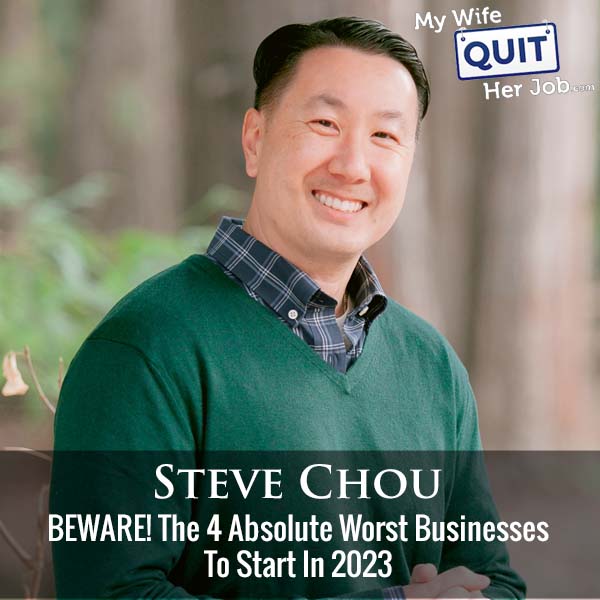
In this Family First Friday episode of the My Wife Quit Her Job podcast, I go solo through each of the four business models, share the specific reasons I would not touch them today, and then explain the path I would take instead. My goal is to save you the six to twelve months of wasted time and the thousands of dollars in inventory or lease deposits that a bad choice here will cost you.
Here is what makes each of these four businesses a trap in the current market, and what to do about it.
Get My Free Mini Course On How To Start A Successful Ecommerce Store
If you are interested in starting an ecommerce business, I put together a comprehensive package of resources that will help you launch your own online store from complete scratch. Be sure to grab it before you leave!
Table of Contents
Key takeaways
- Retail arbitrage puts you on a hamster wheel of shopping clearance racks with no real moat. My buddy makes 35 to 50K a year at it but shops eight hours a day and drives a truck. One brand complaint (Lego revoked his selling privileges) can wipe out your inventory overnight.
- Amazon wholesale margins look decent (roughly 50 percent gross, 20 to 25 percent net after fees), but you compete for the buy box with every other seller of the same SKU and prices race to the bottom. The only viable version is an exclusive contract, which brands rarely give and can pull back at any time.
- AliExpress dropshipping ships junk with 60-day delivery times and no quality control, and you own every customer service complaint. The founder of Spocket, a US dropshipping app, agreed on my podcast that AliExpress is not a long-term model.
- A brick and mortar retail store would have cost my wife and me roughly $500,000 to launch Bumblebee Linens. We spent $630 online instead and made over $100,000 in profit in year one.
- The pattern across all four: no control over supply, no control over price, and no owned customer relationship. Build a business where you own the product, the brand, and the buyer list.
Why is retail arbitrage a bad business to start today?
Retail arbitrage is a bad business to start today because too many bargain shoppers are already doing it, the model does not scale past what you can physically buy and ship, and one brand complaint on Amazon can revoke your ability to sell overnight. Retail arbitrage is the model where you buy discounted product from Target, Walmart, or clearance racks and resell it on Amazon, eBay, or Etsy for the price difference. It sounds like free money the first time you flip a product, and then reality sets in.
I actually started with retail arbitrage myself before I launched Bumblebee Linens. Years ago I walked into a toy store and grabbed five Tickle Me Elmo dolls when they were sold out everywhere, flipped them on eBay the same weekend for a solid profit, and thought I had figured out a repeatable business. I have never replicated that flip since, and that is the honest experience of most people who try.
You cannot scale retail arbitrage past your own two hands
You are capped by how many items you can find, buy, store, pack, and ship yourself. I have a friend who makes 35 to 50K a year doing retail arbitrage full time, and to hit that number he shops eight hours a day and drives a truck around town collecting inventory.
That is a job, not a business. The moment he stops sourcing, revenue stops.
One brand complaint can wipe out your inventory on Amazon
If you sell arbitrage on Amazon, the brand you are reselling can decide at any time that they do not want arbitrage sellers on their listings, and Amazon will honor that request. The same friend once bought a truckload of Lego on clearance to resell on Amazon. Then Lego decided arbitrage sellers were not allowed and revoked his selling privileges on their catalog.
He was stuck with a pile of Lego and no legal way to sell it on the largest marketplace he had built his business on. That risk sits over every arbitrage seller and gets worse every year as brand-gating on Amazon expands.
Why is Amazon wholesale a bad business model in 2026?
Amazon wholesale is a bad business model because you sell branded products that dozens of other sellers also sell, and the buy box always races the price to the bottom. Amazon wholesale means you buy inventory in bulk from an established brand at wholesale prices and then sell it on Amazon FBA. It is a step better than retail arbitrage because you get consistent supply from one source, and gross margins run around 50 percent, with 20 to 25 percent net after Amazon fees and FBA.
The problem is the buy box. Only one seller wins the buy box on a listing at any given moment, and the winner is almost always the lowest price. Look at a Pantene shampoo listing right now and you will see eight or more sellers all fighting for that one slot, cutting each other on price every hour of the day.
The only viable wholesale play is an exclusive contract, and those are rare
The only version of Amazon wholesale that consistently works is landing an exclusive agreement where you are the only authorized seller of a product. My student Abby Walker has that arrangement with Insolia and sells their insoles under her brand VivianLou.com, and she does millions in revenue every year as the sole seller.
These exclusive deals are hard to land. Most brands now require you to have a brick and mortar store or a strong existing online presence before they even consider it, and many brands prefer to sell their own products on Amazon and keep the full margin themselves.
Wholesale contracts churn every year
The friends I know who make Amazon wholesale work full time are constantly losing wholesale accounts and hunting for new ones to replace them. If you are going to do wholesale, sell on your own website where you are the only seller and the brand cannot be undercut by six competitors on the same page.
Why AliExpress dropshipping is a business you should not start
AliExpress dropshipping is a business you should not start because the products are low quality, shipping from China takes up to 60 days, and you own every customer complaint even though you never touch the product. AliExpress dropshipping works like this: you list a product from AliExpress on your Shopify or WooCommerce store, and when a customer buys, you order it on AliExpress and have it shipped straight to them. You pocket the difference.
Apps like DSers make the flow one-click, so it costs nothing to start. What the dropshipping gurus do not tell you is that you are the storefront the customer trusts, and every quality problem lands in your inbox.
60-day shipping from China kills any customer relationship
The cheapest viable AliExpress shipping method that does not eat your margin takes up to 60 days to reach a US customer. Nobody in 2026 waits 60 days for a package.
Search “AliExpress reviews” on Google and you will find thousands of complaints about broken, misdescribed, or missing products. When those complaints come in, you handle them, not the seller in China.
The AliExpress supplier base is not real suppliers
The vendors on AliExpress are largely regular people reselling stuff, not real factories or wholesalers. Prices move, listings vanish, and keeping your store in sync with what is actually available is a full-time firefight.
I interviewed the founder of Spocket, a popular US-based dropshipping app, on my podcast about AliExpress dropshipping. He agreed flat out that AliExpress can make you a couple of bucks in the short term but will not build a long-term business. Spocket itself does not source from AliExpress.
Why a brick and mortar retail store is one of the worst businesses to start
A brick and mortar retail store is one of the worst businesses to start because the upfront cost is enormous, foot traffic is shrinking, and every advantage a physical store once had can now be replicated online for a fraction of the money. When my wife and I priced out a physical store for Bumblebee Linens back in 2007, the lease deposit, buildout, fixtures, and starting inventory came out to roughly $500,000 before we sold a single handkerchief.
We went online instead. Our total startup cost was $630, and we made over $100,000 in profit in the first year of business. We were profitable from day one.
Retail commerce keeps moving online
Physical retail keeps losing share to online year after year, and the shift accelerated after 2020. Starting a physical store today means signing a multi-year lease and buying inventory into a shrinking channel while your online-only competitors iterate weekly at a tenth of the fixed cost.
Launching an online store is easier and cheaper than ever
Back in 2007 it took me several months to code and launch Bumblebee Linens. Today you can have a Shopify, BigCommerce, Shift4Shop, or WooCommerce store live in a matter of days.
The tech-averse instinct is that physical feels safer because it is tangible. The numbers say the opposite. Online lets you start for hundreds instead of hundreds of thousands, test products in weeks instead of years, and reach the entire country from day one.
What to do instead of these four business models
Do the opposite of what makes these four models fail. Sell products you own and control (your own brand, not someone else’s), on a channel you own (your own website is the ideal, Amazon private label is a distant second), with a customer list you own (email and SMS), and with a fulfillment path where you control quality (US-based suppliers or your own inventory, not a random AliExpress seller).
That is the model my wife and I used to build Bumblebee Linens into a seven-figure store on a $630 starting budget. It is also the model I teach in my flagship course.
The four models above break because you rent everything: you rent your supply from a brand that can pull the plug, you rent the buy box from Amazon’s algorithm, you rent the customer trust that AliExpress shipping destroys, or you rent a physical building that costs six figures a year in overhead. Own your stack instead.
Frequently asked questions
What is the worst business to start in 2026?
The four worst businesses to start in 2026 are retail arbitrage, Amazon wholesale on non-exclusive products, AliExpress dropshipping, and a new brick and mortar retail store. All four give you no control over supply, price, or the customer relationship, and each has a specific failure mode that gets worse every year.
Is retail arbitrage still profitable on Amazon?
Retail arbitrage can still generate 30 to 50K a year for a full-time sourcer who is willing to shop clearance racks eight hours a day, but it does not scale and one brand-gating decision can wipe out your inventory. It is a job, not a durable business.
What is the difference between retail arbitrage and Amazon wholesale?
Retail arbitrage means buying discounted products at retail stores (Target, Walmart) and reselling them on Amazon, while Amazon wholesale means buying in bulk directly from a brand at wholesale prices. Wholesale gives you consistent supply from one source, but you still compete for the buy box with every other authorized seller of the same product.
Why is dropshipping from China a bad idea?
Dropshipping from China through AliExpress is a bad idea because shipping takes up to 60 days, quality control is essentially zero, and you own every customer complaint. The tooling makes it look effortless to start, but you cannot build a repeat-customer brand on 60-day arrivals of low-quality product.
How much does it cost to open a brick and mortar retail store?
Opening a brick and mortar retail store typically costs several hundred thousand dollars once you factor in the lease deposit, buildout, fixtures, and starting inventory. When my wife and I priced one out for Bumblebee Linens, the number came in around $500,000, while our online launch cost $630 and turned a $100,000 profit in year one.
What ecommerce business model do you recommend instead?
I recommend selling your own private-label products on your own website, ideally with a distinct brand and a direct-to-consumer email and SMS list. You own the product, you own the pricing, you own the customer, and no marketplace algorithm or brand policy can pull the rug out from under you overnight.