
Podcast: Download (Duration: 50:17 — 57.8MB)
The most reliable way to run a challenge that grows your brand and sells your products is to design a short (2 to 14 day) activity your audience can actually finish, front-load a 15-minute mindset session so buyers can afford to say yes emotionally, and close with an offer that reframes free attendees as “guests” and paid buyers as “members.” Two very different challenges (Amy Porterfield’s paid 37-dollar list-building challenge and Shalene Johnson’s free 14-day walking challenge into a 14.95-a-month membership) both work, and picking the right pattern depends entirely on how easy your quick-win is.
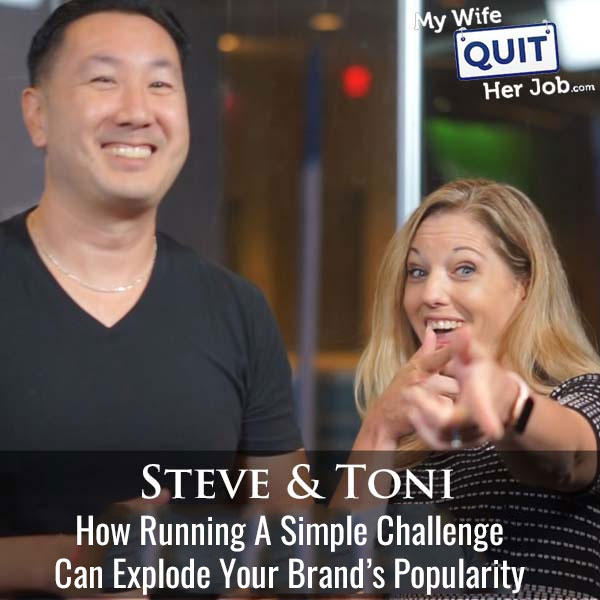
This is a Profitable Audience episode of the My Wife Quit Her Job podcast, where my co-host Toni Herrbach breaks down two challenges she attended in the same week and the exact tactics she plans to steal from each. Alicia Rinozo (a past Sellers Summit speaker) also grew an eight-figure water-bottle business almost entirely on the back of fitness challenges, so this format works for physical products too.
Below is the full breakdown: the two challenge models, the mindset trick that lifts conversion, why “guest vs member” language works, and the exact template you can copy for your own brand.
Get My Free Mini Course On How To Start A Successful Ecommerce Store
If you are interested in starting an ecommerce business, I put together a comprehensive package of resources that will help you launch your own online store from complete scratch. Be sure to grab it before you leave!
Table of Contents
Key takeaways
- Two proven challenge models: paid live-webinar-style (Amy Porterfield, 37 dollars for a 4-day challenge with a 99-dollar VIP upgrade), and free auto-drip-style (Shalene Johnson, free 14-day walking challenge into a 14.95/month membership).
- A 15-minute mindset session BEFORE the main teaching is the single highest-leverage tactic in the whole episode. 95 percent of non-buyers are blocked by self-doubt, not by price or product.
- Charging even a small entry fee (27 or 37 dollars) filters out low-intent attendees but roughly halves signups. Only use it if you have list size or social proof to absorb the drop.
- Auto-drip challenges scale infinitely. Shalene ran only 2 live Zoom calls (day 0 kickoff and day 14 close) across the entire 2-week challenge; every other daily touchpoint was a pre-recorded audio email.
- Use guest experts on 50 to 60 percent of the days. Shalene delivered roughly 6 of 14 daily audios herself and used credentialed guests (with recognizable names or bestselling books) for the rest.
- “You were our guest in the free challenge. Now become a member” is a verbatim script worth stealing. It reframes the upsell as an upgrade, not a purchase.
- Design the quick-win to match your audience’s difficulty tolerance. Walking is a nearly guaranteed win in 2 weeks. Setting up an email lead magnet is not.
Why every challenge needs a 15-minute mindset session before the teaching
The single highest-leverage tactic in modern challenge marketing is a 15-minute mindset session delivered right before the main teaching, because roughly 95 percent of non-buyers are blocked by self-doubt rather than by price, product, or logistics. If you handle the confidence objection before the sales pitch, the pitch itself becomes almost automatic.
Amy Porterfield’s list-building challenge ran mindset training at 11 a.m. Eastern (some of it live, some pre-recorded from other experts) and then the main webinar at noon. The gap was deliberate: get people into the right headspace, let it settle, then teach.
The “financial hurdle” almost every course, membership, and product faces is downstream of a “do I believe I can do this?” hurdle that most creators skip entirely.
I saw the same effect in my own Family First Challenge. The first 2 full days were pure mindset content with zero actionable steps, and I was convinced attendees would revolt. Instead, those days generated the most engaged Q&A of the whole event and the “how did you get started when you didn’t know what you were doing?” questions were the sticky ones.
Amy Porterfield’s paid challenge model, explained
Amy Porterfield’s list-building challenge is a paid 37-dollar 4-day live webinar series with a 99-dollar VIP upsell (extra Q&A Zoom call plus mini-course) that funnels attendees into her 497-dollar List Builder Society course. It works because her list is large enough (reportedly around 300,000 subscribers) that even a modest signup conversion produces thousands of paid attendees at 37 dollars each.
The style is presidential-debate polished. Landing pages, slides, and worksheets are pixel-perfect, questions are prepared in advance rather than answered live, and the whole flow feels like a produced event. That polish is what justifies the upsell into a 497-dollar course, because the perceived production quality signals the paid product will be equally professional.
The paid entry fee also acts as a filter. Casual browsers who “just want the freebie” self-select out at 37 dollars, and the remaining audience is meaningfully more likely to buy the 497-dollar upsell. In my own testing (gating a workshop behind a 27-dollar book purchase), signups roughly halved but the buyers who did show up were the serious ones.
Why the paid model is not right for most creators
Paid challenges require either a huge existing list or heavy social proof to overcome the initial resistance to paying for what everyone else offers free. If you are early in your creator journey, a paid 37-dollar entry will typically kill signups without producing enough qualified attendees to justify it.
The VIP-tier upsell also depends on scarcity of access. Amy’s VIP Zoom calls have been reported at 1,800 attendees at once, and she deliberately does not answer live audience questions inside them. The value proposition is “you are in the room with her,” not “she is answering your specific question.”
The replay-expiration controversy worth learning from
Amy’s team took the paid webinar replays offline on a specific date (February 21, 2024 in this cohort), which triggered visible frustration in the associated Facebook group when the expiration was not clearly communicated up-front. Team Porterfield’s response was that the challenge was designed as a synchronous group activity, not an evergreen self-paced product.
The lesson for anyone running a paid challenge: put the replay-expiration date at the top of the sales page in bold, or expect a Facebook-group blow-up on the day it happens. Buried disclosures produce disgruntled buyers, and disgruntled buyers do not convert to the upsell.
Shalene Johnson’s free walking challenge model, explained
Shalene Johnson’s 14-day walking challenge is a free daily-email challenge with 2 live Zoom bookends (day 0 kickoff, day 14 close) and 14 daily pre-recorded audio emails, converting attendees into a 14.95-a-month (or 99-a-year) Phase It Up membership at the closing call. It scales infinitely because almost none of it requires her live attendance during the challenge.
The structural genius is that a walking challenge means participants have headphones in their ears anyway, so audio content lands perfectly. Every morning, attendees got an email with an audio recording matched to walk length (15, 30, 45, or 60 minutes) covering hormones, nutrition, energy, zone-2 cardio, or a general mindset check-in.
The offer at day 14 is deliberately reframed: “You were our guest in this free challenge. Now become a member.” That single verbal switch (guest vs member) turned a purchase decision into an upgrade decision, which is emotionally lower-friction than “buy my thing.”
Use guest experts on 50 to 60 percent of the days
Only about 6 of the 14 daily audios were Shalene’s own recordings. The other 7 to 8 were guest experts with real credentials (nutritionists, personal trainers, doctors) and real name recognition (bestselling books, large social followings). This does two things: it dramatically reduces the challenge-creator’s workload, and it borrows credibility from experts the audience already trusts.
For any creator building a challenge, this is the single highest-ROI production choice. Recruit 6 to 8 credentialed guests, record 15-minute audios once, and schedule them across the challenge. The whole 14-day sequence can be built in a single week in December for a January launch, then re-run every cohort.
Include done-for-you assets like meal plans and shopping lists
Shalene’s daily emails included professionally-designed meal plans (vegetarian and non-vegetarian options), shopping lists, and printable trackers, all built in Canva. These are cheap to produce and dramatically raise perceived value, and they give attendees a physical artifact of the challenge that keeps her brand present in their kitchen for weeks after the challenge ends.
Amy vs Shalene: which challenge model should you copy?
Pick your challenge model based on how easy your quick-win is: use Shalene’s free auto-drip model when the challenge activity is easy for most people to finish (walking, journaling, water intake, gratitude), and use Amy’s paid live model when your list is large enough that a 50 percent signup drop from the entry fee still fills the room.
Here is a side-by-side comparison of the two models.
| Element | Amy Porterfield (paid list-building) | Shalene Johnson (free walking) |
|---|---|---|
| Entry cost | 37 dollars, plus 99-dollar VIP upsell | Free |
| Duration | 4 days | 14 days |
| Live element | Daily live webinars at noon Eastern | 2 Zoom calls only (day 0 and day 14) |
| Daily delivery | Live webinar + mindset session | Pre-recorded audio email |
| Guest experts | Some in mindset segments | 7 to 8 out of 14 daily sessions |
| Q&A style | Pre-submitted questions, presidential-debate polish | Message on social or reply to email |
| Community | Facebook group | Social media plus email replies |
| Backend offer | 497-dollar List Builder Society course | 14.95/month (or 99/year) Phase It Up membership |
| Best for | Large lists, difficult-implementation topics | Any list, easy-to-finish topics |
| Ceiling on scale | Bounded by live capacity | Scales infinitely |
How to design the quick-win at the heart of any challenge
The quick-win is the single most important design choice in a challenge, because attendees who felt a genuine result during the free portion convert to the paid backend at multiples of the rate of attendees who did not. Walking for 30 minutes a day for 14 days produces measurable energy improvements for most people, so Shalene’s conversion rate is naturally high.
Setting up an email lead magnet in 4 days produces a landing page but no subscribers, so many of Amy’s attendees hit day 5 asking “okay, I did this, now how do I get people to my website?” That gap is why Amy needs the mindset session and the polish and the paid filter, because her quick-win is genuinely harder to feel.
For your own challenge, ask: can 80 percent of my attendees actually finish this activity in the challenge window, and will finishing it produce a felt result they can name to a friend? If both answers are yes, run the free auto-drip model. If either is no, add a mindset track, extend the timeline, or pick an easier win.
A step-by-step template for your first challenge
Here is the template compressed into a build order you can start on this month.
- Pick a challenge activity that 80 percent of your audience can finish in 7 to 14 days and that produces a felt result.
- Design a 15-minute mindset session that handles the “can I actually do this?” objection. Deliver it before the main teaching each day.
- Recruit 6 to 8 credentialed guest experts to record 15-minute audio segments once. Schedule them across the challenge days.
- Produce done-for-you assets in Canva (meal plans, checklists, tracking sheets, printable graphics) that raise perceived value.
- Structure the delivery as one daily email with the audio, the asset of the day, and a single call-to-action.
- Book only 2 live sessions: a day-0 kickoff (goals, why this matters) and a final call (social proof plus the offer).
- Frame the offer in guest-to-member language: “You were our guest in the free challenge. Become a member for [x].”
- Keep the paid membership under 20 dollars a month or 100 dollars a year to remove the price objection for any attendee who felt a real result.
Frequently asked questions
What is a challenge in marketing?
A marketing challenge is a short (typically 2 to 14 day) structured activity that a creator or brand invites their audience to complete together, ending with an offer to join a paid product, membership, or service. The challenge produces a felt result during the free portion, which dramatically raises conversion to the paid offer at the end.
Should I charge for my challenge or make it free?
Charge for a challenge only if you have a large existing list (roughly 50,000-plus subscribers) or heavy social proof, because paid entry typically halves signups. Free challenges scale better for most creators and are especially effective when the challenge activity is easy for most attendees to finish and feel a result from.
How long should a marketing challenge run?
Marketing challenges typically run 4 to 14 days. Shorter (4 to 7 day) challenges work when the topic requires live teaching, like Amy Porterfield’s 4-day list-building challenge. Longer (14 day) challenges work when the activity is habit-based and self-directed, like Shalene Johnson’s walking challenge.
What is the mindset session in a challenge and why does it matter?
The mindset session is a short (typically 15-minute) segment delivered before the main teaching that addresses the audience’s self-doubt and confidence blocks. It matters because roughly 95 percent of non-buyers are blocked by self-doubt rather than by price or product, so handling the confidence objection first makes the paid offer at the end far easier to convert.
How do you monetize a free challenge?
The most effective way to monetize a free challenge is to design a paid membership, course, or product that continues the transformation the challenge started, and to pitch it at the final live call by reframing free attendees as “guests” and paid buyers as “members.” Shalene Johnson uses this exact structure to convert free walking-challenge attendees into a 14.95-a-month Phase It Up membership.
Can I use guest experts in my challenge?
Yes, using guest experts on 50 to 60 percent of your daily sessions is one of the highest-leverage moves in modern challenge marketing. Guest experts reduce your production workload, borrow credibility from names your audience already trusts, and let you build a full 14-day sequence in a single week of recording.
What tools do I need to run a challenge?
At minimum you need an email service provider (ConvertKit, Klaviyo, ActiveCampaign) to send the daily emails, an audio or video recording setup for daily content, Canva for done-for-you assets, and either a Facebook group or a social media presence for community engagement. A live Zoom account is enough for the day-0 kickoff and day-14 closing call.