
Podcast: Download (Duration: 47:14 — 54.3MB)
The core difference between Global Sources and Alibaba is vetting and supplier composition. Global Sources verifies every advertiser’s business registration through third parties like Dun and Bradstreet, carries a higher proportion of actual manufacturers, and labels trading companies openly. Alibaba has far more listings and a much harder time distinguishing manufacturers from middlemen.
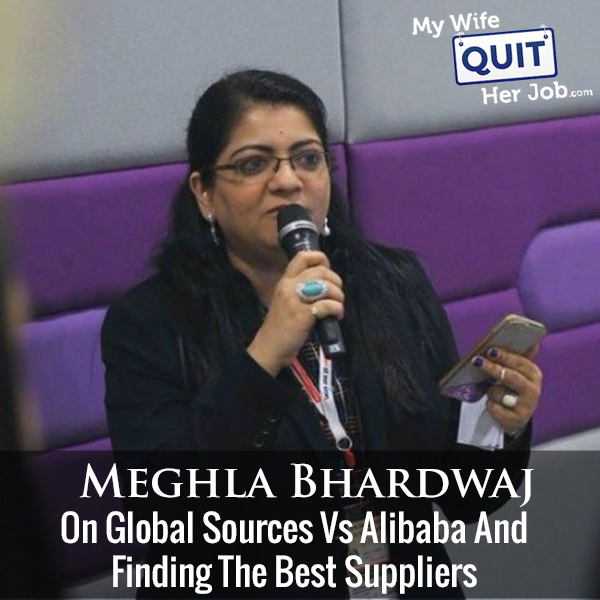
Meghla Bhardwaj is head of content marketing at Global Sources, which was founded in 1971 and started as printed magazines before moving to the web in the 1990s and launching trade shows in the early 2000s. She has spent 18 years with the company across India, the Philippines, China, and Singapore, including roughly a decade living in Shenzhen.
Below is how the platforms differ, how to write a supplier inquiry that gets answered, when a trade show is worth the flight, and how to plan factory visits in China.
Get My Free Mini Course On How To Start A Successful Ecommerce Store
If you are interested in starting an ecommerce business, I put together a comprehensive package of resources that will help you launch your own online store from complete scratch. Be sure to grab it before you leave!
Table of Contents
Key takeaways
- Global Sources verifies business registration for every advertiser through third parties such as Dun and Bradstreet, Experian, or Ease Credit.
- A “verified manufacturer” label means Global Sources checked the government-issued license permitting that company to manufacture.
- Suppliers vet your inquiries too. Vague messages asking for a catalog are a red flag that marks you as a non-serious buyer.
- Global Sources has a small-order filter, where small typically means around 100 pieces.
- Trade show suppliers tend to be more reliable, because attending a show is a real financial investment.
- New products often launch at trade shows rather than online, because suppliers fear competitors copying online listings.
- Attend Global Sources shows in Hong Kong without a visa or a language barrier. The Canton Fair in Guangzhou requires a China visa and a VPN.
- Meghla’s advice is to source mostly online and visit a show once a year or once every two years, combined with factory visits.
What Global Sources is and how it differs from Alibaba
Global Sources is a B2B supplier platform established in 1971, making it the original supplier directory. It began as printed magazines, launched Globalsources.com in the 1990s, and added trade shows in the early 2000s.
The company connects overseas importers with suppliers in China and elsewhere in Asia through two channels: the online directory and sourcing trade shows held in Hong Kong every April and October.
| Factor | Global Sources | Alibaba |
|---|---|---|
| Trade shows | Yes, Hong Kong every April and October | Online only |
| Supplier mix | Higher percentage of manufacturers | More trading companies, harder to distinguish |
| Transparency | Trading companies typically state so on their profile | Often unclear |
| Verification | Business registration verified by third parties; manufacturer licenses checked | Varies |
| Curation | Analyst’s Choice badges, trending and popular product lists, design awards | Search-driven |
Global Sources works directly with each supplier to write their company profile and identify what they actually specialize in. That is why the listings communicate more about a company than a self-served profile does.
Curation is the other differentiator. The Analyst’s Choice badge flags new and innovative products, and the shows include curated zones such as a millennial zone plus an externally judged design award.
My own experience matches this. There is considerably less riffraff on Global Sources, whereas on Alibaba you are often unsure whether you are talking to a manufacturer, a trading company, or someone buying products elsewhere and reselling them.
How Global Sources vets its suppliers
Global Sources verifies business registration details for all advertisers through independent third parties including Dun and Bradstreet, Experian, and Ease Credit. Without a proper business registration, you cannot list.
Trade show exhibitors go through the same verification. The additional signal is the verified manufacturer label, which means Global Sources checked the license issued by the relevant government department permitting that company to manufacture.
That label does not guarantee every displayed product is made in-house. Chinese companies commonly manufacture some product lines themselves and outsource others, and the label tells you their primary category is likely their own factory.
Meghla’s framing for buyers is trust but verify. That applies to the platform’s checks and to your own.
How to write a supplier inquiry that gets a reply
Suppliers vet incoming inquiries just as buyers vet suppliers, and Global Sources receives regular complaints from suppliers about low-quality inquiries from people who only want free samples. The way to signal you are serious is asking specific product questions.
Asking for a catalog is the red flag. A vague message saying you are looking for a product and would like their catalog tells a supplier you are new and do not know what you are talking about.
A strong inquiry names the exact product and material, states an initial order quantity, indicates where volumes go from there, names your destination market, and asks about the specific certifications that market requires. Something like: I am looking for stainless steel garlic presses in this specific grade, I would order 100 pieces initially and increase volume once established, I am importing into the US, can you confirm you hold these certifications.
It also helps to give background on your own company. You do not need to announce you are brand new. Say you are an online seller, name your product category, and link your website, because suppliers do look at what else you sell.
Finding suppliers who accept small orders
Global Sources has an “accept small orders” filter at the top of search results. Small is defined by each supplier since it varies by category, and in general it means around 100 pieces.
Small-order availability is expanding, and not only among trading companies. Manufacturers are adjusting supply chains and production runs for smaller orders because even large importers want to test products in small quantities now.
You still confirm the actual MOQ directly with each supplier.
How to vet a supplier for your own market
Start by identifying the regulations that apply to your product in your destination market, then look for suppliers who already export there. A supplier who ships to the US regularly already knows the US requirements.
The second decision is manufacturer versus trading company. Trading companies buy at higher volume from manufacturers and resell in smaller quantities, which makes them useful when you are testing a product and cannot find a manufacturer with a low enough MOQ.
There is no universal good or bad supplier. Meghla’s position is that it depends entirely on your requirements, and listing those requirements is what makes filtering easy.
Should you trust a supplier’s certification claims?
Trust larger, established companies more than small workshops with limited export history. A supplier already selling to Disney or other well-known US brands is more credible than a new factory with no major buyers.
For anything you are scaling or a new product line, run your own independent testing. Buy a sample from the supplier and send it to a testing laboratory yourself.
Global Sources does not publish regulatory requirements by product. Inspection companies such as Asia Inspection typically have that information available or will provide it on request.
Protecting your product from being copied by a supplier
Signing an agreement with your supplier does not guarantee protection and does make a supplier think twice. A supplier determined to sell your product elsewhere will do it regardless of a contract.
The more likely threat is other sellers rather than your manufacturer. Most manufacturers do not want to do B2C because their profit comes from high-volume production, not from selling 10 units on Amazon.
Some manufacturers are listing on Amazon directly, and by and large it is Chinese third-party sellers with access to those factories and wholesale markets who sell on Amazon. Manufacturers still want the large orders.
How to buy samples from suppliers without negotiating
Global Sources launched a buy-samples section at Globalsources.com/buysamples where roughly 100,000 products can be purchased at the click of a button. The listed price includes shipping anywhere in the world.
Normally getting a sample means a long back and forth: asking whether a sample exists, being offered a different model, negotiating shipping. This removes that.
Samples ship within two days directly from the supplier, since Global Sources holds no inventory. A matching “accept sample orders” filter appears on search results.
Sample prices are higher than wholesale and Global Sources encourages suppliers to price them low and treat the cost as marketing. High sample prices turn off legitimate buyers more than they filter out sample hunters, so a product a supplier might otherwise quote at $100 as a sample may appear at $50 to $60.
This is most useful for comparing baseline quality across manufacturers before you commission a customized sample. Having a sample credited against your first large order still works the same way.
When is a sourcing trade show worth attending?
Meghla’s recommendation is to do most sourcing online and attend a show once a year or once every two years, combining the trip with factory visits. There are four specific advantages a show provides that a website cannot.
You see new products first. Suppliers frequently withhold new products from their online listings because competitors copy them, and launch them at trade shows instead.
The sourcing process compresses dramatically. Searching online, contacting suppliers, and waiting for samples takes months, while a show lets you compare products from many manufacturers in a couple of days.
You can physically handle products, which reveals quality in ways photographs cannot for many categories.
Pricing and payment terms improve. Exhibitors take you more seriously because you flew in and committed days to being there, and a few cents per unit matters to your bottom line.
Trade show suppliers also tend to be more reliable in general, because exhibiting is a real financial investment in putting themselves in front of buyers. Many exhibitors also list on the Global Sources website.
How to negotiate with Chinese suppliers
Do not open with price. Establish first that you are a serious buyer who will place larger volumes and repeat orders.
Negotiating before your first large order is fine if you have tested the product and are confident it will sell, because you can credibly promise the volume. Chinese suppliers expect negotiation, so there is nothing rude about it.
Negotiation is easier in person at a trade show than over email.
Global Sources trade shows vs the Canton Fair
Global Sources runs four exhibitions each April and October in Hong Kong: consumer electronics, mobile electronics, lifestyle products covering gifts and home goods, and fashion. With two electronics shows, that is their strongest category.
The Canton Fair in Guangzhou runs three phases: electrical and electronics first, gifts and home products second, and fashion and textiles third. Most Amazon sellers attend phase two.
The Canton Fair is far larger. Global Sources is smaller and focuses on curating products so buyers can find new and innovative items more easily.
Both are timed to the same April and October windows and sequenced so buyers can move between them without overlapping product categories.
Entry to Global Sources shows is free with online pre-registration, or a small fee at the door.
Hong Kong vs mainland China for a first-time buyer
Hong Kong requires no visa for most nationalities, has no meaningful language barrier, and needs no VPN. Even taxi drivers speak basic English, and menus and signage are in English.
Guangzhou is more difficult. Far fewer people speak English, taxi drivers generally speak none, and you should carry your hotel address written in Chinese at all times.
Mainland China requires a visa arranged at least a couple of weeks ahead, and a multiple-entry visa if you plan to leave and return. Google, Gmail, and YouTube are blocked, so bring a VPN.
Meghla suggests flying into Guangzhou for the Canton Fair first, then coming to Global Sources in Hong Kong. My own preference is the reverse: base yourself in Hong Kong, take the train to the Canton Fair, and come back, because Hong Kong is more enjoyable and the food is better.
Electronics suppliers also tend to have stronger English than other categories, since those factories cluster in the Pearl River Delta near Hong Kong.
How to work a trade show efficiently
List the specific products and categories you want before you go. That focus is what stops you from wandering, which matters enormously at a show as large as the Canton Fair.
Write down your full requirements: specifications, functions, features, quality standards, certifications, and whether you want a manufacturer or a trading company. Then a couple of questions at each booth tells you whether to stay or move on.
Get price estimates online beforehand so you have a benchmark to compare against booth quotes.
Shortlist exhibitors from the online exhibitor list, get a floor map, locate each booth, and plan a walking route. Bring plenty of business cards, since card exchange is standard practice in China.
Practical items: a high-capacity power bank and comfortable shoes, because you will walk a great deal.
How to schedule factory visits in China
Pick one city and visit several factories there, because China organizes production into regional hubs by product category. Scheduling visits across different cities means losing days to travel.
Electronics generally means Shenzhen or Guangzhou, about one and two hours from Hong Kong respectively. Plastic goods like spatulas are more likely in Zhejiang province in the east, often around Ningbo, which handles appliances and similar products.
The logistics are usually handled by the supplier. It is common for a vendor to send someone to meet you at the airport with a sign, drive you to the factory, tour you around, and take you for a meal.
Expect drinking, often baijiu, which Meghla advises limiting to two shots. If your next factory is nearby, your host will frequently drive you there, which matters because transportation in interior cities can be genuinely difficult.
Factory visits are what take a supplier relationship to the next level. Seeing how your products are actually made changes the relationship.
You can find Global Sources exhibition information at GlobalSources.com/exhibitions and summit information at GlobalSources.com/summit.
Frequently asked questions
Is Global Sources better than Alibaba?
Global Sources verifies every advertiser’s business registration through third parties, carries a higher share of actual manufacturers, and labels trading companies transparently. Alibaba has far more listings, which is an advantage for selection and a disadvantage for filtering out middlemen.
What does the verified manufacturer label mean on Global Sources?
It means Global Sources checked the government-issued license permitting that company to manufacture products. It does not guarantee every listed product is made in-house, since Chinese companies commonly outsource secondary product lines.
What should you say in your first email to a supplier?
Name the exact product and material, state an initial order quantity and where volumes go from there, name your destination market, and ask about specific required certifications. Asking for a catalog with no specifics marks you as a non-serious buyer.
What is a small order on Global Sources?
Roughly 100 pieces, though each supplier sets its own threshold since it varies by category. A search filter labeled “accept small orders” surfaces suppliers willing to work at that scale.
Can you trust a supplier’s certification claims?
Larger established suppliers with major-brand customers are more credible than small new workshops. For anything you plan to scale, buy a sample and send it to an independent testing laboratory yourself.
Will a Chinese supplier steal your product idea?
It is possible, and an agreement makes a supplier think twice without guaranteeing anything. The greater risk is competing sellers, since manufacturers make their money on volume production rather than selling small quantities on Amazon.
Do you need a visa to attend the Canton Fair?
Yes. Guangzhou is in mainland China and requires a visa arranged weeks in advance, plus a multiple-entry visa if you will leave and return. Hong Kong, where Global Sources shows are held, requires no visa for most nationalities.
How should you plan factory visits in China?
Concentrate visits in one city, because production clusters by category into regional hubs and traveling between distant cities consumes days. Suppliers commonly collect you from the airport, tour the factory, and drive you to nearby factories afterward.