Podcast: Download (Duration: 52:36 — 60.5MB)
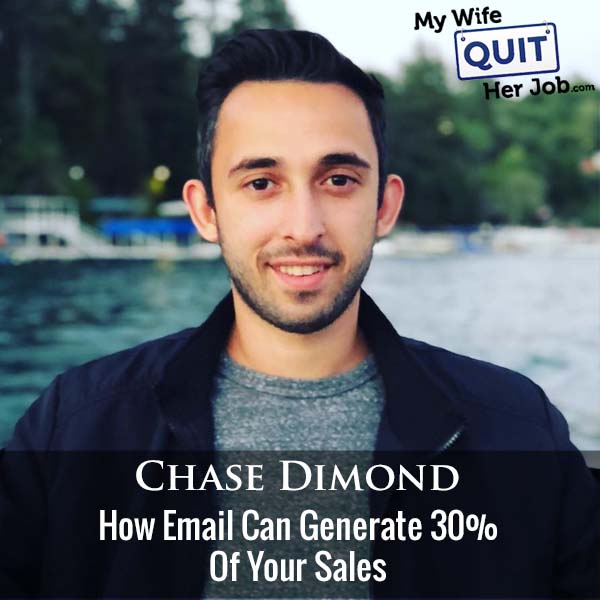
Today, I have my buddy Chase Dimond on the show. Chase is the co-founder of Boundless Labs which is a top email marketing agency with a focus on CBD companies.
Chase lives and breathes email, and he has helped his clients send hundreds of millions of emails resulting in over 50 million in email revenue. If your email marketing is not driving at least 20% – 30% of your total revenue for your eCommerce store, then you’re leaving money on the table.
Get My Free Mini Course On How To Start A Successful Ecommerce Store
If you are interested in starting an ecommerce business, I put together a comprehensive package of resources that will help you launch your own online store from complete scratch. Be sure to grab it before you leave!
What You’ll Learn
- How to run email marketing campaigns that generate 30% of your sales
- How Chase started Boundless Labs and helped his clients secure 40% – 70% open rates
- How to increase your email marketing open rates and run email marketing the right way for an online store
Other Resources And Books
Sponsors
Postscript.io – Postscript.io is the SMS marketing platform that I personally use for my ecommerce store. Postscript specializes in ecommerce and is by far the simplest and easiest text message marketing platform that I’ve used and it’s reasonably priced. Click here and try Postscript for FREE.

Klaviyo.com – Klaviyo is the email marketing platform that I personally use for my ecommerce store. Created specifically for ecommerce, it is the best email marketing provider that I’ve used to date. Click here and try Klaviyo for FREE.

EmergeCounsel.com – EmergeCounsel is the service I use for trademarks and to get advice on any issue related to intellectual property protection. Click here and get $100 OFF by mentioning the My Wife Quit Her Job podcast.

Transcript
You’re listening to the My Wife Quitter Job podcast, the place where I bring on successful bootstrap business owners and dig deep into what strategies they use to grow their businesses. Today I have my buddy Chase Diamond on the show and Chase is the co-founder of Boundless Labs and he is an expert on email marketing. Chase is also going to be a speaker at Seller Summit 2022. Now, if email isn’t driving at least 20 % of your sales, then you are leaving money on the table and Chase is going to teach us how to do it for an e-commerce store.
00:27
But before I begin, I want to thank Klaviyo for sponsoring this episode. Now I’m super excited to talk about Klaviyo because they’re the email marketing platform that I personally use for my e-commerce store and it depend on them for over 30 % of my revenue. Now you’re probably wondering why Klaviyo and not another provider. Well Klaviyo is the only email platform out there that is specifically built for e-commerce stores and here’s why it’s so powerful. Klaviyo can track every single customer who is shopped in your store in exactly what they bought. So let’s say I want to send out an email to everyone who purchased a red handkerchief in the last week, easy.
00:56
Let’s say I want to set up a special autoresponder sequence to my customers depending on what they bought, piece of cake, and there is full revenue tracking on every single email sent. Klaviyo is the most powerful email platform that I’ve ever used, and you can try them for free over at klaviyo.com slash my wife. That’s K-L-A-V-I-Y-O dot com slash my wife. I also want to thank Postscript for sponsoring this episode. Now, if you run an e-commerce business of any kind, you know how important it is to own your own customer contact list.
01:23
And this is why I’m focusing a significant amount of my efforts on SMS marketing. SMS or text message marketing is already a top five revenue source from my e-commerce store. And I couldn’t have done it without Postscript, which is my text message provider. Now, why did I choose Postscript? It’s because they specialize in e-commerce and that is their primary focus. Not only is it easy to use, but you can quickly segment your audience based on your exact sales data and implement automated flows and abandon cart at the push of a button.
01:50
Not only that, but it’s price well too and SMS is the perfect way to engage with your customers. So head on over to postscript.io slash Steve and try it for free. That’s P O S T S U I P T dot I O slash Steve. And then finally, I want to mention a brand new podcast that I recently released with my partner, Tony. And unlike this podcast where I interviewed successful entrepreneurs in e-commerce, the profitable audience podcast covers all things related to content creation and building an audience.
02:17
No topic is off the table and we tell it like how it is in a raw and entertaining way. So be sure to check out the Profitable Audience Podcast on your favorite podcast app. Now onto the show.
02:34
Welcome to the My Wife, Quit Her Job podcast. Today I have my buddy, Chase Diamond on the show. Now, Chase is someone who I met at Nick Shackelford’s Geek Out event, and he is the co-founder of Boundless Labs, which is a top email marketing agency with a special focus on CBD companies. Chase lives and breathes email, and he’s helped his clients send hundreds of millions of emails, resulting in over 50 million in attributable email revenue. Now, if email marketing is not driving at least 20 to 30 % of your total revenue for your e-commerce store,
03:03
then you are probably leaving some money on the table. And what’s also amazing is that Chase has secured crazy results for his clients, like sending emails with a 40 to 70 % open rate. And today, Chase is going to teach us how to run email marketing campaigns specifically for an e-commerce store. What up, Chase? Steve, my man, how are you? I’m doing well, man. I’m glad we got a chance to catch up before we actually hit the record button. But before we start, give me the quick background.
03:31
how you got started with Boundless Labs and how did you get into email of all things? Yeah, absolutely. Thank you for having me. So really long-winded, I got actually started in marketing by accident when I was 14 years old. At the age of 13, I was diagnosed with Crohn’s disease and I was essentially sick for an entire year through lack of awareness and basically lack of a diagnosis for this disease. So as a 14 year old, I took it upon myself to do guerrilla marketing. At the time I didn’t know I was doing guerrilla marketing.
03:58
but I basically was taking out ads in the newspapers. I was calling my friends. I was doing walks and restaurant fundraisers, so on and so forth. So from 14 to 16, I dedicated my lives to raising awareness and fundraising for the Crohn’s and Cladis Foundation. And at 16, I actually became the youngest board member of CCFA and spent a six-year board term working with them. And in college, I had to help pay for my tuition. So I had to work.
04:26
random jobs and internships at one point in time. think I probably had two or three jobs and internships at a time while also playing college soccer, while also doing business clubs and fraternities. So through college, I really got into marketing. I did a bunch of different marketing from SEO to email, to pay acquisition, this, that, and the other. And email really was the thing that stuck with me as the thing that was really intimate and personal, but scalable. And what I really mean by that.
04:53
So within an email, right, if I can get you to open the email, it’s just me and you. And I have your attention for two seconds, 30 seconds a minute, dependent upon how great my content is. Whereas with something like social, you know, if you’re running an ad on, let’s say Facebook or Instagram, not that it’s not effective. Obviously it’s super effective, but you’ll see, you know, an ad and you also see a post from a friend, a family member, you know, boyfriend or girlfriend. So there are other descriptions on your screen. So for me, I really liked the fact that I could send an email to a thousand people.
05:22
100,000 people, a million people, but in a way that felt really personal for each person. So from there, I was basically building after college products that served college students documents. And I was building travel series and email was really the core at what I did. And I did it in the beginning of my career kind of on the cold email side. So I was building massive audiences with cold email, essentially aggregating data from Instagram, from SoundCloud, from forums and driving traffic to
05:51
know, newsletters and communities. So long-winded, did cold email for a couple of years. Nick and I have been close friends for about 15 years and he hit me up and he’s like, dude, the stuff that you’re doing on cold email is so cool. However, you know, I foresee a day in the future, we’re going to probably be on the wrong side of the law. This was before like GDPR and California privacy and all these things. Why don’t you come join me in e-commerce? So I’ve now been doing e-commerce for about three, three and a half years. Thanks to Nick. So long-winded, that’s kind of my story of how it got to
06:21
you know, boundless labs and in our structure. Right? Yeah, you guys merged, right? Yes. So about a year ago, we merged. So we were doing exclusively ecommerce, email marketing, Nick’s company was doing exclusively paid social, we’ve kind of come together. So all in, about 45 to 50 employees, and we offer email paid and content. This is random. But did you guys meet through soccer? Because I remember Nick was almost pro, right? Yes. So we actually met through our brothers playing soccer. So
06:49
I played soccer my whole life, Nick played soccer his whole life, our little brothers played soccer together, so that’s how I met Nick initially. And Nick did play, he had a stint with the LA Galaxy, so he played in college and then he went pro for think a year or two. Yeah, I thought there was some connection there. So hey, so Chase, what are some of the companies that we might have heard of, e-commerce companies that you’ve helped in the past, and what are some of your biggest wins in terms of sales when helping these companies?
07:14
Yeah, so one that was really cool for me growing up, I was a big fan of the Chive, like the men’s millennial kind of newsletter site. And they have an e-commerce brand called the Chivory, which is an eight figure e-commerce brand. So I had the opportunity to consult for them on their email program for about a year and a half to two years. I actually only had stopped because I had my daughter and I kind of was cutting back a little bit on the consulting, but I worked with them for a while and I think we increased their revenue year over year by like 50%. So that was pretty significant for a brand that was doing
07:43
you know, a couple million dollars already from email. So that was a cool one. We currently actually work with a brand called Poopery, which is the spray for the bathroom. Yeah, I’ve seen the commercials. look really good. Maybe I saw them from Nick’s feed actually. Yeah, Poopery is awesome. I mean, that’s like a household name that’s in a bunch of stores. Never thought we’d land them. Happened to get them as a client. So that was really cool. And then like one or two others. We previously worked with a protein company called Orgain.
08:13
They’re sold in a lot of you know, grocery stores, Amazon, so on and so forth. So we work with, you know, a couple really big household names like that, but a lot of our brands typically do between about one to about $20 million in annual revenue. Um, so they’re kind of smaller, fast growing, you know, seven to eight figure brands that not as many people know, but they’re doing a really great job. Those are brands kind of like nugs, which is like the chicken nugget alternative, you know, a brand called hydrant, which is like a, you know,
08:42
kind of like a electrolyte replenishment for your drink, your water, and so on and so forth. Sweet, which actually is the actual target demographic with this podcast, so it’s perfect. So let’s start from the beginning, because you can’t really do a lot of the techniques unless you actually have an email list. So what are your recommendations on building your email list as quickly as possible? So what we do, so we kind of are middle to bottom of the funnel. So we are completely dependent on top of the funnel traffic.
09:12
that brands drive. So typically that is Facebook and Instagram. Outside that is the other platforms like Google, Snap, Pinterest, et cetera. There may be some SEO, maybe some affiliate, maybe some influencers. So once traffic hits the page, that’s kind where we come in. And we basically leverage forms to collect emails. So whether that’s a pop-up, a fly out, an embedded subscription, we leverage forms and we kind of optimize these forms to collect as much traffic as possible. I
09:41
my own kind of research and also through some of the research that I have from privy, basically having like some kind of call to action of just sign up, there’s no discount, there’s no incentive, you can expect that to convert between one to 2 % of the traffic. So for every 100 people that visit your website, if you just have sign up for our newsletter to get our content, you can expect about one to two people to give you their email. If you have an incentive, whether it’s 5%, 10%, 15 % off, you can expect about five to 10 % of those people to give you their emails, right? So
10:10
every 100 visits, if you have some kind of discount or incentive, you can expect five to 10 people to give you their email. And what’s kind of interesting is the whole giveaway type thing. So enter your email to have a chance to be entered into our weekly giveaway or monthly giveaway, whatever it might be, some kind of like enter to win. We’re actually seeing that converting in the low teens in terms of people giving us their email. So 10 out of every 100, 12 out of every 100, so on.
10:36
That’s how we’re typically collecting emails is through the traffic that’s coming onto the website. All right. That’s one. Two. Um, there’s not a lot of control that we necessarily have on this one, but other ways that we collect email is when someone starts checkout and whether they purchased or not, as long as they’ve entered their email, their phone number, their address and click next, we will collect their email. And then outside of that, we’re leveraging, you know, giveaways, um, and ambassador programs and referral programs to try to grow the list. So what is the top converting?
11:06
email form that you guys have seen with the clients? Is it the giveaways? Yeah, so it’s, it’s interesting, right? So the giveaways gets you the most number of emails. It’s a little bit longer tail in terms of actually seeing like what that conversion looks like just because, you know, if you’re doing a weekly or monthly giveaway, someone signs up and then you have to wait a week and then you have to announce whether they want or not. And then, you know, some people convert other people don’t. So giveaway helps you collect the most email, the conversion on it’s pretty decent, but the
11:34
The interesting thing is like the incentive or the offer, that’s actually like the most immediate in terms of conversion, in terms of actually someone purchasing, even though it’s only five to 10 % and it’s less people giving their email than the other, you see the ROI there the quickest just because when someone enters their email to get a discount code, they’re typically gonna buy as soon as that discount code either shows them on the pop-up itself after they submitted the form or directly within the email. So that’s kind of like the interesting thing. So it kind of depends.
12:02
And we’re still trying to track an attribute, someone coming in through a giveaway and then converting and how they converted just since attribution is a whole thing in and of itself. Yeah. The reason why I’m asking you this question is because traditionally when I’ve done some giveaways in the past, the email quality isn’t as good, but the way I’ve been running them is like, I hate having to remember to like give out the prize after a week. So I use, I started using messenger to just give out a prize every single day automatically through the bot. And then that way I’m collecting emails, but the quality of those emails aren’t nearly as good as my
12:32
standard coupon pop-up form. So I was just curious, since you work with a lot more companies. Yeah, that makes sense. And that’s really cool and interesting about the daily messenger thing. OK, so you get your emails. How many emails should you be sending per week? Like, how do you figure out the frequency? And what is the right frequency? Yeah, so there’s two different types of emails that we’re focused on. And there’s actually three types of emails in general. So I’ll talk about the three types in general, and then I’ll talk about what each one are and kind of the cadence. So there’s campaigns.
13:02
There’s flows, flows is synonymous with email automation, and then there’s transactional emails. So a campaign is a one-time send to a group of contacts. Think about like a Black Friday sale, a new product launch, a holiday offer. Right? Those are all campaigns. And I’ll talk about kind of the cadence in one sec. The flows is an email automation. These are emails that are triggered off of an event or behavior. So someone enters their email into a pop-up that then triggers the welcome series for non-buyers, so long as they have not converted already. And then the transactional emails, I don’t talk about as much about those.
13:32
Those are very important, but the reason I don’t talk about it as much is they’re typically set up by default within your Shopify or, you know, WooCommerce, so on and so forth. are things like shipping confirmation, order confirmation. So it is definitely important to kind of edit and make those look on brand and do what you can just because those inherently have a really high open rate. Um, but I mainly talk about the campaigns and flow. So on the campaign side, the way that I think about sending, you know, numbers of emails per week or per month is you start with one per week, right? Send one per week.
14:01
Look at that open rates, look at the click through rates. Those are like the positive engagements, right? Look at the conversion and then look at the negative things, right? The unsubscribe, the market spam, the bounces. If all of those are solid, right? So if the open rate is North or at around 20%, you know, if the click through, obviously it’s going to vary depending on the kind of content you’re sending. Is it plain text? it designed? Is it an offer? Is it content? You know, the click through will obviously vary also varies by industry, but as long as those metrics look healthy and solid based off what you’re at and what your industry is at, cool.
14:31
And if the unsubscribes and mark a spam, the balances are all low. Great. Can you provide a guideline? Like what number is considered low? Yeah. So it depends. like, for example, like mark a spam, that one’s really important to keep extremely low. So I believe it’s one out of 1000 people can mark as spam. think anything over that is considered a little bit high. Right. On the unsubscribed side, typically about like half percent or lower is what you want to be. You know, if you’re at like 1 % or 2 % or 3 % unsubscribes, it’s
15:01
a little bit higher depending on the ESP, the email service provider that you’re using. For example, I Klaviyo recently rolled out benchmarks that you can kind of see based off other stores using Klaviyo in your industry, like what they’re pacing out. So I think that part is really solid just to be able to see great, we’re average at the open rates, we’re below average on click through, you know, so on and so forth. So you look at all these metrics, right? And then if they all look good, send a second email per week, right?
15:28
Second email, right, there’s not an increase in customer support tickets saying, oh my God, you send me two emails per week, what are you doing? Right, send a third email per week. And at that third email per week, if you notice like after you send one more in the fourth email, there’s friction. You know that there’s the optimal number of emails you probably want to send is two to three emails per week, right? So again, like you’re trying to straddle on between maximizing the number of times you got to send because that’s, you know, going to maximize the opportunity to hopefully drive revenue. But you also want to minimize the churn, right? You want to minimize people.
15:58
unsubscribing by sending them too many emails. And the way that you can send more emails per week, which I’ll happen to annoy one person four times or five times or six times is by leveraging segmentation, right? So with some of our brands, we actually will send four or five, six times a week, but one person might only receive two or three of those emails. Sure. that making sense? Yeah, it does. I’m just wondering though, let’s say you are sending these people three emails a week. Would you be concerned if each one of those sends resulted in a 0.5 % unsubscribe rate?
16:27
which were within your guidelines, but at the same time, you’re still shedding a bunch of people. Yeah. Yeah. I think it depends on like how much revenue we’re driving, right? Like if we’re selling these and we’re driving a lot of revenue, um, and then we can go acquire new customers for, you know, profitable, right? So I think it really depends on like the, the unit economics of like how a brand and what their LTV is, whatnot. think, know, about half a percent, I’m doing that, I’m making a lot of money. I’m probably okay with it. Um,
16:55
Again, a lot of the list size that we work with are fairly large, right? So not that half a percent isn’t a big deal. Obviously, the larger the list, the more people that is. But we’re focused like really on trying to drive A, the conversion and B, like the repeat purchase and that relationship. So I’m not super concerned if it’s a few emails per week at like half a percent. If it goes to like 1%, 2%, I would be more concerned. Okay. And then you mentioned segmentation. How do you manage that?
17:24
We were just talking about acquisition forms initially where you give out a coupon or something. How do you know which buckets to put your people in? Yeah, so for us, there’s a couple of main ways that we segment people and everything revolves typically around, you know, an engaged segment. So either an engaged segment by itself. So, you know, 30, 60, 90, 120. So people have opened or clicked over the past 30, 60 days, past 90 days, 120 days, whatever it might be. The way that we pick these segments is we want to be able to get that 20 % open rate on a campaign.
17:53
So if you’re getting like a 30 or 40 % open rate and you’re only hitting a 30 day engage, you’re probably being a little bit too strict. You probably can open that up to like a 45, a 60, a 75. And the reason that we want to get a 20 % open rate on campaigns is that allows us to have good deliverability, right? That means, you know, people are open to emails. Hopefully it’s in the inbox, potentially it’s in the promo. When you’re hitting like a 5 % or 10 % open rate consistently, that’s really bad for your domain reputation. That’s really bad for your deliverability.
18:22
So everything that I’ve done, everything that I’ve heard from any ESP, 20 % of that benchmark. So we picked the segment that allows us to hit that. And then other segments that we’ll hit is an engaged plus gender based, right? So within Klaviyo, they have predictive analytics where they can tell you someone’s likely male or likely female, right? So for males, we might show the content for men first and then for females second. And for females, we’ll show maybe the content for females first and male second, right? And just by having like the switch in that cadence.
18:51
does increase engagement from what we’ve seen because it’s more relevant right when they open the email. So that’s one thing we might do for gender. Another segment that we might hit is geography, right? So two examples there. I live in California on the West Coast, right? And it’s like 75 degrees out right now. Someone can send me an email, say an apparel company sends me an email with flip flops and shorts. I would probably buy that right now. Whereas on the East Coast, right? Maybe in New York right now, you would have to send like a
19:20
a beanie, a sweatshirt, and sweatpants because no one else is going to buy flip-flop thread if they’re not in great weather right now. That’s one way we think about geography. Another way we think about geo, a lot of our brands have both domestic and international customers. Say, for example, in the US, we have free shipping. We might segment the US people and send them a free shipping offer while internationally, wouldn’t. That geography is another.
19:49
previous buyers, someone’s purchased product A that’s complementary with product B. So they’ve bought item A, they haven’t purchased B, right? That might be another segment. So those are kind of some of the segments that we focus on most often. And then we could kind of get more granular from their VIPs and so on. So can we talk about the open rate of 20 % as your benchmark? So let’s say your 120 list, meaning it’s opened within the last 120 days, doesn’t hit that threshold. What do you do with those people?
20:18
Do you continue to send to them or like, let’s say you’re reaching like a 10 % open rate on a particular time-based segment. What do you do? Yeah. So there, there’s a couple of things that we do. So one thing that we’ll do is we’ll have a special segment set up for people that typically shop during Black Friday, Cyber Monday, right? And we’ll kind of protect these people. We won’t necessarily send to them too frequently. We’ll send to them maybe let’s say once a quarter and then during Black Friday and Cyber Monday.
20:47
be pretty aggressive because what we’ve noticed is there are just people that are on our list that have shopped last one or two years of a Black Friday, seven Monday around the holidays, but they don’t do anything around the rest of the year. we’ll kind of protect these people and keep them in a segment that will exclude from ongoing campaigns. we also want to keep them protected where we don’t suppress or delete them. that’s kind of one thing that we’ll do. But the main thing that we’ll really do outside that small sliver of people is we’ll find, so for example, depending on how many times you send per week and whatnot,
21:17
So I’ll give a couple of examples. So say you send once a week, you want to give people probably at least 10, 15 chances to open. So once a week, that’s four month. So at about, let’s say, three to four month mark, we’ll want to have those people that have not opened all those emails automatically go into a sunset unengaged. So that’s basically a fancy way of saying a breakup series. So we want to find that window of time where we’ve given people enough chances and they haven’t opened, where they’re likely never to open.
21:47
So we’ll drop them through kind of like a last chance, you here’s an offer, you know, do you want to hear from us? If you do great, if you don’t, you know, we’re going to get rid of you. So we’ll send them through a sunset unengaged, they’ll automatically have a property that says unengaged equals true, if you’re using Klaviyo. And then we’ll go through on like a monthly basis and suppress those people. So that way we’re not paying more money for them. That way we’re not accidentally sending to them and causing potential issues.
22:13
Yeah, I’m just wondering what you do for the borderline folks though. Do you just reduce the frequency for those? So for example, let’s say you have them segmented by month, right? Open the last month, open the last two months, three months, four months. Let’s say within your four to five month people, or sorry, like three to four month people, they’re at a percentage that is low, but it’s lower than 20%. Do you continue sending to that segment? So we would, yeah, we would, to your point, we would drop the frequency and we would
22:41
lump that in with like the overall sense. So what I see some people do, right, is they’ll send to like they’re engaged and that’ll get like a 30 % of rain. And then they’ll send their unengaged, which gets like a 2%, right? Like that looks really, really bad. I don’t hear many people talking about this, but like, I believe in a process of blending the data. So that way, you know, ESPs don’t actually know what’s happening. And that sounds kind of like sneaky, but like, it’s just a way to go about it where I’d rather have, let’s say, you know, a 15 % open rate, um, sending to.
23:08
So that looped in group or even the 10 % open rate that you mentioned versus having a 30 % on one and like a 2 % on the other, right? It looks really, really bad. But yeah, I would probably send to them if you’re three times a week, four times a week, maybe once a week, once every other week. And then from there, as those people kind of expand and they don’t open, then they’ll hopefully fall into that unengaged segment, which will then trigger the breakup series. Okay. That’s actually instantly what I do. I was just kind of curious what you do, mainly because Klavia actually sends you a nasty email.
23:39
if your open rate drops below a certain amount. Exactly. And, you know, this might be going too much back into my gray hat days with like the cold email stuff. But what I learned back then and no ESP would ever admit this or agree with this, which is fine. But we basically used to send tons of high quality outbound cold email. Like we were sending millions and millions of emails. And what we actually noticed is like these ESPs and people
24:06
They don’t actually care whether someone’s opted in or not, right? They say that they do, and they said that they don’t tolerate purchase lists. And I’m not telling anyone to go do this, right? This is something that worked a long time ago and you have to be very careful. But what we notice is say we had a hundred thousand people opt in into our newsletter. We could merge, let’s say 5,000 of these people that were completely cold in with this hundred thousand person list. And the ESPs would never know that those people were added and uploaded because the good people would mirror the metrics of the bad people. So I’ve known for a long time,
24:34
blending and the mirroring of the data is something that was really kind of interesting. But anyways, that’s kind of like something I figured out before. And that’s kind of why I still do that practice today. But all the people today are opted in all white hat, you know, none of this gross stuff. If you sell on Amazon or run any online business for that matter, the most important aspect of your long term success will be your brand. And this is why I work with Steven Weigler and his team from Emerge Council to protect my brand over at Bumblebee Linens.
25:02
Now what’s unique about Emerge Council is that Steve focuses his legal practice on e-commerce and provides strategic and legal representation to entrepreneurs to protect their IP. So for example, if you’ve ever been ripped off or knocked off on Amazon, then Steve can help you fight back and protect yourself. Now, first and foremost, protecting your IP starts with a solid trademark and Emerge Council provides attorney-advised strategic trademark prosecution, both in the United States and abroad for a very low price. And furthermore, the students in my course have used Steve for copywriting their designs,
25:32
policing against counterfeits and knockoffs, agreements with co-founders and employees, website and social media policies, privacy policies, vendor agreements, brand registry, you name it. So if you need IP protection services, go to emergcouncil.com and get a free consult. And if you tell Steve that I sent you, you’ll get a $100 discount. That’s E-M-E-R-G-E-C-O-U-N-S-E-L.com. Now back to the show.
25:57
I’ve also heard of ESPs putting you on a worse IP or a lower quality IP as well. Like if you send too many emails with a lower open rate, just kind of behind the scenes. Yeah, so you have either like a shared IP or a shared pool or kind of like a dedicated IP or a dedicated pool, right? So they typically group people together based off of size of a list and also engagement and behavior, right? So the great thing about a shared thing is if you’re starting out, you get a
26:27
leverage to some degree, like the shared pool and the benefits that being said at the end of the day, like, you know, one rotten egg really spoils the bunch. So if you’re on a pool where someone is really, you know, doing things that are, you know, I don’t want to say illegal, but doing things that are not best practices, right? It really can hurt you. Right. So a good practice and recommended practice for people is to move to like a dedicated thing. So that way you control your own destiny. But again, it’s, it’s, it’s a little bit more to it than that, but to your point, like,
26:54
Yeah, that’s definitely something that can happen. So you do have to be careful and mindful. If you’re following best practices and you’re getting in trouble, it could be worth looking into, you know, asking who else is on the shared pool. What does that look like? Is there ability to move to a different or better pool? And sometimes too, depending on how much you’re paying the ESP, right? You might be on a preferred pool. you recommend going dedicated IP as soon as you can then? So
27:20
I want to say yes. I, all my own personal stuff, like my personal newsletter and everything that I do, I do do a dedicated one. That being said, like a lot of people that are going to hear this and listen to this probably aren’t following all the best practices, aren’t probably being religious about cleaning the last and doing these things. So I would hate to say yes and get people in trouble. Like if you’re not sure what you’re doing or you’re kind of doing email, even if you’re doing it well, but you don’t know all the things that you don’t know, I think a shared is probably safer. Okay.
27:49
Well, we’ve been talking about open rates for a while. What are some of these things that you do to get these crazy open rates that I’ve seen you get? Yeah, so it’s a couple of things, right? Well, on the automation side, right? Like the open rates there inherently are going to be higher. So on a welcome series for non-buyers, email one, you should be seeing 40, 60, 70%, right? Like the open rates on these automation emails should be really, really high. So you have to take advantage of it. The abandoned cards to customer thank yous.
28:18
So on the automation side, just because someone has taken an action that will then trigger an email, that relevance is what I think allows some of those emails to be super high and engaging. But on the campaign side, again, it’s picking the right segment, leveraging the right content. So basically, talking about the open rates, just going back to that really quickly, there’s four main factors that determine whether someone’s going to open your email. One that you have some control over, but not really, is where your email lands.
28:46
the inbox, is it in the promotion, is it in the spams? You have every power in your hand to stay out of the spam by following best practices. Whether you’re in the inbox or the promotions, it’s really kind of a coin toss. It really just depends. The more things that you do that are personalized, having live text and plain text involved with your emails, the better. Again, that’s not a guarantee. There’s no silver bullet. So where your email lands will have an impact on your open rate. Next is from left to right in your email, you have the from name.
29:16
the subject line in the preview text, right? The from name. So if it’s my newsletter, it’s Chase Diamond, right? If it’s your newsletter, it’s Steve or whatever it might be. My wife quit my job. Right. Do the people, are they familiar with it? Do they recognize it? Are they interested in the content that you sent previously? If yes, great. Then the open rate. think the open rate is the most important thing that you can control is the, or sorry, sorry. The subject line is the most important thing that you can control for the open rate. Is the subject line something that’s interesting, intriguing? it personalized? Is it witty?
29:45
but also has to be related to the content. And then the preview text is that text that you see to the right of the subject line. That’s almost like a second subject line. So you have to use the two hand in hand to make people really have enough info, but also leaves them wanting a little bit more that they do open. So those are kind of like the four levers that you can kind of pull. You have to be running A-B tests on the subject line. After you’ve tested subject lines, you have to be running A-B tests on the preview text, things like that. So those are the things that impact kind of the open rate. Does that make sense?
30:15
Yeah. So how do you run your AB test? Do you just send to a very small segment your, your test? then once you find out the winner, then you send the rest out. Yeah. And it depends on the list size, right? Like we want to make sure that there’s enough significance on the test that is worthy of being, you know, statistically significant. So depending on your list size, right? Like some of the lists that we work with are a million people big, right? So we could send to 10 % of that list, right? Version A and version B, and we have ample amount of data.
30:45
However, if your list is really small, you might need to send to a larger percentage on the testing just to have significance. So if you have a 10,000 person list that you’re sending to, you might need to hit 20 or 30 % of the list in a test. So that way you have at least thousand or 1500 people receiving each variation. But typically, right, a fair split for most clients we work with is a 20, 80. So 20 % of people receive the test and then the 80 % of the people will receive the winning variation.
31:14
And there’s two ways that we run tests. You can only one one away at a time. If we’re running something that tries to get people to open it, say a subject line, we’ll run a test on the open rate. So depending on which open rate has the highest percentage, we’ll then select that subject line. Or if we’re running a content test, we’re only going to have one subject line. The subject lines will be the same, but instead we’re going to be testing the content. So we’ll want to have that test run off the click through, right? So whichever click through has the highest percentage, we’ll send that version. Do you run an A-B test on every single send?
31:44
for the companies you work with? Nine out 10 times we do. The one out of 10 times that we go is when something is so last minute and so urgent that needs to go out that we forgot about, or there’s an emergency, right? So, say there was like a weather or something that affected fulfillment, right? And we needed to send an email out to everyone that’s purchased over the last week or something. And we would just send that out ASAP with our best guess and our best judgment because that’s really time sensitive. So when we have a little bit more time, you know,
32:12
And typically we’ll run an A-B test for anywhere on like two to four hours if we can, right? So two is typically the shortest amount of time that we’ll recommend and then four is probably the longest. Anything past that you’re maybe kind of missing out on kind of optimal send times. So nine out 10 times A-B test, you know, we do. What is, can you give me an example subject line that just kind of killed it for an e-commerce store that had a really high open rate? Just to get, people an idea of what like a good subject line is.
32:41
Yeah. So for, let’s say like a welcome series for non buyers, right? You know, we honestly keep that pretty simple. Um, let’s something like, you know, welcome to whatever, or, know, here’s your 15 % offer or congrats your end, you know, welcome to the family. So, so like, we kind of keep it somewhat simple, like on the welcome series, know, but other emails, you know, we might leverage, let’s say like something in brackets, right? Like let’s say for example, like new in kind of brackets, and then we might have like,
33:11
new, you you don’t want to miss this or something like, so we’re kind of leveraging things like more based on FOMO, like you don’t want to miss this or last chance or going fast or something around time. we’re leveraging like countdown timers within emails. In my weekly newsletter, actually every single Monday that I send, I actually break down the subject line of the week that we send. And I also break down like what the open rate and the click through was. And, you know, even saying that I can’t even remember what the last one was that I sent two days ago, right? Sure. Yeah.
33:41
Yeah. What is your view on single versus double opt-in? Because I know all the ESPs want you to use double, but realistically, I don’t know any e-commerce store that uses double. And so I’m just kind of curious what your opinion is. Yeah, I’d say again, nine out 10 times we’re using single opt-in. The ESP is right. They say that’s best practice. They always push you to do that. Within Klaviyo by default, they actually have double opt-in set up and you actually have to ping their customer service saying, hey, can you please
34:08
unlock the ability for me to go to a single opt-in, they’ll unlock it. Then you have to go in for each list and click that you don’t want it. Right. So not that they make the process impossible, but they do add some barrier and then you add some friction because they want you to leverage it. say for example, like you have a hundred people that enter their email into your pop-up and you have a double opt-in, you you might only get 50 to 70 % of those people actually go into the email and clicking confirm, right? Maybe even less. So you’re missing out on a lot of people that.
34:36
might’ve just missed that first email that could be engaged. So yeah, nine out of 10 times we use single opt-in. The one out of 10 time that we’ve known is if someone has a lot of bounced emails, I don’t know if they got hit with something that’s spam or maybe they have like a spin to win, right? One of those wheel of things and people just keep entering random emails cause they want the best code. Maybe if you’re running Facebook lead ads, right? And you’re not having people, you know, manually enter their email and it’s defaulting their email from when they’re in college, right? That they don’t have access to.
35:03
So in rare cases where like the bounce rate is really high on like a first email, then we’ll switch to a double opt-in for a period of time just to see if that kind of changes it. But yeah, I’m a big believer in single opt-in just because I follow the best practices and I’d rather have more people on my list. And then I’d rather filter them out later by myself versus Clay deal not allowing me to send emails that don’t confirm. Yeah, I I found cases where the double opt-in email doesn’t even get delivered. So you actually have no chance of getting them on your list in some cases.
35:33
Right, that would suck. And I could definitely see that happening, Email is definitely not like a perfect thing. Sometimes emails that are supposed to go to the inbox go to the promotion spam and vice versa. So we talked about some of the default segments that apply to most stores like demographics and opens. What are some of the specialized ones that you create for customers? So one kind of cool thing that we do within Claviy in particular, I’m not sure if you can do this in other ESPs or not. Hopefully you can.
36:02
But within Quavio, you have the ability to create custom tracking links. So I’ll give you kind of two examples. So most companies have like a product navigation, a product header, right? We’ll say something like, men’s, women’s, children’s, sale, right? All these different buttons that you can click. We’ll actually tag each of those buttons. That way when someone clicks on one of them, we’ll automatically add a property to their profile saying, Steve clicked on the males category, right? And Chase clicked on the males category.
36:29
and our wives clicked on the females or the kids category. So we’ll tag the product navigation within these emails. So that way we know not only if people have purchased what they’re interested in, but also basically just off of intent and browse and viewing something, what people are interested in. So that’s one thing that we’ll do. So we’ll have a specific flow or specific segment for someone that’s clicked on the category of men’s. And then we’ll run that against Klaviyo’s predictive analytics of whether they think they’re likely male. We now have two points that say,
36:57
their gender and they’re interested in this, right? So I never talked about gender before, but that’s one thing that we do on that. The other thing that we do is, for example, with the child, the child breed, they sell tons of apparel, they have tons of different categories. It’s almost impossible to know what interests people have unless they’ve viewed or added something to cart. So what we’ll basically do in their welcome series is we’ll pick the top nine categories. We’ll show them in the email, like, hey, here are our top nine categories. Here are funny t-shirts, drinking t-shirts, sports t-shirts, et cetera.
37:27
And we’ll have each of those links and those buttons tagged for when someone clicks on it. So, you know, I like sports. So if I click on the welcome to your email of the sports category, that will automatically update my profile saying, is interested in sports. Then we’ll start sending campaigns to you about sports t-shirts and whatnot. Right. So we’re using like these links to track these different types of things. You also could do a survey within an email, right? Of like, you know, Hey, what are your thoughts on, you know, this versus that? Do you like buying things one time or subscriptions?
37:56
So if we’re working with a brand, Hydrate, that has a one-time purchase or a subscription purchase and someone clicks, hey, I like to buy things one time, all the discounts and campaigns we’re going to run, it’s going be promoting one-off products. However, if someone clicks that they’re interested in subscriptions because they want to bundle and save and not have to remember every month to order, we’ll start sending people offers about subscriptions. So those are some other things that we do that I think are a little bit more advanced that people aren’t really talking about.
38:24
So someone might only get an email two or three times a week, but you have all these segments in there, which really means that you’re doing a lot more sends, right? So you’re doing a lot more sends to different segments. how do you, how do you work out like the amount of work involved in sending to so many segments with, you know, the amount of sales and the segmentation that you can do? Does that make sense? Yeah, 100%. And again, I think we’re at a little different like revenue stage and list size. We’re like,
38:53
some of these slivers of segments are still pretty big, right? We’re working with hundreds of thousands or millions of people list. So for us, like we basically plan all campaigns a month out and we basically build like three, four or five different kind of master templates that we’re going to use for the month. So a lot of this is more like modular, right? So in the case of sending a campaign to men and a campaign to women, it’s more or less the same thing, just the order of swapped, right? So it’s just a matter of putting, you know, women’s first for women.
39:23
and men second, then for men’s, know, men’s first, women’s second, right? So in theory, it sounds like a lot of work, but in something like that, where we’re going to send two different campaigns in a week to gender, it’s pretty easy. In some of these other cases, right? We have a lot of building blocks from other clients, from the same clients that we’ll send three months ago, right? So if we’re to send a UGC email, right? User-generated content email this week, of harping on social proof and kind of just showing people different.
39:52
styles and diversity. We can pull elements that we did from the UGC campaign from last quarter. So we’re really focused on efficiency. And a lot of times because these lists are so big and because they’re so segmented, the ROI and the engagements there, and also too, we’re an agency. So we are getting paid based on the number of emails that we send. Obviously the emails have to be profitable for our clients. it’s kind of like the synergy for us at least. But I think for a smaller store that’s doing it in-house, that has limited resources,
40:22
I think just sending two or three emails a week to an engaged segment, that is better than not sending any emails at all. Sometimes good enough gets the job done. I’m sure people that are listening to this are going to be $100,000 a month, they’re going to be a million dollars a month, they’re going to be $50 million a month. You do have to make sure that the juice is worth the squeeze. I think a lot of people get caught up with not sending enough emails per week. That’s how I would err on anyone listening that is thinking this is so overwhelming is create templates.
40:51
Start trying to plan out a couple of weeks or a month in advance. Leverage as much of the same assets as you can. Just swap in new graphics, maybe new call to actions, but leverage the templates you have. Don’t custom code every single email if you don’t have to. In that example that you gave where you were tagging people based on which links they clicked, what do you do with the people that open but don’t click at all? Are you just dealing with those people who clicked in a separate segment and you’re still sending emails to the people who didn’t click anything separately?
41:20
Yeah, exactly. So the people that open, if they don’t click anything, they’ll just be getting a little bit more like, you know, generic emails since we’re not specific to like what their interests are. They’ll kind of be like in the, the engaged bucket, right. Or like the gender bucket or the geo bucket versus like, you know, the engaged male that like sports, right. So obviously we prefer to be super targeted in laser focus because obviously that’s going to increase open rates, cook through rates, conversion rates. But, but truthfully, a lot of people don’t do those types of things. Right. So.
41:50
I don’t have an exact percentage, right? But for every person that’s opening the email out of every 10, we’re probably only getting like one or two people, potentially three people to give us these kind of interests or these questions or these behaviors. And again, they don’t know that they’re doing this, right? There’s no incentive for them to do it. This is the thing that we’re collecting on the backend. So from what I understand, if you can have a tighter segment, you’ll send specific emails to that segment. Otherwise, they go to this general pool that you’re already sending to people who are engaged with your list overall.
42:19
That’s correct. And also too, think one thing that I should have mentioned before is it really depends on like what you’re selling, right? For example, with the brand Hydrant, they sell basically two different main products and they have different flavors of each. So one product is just like a hydration kind of supplement packet by itself. The other one is hydration plus, was basically just electrolytes plus caffeine, right? They have two different products and then they have different flavors of each. So with them, we can only do so much, right? We can try to learn about someone’s
42:47
behavior in terms of, again, the subscription versus one-time purchase, um, flavor preferences through like a quiz, et cetera. But we can’t do like the gender. We could do geo to some extent, right? Like if it’s really a hot day, we might come up with a last minute sentence saying, Hey, you know, you’re in, you’re in California and make sure that you’re hydrated today. It’s going to be 90 degrees. Um, so it really also just depends on like the number of skews in the category that you’re in things like, you know, apparel and home goods and some of these other categories.
43:15
really lend themselves to doing a lot more of these things where other companies that are a single product store or just a few product stores, you have to be a little bit more crafty and there’s less things that you can do. Right. What is your best advice on escaping the promotions tab? Yeah, the best, again, there’s definitely no silver bullets. I don’t want this to come across like that, but the best thing that you could do is leverage personalization in the subject line and then also in the content. And then basically leveraging as much
43:44
live text as possible. And basically what I mean, right, is there’s plain text, right? A lot of times companies just have plain text that looks like text, but it’s actually an image. Actually having text that you type out within the email provider itself, that’s not behind an image. Having live text is, I think, really important. So I think those are kind of good things.
44:06
The earlier on that you can get people to click an email, the earlier on you can get people to reply to your email, the earlier on that you can get people to hopefully drag your email into the inbox. Those are all other things that you could do, but again, those don’t guarantee hitting the primary. Since you just touched on this, text or HTML based emails? Man, I know there’s such an ongoing debate about the two. And again, I don’t mean to be that guy, but I’m really somewhere in the middle. I think it depends on the brand, it depends on the email.
44:35
A lot of the brands we work with are really obsessed with brand and that’s everything to them. So they come in wanting to err on the side of being more designed and more branded because that’s them. And we’ll slowly start pushing them away from like 100 % design to like 75 % not design, 25 % kind of plain text. So a couple of use cases of plain text that I think you have to test. The first email after someone purchased, customer, thank you email.
45:00
typically coming from like the founder or the community manager, whoever it kind of is, the evangelist of the brand, you know, just sending a thank you and their gratitude, I plain text, maybe even having a signature at the bottom. I think that feels like a good one. Say you’re sending three abandoned cart emails, having that third abandoned cart email basically be like, hey, I my team sent you two emails this week, wanted to check in to see if you had any questions, let us know if there’s anything we could do with you. think that’s a great candidate for a plain text email. I even think sometimes, you know,
45:29
certain campaigns, like whether it’s like, you hey, quick heads up, we’re dropping something new tomorrow, stay tuned. Even a simple plain text email like that, I think is great. So I think it depends on like your audience. think it depends on, but we do send a lot of branded kind of HTML emails for our clients just because we happen to work with a lot of brands that are focused on how they are perceived. sounds like anytime you want to come across as more personal, you might want to go plain text based on your examples that you just gave. Yes. Right. Okay.
45:59
All right, last question. What are some of the coolest things that you were doing in email marketing today right now that most people are not doing yet? Yeah, I think a couple of things. I think one goes back to like the custom tracking, right? The link and learning more about behavior. think that’s one. Two, this is actually something I’ve never talked about, I think on a podcast, but basically what we’re doing. So because we have clients that have such a list and again, because churn is inevitable, people are going to unsubscribe. No one’s really taking advantage of that unsubscribe window, right? So
46:27
happens is you click on subscribe, you say, want to unsubscribe, then you basically get an unsubscribe confirmation on the page. We’re taking advantage of that real estate that says, hey, Steve, you’ve been unsubscribed, but by the way, in the next 24 hours, if you do want to make a purchase, here’s a custom discount code. So we’re actually showing someone a discount code when they unsubscribe on that window because we’ve lost them anyways. We might as well take a last chance to get them to convert. And I wouldn’t say the conversion is high as a percentage, but in terms of the number of people opting out,
46:56
it since that’s so big number of people that are actually converting is pretty large. I wish I could remember the exact numbers, but one of our brands, a bigger brand, I don’t know, they highly had, let’s say 50,000 people unsubscribe over the course of, I don’t know, eight months or 10 months or a year, I don’t remember the exact number. We ended up converting of like the 50,000 people. think we have like 500 or 700 people actually convert. That’s really good actually. Which isn’t huge, right? As a percentage.
47:23
But like that was pretty significant in terms of like 500 sales that were like free money. So again, because it’s so much volume, we’re getting a lot other stores, right? Maybe, maybe it’s lower, but any sale you get, even if you get one sale, 10 sales, 20 sales on people that aren’t subscribing, that’s free money to you. So that’s one thing that we’re doing that I’ve never really seen anyone else do that I’ve never really ever talked about out loud. that’s another.
47:49
One thing that we’re testing, I can’t really talk about it a whole lot yet since I don’t have a lot of ample data, but we’re testing AMP, which is basically accelerated mobile pages, which makes emails behave a lot more like landing pages. So it’ll make emails a little bit more interactive around being able to do like a product carousel. So just like you’re on a website, you can click between product images. You can do that same type of thing within an email. They have this thing called the accordion where you could click on a category and it can expand it out.
48:16
So basically what we’re trying to build is like an FAQ within an email at the very bottom. Now, what’s your return policy? How long is shipping going to take? And it’s kind of all stacked together unless people click it. So those are kind of the things that we’re testing. There are certain barriers, like you have to get approved by the ESP, you have to get approved by Google, you have to be highly technical. So it has proved to be a little bit challenging to kind of roll out for clients, but I’m kind of starting to test this a little bit just on like on my own.
48:45
personal newsletter. So hopefully we’ll be able to send something like that out over the coming months. What about the use of GIFs or animated images in the emails? Do you guys do a lot of that? We do a lot of GIFs. So right now, at least within Klaviyo, they don’t support the ability to show videos the way that you have to be able to, if you want to link out to a video, you either have to do a screenshot of like, you know, the video with a play button, or you can kind of do a, you know, a GIF or whatnot to try to get people to do it.
49:12
So that’s kind of one thing that we do to get people to go to a video if we’re going to do it. We also use GIFs a lot to kind of get around the whole AMP thing, right? If we want to do like a product carousel or kind of like a UGC where we’re shutting off people, we kind of leverage GIFs. I think, you know, we’re probably sending for clients, we work with 50 clients on the email side right now. You know, we’re probably sending, I don’t know, hundreds of emails a week, conservatively. I’d say probably like at least a quarter of those have a GIF. Nice. So Jayce, we’ve been chatting for a while.
49:41
Time has kind of flown. I wanted to give everyone out there the opportunity to find you in case they need your services or they have any questions for you just about email in general. Yeah. So for me, the two places that I’m posting a lot of content in, and they’re both free, is on Twitter. So my handle is Ecom Chase Diamond. There’s no way in diamond. So it’s Ecom Chase, and then last name is D-I-M-O-N-D. So Ecom Chase Diamond, tons of free e-commerce email marketing tips.
50:09
And then on there, you’ll be able to find my free weekly newsletter. Every single Monday, I send a interview, a guide, a tip of things that are working for our clients. So those are my two free resources that I think people will get a lot of value from. And if they need your consulting, I don’t know what the minimum company size that you work with us, but if you wouldn’t mind just mentioning it in case people are looking for those email marketing services. Yeah, on the email side, we’re typically working with brands that are on Klaviyo.
50:37
They have a list size of at least 10 to 15,000 people at minimum, and they’re doing north of a million dollars in terms of annual e-com revenue. Okay. And then also the, I guess the sister side, I shouldn’t call Nick a sister, I guess, but he does the like Facebook ads and paid social essentially, right? Yeah. Client size is pretty typical. They’re around the million dollars or more in terms of annual revenue. So basically we’re focused on paid social, primarily Facebook and Instagram, and then
51:07
We also do have a content studio where we’re a videography and photography for social and also email. Cool. Hey, well, Chase, I appreciate you coming on, man. I’m sure the audience learned a ton about email and we talk about a lot of things that a lot of people aren’t doing. So that’s great. Thanks a lot. Yeah, thanks so much, man. Appreciate it.
51:29
Hope you enjoy that episode. Now if you aren’t sending out emails on a regular basis and segmenting your audience properly, then you are leaving a lot of money on the table. For more information about this episode, go to mywifecoderjob.com slash episode 363. And once again, I want to thank Postscript, which is my SMS marketing platform of choice for e-commerce. With a few clicks of a button, you can easily segment and send targeted text messages to your client base. SMS is the next big own marketing platform and you can sign up for free over at postscript.io slash Steve.
51:58
That’s P-O-S-T-S-U-R-I-P-T dot I-O slash D-U. I also want to thank Clavio, which is my email marketing platform of choice for eCommerce merchants. You can easily put together automated flows like an abandon card sequence, a post purchase flow or win back campaign. Basically all these sequences that will make you money on autopilot. So head on over to mywifequitterjob.com slash K-L-A-V-I-O-Y-O. Once again, that’s mywifequitterjob.com slash K-L-A-V-I-O-Y-O. Now I talk about how I these tools on my blog. And if you are interested in starting your own eCommerce store,
52:28
head on over to mywifecoderjob.com and sign up for my free six day mini course. Just type in your email and I’ll send you the course right away. Thanks for listening.
I Need Your Help
If you enjoyed listening to this podcast, then please support me with a review on Apple Podcasts. It's easy and takes 1 minute! Just click here to head to Apple Podcasts and leave an honest rating and review of the podcast. Every review helps!





Ready To Get Serious About Starting An Online Business?
If you are really considering starting your own online business, then you have to check out my free mini course on How To Create A Niche Online Store In 5 Easy Steps.
In this 6 day mini course, I reveal the steps that my wife and I took to earn 100 thousand dollars in the span of just a year. Best of all, it's absolutely free!