
Podcast: Download (Duration: 50:12 — 57.7MB)
A small business marketing strategy starts with identifying the specific problem you solve, then mapping content to the seven stages customers actually move through: know, like, trust, try, buy, repeat, and refer. John Jantsch calls this the marketing hourglass, and it deliberately extends past the purchase where a traditional funnel stops.
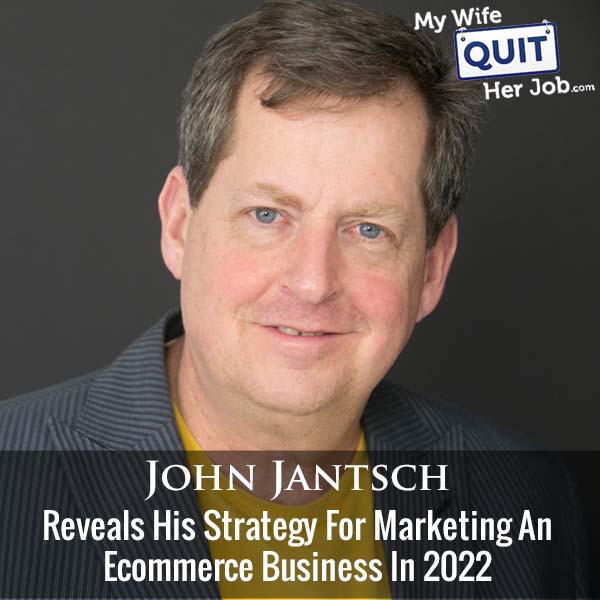
In this episode I sat down with John Jantsch, author of Duct Tape Marketing and five other books translated into 14 languages. He has run his marketing consulting practice for nearly 30 years and now heads a global network of independent consultants.
Below is his full approach: customer discovery interviews, the marketing hourglass, content as the voice of strategy, hub pages, choosing platforms, and why retention beats acquisition.
Get My Free Mini Course On How To Start A Successful Ecommerce Store
If you are interested in starting an ecommerce business, I put together a comprehensive package of resources that will help you launch your own online store from complete scratch. Be sure to grab it before you leave!
Table of Contents
Key takeaways
- You can outsource marketing tactics and never strategy. Who the customer is and what your message says stay with you.
- Marketing is everyone’s job. Anyone who touches a prospect or customer performs a marketing function.
- Interview six to eight customers by phone. Themes repeat, and those themes become your messaging.
- The marketing hourglass has seven stages: know, like, trust, try, buy, repeat, refer.
- Map content to stages instead of publishing more. This produces less content that works harder.
- Restructure old posts into hub pages. Jantsch’s local marketing guide ranks in the top two on Google.
- Go deep on one or two platforms. Scattering across every channel builds momentum nowhere.
- Prioritize retention over acquisition. His consulting network retains about 85% and spends more time on retention than recruitment.
What has actually changed in marketing
The fundamental job has not changed: get someone to trust you enough to hand over their money. Platforms and networks changed, and the underlying task did not.
What did change significantly is how people choose to become customers. The research path a buyer takes now runs largely outside your control, which is why content matters more than it used to.
Jantsch started his consulting firm nearly 30 years ago, before the internet was a marketing channel at all.
Why you cannot outsource marketing strategy
Tactics can be outsourced and strategy cannot, because strategy is the set of decisions only you can own: who the customer is, what your message says, where you meet them, and what journey you take them on.
Social platforms have grown complex enough in their formats that outsourcing execution often makes sense.
The related point is that marketing is not a department. Anyone in your business who touches a prospect or customer performs a marketing function, including whoever answers the phone, sends the invoice, or fulfills the order.
That makes marketing a culture question as much as a tactical one.
How to identify the problem your business solves
Start by naming the specific problem you solve or the underserved itch you can scratch, because launching another store without one puts you in direct commodity competition with Amazon.
The failure mode is subtle. A business generates early interest and momentum, then stalls because it is perceived as a commodity that happened to advertise well.
The diagnostic work continues after you have customers: why do people buy from you, why do they stay, and what do you do that others do not.
How to run customer discovery interviews
Phone interviews with six to eight customers will surface repeating themes, and those themes become your core messaging.
This is a creative process rather than survey research. You are not checking boxes against five yes-or-no questions, you are listening for stories.
The critical follow-up: when someone says you provide better service, that answer is useless on its own. Ask what better service looks like and for a story about a time it happened.
What comes out of those stories feeds core messaging, email subject lines, and blog post topics. It also improves your ability to attract more people like them.
Interviews produce a second benefit. People realize a real person is behind the website, which increases attachment and makes them more willing to speak publicly about their experience in a testimonial or review.
How to research customers before you have any
Study the reviews and testimonials of aspirational competitors, since people writing reviews describe exactly which expectations were exceeded and which small things nobody else does.
The competitors do not need to sell your product. Anyone serving the same market will do.
My own version of this at Bumblebee Linens was calling abandoned cart customers within about 10 minutes, offering free product, and asking why they did not buy.
The answers were rarely about price or changed minds. When we launched an apron line, buyers told us the ages four to 10 sizing was too ambiguous to know whether it would fit their child. We fixed the listing.
Most abandoned carts come down to a moment of confusion, and online confusion usually ends in bailing unless the shopper already trusts the company.
What the marketing hourglass is
The marketing hourglass is a seven-stage customer journey: know, like, trust, try, buy, repeat, and refer.
The shape borrows from the traditional funnel and deliberately continues past the purchase. Most marketing treats becoming a customer as the end point, and Jantsch treats it as where the opportunity expands.
Those stage names describe behavior customers actually want to engage in with the companies they do business with. Your own buying experience validates the sequence.
The practical use is that questions change at every stage. Early on the question is who can solve my problem, and later it becomes whether this specific company can be trusted to solve it for me.
How to map content to the customer journey
Ask what content each stage requires rather than publishing continuously, which produces less content that does more work.
Jantsch calls content the voice of strategy. The progression once was content is king, then content is air, meaning you cannot compete digitally without it.
Stage by stage: what content makes someone aware of you, what makes them like what they hear, what builds trust, what supports a trial, what supports the purchase including onboarding, what drives repeat business, and what generates referrals.
Onboarding content is the commonly skipped one. Orientation material after the sale belongs in the plan alongside acquisition content.
How to turn old blog posts into hub pages
Restructure existing posts into a hub page that acts as a table of contents for a complete guide on one topic, with every post linking to the others and back to the hub.
The problem this solves is common. You published on the blog bandwagon for years, so you have 247 posts sitting disconnected in the ether with nothing tying them to a useful whole.
Jantsch’s own example: search “guide to local marketing” and the Duct Tape Marketing guide sits in the top one or two spots, competing with HubSpot. It is a restructure of years of posts on Google advertising, Google My Business, citations, and the rest of local SEO.
Some links point to his own posts and others to good outside resources, arranged around subtopics rather than published dates.
The results compound. The page carries a lead capture offer, gets promoted through Facebook ads, and earns shares and long dwell times because it is genuinely useful. It also feeds a nurture sequence, which means one asset works across several hourglass stages.
How to choose which marketing channels to use
Pick one or two channels you actually enjoy, learn them deeply, and build real traction before adding another.
The buckets Jantsch organizes everything into: website content and SEO, email marketing, social media, reputation management, paid search, and analytics with goal tracking. Analytics is the one most businesses skip.
The failure mode is scattering. Dabbling across TikTok, Instagram Reels, and Stories at once feels like wasted effort because it usually is, and platform formats have diverged enough that one video rarely works everywhere.
Clubhouse is the cautionary example. It was enormous for roughly six weeks during the pandemic, and a lot of people felt they were missing out by not being there.
A large part of consulting, in his framing, is helping people understand what not to do. There will always be more you could do than you can do.
SEO versus social media for long-term traffic
Search compounds and social requires continuous output. Jantsch has blog posts from 2005 and 2006 still pulling hundreds of views a day, which is difficult to replicate on any social platform.
The tradeoff is competition. Ranking for specific product searches is the golden goose and the competition for those terms has become brutal.
For fashion and visual products, social is often where the market actually is, at the cost of producing every day. The offsetting benefit is building a following you retain ongoing access to.
Why retention beats acquisition
Prioritize retention when forced to choose, because existing customers will buy nearly anything you offer as long as you keep delivering value.
Jantsch’s consulting network retains about 85% of members paying an ongoing fee, and his team spends more time on retention than recruitment. Part of that is limited resources, and part is that selling to an existing relationship is dramatically easier.
Two fixes cover most of the opportunity. Stay top of mind so people come back, and keep educating customers on everything else you could do for them.
The second one is the more common failure. A customer mentions they just added a service elsewhere, and you have to tell them you offer that too. They came in one door, bought, got served well, and were never told what else existed.
Surprise is the other lever. Jantsch bought running shoes online and found socks and energy bars in the box, which was enough to bring him back.
Why small businesses should stay small in their marketing
Lean into the human touch that a large company cannot replicate, because online buying has become robotic enough that a genuine personal signal stands out.
A handwritten note saying it was a pleasure to pack this order, signed with a real name, does real work. Whether or not there is literally a Rusty, it lands.
The pattern I keep seeing: every small business wants to act big and every conglomerate wants to act small. The advantage belongs to whoever actually is small.
The trap is that success makes you stop. The hustle tactics that got you on the radar get dropped once you are on it, often without anyone deciding to drop them.
My own experience matches. I did a lot of small personal things early on, stopped as we got busy, and have been revisiting them since.
What the Ultimate Marketing Engine is about
The premise of Jantsch’s book is that the ultimate marketing engine is a successful customer, and the subtitle is five steps to ridiculously consistent growth.
The reframe is looking at customers for the transformation they want rather than the transaction they complete. They arrive at a particular stage of their life or business, and the question becomes how you move them from there to where they ultimately want to go.
His consultant network runs on a five-stage maturity model. Each stage has known characteristics, known challenges, and a milestone checklist, with specific tasks assigned for any milestone not yet met.
The endpoint varies by person. Some want to stay deliberately small and stable, some want to hire and scale, and some are building toward an exit.
Where to start if you are starting over today
Pick a topic that genuinely interests you and start creating content about it without needing it to make money first.
Jantsch’s own answer: he lives in the Colorado mountains and would build something educational around nature and being active outdoors.
The distinction he draws, borrowed from Oliver Burkeman’s Four Thousand Weeks, is between a hobby and a side hustle. People label things side hustles to justify the time by pointing at potential income.
If you are slightly embarrassed to talk about it, that is the sign it is a genuine hobby. The thing you have poured 10,000 hours into for no reason is probably the thing you should be writing about.
Frequently asked questions
What is the marketing hourglass?
A seven-stage customer journey model: know, like, trust, try, buy, repeat, and refer. It borrows the funnel’s shape and deliberately extends past the purchase, where traditional funnels stop and where John Jantsch argues the real opportunity is.
Can you outsource marketing for a small business?
Tactics yes, strategy no. Who your customer is, what your message says, where you meet them, and the journey you take them on all have to stay with you. Social platform execution is a reasonable thing to hand off.
How do you find out why customers buy from you?
Interview six to eight of them by phone and listen for repeating themes. When someone says you provide better service, ask what that looks like and for a story about a specific time. Those stories become your messaging and content.
How do you research customers before you have any?
Read reviews and testimonials of aspirational competitors, including anyone serving the same market rather than only direct competitors. Reviews describe which expectations were exceeded and which small things nobody else does.
What is a hub page?
A page that restructures existing blog posts into a table of contents for a complete guide on one topic, with the posts interlinked and pointing back to the hub. Jantsch’s guide to local marketing ranks in Google’s top two using this structure.
How many social media platforms should a small business use?
One or two, chosen for what you actually enjoy and understand, learned deeply before adding more. Scattering across platforms feels like wasted effort because formats have diverged enough that one piece of content rarely works everywhere.
Is retention more important than acquisition?
Yes when you have to choose. Existing customers will buy nearly anything you offer as long as you keep delivering value, which is far easier than converting strangers. The two easiest fixes are staying top of mind and educating customers on what else you offer.