
Podcast: Download (Duration: 13:00 — 15.2MB)
Eleven online business ideas you can start with no money this year: podcast matchmaking, digital courses, dropshipping, print-on-demand, curated subscription boxes, testimonial video content creation, Amazon Influencer product reviews, personalized coaching, activity books on Amazon KDP, virtual event planning, and online tutoring. Every one runs from a laptop at home, and most cost nothing but time to launch.
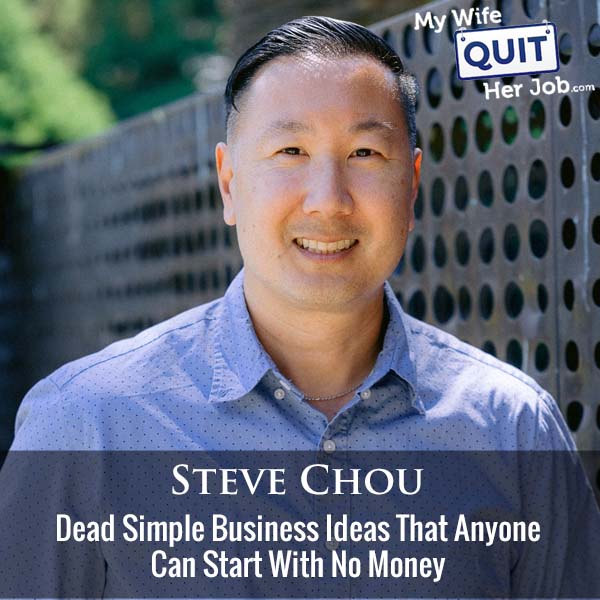
In this Family First Friday episode of the My Wife Quit Her Job podcast, recorded shortly after The Family First Entrepreneur hit the Wall Street Journal business bestseller list, I run through my go-to list for anyone who tells me they cannot think of a side hustle or do not have money to start one. These are the ideas I hand to friends, students, and readers first because the barrier to entry is essentially zero.
Here is the full list, why each one works, what platforms make it easy, and the market data behind the biggest categories.
Get My Free Mini Course On How To Start A Successful Ecommerce Store
If you are interested in starting an ecommerce business, I put together a comprehensive package of resources that will help you launch your own online store from complete scratch. Be sure to grab it before you leave!
Table of Contents
Key takeaways
- None of these 11 business ideas require inventory, an office, or startup capital beyond the cost of a laptop and time. They run on people skills, an internet connection, and a willingness to niche down.
- The e-learning market is projected to pass $375 billion by 2026, which is why “expert enough” digital courses remain one of the highest-leverage no-money businesses on the list.
- There are over 5 million podcasts and roughly 464 million podcast listeners today, and most shows are actively looking for guests. A podcast matchmaking service is a pure-people-skills business that Jessica Rhodes grew to six figures within a year at Interview Connections.
- Dropshipping is a stepping stone, not the destination. Margins are thin, so use it to find winning products and then private-label them for real profit.
- Amazon Influencer video reviews pay roughly 4 percent of the buyer’s entire checkout cart, not just the reviewed item, and rank in the product listing itself on a page that gets millions of daily visits.
- Virtual coaching and tutoring have no geographical ceiling. Steve’s tennis coach makes thousands per month at $99/month through tpatennis.com without stepping on a court.
What are the best online business ideas you can start with no money?
The best online business ideas you can start with no money are the ones where your only real inputs are your time and an existing skill. That includes podcast matchmaking, digital courses, dropshipping and print-on-demand ecommerce, subscription boxes, testimonial video content creation, Amazon Influencer video reviews, one-on-one coaching, low-content activity books on Amazon KDP, virtual event planning, and online tutoring.
Every idea below can be started from home this week. Most only need free platforms (Teachable for courses, KDP for books, Amazon for reviews) and the willingness to niche down to a specific audience.
Idea 1: Start a podcast matchmaking service
A podcast matchmaking service connects podcast hosts who need guests with authors, experts, and researchers who want interview slots. According to Podcast Report, there are now roughly 464 million podcast listeners and over 5 million podcasts, and most active shows (my own included) are constantly hunting for good guests.
The business model is simple: build a list of shows in a niche, offer to help hosts source guests for free, and then charge experts to pitch them into those shows. You do not even need the podcaster’s permission upfront; you just need a working list and a real pipeline of qualified guests to place.
My friend Jessica Rhodes built exactly this at Interview Connections and grew it to six figures in year one. It is a pure people-skills business with essentially zero startup cost.
Idea 2: Launch a digital course on something you already know
A digital course business turns a skill you already have into recurring revenue. The e-learning market is expected to pass $375 billion by 2026, and platforms like Teachable will host your course for free until you make sales.
The bar is lower than most people think. You do not need to be the world’s foremost expert; you need to be “expert enough,” meaning you know more than the person paying you. My own ecommerce course has over 5,000 members and has generated close to $10 million, and my material is really only useful up to about $10 million in store revenue.
Find early students by hanging out in relevant Facebook groups and answering real questions until people start asking for more. Authority in a niche is built one helpful comment at a time.
Idea 3: Start a dropshipping ecommerce store
Dropshipping is an ecommerce model where you take the order and your supplier ships the product directly to the customer, so you never touch inventory. It is one of the few ways to launch an ecommerce store with essentially zero upfront capital, and there are 12+ free ecommerce platforms that will let you list products at no cost.
The honest tradeoff is margin: dropshipping rarely produces life-changing income on its own because you are the middleman on a very small spread. Treat it as a data-gathering step. Test which products sell, then private-label the winners so you keep the full margin.
Idea 4: Start a print-on-demand store
A print-on-demand store lets you sell custom designs on t-shirts, mugs, hoodies, and dozens of other products without buying inventory. When an order comes in, the print-on-demand supplier prints and ships it, and you collect the difference between retail and the supplier’s cost.
You do not need to be an artist anymore. AI tools like Midjourney and DALL-E can generate designs from a prompt, so the only real inputs are a niche and a marketing plan.
Idea 5: Launch a curated subscription box
A subscription box business ships a curated bundle of themed products (snacks, beauty samples, hobby supplies) to a recurring paying customer base. The killer feature is retention: once someone subscribes, they become a consistent monthly revenue stream instead of a one-time purchase.
A concrete niche example: a Japan snack box that ships hard-to-find snacks and drinks the US does not carry. The sourcing trips are business-deductible travel, and the recurring model smooths out revenue across the year. Platforms like CrateJoy operate as a marketplace for subscription boxes and help with discovery in the early days.
Idea 6: Create testimonial video content for ecommerce brands
Testimonial video content creators are hired by ecommerce companies to record product-review-style videos that run in the brand’s paid ads and social feeds. Most of the “everyday customer” testimonials you see in ads are paid creators, because the odds of finding a genuine buyer who is also good on camera and eloquent are very low.
If you are comfortable on camera, tens of thousands of brands are actively hiring for this. You need no audience of your own, because the video runs on the brand’s channels, not yours. One of my friends earns a full-time living making these videos for skincare brands.
Idea 7: Join the Amazon Influencer program and film product reviews
The Amazon Influencer program pays you a commission (roughly 4 percent) when a shopper watches your product review on Amazon and buys, and that commission applies to the buyer’s entire cart, not just the reviewed item. Your video can appear directly inside the product listing on a page that gets millions of daily visits.
The workflow: apply to the Amazon Influencer program, buy products you would have bought anyway, film a quick phone review, and upload it. The key is finding popular products that do not yet have many video reviews, because your video is much more likely to be featured.
Because Amazon does the traffic, this is one of the closest things to genuinely passive income on the list once your reviews are in place.
Idea 8: Sell personalized coaching in a niche skill
A personalized coaching business sells one-on-one instruction in any skill you have deep knowledge in, from personal finance to college admissions to a specific video game. There is a coach for essentially everything at this point; I recently searched for Mario Kart coaches after a friend beat me and there are real people making money doing it.
The more obscure and specific the skill, the less competition and the easier it is to charge. List services on Fiverr, Upwork, or Craigslist, or find clients in niche communities where your skill is discussed.
Personally, I am about to hire a college admissions coach for my daughter, because most kids do not accidentally get into top schools. If there is demand in your niche, there is a coaching business in it.
Idea 9: Sell low-content activity books on Amazon KDP
Low-content activity books are puzzle, coloring, and workbook titles you upload to Amazon KDP (Kindle Direct Publishing) with no inventory cost. Software like BookBolt has built-in templates that auto-generate word scrambles, word finds, crosswords, and sudoku, so a finished book takes about an hour.
The trick is finding underserved niches. A themed Chinese New Year activity book, for example, sells surprisingly well because the category has thin competition. For coloring books, AI image tools can generate coloring-friendly line-art pages on the fly, so you do not need to draw.
Idea 10: Start a virtual event planning agency
A virtual event planning agency handles the software, speaker coordination, email sequences, and run-of-show for online conferences. I discovered this need the hard way when COVID forced me to move my Seller Summit conference virtual in three weeks in 2020, and I would have paid real money for someone who already knew the software stack.
Virtual events are still in high demand. Companies want the reach and cost profile of an online conference without hiring an in-house events team, and a specialized agency is the obvious fit.
Idea 11: Tutor online in a language, instrument, or sport
Online tutoring turns any teachable skill into recurring income without geographic limits. A friend of mine made over $100,000 tutoring Chinese kids in English over Zoom, and that model now extends far beyond languages.
I have friends taking virtual piano lessons and virtual singing lessons, and I convinced my own tennis coach to launch virtual tennis lessons at $99/month through tpatennis.com. He now earns thousands of dollars a month without setting foot on a court. If you can teach it, someone across the world will pay for a Zoom link.
Comparison: which no-money business idea fits which strengths
| Business idea | Best if you have | Time to first dollar | Income ceiling |
|---|---|---|---|
| Podcast matchmaking | People skills, outreach comfort | Weeks | Six figures (Interview Connections did it in year 1) |
| Digital course | A skill and a small audience | Months | Seven figures |
| Dropshipping | Willingness to test dozens of SKUs | Weeks | Low-to-mid five figures/month before pivoting to private label |
| Print-on-demand | Design taste (or AI prompting) | Weeks | Five to six figures |
| Subscription box | Curation instinct, niche knowledge | Months | Seven figures at scale |
| Testimonial video creator | On-camera presence | Days | Full-time income per skincare-brand friend |
| Amazon Influencer reviews | Willingness to film phone videos | Weeks after approval | Passive four to five figures/month |
| Personalized coaching | Deep skill in one niche | Days | Six figures |
| Low-content KDP books | Nothing beyond BookBolt access | Weeks | Four to five figures/month with a catalog |
| Virtual event planning | Operations/PM experience | Months | Six figures per event |
| Online tutoring | English fluency or teachable skill | Days | $100K+ per Steve’s friend teaching Chinese kids |
Frequently asked questions
What is the easiest online business to start with no money?
The easiest online business to start with no money is one that sells a service you already know how to perform, because the only inputs are your time and a laptop. Personalized coaching, online tutoring, and testimonial video content creation all fit that profile: no inventory, no software cost, no upfront ad spend, and you can be paid within days on Fiverr, Upwork, or Craigslist.
How much money do you actually need to start a dropshipping business?
You can start a dropshipping business for essentially $0 because there are 12+ free ecommerce platforms and no inventory to buy upfront. Practical costs come from testing paid ads to find winning products, and margins are thin enough that dropshipping is best treated as a research phase before you private-label the products that actually sell.
Do you need a big audience to make money on the Amazon Influencer program?
No. The Amazon Influencer program surfaces your videos directly on the Amazon product listing itself, so buyers on Amazon (not on your channel) drive the sales. Applicants do need a qualifying social presence to be approved, but once you are in, the traffic comes from Amazon’s tens of millions of daily shoppers, not from a following you have to build first.
Do I need to be a professional artist to sell print-on-demand or KDP books?
No. AI tools like Midjourney and DALL-E generate print-on-demand designs and coloring-book pages from text prompts, and BookBolt auto-generates puzzle books like word finds, crosswords, and sudoku from templates. The bottleneck is niche selection, not art.
Am I really qualified to sell an online course?
You are qualified to teach an online course if you know more about the topic than the person paying you. Steve’s ecommerce course is capped in usefulness around $10M in store revenue, but the vast majority of students want to hit their first six or seven figures and get real value from that scope. “Expert enough” beats “world-class expert” for course-market fit.
How big is the e-learning market?
The global e-learning market is projected to surpass $375 billion by 2026, which is why online courses, coaching, and tutoring are three of the strongest categories on this list. Demand for on-demand skill acquisition (from Excel to piano to Mario Kart) is still expanding faster than the supply of specialized teachers in most niches.
What is the fastest of these ideas to start earning?
Personalized coaching, testimonial video content creation, and online tutoring can generate their first paid client within days. All three list on Fiverr, Upwork, or Craigslist with no gatekeepers, and the buyer is looking for a service they can consume immediately.