Podcast: Download (Duration: 46:21 — 53.3MB)
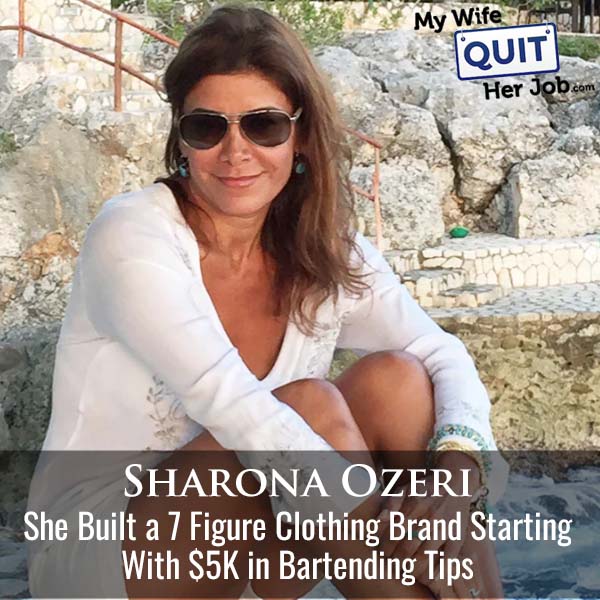
To sell clothing on Amazon today, you compete on brand, quality, and uniqueness, because Chinese factory sellers have already won the race to the lowest price. Sharona Ozeri has done exactly that with Shushi, a seven-figure resort wear brand she started with $2,000 to $5,000 in bartending tips.
Sharona studied textile and fashion design at FIT and Parsons, landed Bloomingdale’s in her second year, walked away to live in the South of France, and rebuilt the business on Amazon starting in late 2014. Her first year on Amazon produced zero sales.
I met Sharona at Sellers Summit back in 2018 and caught up with her again at Scott Cunningham’s Merchant Mastery event at Shopify HQ. Clothing is one of the hardest categories in ecommerce, and she has worked through every version of it.
This post covers how she found handmade factories in Bali with low minimums, what wholesale to Bloomingdale’s actually paid, why Amazon clothing is so difficult now, the founder ads working on Meta, and how she would start a clothing brand from scratch today.
Get My Free Mini Course On How To Start A Successful Ecommerce Store
If you are interested in starting an ecommerce business, I put together a comprehensive package of resources that will help you launch your own online store from complete scratch. Be sure to grab it before you leave!
Table of Contents
Key takeaways
- Sharona started a clothing business with $2,000 to $5,000 saved from bartending tips while still in fashion school.
- Handmade factories in Bali accept minimums around 150 units per color per size, far below typical Chinese clothing minimums.
- Wholesale markups run 2.1 to 2.5 times if you are lucky, and Bloomingdale’s paid closer to 2 times.
- Amazon clothing carries return rates around 20% to 30%, and the middle price tier is shrinking.
- Chinese sellers win on price, so independent brands compete on quality, customer service, and unique details.
- Founder videos outperformed expensive model photo shoots in Sharona’s Meta ads.
- Starting over, Sharona would pick a niche of a niche, or skip clothing and go into wholesale.
How do you start a clothing brand with little money?
You can start a clothing brand with a few thousand dollars if you source from small factories and test with a modest first order. Sharona invested somewhere between $2,000 and $5,000 to start, all of it from bartending tips she earned in New York City while attending fashion school.
The idea came from a vacation. Two friends convinced her to spend about a month and a half in Bali, where she saw the traditional batik and hand-painting techniques she had just studied in class.
She decided on the spot that she needed a reason to come back. She bought children’s clothes and jewelry, brought them home to New York, and planned to take orders and return to place them.
She started with kids’ clothing and later moved to women’s resort wear. Children’s clothing came with too many sizes and too much regulation to manage comfortably.
Her advice for anyone thinking about it is to work for an established company first. Even natural entrepreneurs learn far more working inside someone else’s business before they launch their own.
How did Sharona find clothing manufacturers in Bali?
Sharona found her first manufacturers by talking to shop owners and vendors directly, and several turned out to run small factories behind their homes. Her first supplier owned a storefront selling colorful batik clothing with a workshop out back.
Another supplier came from a woman selling sarongs out of a basket on the beach. Sharona asked where the sarongs were made, and a few days later she was visiting the woman’s factory.
This was the early 1990s, when Bali had far fewer tourists and suppliers were easier to reach. She also had friends in the industry, and she later learned to speak Indonesian after living in Bali for many years.
The two techniques she built on were batik, which uses copper stamps, and hand painting. At one point she kept a warehouse on her property full of large screens for screen printing and copper stamps for handmade batik.
What are minimum order quantities for handmade clothing?
Handmade clothing factories in Bali accept far smaller minimums than mass-production factories, and Sharona’s sarongs can run as low as about 150 units per color per size. She often orders closer to 1,000 of a color and tells the factory she will take more or less depending on what fits their production.
Quantities depend on the physical size of the printing tables. Each table fits a certain number of screens, so efficient orders come in multiples that match the table length.
Handmade production always produces rejects, so you plan for them. Sharona and her factories both make extra units on every run.
As her sales grew, she shifted from intricate prints toward solid colors. Prints were much harder to produce in quantity, and solids scaled far more easily.
I see the contrast constantly with students who want to make clothing in China. Chinese factories require large minimums for every size and every design, which makes small handmade producers a real advantage for a new brand.
How does selling clothing wholesale to department stores work?
Selling wholesale to a department store usually runs through a sales rep who already has relationships with the buyers. Sharona’s first sales came at a trade show at the Javits Center in New York, where one of the biggest wholesale reps in the industry asked to carry her line.
She almost turned him down. His showroom carried famous brands, and she worried a tiny line would get lost there.
He told her he had “the key to Bloomingdale’s,” and he was right. Orders arrived by fax faster than she could organize them, and Bloomingdale’s picked three or four of her pieces and gave them a prominent spot on the floor.
Wholesale markups typically run 2.1 to 2.5 times if you are lucky. Bloomingdale’s paid closer to 2 times, or slightly less, in exchange for volume.
Returns were never a real problem in wholesale. That is a sharp contrast with Amazon, where clothing return rates run around 20% to 30% because shoppers order several colors and keep only the ones they like.
What makes wholesale to Bloomingdale’s so hard?
Bloomingdale’s runs on strict shipping deadlines and an electronic ordering system, and missing a deadline cuts your price automatically. Sharona had to learn EDI, the computerized ordering system the store was rolling out at the time, while running the business from Bali.
The penalty clause hit her on the very first order. The week it was due to ship, her brother died, and she flew home for the funeral.
She called Bloomingdale’s to explain that the shipment would be late. The contract allowed no exceptions, the store deducted from the price, and she barely made a profit on her first Bloomingdale’s order.
Why did Sharona walk away from Bloomingdale’s?
Sharona walked away from wholesale in 1995 to move to the South of France with her French boyfriend. The business carried a lot of work and stress, and he asked her to choose a different life.
She flew to San Francisco to tell her investor partner she was quitting. Before she could say it, he announced that Bloomingdale’s had just placed a big order, so she stayed a little longer before making the move.
She lived in France until 2004 and reinvented herself. She opened a gallery selling home decor from Bali, China, and Morocco, with a section for children’s clothing.
When she returned to New York, she worked at a popular boutique, then spent a year as a corporate manager for Benetton. She quit to sell her own designs again.
How do pop-up shops and street fairs sell clothing?
Holiday street fairs in high-traffic locations can produce huge sales in a few weeks with very little overhead. Sharona ran a kiosk at the Grand Central Terminal holiday fair, one of the busiest retail foot-traffic locations anywhere.
She designed in Bali, came back to New York, and sold through temporary holiday markets at Grand Central and Union Square. She worked them about six months a year for several years.
Her best seller was a packaged gift for baby showers. Grand Central sits among thousands of offices, and coworkers constantly need a quick, special baby shower gift.
Customers kept asking whether she made anything for women. That demand pushed her into women’s clothing and matching mother-and-daughter pieces.
How did Sharona start selling clothing on Amazon?
Sharona started selling clothing on Amazon at the end of 2014 after a longtime supplier emailed to ask when she would place her next order. She had just decided to quit fashion and was studying for her real estate license.
She had sold books on Amazon and some clothing and jewelry on eBay years earlier. She listed her products, and nothing sold for a full year.
She realized she needed to learn how Amazon actually worked. Slowly the sales came, and once she saw it working, she committed to the channel.
For new listings today, she starts with automatic and broad pay-per-click campaigns. Those campaigns reveal which search terms actually produce sales.
Why is selling clothing on Amazon so hard now?
Clothing on Amazon is hard because factory sellers from China compete directly on price, return rates run high, and the ranking algorithm punishes stockouts. Sharona says the real competition began about four or five years ago.
She cannot win on price against Chinese sellers. She competes on experience, brand, customer service, quality, and products that look different from everything else on the page.
Amazon also penalizes low inventory. Dropping to zero stock, or below 30 days of supply, pulls your ranking down.
That rule clashes with handmade production. Small Bali factories cannot scale up quickly, so Sharona is exploring larger factories in other countries to keep stock levels steady.
Clothing is a category most Amazon experts tell new sellers to avoid. High returns and direct-from-factory competition make it one of the toughest places to start.
Which price tier works for clothing on Amazon?
The cheap tier and the premium tier both work on Amazon, and the middle tier is shrinking fast. Sharona currently sits in the middle and is testing a move toward premium quality.
She describes the shift as premium quality rather than luxury. Shoppers are growing tired of low-quality clothing that falls apart, and she believes more of them will pay extra for something that lasts.
She is honest that the test is still running. Moving up a tier on Amazon is hard when nobody has heard of your brand.
How do you deal with Shein copying your designs?
Most small brands cannot stop a fast-fashion giant from copying a design, and Sharona chose to let it go. Shein copied one of her simple, stretchy ponchos, which she had made distinctive by adding ruffles.
Shein took her photos and listing straight from Amazon and posted the knockoff on its own site. Ponchos were popular that year, and the copy appeared quickly.
She was shocked and briefly considered fighting it. In the end she let it slide, since a legal fight with a company that size would cost more than it could recover.
A friend of mine who sells clothing has seen the same thing. Her designs get knocked off and listed in as little as two or three weeks.
Why founder videos beat model photo shoots in clothing ads
Founder videos are working best for Sharona, and they outperform the polished photo shoots she paid for. She spent heavily on professional shoots with models, and simple videos of herself won.
In her best ads, she introduces herself as the founder, wears the product, and shows how it upgrades an outfit for different occasions. Shoppers want to know who is behind a brand before they buy.
Finding the winning format took time and money. She says Meta is a big investment that is now paying off.
She is putting more focus on her Shopify store this year to own her customers and build an email list. Amazon keeps the customer relationship, and your own site lets you keep it.
Google also surprised her by sending a large share of Shopify traffic. Her theory is that shoppers find Shushi on Amazon, search the brand name, and land on her website.
How do clothing brands keep sales going between collections?
Clothing brands keep sales going by building around staples that sell for several seasons, which removes the pressure to launch a full new collection every year. Sharona relies on proven products for a couple of years at a time and adds new items around them.
She adds a few products each year instead of launching a whole line. Products that sell poorly get discontinued, and their listings fade away.
You also do not have to invent every garment from scratch. Everyone sells t-shirts and sarongs, and you make them yours with details like sleeve length, buttons, fabric, and color.
Sharona no longer designs her own fabrics, since that took too much work for Amazon. She still chooses every fabric and color and stays heavily involved in each garment’s design.
How would you start a clothing brand from scratch today?
Sharona would start on Amazon again, in a niche of a niche, or she would skip clothing entirely and sell wholesale. A narrow niche gives a new brand room to win before it grows.
Her favorite example is a seller who made clothing just for St. Patrick’s Day. Nobody else served that day, so he did extremely well and then expanded into other holidays and cultural days.
Wholesale appeals to her because the profit margin is about the same as Amazon and shipping in bulk is easier. Buyers find you at trade shows, through road reps who visit stores, or more and more through your own website.
The catch is cash flow. Wholesale buyers pay on 30, 60, or 90 day terms, so you wait months for money you have already earned.
With Amazon margins shrinking, she plans to grow both her Shopify store and her wholesale business.
Which clothing sales channel is right for a new brand?
Each channel trades margin, cash flow, and customer ownership differently. Here is how the three channels Sharona has used compare, based on her experience.
| Channel | What works | What hurts |
|---|---|---|
| Wholesale | Bulk shipments, few returns, margins about the same as Amazon | 2 to 2.5 times markup, buyers pay on 30 to 90 day terms, strict deadlines |
| Amazon | Built-in traffic, PPC auto campaigns reveal winning search terms | Price war with Chinese sellers, 20% to 30% clothing returns, stockouts drop rankings |
| Shopify | You own the customer and the email list, founder videos convert on Meta | You pay for every visitor with ads or content |
How do you find a clothing manufacturer as a beginner?
Start with online supplier directories and trade shows, then travel to the region where your craft is concentrated if you want small, flexible factories. Sharona says finding suppliers is much easier now than when she started.
The trade-off is that everyone else uses the same websites. Small specialty suppliers, like the handmade factories she works with in Bali, usually require going in person.
Production tends to cluster by region. Research where your type of clothing is made, such as knitwear in Peru, then go there and talk to people.
Locals are often happy to help. Sharona found that factory owners love to talk and will tell you who can make what.
Many of those small handmade workshops are disappearing. Younger workers are choosing other jobs over hand batik and rice fields, and my own handmade handkerchief line in China moved entirely to machines for the same reason.
How do you know a clothing design will sell?
Sharona relies mostly on instinct, backed by trend-watching and occasional keyword research. Fashion keywords are almost all taken, so search data rarely reveals a hidden opportunity.
She does check long-tail keywords for terms she has missed. Search data can also hint at which styles are trending.
Influencers now shape trends more than anything else. Fashion has changed a lot because influencers decide much of what becomes popular.
Frequently asked questions
Is clothing a good category to sell on Amazon?
Clothing is one of the hardest Amazon categories, because returns run around 20% to 30% and Chinese factory sellers compete directly on price. Independent brands survive by competing on quality, customer service, and distinctive designs.
How much money do you need to start a clothing brand?
Sharona Ozeri started her clothing business with $2,000 to $5,000 saved from bartending tips. Low-minimum handmade factories kept her first orders small enough to afford.
What is the minimum order for handmade clothing from Bali?
Small handmade factories in Bali can produce as few as about 150 units per color per size. Production runs are sized to fit the printing tables, and factories always make extra to cover rejects.
What markup do department stores pay on wholesale clothing?
Wholesale clothing markups typically run 2.1 to 2.5 times. Large department stores like Bloomingdale’s often pay closer to 2 times in exchange for order volume.
What ads work best for selling clothing online?
Founder videos are outperforming polished model photo shoots for Shushi on Meta. The founder introduces herself, wears the product, and shows how it upgrades an outfit for different occasions.
Can you stop Shein from copying your clothing designs?
Small brands usually cannot afford to fight a fast-fashion giant over a copied design. Sharona let a Shein knockoff of her ruffled poncho go after it used her own Amazon photos and listing.
Should a new clothing brand sell wholesale or on Amazon?
Wholesale margins are about the same as Amazon, and shipments are simpler, but buyers pay on 30, 60, or 90 day terms. Sharona would start a new clothing brand on Amazon in a niche of a niche, or go into wholesale instead.
Do you need to design new clothing every year?
You can rely on staple products that sell for several years and add a few new items each year. Making common garments distinctive through fabric, color, sleeves, and buttons works better than designing everything from scratch.