

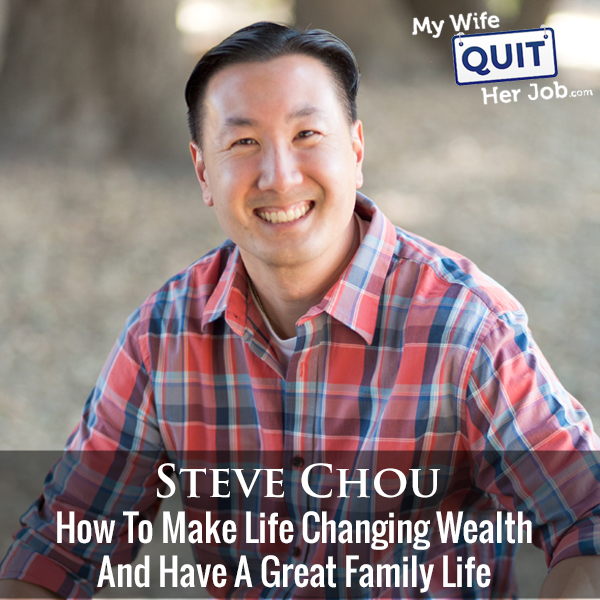
Podcast: Download (Duration: 26:06 — 30.2MB)
Building wealth without sacrificing family comes down to owning income-generating assets rather than selling your time, keeping your headcount as low as possible, and playing a long enough game that compound interest does the heavy lifting. My primary goal is being the best dad I can be, and making money is secondary to that.
I am not filthy rich. There is no private jet and I will not turn up on MTV Cribs. I do run multiple seven figure businesses that are very profitable, and I spend a lot of time with my family, almost too much.
These 20 principles will not get you to Bezos or Zuckerberg money. If you want a couple of million a year with family as the priority, this is how I have approached it over 20 years.
Get My Free Mini Course On How To Start A Successful Ecommerce Store
If you are interested in starting an ecommerce business, I put together a comprehensive package of resources that will help you launch your own online store from complete scratch. Be sure to grab it before you leave!
Table of Contents
Key takeaways
- Assets buy freedom. A day job caps your earnings at the hours in a day.
- MyWifeQuitHerJob.com is a seven figure business with one VA, because software replaces headcount.
- Your business is more secure than your job. A specific role is by definition replaceable.
- Every dollar saved is three to four dollars at exit, since ecommerce sells at a 3x to 4x multiple.
- The blog made nothing in year one, paid the mortgage in year two, and replaced my income in year three.
- Pick businesses that are hard to replicate. Our embroidery machines are a genuine pain to run.
- My mastermind improved conversion rate 46% over nearly six years of monthly meetings.
- Nine out of ten businesses fail because people give up. Outlast everyone and you win.
Why income-generating assets beat a salary
You cannot get rich unless you build assets that make money while you sleep.
A day job pays you for time, and there are only 24 hours in a day. That caps your earning potential permanently, which is why a job will never produce life-changing money.
An asset is an army you command, human or machine, building wealth around the clock without your intervention.
The ones I have built over 20 years are my house, Bumblebee Linens at seven figures a year, MyWifeQuitHerJob.com and the podcast at seven figures collectively, the Sellers Summit conference at six figures, a stock and mutual fund portfolio, and a YouTube channel I started recently.
The point of all of it is freedom. Time spent working is time not spent with the people you care about.
Why your asset has to add real value
The more value an asset provides, the more money it makes, which is why my online businesses out-earn everything else I own.
I get emails every day asking about AliExpress dropshipping, eBay dropshipping, and similar get-rich-quick models. The internet is full of schemes that promise a quick buck by selling junk or ripping someone off.
Before investing time in a business, ask whether you are providing value or making money at someone else’s expense. Value is what makes an asset last.
The durability shows in the numbers. My wife and I have run our ecommerce store for over 13 years, and MyWifeQuitHerJob.com for 11.
Why I keep employment to an absolute minimum
Every business should run on the minimum human labor possible, and you should only hire once you have exhausted every other option.
People use headcount as a proxy for success, so I get a little sheepish admitting I have one VA on staff at MyWifeQuitHerJob.com.
Human labor is the highest-maintenance way to grow. You manage personalities, morale, and your own leadership, and weak leadership means people work less hard or leave.
Computers get the work instead. If I can write code to replace a human, I do it, because software never complains, never tires, and runs 24/7.
Could I scale to $10 million on one employee? Probably not.
Would $10 million make me a better father? Also probably not.
Why a business is more secure than a day job
Job security is lower than business security, and the reason is replaceability.
When I hired engineers at my tech company, I wrote job requisitions for very specific roles. My last hire was a junior microprocessor designer with a narrow hardware skill set.
He was excellent and he eventually left for another position. His departure was not catastrophic, because I replaced him with an engineer of similar caliber.
Every aspect of a job can be taught, and in engineering especially, you will eventually compete against someone younger who knows more. Nobody replaces me at my own store or blog while I am the boss.
How to create your own luck in business
Luck is real, and consistent luck across years is skill.
If I lost everything tomorrow, I am confident I could rebuild it all within five to ten years.
The mechanism is volume. Hustling gets you more lottery tickets, and each one is a chance at something good.
The examples are concrete. Without the podcast and blog I would never have met the sponsors who support me daily, and without attending conferences I would never have met my business partner.
Putting yourself out there through a blog, podcast, or YouTube channel builds a brand that attracts people. After a decade covering ecommerce, people needing help in that field gravitate toward me by default.
Why every entrepreneur has to learn how to sell
Selling is a learnable skill, which matters because building wealth requires it.
Before my internet life I was an engineering director staring at a screen all day. I was great at building things and horrible at selling.
My first live presentation selling my course was terrible. I sold 35 seats and literally trembled when it came time to present the offer.
Most people assume sales requires being sleazy and pushy. It is mostly communication and authenticity, and a product that genuinely provides value largely sells itself when you tell it straight.
Devote part of your study time to human psychology and marketing yourself, however uncomfortable it feels.
Why building wealth always takes years
Wealth is almost never a sudden windfall. It accumulates.
My blog made no significant money until after year three, and the podcast took a few years as well.
The YouTube channel is my current example. I started it about a month ago, views are very low, and I plan to publish one video a week forever, because in a year or two it will generate meaningful leads.
Assets build little by little and then add up collectively. There are countless ways to make money online, so pick one and stay with it.
Why living below your means buys peace of mind
My wife and I could afford a bigger house, a new car, or more extravagant vacations, and we deliberately do not buy them.
More money in the bank means more freedom. I do not have to think about money at all, and that peace of mind is something extravagant spenders rarely experience.
Lifestyle upgrades raise expectations and establish a new normal. That new normal costs more to maintain, and it does not make you happier.
A house that costs twice as much will not make me twice as happy or twice the father I am now.
The goal is reaching the point where you can say you are done, and spend your time on the work and people you choose.
Why being stingy on business expenses pays 3x at exit
Every dollar you save in your business results in three to four more dollars in your bank account.
My friend Joe Valley made this point presenting to my students on valuing and selling a business. Most ecommerce businesses sell at a three to four times multiple of earnings, so every dollar of extra profit is three to four dollars of extra sale price.
That math is why I code my own apps rather than paying recurring monthly fees. If I can build something in a week or less that saves $50 a month, I write it.
The exception is speed. If you are scaling fast, paying for the tool beats figuring it out yourself, and the call depends on your goals and expected sales lift.
My general approach is cutting recurring costs aggressively and haggling with vendors on everything. If you do not ask, you do not receive.
Why you should also avoid being too cheap
Refusing to invest in essential tools is a different problem from keeping the business lean.
I have watched students refuse to pay $40 for a research tool that would save them hundreds of hours, and store owners choose inferior platforms like Wix over Shopify or BigCommerce to save money.
Forward progress is the priority, and that requires valuing your time properly.
Assign yourself an hourly rate to make the call. Take your day job hourly pay and multiply it by two, then buy any tool that saves you more than that rate is worth.
The same math justifies outsourcing. Putting a dollar figure on your time is what keeps you out of the frugality trap.
Why compound interest applies to businesses and relationships
Playing the long game works because compound interest applies to everything in life.
The financial version is familiar. A thousand dollars growing at 10% a year becomes 17 times the money by year 30, because earnings pile on earnings.
My blog is the same curve. No money in year one, enough to pay the mortgage in year two, enough to replace my day job income in year three, and seven figures today in year 10 plus.
Relationships compound identically. Building trust takes time, working out who you can depend on takes more, and the relationships I built over the past decade now drive a huge share of my revenue.
I will not start a business I do not plan to run forever, and I will not heavily invest in a relationship I do not plan to maintain.
How to choose business partners
Until 2016 I refused to partner with anyone, because the horror stories from friends were relentless.
Partners stealing outright, partners not holding up their end, partners making boneheaded decisions. There are many ways for a partnership to fail.
I now screen for four traits. A good head on their shoulders, meaning I trust them to make the best decision available with the information at hand.
Integrity, meaning they will not do anything illegal or try to rip me off. Motivation, because smart and unmotivated is a common combination and effort levels have to match.
Logic over emotion, because in my experience the least emotional people have the best judgment and heat-of-the-moment decisions tend to be poor ones.
Why you should never consider yourself an expert
I teach a course on starting a store and a course on starting a blog, and I do not know everything.
Blogging and ecommerce both change quickly, and doing well today guarantees nothing about tomorrow. Adapting is survival.
Read books, blogs, and tutorials daily, and keep an open mind above all. After nearly a decade running my online store courses, I still learn new things from my own students constantly.
Reading is only half of it. Taking action beats watching a tutorial by a wide margin, so if you have been stuck in analysis paralysis, start with whatever you have.
Why to outsource every repetitive task
Once a task becomes repetitive, you have stopped learning from it, and it has become a waste of your time.
The first choice is outsourcing to a machine by writing code.
When code cannot do it, hand the work to another person. The principle holds even while keeping the team as lean as possible.
Why business owners should learn to code
If you run an online business, you should at least be able to read and modify small parts of your site’s code.
Countless entrepreneurs call their web developer for the smallest tweaks. You wait on someone else’s schedule, you become dependent for every little thing, and developer costs add up fast.
Software is the best leverage available to any business. Knowing how to code means commanding an army of machines that work tirelessly.
Expertise is unnecessary. Fluency is usually enough, and understanding how programming languages work pays off even if you are tech averse.
Machines will likely render a great deal of human labor obsolete. Better to design the robots than be replaced by one.
Why to pick a business with high barriers to entry
New entrepreneurs gravitate toward whatever is easy to start with low financial risk, which is exactly why dropshipping is so crowded.
Easy to start means easy for everyone else to start too, so competition never stops arriving.
Look for the parts of a business that are painful to replicate instead. We do personalization at our store because it is a genuine pain in the butt.
Running embroidery machines around the clock has a steep learning curve and the machines break constantly. Copying our personalized offering requires real investment.
The same holds in content. Video is harder to produce than a blog post or a podcast, which is precisely why producing it gives you an edge. Go with what is hard and life gets easier later.
How to use criticism to improve your business
I used to refuse to ask for help, and I got defensive and retreated whenever negative feedback arrived.
Over the years I learned to channel that energy directly into improving the business.
If you are not in a mastermind group, join one or start one. Unbiased outside feedback catches glaring weaknesses you cannot see from inside.
Mine has met monthly for nearly six years, and that group is directly responsible for a 46% improvement in my conversion rate. The feedback is blunt and painful, and applying it consistently works.
Why your personality is your best competitive moat
People ask why my face and name are plastered all over my blog, since it complicates ever selling the business.
Competition increases every year, and my personality is the one thing nobody can copy. My skills, my sense of humor, my particular way of explaining things are not replicable.
A strong personal brand future-proofs the business in a way features and pricing cannot.
So put yourself out there. Talk about your failures alongside your triumphs, because there are always people who want to hear your story.
Why to prioritize tasks by impact rather than urgency
Fixing what is urgent is often the wrong use of your time.
This one occasionally gets me in trouble at home. My wife needs a product graphic fixed immediately because it is wrong on the site and we will lose sales.
I ask how many photos are broken, and the answer is one.
I ask how many units of that product sell per day, and the answer is none yet, because it is brand new. Could it wait until next week, since I have higher-priority items?
That is an exaggerated version of a real conversation, and the underlying point holds. Spending all your time on mini emergencies means the business never moves forward.
Keep putting out fires and keep listening to your spouse. Also accept that some things can stay broken while you work on something more impactful.
Why you will succeed if you simply do not quit
This is the most important principle here. Start a business, stick with it forever, and you will eventually succeed.
Nine out of ten businesses fail because people give up. Everyone wants immediate results and almost nobody has patience.
Getting rich quick is a myth. Put in the hours, build the skill set, get genuinely good at what you do, and make the business part of your daily routine.
Tracking progress obsessively and setting expectations is how impatience creeps in. Plenty of successful businesses simply weathered the storm while weaker competitors dropped out.
Make your business a permanent part of your lifestyle and you will outlast everyone else.
Frequently asked questions
Can you get rich without sacrificing family time?
Yes, if you build assets rather than sell hours and keep your organization small. Steve Chou runs multiple seven figure businesses with a single VA on his blog team, specifically so family stays the priority.
What is an income-generating asset?
Something you own that makes money while you sleep, without your ongoing intervention. Examples include an ecommerce store, a blog, real estate, a stock portfolio, and a YouTube channel.
Is running a business safer than having a job?
In practice, yes. A job is a specific role that can be taught to someone else and filled by a younger candidate, while nobody replaces you in a business you own.
How long does it take to build wealth online?
Years, not months. MyWifeQuitHerJob.com made no money in year one, paid the mortgage in year two, replaced a day job income in year three, and reached seven figures by year ten.
Should you hire employees or use software?
Software first, and hire only after exhausting the alternatives. Human labor is the highest-maintenance way to grow, while code runs continuously without morale or management overhead.
How much does cutting business expenses actually save?
Three to four times the amount, because ecommerce businesses typically sell at a three to four times multiple of earnings. Every dollar of saved cost becomes three to four dollars at exit.
What should you look for in a business partner?
Good judgment, integrity, genuine motivation to do the work, and decision-making driven by logic rather than emotion. Effort levels between partners have to match.
Why do most online businesses fail?
Because people quit. Nine out of ten failures come down to impatience rather than a flawed idea, and businesses that simply outlast their competition tend to succeed.

