
Podcast: Download (Duration: 43:29 — 50.1MB)
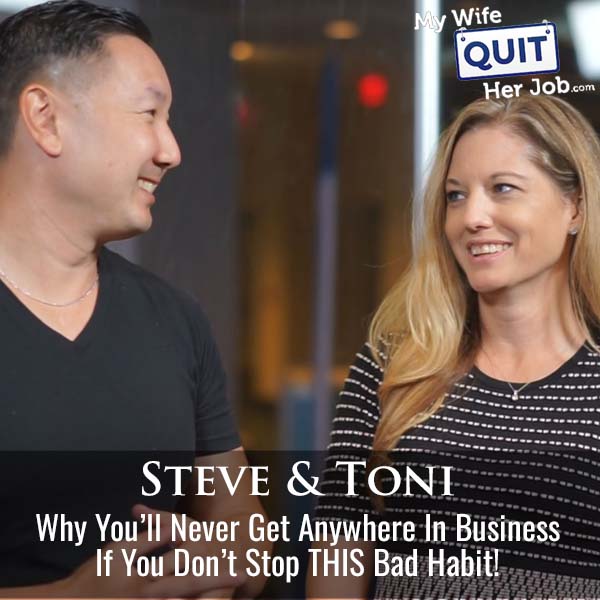
The way to beat shiny object syndrome is to draw a hard line between your working hours and your exploring hours: money-making activities only on the clock, and every “what if I also did this” idea gets pushed to your evenings, your weekends, or a dedicated brainstorming outlet like coaching or a mastermind. My co-host Toni Herrbach and I built this episode around the exact ways we each fight it, because it is the single biggest productivity killer we see in our audience and we are both guilty of it too.
Shiny object syndrome is not a personality flaw. It is a form of procrastination that comes from fear or self-doubt about the hard, unfinished work in front of you, and it hits everyone from first-time sellers to eight-figure operators.
Below we cover what shiny object syndrome actually is, why it wrecks businesses that are otherwise ready to scale, how founders like Nathan Barry and Spencer Jan built giant outcomes by killing their side projects, and the concrete rules Toni and I use to keep it contained.
Get My Free Mini Course On How To Start A Successful Ecommerce Store
If you are interested in starting an ecommerce business, I put together a comprehensive package of resources that will help you launch your own online store from complete scratch. Be sure to grab it before you leave!
Table of Contents
Key takeaways
- Shiny object syndrome is compulsively chasing new business ideas instead of finishing the profitable one already in front of you.
- It is usually procrastination rooted in fear or self-doubt, not laziness. The new idea feels fun because the old one feels hard.
- The founders who win big almost always kill their side projects. Nathan Barry shut down a seven-figure course business to focus on ConvertKit, now worth hundreds of millions.
- Spencer Jan shut down a $4M/year apparel business to go all in on Solo Stove. Solo Stove became a public company worth hundreds of millions.
- New founders should never split their focus at the start. Not two websites, not two social channels, not Amazon and Shopify simultaneously. One thing, done first.
- Diversification later in the business is fine. Splitting from day one is a way to guarantee neither channel gets to escape velocity.
- Split your calendar. Money-making activities on the clock, shiny-object exploration on your own time.
- Use a mastermind, a course, or coaching calls as a legitimate outlet for the creative “what if we did X” energy so it does not leak into your own business.
- Even background thinking costs you. If you are writing today’s video while daydreaming about a new product line, that video takes two to three times longer.
- New projects are always fun for the first 15 minutes and then they are work. Assume that up front and decide anyway.
What is shiny object syndrome in business?
Shiny object syndrome is the compulsive habit of chasing a new business idea, product line, marketing channel, or side project instead of finishing the profitable work already in front of you. Toni and I both consider it one of the top two productivity killers for entrepreneurs, tied with self-doubt.
The mechanism is straightforward. The idea in front of you is hard, half-built, and full of the annoying reality of customer complaints, broken printers, and 2 a.m. inventory. The new idea is 100 percent fantasy, which is why it feels so much more energizing.
You can even have shiny object syndrome inside a business that is already running. My print-on-linens experiment for Bumblebee Linens was fun for the first month, then slowly became the biggest time sink in my week. Embroidery has always been our bread and butter, and I diluted it chasing a printer I bought partly because it looked cool.
Why founders who focus on one thing win bigger
The founders who build outsized outcomes almost always shut down their profitable side projects to pour everything into one. That pattern shows up so consistently across the guests we have hosted on the podcast that Toni and I now use it as a diagnostic.
Nathan Barry ran a course business generating seven figures a year while ConvertKit was still doing roughly six figures. He killed the course business to focus. ConvertKit (now Kit) is worth hundreds of millions of dollars today.
Spencer Jan was doing $4M a year in apparel when Solo Stove was around the same size. He shut apparel down. Solo Stove eventually went public and hit valuations in the hundreds of millions. In hindsight it looks obvious. In the moment, walking away from $4M a year of proven revenue is one of the hardest business decisions there is.
Jim Wang built Bargaineering by becoming the AB testing expert on landing pages. He did not spin off a print-on-demand t-shirt store or a Facebook group empire. He drilled into one narrow specialty and made millions from it.
The real cost of shiny object syndrome
The real cost of shiny object syndrome is not the hours you spend on the new project, it is the hours you lose on the current one because your brain will not fully leave the new idea alone. That is the part most founders undercount.
Say you are writing a video about Temu for your channel. In the back of your mind you are calculating hat printing margins because you just watched a YouTube on it and got fired up. The Temu video now takes two to three times longer than it should, because half of your attention is offloaded to a business you have not even started.
Toni saw this in real time last week filming Amazon short-form videos. She had a limited window to record 10 videos for a guaranteed-money program, and she caught herself 40 minutes deep rabbit-holing a completely different Amazon project idea that she will “probably never do.” Meanwhile the clock on the actual paying gig was ticking.
Why new entrepreneurs should never split focus on day one
New entrepreneurs should pick one channel and one product and give it 100 percent of their attention until it is generating meaningful revenue, and only then think about diversifying. We get the “can I start two websites at the same time” or “should I do Amazon and Shopify at the same time” question on every webinar, and the answer 99 percent of the time is no.
The reason is that both channels demand a full learning curve. Setting up a Shopify store correctly, running paid traffic, and getting to a profitable acquisition cost is a multi-month effort on its own. Launching an Amazon listing that ranks and converts is a completely different multi-month effort. Split your effort day one, and neither one gets past the tough middle where most stores die.
Diversification later is smart. Diversification from day one is a way to lose twice.
How to tell if your new idea is shiny object or a real opportunity
The honest test for whether a new idea is shiny object or a legitimate opportunity is whether it advances your current business or competes with it, and whether the timing on the current business can actually afford the distraction. Not every impulse is a distraction, but most are.
A real opportunity usually meets three tests. It is aligned with what you already sell or the audience you already have. It has a clear monetization path within a defined time window. You can commit protected hours to it without starving the thing that pays your bills.
A shiny object usually looks the opposite. It is a completely new audience, in a category you have never sold in, with a monetization plan of “figure it out later,” and you plan to squeeze it into hours you did not actually have.
Comparison: focused founder vs shiny-object founder
| Behavior | Focused founder | Shiny-object founder |
|---|---|---|
| Response to new idea | Adds to an ideas doc, revisits monthly | Opens 15 tabs, starts building today |
| Number of active projects | 1 to 2 core, aggressively defended | 5 to 10, all half-finished |
| Response to boredom | Sits with the boring middle of the current project | Starts something new for the dopamine |
| Reaction to a $4M side business that is not the main bet | Shuts it down like Nathan Barry and Spencer Jan did | Keeps it running, splits focus, wins neither |
| Weekly output | Ships the highest-impact thing every week | Feels busy, ships nothing meaningful |
How to beat shiny object syndrome: the rules that actually work
The rules Toni and I use to keep shiny object syndrome contained fall into three buckets: separate the calendar, get an outlet, and force honest math on new ideas. All three are needed. Any one of them alone will not hold.
Rule 1: Split your calendar into money time and exploration time
Money-making activities happen during your working hours, and every shiny-object idea gets pushed to evenings, weekends, or a dedicated Sunday afternoon. Toni’s version is Monday through Friday, 9 to 5, is for activities that make money now or have a clear line to making money soon. Everything else is Wednesday night or Sunday during football.
This is why she can research home renovation shows or Scottish castle vlogs and still hit her Friday deadlines. The exploration has a container. It does not steal from the paying work.
Rule 2: Get a legitimate outlet for the creative energy
Founders who love business ideas need a legitimate place to talk about them so the ideas do not leak into their own operations. For Toni and me, the outlet is our course. We spend hours a week on Zoom coaching calls, in Facebook groups, and on Friday check-ins with students, and I get to brainstorm new business models with them constantly.
The critical part is that after the call, it is their idea to execute, not mine. I walked away from a great brainstorm about a specialty camper business last week and never thought about it again. That would not have happened if there was no outlet for the creative energy at all.
If you do not run a course, the equivalent outlets are a mastermind group, a paid coaching relationship where you are the coach, or in-person events like Seller Summit where you can enjoy other people’s passions without signing up to build them.
Rule 3: Force honest math on any new project before you start
Before you commit to any new idea, calculate the real cost in hours per week and the real revenue potential per hour, and only then decide. We ran this in real time on the podcast for a coaching business I was toying with.
Charge $500 for four one-hour calls a month per client. That is around $125 an hour. Take on 5 hours a week of clients and you are at $500 a week. Now ask: if you spent those same 5 hours on YouTube videos for your existing channel, would you clear more than $500? For me the answer was yes, and the coaching idea died on the spot.
That same math kills a lot of shiny objects before they eat six months.
When is a “shiny object” actually your next long-term bet?
Not every new idea is shiny object syndrome. Some of them are legitimate next bets, and the giveaway is that they line up with a long-term monetization plan you have been circling for years and that fit your current life stage better than the last version did.
The Shopify apps project I opened up on the podcast is the case in point. I have wanted to build a SaaS product for 10 years, but I always killed the idea because SaaS in the 2010s meant “you never see your kids again.” AI has changed the economics. I can now code a competitive Shopify app in a week, and I already have a captive beta audience in my course members.
The way to test whether an idea is a bet or a distraction: has it been on the back of your mind for years, does it plug into an audience you already own, does it monetize with a model you already know how to run (recurring revenue in this case), and can you carve real hours for it by dropping something less important. If four out of four, it is probably a bet. If one out of four, it is shiny object.
Why a project always stops being fun after week 1
Every new project is fun for the first 15 minutes to two weeks, and then it becomes work, and the founders who succeed are the ones who assume that in advance and decide to build anyway. This is Toni’s “mind sweeper” concept. Everyone wants a mind sweeper to hand the boring middle of a project to, but nobody actually has one, so you either do the boring middle yourself or you abandon the project.
Print-on-linens for me was fun for the first month. Now I have taken apart the heat press twice in three weeks. Toni’s Amazon short-form videos are cool until the fifth batch of 10, when they become a grind.
Assume it. If a new idea does not survive the honest question “am I willing to still do this on month six when it stops being novel?”, it is a shiny object. Kill it before it costs you anything.
Frequently asked questions
What is shiny object syndrome?
Shiny object syndrome is the compulsive habit of jumping between new business ideas, products, or marketing channels instead of finishing the one already generating revenue. It is one of the top productivity killers for entrepreneurs and is usually rooted in fear or self-doubt about the current unfinished project rather than genuine strategy.
Why is shiny object syndrome so bad for a business?
Shiny object syndrome slows every project you touch by two to three times because your attention is split even when you are technically working. It also prevents the compounding that a single focused channel produces once it gets past the difficult early months, which is where most businesses die.
How do I stop chasing new business ideas?
Split your calendar into “money-making hours” and “exploration hours,” and put every new idea into a running ideas document instead of starting it. Revisit the doc monthly. Most ideas that felt urgent last month will look obvious as shiny objects when you re-read them cold.
Should I start two businesses at the same time?
No. Every business demands a full learning curve to get past the early painful months, and splitting your time between two guarantees neither one gets to the point of being self-sustaining. Pick one, get it profitable, then diversify.
Should I sell on Amazon and Shopify at the same time when I am starting?
No, not when you are starting. Both channels require months of dedicated learning and iteration to work, and splitting focus between them from day one usually results in neither generating meaningful revenue. Pick one, get to a repeatable process, then expand to the other.
How did Nathan Barry and Spencer Jan beat shiny object syndrome?
Both of them shut down profitable existing businesses to focus on the one they believed had the bigger long-term ceiling. Nathan Barry shut down a seven-figure course business to focus on ConvertKit, now worth hundreds of millions. Spencer Jan shut down a $4M/year apparel business to focus on Solo Stove, which eventually went public.
Is shiny object syndrome always a bad thing?
No. If a new idea has been on the back of your mind for years, plugs into an audience you already own, monetizes with a model you already know how to run, and you can carve real hours for it by dropping something less important, it is probably a legitimate next bet rather than shiny object syndrome. The test is honest math and time cost, not gut feel.