
Podcast: Download (Duration: 50:05 — 57.6MB)
Starting a cosmetics company does not require a chemistry background, because third party contract manufacturers employ the chemists and formulators that most major brands rely on. Jamie Kern Lima found her first one by cold calling every brand sold in department stores and asking who they recommended, and that manufacturer produced her first samples free.
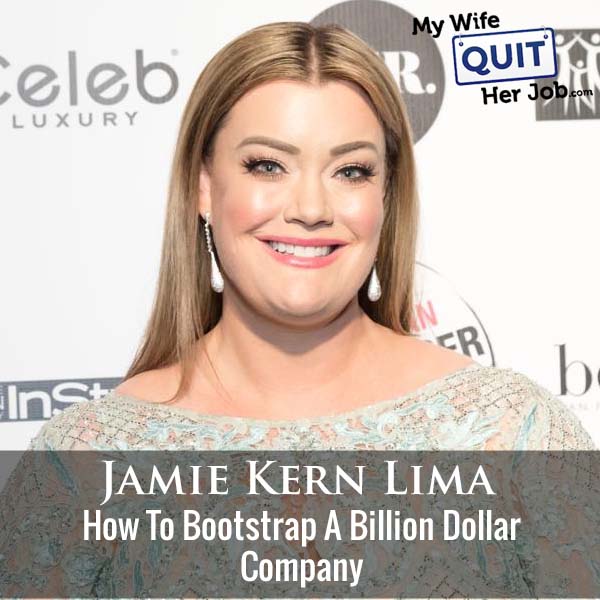
In this episode I spoke with Jamie Kern Lima, co-founder of IT Cosmetics, which she sold to L’Oreal for $1.2 billion in cash. She started the company from her living room with under $100,000, went three years before she could pay herself, and heard hundreds of rejections from the retailers that now carry her.
Below is the full path: how to find a manufacturer, why owning your formula and batch recipe determines whether you can ever sell, how she got onto QVC, and what she would do differently.
Get My Free Mini Course On How To Start A Successful Ecommerce Store
If you are interested in starting an ecommerce business, I put together a comprehensive package of resources that will help you launch your own online store from complete scratch. Be sure to grab it before you leave!
Table of Contents
Key takeaways
- Contract manufacturers supply the chemists. You do not need a formulation background to launch a product.
- Own your formulas AND your batch recipes from day one, because manufacturers will not hand them over once you succeed.
- She started with under $100,000 all in, and her first samples cost nothing.
- Minimum order quantities can be low. Her first was roughly 1,000 units.
- Three years of rejection preceded the first yes from QVC and every major retailer.
- One 10-minute QVC slot sold over 6,000 units when she was doing two to three orders a day online.
- Repeat purchase is what makes a brand. One sale is a transaction, a second is a brand.
- She would not work 100-hour weeks again, and does not believe they caused the outcome.
How to start a cosmetics company with no industry background
Most cosmetics brands, including the largest ones, produce through third party contract manufacturers staffed with chemists and formulators.
Jamie had no chemistry background and never formulated anything in her kitchen, though she notes plenty of founders do start that way.
Her research was self-directed. Reading everything available online, then attending trade shows, taught her that these FDA-approved facilities handle formulation for most of the industry.
The obstacle is secrecy. Who you manufacture with is among the most closely guarded secrets in beauty, alongside the formulas themselves.
How to find a cosmetics manufacturer
Jamie made a list of every brand sold in department stores and Sephora, then cold called all of them asking who they recommended.
Most people hung up. That was the expected outcome and she kept calling.
One person at a smaller non-competing brand sold in Sephora gave her the name of their manufacturer in New York City.
That single referral was the whole entry point. The company turned out to make products for many of the largest brands in the country and had the FDA regulatory compliance and clinical safety testing certifications she needed.
They produced her first samples free. Jamie attributes it partly to pitching them on her broader mission, and notes that manufacturers willing to work without upfront sample fees do exist.
What it costs to launch a cosmetics product
IT Cosmetics launched with under $100,000 all in, and the first minimum order was roughly 1,000 units.
Sample formulation cost nothing in her case. The manufacturer absorbed their formulators’ time.
Minimum order quantities vary widely. Plenty of contract manufacturers set high MOQs and plenty do not, so finding one without a high floor is worth the search.
Her volume at the time makes the number meaningful. Selling two to three units a day online means 1,000 units is a genuine commitment.
How product formulation actually works
Formulation runs through the manufacturer’s chemists, and the founder’s job is patience across many iterations.
IT Cosmetics also assembled an advisory board alongside the manufacturer’s team.
The concealer took hundreds of iterations. Jamie could not point at an existing product and ask them to match it, because nothing on the market worked for her skin.
That is the harder version of product development. Improving on something that exists is a shorter path than creating something with no reference point.
Why you must own your formulas and batch recipes
Owning both the formula and the manufacturing batch recipe determines whether your business can ever be sold or funded.
The formula is the ingredient list and quantities. The batch recipe is how it is actually made, closer to a cake recipe specifying temperature, order of addition, and mixing time.
Jamie secured ownership of both from her first manufacturer while she had no money and no traction, on instinct rather than knowledge.
The timing is what matters. Once you become successful, manufacturers resist handing these over, because doing so lets you leave and produce elsewhere.
The cost of missing this shows up at exit. The night before the L’Oreal deal closed, one product out of 400 had no findable written proof of ownership, and the lawyers did not know whether the deal would proceed until the manufacturer sent documentation the next morning.
Her general advice is to work backward from where you want to end up. If you know you may take investment or sell one day, learn what that requires and put those foundations in place now.
Why repeat purchase rate matters more than launches
A single sale is a transaction, and a customer buying a second time is what constitutes a brand.
IT Cosmetics deliberately resisted the industry norm. Retailers push for new products every season and quarter, chasing short-term revenue on whatever is trending.
Their rule was that nothing launched unless it worked better than anything available. That discipline cost real sales.
The moisturizer took seven years. Retailers had been asking from day one, and it did not ship until the formula was right for Jamie’s own sensitive skin.
The reason she held the line is that authenticity cannot be faked. Selling something she could not wear herself would have undermined the premise of the brand.
Hero products with high repeat rates are what compound. Word of mouth from people who genuinely love a product is what kept the company alive before it could afford advertising.
How IT Cosmetics survived before retail said yes
For three years the entire business was two to three website orders a day and grassroots word of mouth.
Customers posted their own before and after photos online, which spread organically with no ad spend behind it.
Jamie and her family ran a manual demand-generation campaign. They walked into retail stores, asked for managers, and requested written corporate submissions to carry IT Cosmetics.
The PR effort ran under a pseudonym. Jamie’s middle name, Marie, got her own email address, handled customer service, and pitched every outlet from small blogs to Good Morning America, mostly getting rejected.
The website launch itself was a lesson. Her husband built the first site from an HTML book, and the first order that came through was one he placed himself to prove the site was not broken.
How to get on QVC and why it matters
Jamie sent product to QVC for three years and heard no dozens of times before getting a single 10-minute slot.
Her outreach method was direct. She found anyone she could on LinkedIn working at QVC, Sephora, Ulta, or department stores and sent them product.
The economics are why it was worth three years. In beauty, you can sell more on QVC in an hour than across a full year in department stores.
The terms were brutal for a company with no cash. Beauty on QVC is consignment, unsold units come back, and hitting the sales goal meant moving over 6,000 concealers.
Funding that inventory took 23 banks. The first 22 said no, and bank 23 issued the SBA loan that covered the purchase order.
Her standing rule, which she broke here, is worth stating. Never take a purchase order you cannot afford to lose, and three years in they had no other path to survival.
Why authenticity beat the expert advice on that QVC slot
Outside experts told her to use models with perfect skin, and she went on air with her own rosacea visible instead.
Her reasoning was about who was watching. She pictured a single mom folding laundry who had forgotten she mattered, and decided that woman seeing herself represented was worth more than a higher-converting segment.
The slot was not guaranteed. QVC can cut your time live if the product is not selling, so the 10-minute window could have ended early.
It sold out before the clock ran down. That one airing became five that year, a hundred the next, and eventually more than 250 live shows a year.
The retail effect compounded. People watching wanted to try the product in person, which built the demand that made physical retailers say yes.
What Jamie Kern Lima would do differently
She worked 100-hour weeks for close to ten years and does not believe those hours produced the outcome.
Her diagnosis is that success arriving after three years of rejection triggered a fear it could vanish, which drove her to strike while the iron was hot.
Work became an addiction for both her and her husband. Like any addiction, it separates you from yourself to the point where days stop registering.
That realization shaped the exit decision. Going public would have left them running the company, and partnering with L’Oreal was partly a way to stop.
Her framing of it is unusual and useful: she had to trust herself not to trust herself, because left alone she would have kept working those hours.
Her conclusion is that 40 or 50 hour weeks might have produced the same result slightly slower, and she would have enjoyed the decade considerably more.
Frequently asked questions
Do you need a chemistry background to start a makeup line?
No. Third party contract manufacturers employ the chemists and formulators that most major beauty brands use, and many are FDA-approved with clinical safety testing in place. Jamie Kern Lima had no chemistry background at all.
How do you find a cosmetics manufacturer?
Jamie called every brand sold in department stores and Sephora asking for recommendations. Most hung up, and one person at a smaller non-competing brand gave her a name. Who you manufacture with is a closely guarded secret in beauty.
How much does it cost to launch a cosmetics product?
IT Cosmetics launched with under $100,000 total. Her first samples were produced free by the manufacturer, and the first minimum order quantity was around 1,000 units.
Why does owning your formula matter?
Without documented ownership of both the formula and the batch recipe, you cannot reliably take investment or sell the business. Manufacturers resist handing these over once you are successful, so secure them at the start.
What is a batch recipe?
The manufacturing process rather than the ingredient list: temperature, order of addition, mixing times. Owning the formula alone is not enough, because the batch recipe is what makes the formula reproducible elsewhere.
Is QVC worth pursuing for a product brand?
Jamie says do everything you can to get on. A single hour on QVC can outsell a full year in department stores, and the exposure builds the retail demand that gets physical stores to say yes.
How long did IT Cosmetics take to become profitable?
Three years passed before Jamie and her husband could pay themselves anything. During that period they sold two to three units a day through their website and heard no from every major retailer.
Do you have to work 100-hour weeks to build a big company?
Jamie worked them for close to a decade and does not believe they caused the outcome. Her view is that 40 or 50 hours might have produced the same result slightly slower, with far more of it enjoyed.