
Podcast: Download (Duration: 46:32 — 53.5MB)
The most reliable way to not give up on your business is to set a three to five year timeline before you start, so that a slow first year reads as normal rather than as failure. Most people quit because they expected results in three to six months and treated the absence of results as a verdict.
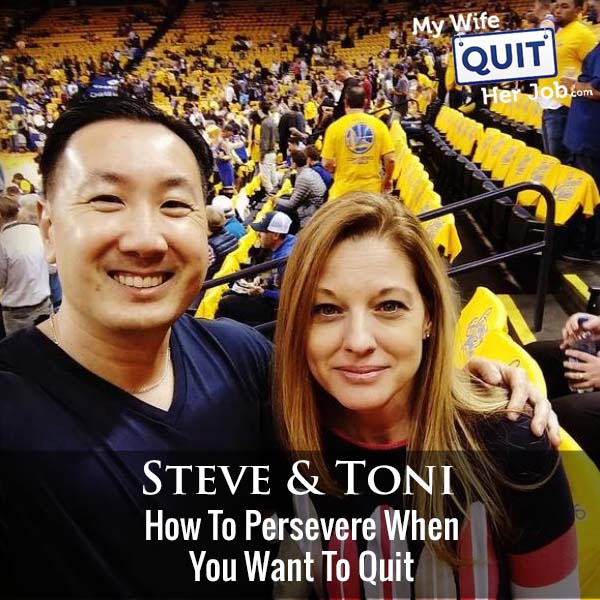
In this episode my business partner Toni and I talk through the times we each wanted to quit, and the specific tactics that got us through. Toni runs a blog and an ecommerce business, and my own blog earned nothing for roughly three years.
Below are all eight tactics, plus the distinction between quitting and pivoting, and why physical training is the most transferable skill for business persistence.
Get My Free Mini Course On How To Start A Successful Ecommerce Store
If you are interested in starting an ecommerce business, I put together a comprehensive package of resources that will help you launch your own online store from complete scratch. Be sure to grab it before you leave!
Table of Contents
Key takeaways
- Give yourself three to five years. Most money arrives after year one, and very little arrives during it.
- Decide you will not quit before you start. A casual attitude makes quitting easy the first time something breaks.
- Know your why. Toni’s is being able to pick her kids up from school, which outweighs most bad days.
- Find a quick win when you are stuck. Selling one unit beats agonizing over a container order.
- Write down your wins, because in the middle of a bad stretch you cannot see past or future clearly.
- Get a mastermind or accountability partner who will be honest with you rather than only supportive.
- Endurance training transfers directly. Persisting through physical difficulty builds the same muscle business needs.
- Pivoting is not quitting. Changing format or direction while continuing is a different decision entirely.
The two kinds of hard times in business
Difficulty splits into things that are not working and things outside your control, and they call for different responses.
The first category is effort without return. You are publishing, building, and shipping, and the traffic or sales have not arrived yet.
The second is external. A Google update, a false Amazon complaint, or a platform decision that nothing in your process caused.
Toni’s framing is that entrepreneurship swings between high highs and low lows. Good traffic, rising conversion, and positive feedback on one end, and a 60% overnight traffic drop from an algorithm update on the other.
Why unrealistic timelines make people quit
Setting a three to six month expectation almost guarantees you quit right when the work would have started paying.
The mechanism is simple. You hit your deadline without results, and the deadline itself becomes the evidence that it is not working.
My own numbers set the reference. The blog took three years to make real money, and the ecommerce store took about a year.
Toni’s pushback is fair: three to five years sounds like a very long time in a culture where a normal job pays you in two weeks. That is exactly why stating the timeline upfront matters.
Financial stability is the precondition. Starting a business while desperate for money forces short-term decisions and makes quitting far more likely.
Why you have to decide not to quit before you start
Adopt a no-quit stance at the outset, because deciding in the moment goes badly.
The pattern we both see is people who publish three articles, record seven podcast episodes, or post six YouTube videos and stop.
Going in with a casual attitude means the first genuine obstacle becomes a reasonable exit point. Deciding in advance removes that option from the table.
How knowing your why gets you through bad days
Understanding why you are building this is what makes a frustrating week survivable.
Toni’s example is concrete. When she spent days fighting to get email forms installed correctly and wanted to quit, the alternative was a job in an office.
That comparison settles it. A job means giving up school pickups, practices, and being at her kids’ activities, which is the entire reason the business exists.
My own version was a trigger rather than a comfort. My wife and I talked about starting a business for years and did nothing until she became pregnant, and then the research and execution started immediately.
How to use quick wins to break out of a stuck stretch
Find one thing you can complete today that counts as a positive result.
The reason it works is perspective. When you are inside the frustration you cannot assess it logically, and a completed task pulls you out far enough to see it is less bad than it felt.
My version of this for students is deliberately small. Rather than ordering a large container and watching nothing sell, go sell a single unit by whatever means necessary.
That first sale changes the emotional state. It converts an abstract hope into evidence, which is what produces the drive to keep going.
Why you should write down your wins
In the middle of a bad stretch you cannot see clearly in either direction, and a written list restores the view.
Toni keeps this literally, with sticky notes color-coded by how good the win was. Listing five real accomplishments reframes the current problem as one item rather than the whole picture.
The past wins carry information too. Seeing how you overcame a previous bad stretch tells you what approach might work on this one.
My version is conversational rather than written. Over the holidays when things get hard, my wife and I remind each other what the business has actually done, which functions as gratitude.
Why a mastermind group keeps you from quitting
Building a business entirely alone is unnecessarily hard, and a mastermind supplies the perspective you have lost.
The function is specific. When you cannot see your own wins or remember your why, other people can point at both.
The value is not only encouragement. My masterminds pushed me into things I was avoiding, including going all in on Amazon after I had been hesitating, and Amazon is now a significant part of the business.
What makes it work is honesty. You want people in your corner who will also tell you plainly when you are wrong.
A business partner adds something different again. Sharing equity makes the work more enjoyable, and enjoying it is what makes a long unprofitable stretch tolerable.
How endurance training builds business persistence
Training yourself to push through physical difficulty produces a mental muscle that transfers to everything else.
My own version is running a mile of switchbacks up a mountain. Wanting to collapse and continuing anyway is direct practice at persisting through pain.
Toni’s version came from hiring a personal trainer specifically so she would not stop early. Left alone she would have accepted 22 pushups, and the trainer is what got her from modified pushups to full ones months sooner.
The parallel with business is exact. Losing weight produces nothing visible at first, feels worse before it feels better, and then compounds once your body adapts.
Health and fitness is the easiest place to build this. Everyone has access to it, unlike most other areas where circumstances get in the way.
Why negative feedback hurts and what to do with it
The comments that land hardest are the ones containing a small element of truth.
Outright hostile feedback is easy to dismiss. Criticism with a real point embedded in it is what stays with you.
Toni’s hardest period involved comments about her children, since she wrote about parenting and homeschooling, and the partially true ones were the worst.
Family skepticism counts too. My mother’s version was asking why someone with a master’s in engineering was writing about random things on the internet and expecting it to make money.
When to take a break instead of pushing through
A few days completely disconnected can restore perspective that grinding through will not.
Toni’s threshold is low and useful. She took three or four days without checking email for the first time in over ten years, and it cleared her head.
My preference is exercise rather than time off. A run produces a kind of trance that clears my mind, and I rarely need more than a couple of days away.
The longer break is a different situation. If you need a month or a year off, that usually signals burnout requiring a lifestyle change rather than a rest.
Prevention beats recovery. I try not to take on too much in the first place, which is why I rarely reach the burnout point.
The difference between quitting and pivoting
Changing what you are doing while continuing to build is a different decision from stopping.
The examples are ordinary. You start a podcast, discover you are not good at it or do not enjoy it, and move to YouTube instead.
That is not giving up. You have changed the format to something that fits you better while the underlying goal stays intact.
Toni and I ran a business together that we ultimately set aside. The idea was sound and the execution was decent, and factors outside our control made continuing the wrong use of effort.
The signal for stopping something is not frustration. For me it is when something genuinely does not feel right, which is rarer than a hard week.
How to use the Pomodoro technique when you feel overwhelmed
Set a timer for 25 minutes, work on exactly one task, and take a three to five minute break, four times through.
The full cycle produces roughly two hours of uninterrupted work, followed by a longer 15 to 30 minute break.
The setup matters as much as the timer. Toni flips her phone over, removes her Apple Watch, and checks nothing until the timer ends, which let her finish two slide decks in 35 minutes.
I pushed back on this, because I prefer working four or eight hours straight in a flow state and a timer would interrupt it.
Toni’s counter is the one that convinced me. The value is not the productivity, it is that “write a 5,000 word article” is paralyzing while “write for 25 minutes” is something anyone can start.
The general form is breaking an overwhelming task into a piece small enough to begin. Write the outline, build the table of contents, or create the first email form.
Frequently asked questions
How long should you give a new business before quitting?
Three to five years. My blog took roughly three years to make real money and the ecommerce store took about a year. Setting a three to six month expectation means quitting right around when results would have started.
What is the most common reason people quit their business?
Mismatched expectations. People work hard for months, see no traffic or sales, and read that as a verdict rather than as the normal early phase. Financial pressure makes it worse, since desperation forces short-term thinking.
How do you get motivated when nothing is working?
Find one quick win you can complete today. Rather than ordering a large inventory batch and hoping, go sell a single unit by any means. That first sale converts hope into evidence and produces real momentum.
Does exercise actually help with business persistence?
Yes, directly. Training yourself to keep going through physical difficulty builds a mental muscle that transfers. Toni hired a personal trainer specifically because she would stop early on her own, and progressed months faster as a result.
Is it okay to take a break from your business?
Yes, and a few days is usually enough. Toni took three or four days completely disconnected for the first time in over a decade. If you need a month or a year, that signals burnout requiring a lifestyle change rather than a rest.
What is the difference between pivoting and quitting?
Pivoting means changing format or direction while continuing to build. Discovering you dislike podcasting and switching to YouTube is a pivot. Quitting means stopping entirely, and frustration alone is not a reason to do it.
How does a mastermind group help you avoid quitting?
It supplies perspective you have lost. When you cannot see your own wins or remember your reasons, other people can point at both, and a good group will also tell you honestly when you are wrong.
How does the Pomodoro technique help when you feel overwhelmed?
It shrinks the task to something startable. Twenty-five minutes on one thing with all notifications off, then a short break, repeated four times. The point is not productivity, it is that “write for 25 minutes” is doable when the full task is paralyzing.