
Podcast: Download (Duration: 53:04 — 61.0MB)
You validate a product idea by building a landing page with CAD renders, running Facebook lead ads to it, and collecting emails plus wholesale commitments before you spend anything on inventory. Dylan Jacob used exactly that process for both of his first products, and one of them sold out 7,000 units in two weeks.
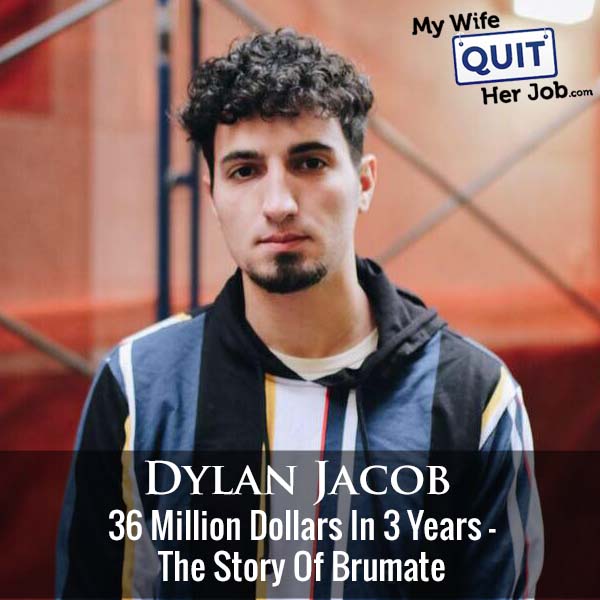
In this episode I spoke with Dylan Jacob, founder of BrüMate, which makes insulated drinkware built specifically for alcohol. He grew it from $300,000 in its first partial year to $2.1 million, then $20 million, then $36 million, bootstrapped and owning 100% of the company throughout.
Below is the full playbook: how he validated each product, what a first prototype actually cost, how he funded inventory with no outside money, why he skipped Kickstarter, and why direct to consumer had to come before retail.
Get My Free Mini Course On How To Start A Successful Ecommerce Store
If you are interested in starting an ecommerce business, I put together a comprehensive package of resources that will help you launch your own online store from complete scratch. Be sure to grab it before you leave!
Table of Contents
Key takeaways
- Validate with renders and a landing page rather than a finished product. CAD files Photoshopped into people’s hands are enough.
- His first prototype cost under $10,000, and the first mold order was negotiated below the 1,000-unit minimum.
- Go to a manufacturer with an in-house engineering team before you hire a designer, because they engineer it for free.
- He skipped Kickstarter deliberately, reasoning the marketing effort was better spent driving to his own page.
- Preorders funded growth. Full price, 90-day lead time, air shipped in, repeated all through 2017.
- Seven colors on one launch outperformed a single color, using one shade per point on the color spectrum.
- A 3PL cut shipping cost over 40%, which more than covered the pick fees.
- Direct to consumer first makes retail work. Shoppers recognize the brand before they see it on a shelf.
How to validate a product idea before manufacturing
Build a landing page with product renders, drive paid traffic to it, and collect emails plus wholesale commitments before ordering inventory.
Dylan’s process was identical for both early products. He had CAD files turned into digital renders, Photoshopped those into people’s hands in real scenarios, and included cutaway views showing how the insulation worked.
The page was honest about its status. It stated the price and said plainly that this was not the final version, which framed the purchase as supporting an original concept.
He ran Facebook lead generation ads to that page and collected a couple thousand emails for the first product.
Wholesale validation ran in parallel. He walked into local breweries and got Sun King Brewery in Indiana to commit to carrying it in their showroom.
Two independent signals is what made him comfortable spending on the mold. Direct to consumer interest and a wholesale commitment on the same concept.
Why he skipped Kickstarter and Indiegogo
Dylan interviewed people who had run crowdfunding campaigns and concluded the effort was better spent on his own page.
The platform fee was part of it. Crowdfunding sites take a cut of what you raise.
The bigger issue was the marketing itself. Campaigns require substantial promotion just to get traction or reach a front page, and he judged that effort more valuable pointed at a page he controlled.
His hypothesis held up. Running his own preorder page produced the same result without the platform taking a share.
How much a first product prototype costs
Dylan invested under $10,000 in his first prototype, which was a deliberately simplified version.
The current product has three separate components, and that first version had one. Reducing complexity is what kept the tooling affordable.
Minimum order quantity was the negotiation. The factory’s minimum was 1,000 units, and he did not want that many knowing it was not the final design, so he paid a higher premium for a smaller batch.
How to find a manufacturer that will engineer your product free
Find a factory with a strong in-house engineering team before you hire a product designer.
The common mistake is the reverse order. People spend three or four months with a designer perfecting a product, take it to a manufacturer, and get told half of it cannot be made.
The manufacturer’s engineers then re-engineer it for manufacturability anyway. That work happens either way, so starting there saves months.
Factories with capable engineering teams typically do that work at no charge as part of winning the order.
Dylan’s selection process was hands-on. He built a list of factories, flew out for two weeks, interviewed their engineering teams, and reviewed his design with each before choosing one.
After that the work was remote. Skype and email with the chosen team handled the rest of the design refinement.
How to find an untapped product opportunity
Look for a large growing category where an entire use case is being ignored.
Dylan’s insight came from drinking craft beer. Sixteen-ounce cans meant the last quarter was always warm, and no 16-ounce koozie on the market actually kept a can cold.
The category-level observation is what made it a business rather than one product. Insulated drinkware was one of the fastest growing sectors of housewares, and every player focused on hydration: water bottles, coffee mugs, tumblers.
Nobody was building for alcohol. That gap defined BrüMate as a company making products for adult beverages specifically.
His logic on willingness to pay is worth repeating. If people spend $30 to keep water cold, beer is both more expensive and something people get more excited about.
How the first product launch actually performed
The first batch of 1,000 units sold out in under two weeks.
Sun King had already committed to 240 units, which cleared about a quarter of the run before launch.
Roughly half the remaining 750 went to customers from the email list built during validation.
Facebook giveaways and paid ads cleared the rest. Return on ad spend ran around seven or eight times.
Targeting was simple. Men and women 21 to 45 interested in craft beer, chosen because most craft cans come in 16-ounce versions and craft drinkers behave like early adopters.
That first batch was about learning rather than revenue. He surveyed those buyers on what they liked and wanted changed, and did not relaunch a second version until early 2017.
The second product that produced $270,000 in two weeks
The insulated wine growler validated with over 7,000 emails collected for around $1,000 in ad spend.
The product solves a specific problem. Glass-free zones like parks, beaches, boats, and campsites exclude wine because of the bottle, and transferring it into an insulated container solves that plus keeps it chilled for over 24 hours.
It was also easier to build. Fewer moving parts than the koozie meant cheaper tooling.
Targeting shifted to women in the same age range, interested in boating, outdoor activities, and wine, which is a considerably broader audience than craft beer.
The results were unusual even for the era. Email open rates ran around 50%, which he notes is far above anything comparable campaigns produce now.
He ordered 7,000 units in seven colors. The product arrived November 26, 2016, sold out in two weeks, produced $270,000 in sales, and shipped to every customer before Christmas.
Why launching in seven colors outperformed one
Offering one shade at each point on the color spectrum captures buyers with different taste without creating dead inventory.
The idea came from his tile business. He had spent four hours choosing granite and then found glass tile came in four colors, and built that company around the largest color selection available.
Drinkware had the same gap. Products came in solid colors or bare stainless, and adding color turns the item into a fashion accessory and a conversation piece.
The execution detail is what avoids stranded stock. He picked one green, one blue, one pink rather than multiple shades of the same color, using Pantone trend data to select the most popular version of each.
Aqua for blue, neon for pink, coral for orange. Nobody color dominated because buyers self-sorted across the spectrum, and the company now runs 30-plus colors on most products.
How to fund inventory with no outside money
Preorders at full price funded the entire 2017 growth curve.
The cycle was tight. Drive traffic to the site, take payment with a stated 90-day lead time, air ship the finished product in rather than shipping by sea, fulfill, and repeat.
He did not discount to compensate. These were products that did not exist elsewhere in colors people wanted, so buyers were willing to wait.
About 10% of buyers missed the preorder notice. Those were refunded or talked through, and most were fine once it was explained.
Other capital came from assets he already owned. He pulled a line of credit against his remodeled house, then sold both the house and his tile business at the end of 2017.
The bank line came at the two-year mark. An unsecured $250,000 SBA-backed line of credit closed around February 2018, in time for spring orders.
Why he hired a Facebook ads contractor instead of an agency
Agencies wanted minimum retainers around $10,000 with spend thresholds he had not reached.
He also wanted daily ownership of the account rather than a few hours of attention, having heard negative agency experiences from other founders.
His hiring process was structured. He interviewed 10 to 15 Upwork contractors with strong reviews and over $100,000 earned, had each audit his account, and picked based on what they proposed doing differently.
The results were immediate. BrüMate did $1 million from January to October 2017 and another $1 million from October to December, compressing 10 months of progress into three.
What the contractor did better was audience structure. Dylan had been hitting the same audience repeatedly, driving frequency up, and lookalike audiences opened up new people with similar interests.
When to move fulfillment to a 3PL
Below roughly $20 to $30 million in sales, a 3PL is usually cheaper once you account for shipping rates.
The cost comparison is not what people expect. Warehousing fees get passed through either way, so the genuine added cost is the pick fee plus additional picks.
Carrier rates offset that. A fulfillment center shipping 30,000 packages a day gets rates a brand shipping 200 a day cannot.
BrüMate’s numbers make it concrete. Average packages weigh nearly three pounds and cost over $10 to ship, and moving to a fulfillment center cut that by more than 40%.
The operational pain was the real driver. BrüMate outgrew three warehouses in a year, going from 3,500 to 7,000 to 20,000 square feet, and burned through a third of the new space in three weeks.
Dylan’s honest assessment is that fulfillment was a distraction from what he actually wanted to do, which is product development and innovation.
They moved gradually. About 30% of daily volume went to ShipMonk first as a test, and 100% followed within two or three months.
Why direct to consumer has to come before retail
Retail works dramatically better when shoppers already recognize your brand from your own marketing.
The failure mode is obvious once stated. A shopper who has never heard of a product walks past it on a shelf, because nothing about it is familiar.
Direct to consumer marketing fixes that in advance. BrüMate reaches millions of people weekly, and only a fraction order immediately, so the rest arrive at a retail shelf already primed.
The relationship becomes symbiotic. Retailers do not have to tell your brand story, which they cannot do as well as you can anyway, and simply provide the shelf.
Dylan’s answer on whether he would reverse the order was unequivocal. Doing retail first means relying on the retailer to tell the story, and the adoption and sell-through BrüMate sees would not have happened.
How to build a true omnichannel brand
Splitting revenue across direct, Amazon, and wholesale protects you when any one channel gets more expensive.
The trigger was rising ad costs. Facebook cost per click climbed substantially between 2016 and 2018, and running a business fully dependent on paid digital looked unsustainable.
His segmentation is by buying behavior rather than demographics:
- Brand loyalists who shop direct, join the email and text lists, and want limited releases
- Amazon shoppers who want unbiased reviews and Prime shipping
- In-person shoppers who want to see and touch the product before buying
The resulting split lands near half direct to consumer, roughly 25% Amazon, and roughly 30% wholesale.
The buffering effect is the point. A retail downturn barely moves the total, and a month of higher ad costs gets absorbed by the other two channels.
Wholesale scaled hard in the final year discussed, from $3 million to $20 to $25 million, with 115 sales reps and placement in Dick’s Sporting Goods, Cabela’s, Bass Pro, Nordstrom, and Total Wine.
Frequently asked questions
How do you validate a product before manufacturing it?
Build a landing page with CAD renders Photoshopped into realistic scenarios, run paid lead ads to it, and collect emails. Dylan also secured a wholesale commitment from a local brewery, so he had two independent signals before spending on tooling.
Is Kickstarter worth it for a physical product?
Dylan decided against it. Between the platform fee and the substantial promotion required just to gain traction on the site, he judged that effort better spent driving traffic to a preorder page he controlled.
Should you hire a designer or a manufacturer first?
Find a manufacturer with a strong in-house engineering team first. Designers frequently produce something a factory then has to re-engineer for manufacturability, and factories with engineering capability usually do that work free.
How do you fund inventory without outside investment?
Preorders at full price. Dylan took payment with a stated 90-day lead time, air shipped finished goods in rather than using sea freight, fulfilled, and repeated. He supplemented with a home equity line and later an SBA line of credit.
Should you launch a product in multiple colors?
Yes, if you pick one shade per point on the color spectrum rather than multiple shades of one color. Dylan launched seven colors chosen from Pantone trend data, and no single color dominated because buyers spread across the range.
When should you switch to a 3PL?
Below roughly $20 to $30 million in sales it usually saves money. Warehousing costs pass through either way, and the carrier rates a fulfillment center gets typically more than cover the pick fees. BrüMate cut shipping cost over 40%.
Should you sell direct to consumer or retail first?
Direct to consumer first. Shoppers walk past unfamiliar products on a shelf, and building brand recognition through your own marketing means retail becomes a place people find something they already know.
How do you diversify away from Facebook ad dependence?
Split revenue across direct, Amazon, and wholesale, since each serves a different buying behavior. BrüMate runs near half direct, roughly 25% Amazon, and roughly 30% wholesale, so a bad month in one channel gets absorbed by the others.