

Podcast: Download (Duration: 44:21 — 51.0MB)
Running a lean business comes down to automating five things: the hiring funnel, content repurposing, email triage, how you decide what to drop, and your email and SMS flows. Austin Brawner and I both run substantial businesses with tiny teams, and these are the systems that make that possible.
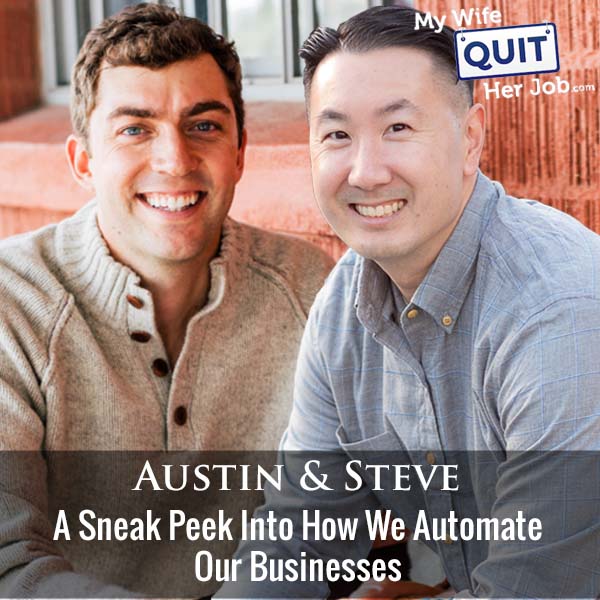
In this episode Austin Brawner of the Ecommerce Influence podcast and I interview each other about how we each automate our operations.
Below is all five: a hiring process that filters 200 applicants down to four, how one blog post becomes six pieces of content, triaging email through a help desk, deciding what to drop, and the marketing flows worth building.
Get My Free Mini Course On How To Start A Successful Ecommerce Store
If you are interested in starting an ecommerce business, I put together a comprehensive package of resources that will help you launch your own online store from complete scratch. Be sure to grab it before you leave!
Table of Contents
Key takeaways
- Market a job like a product. Attracting a great hire justifies the same effort as a sales page.
- A multi-round application filters 200 people to four worth interviewing.
- One blog post becomes six pieces of content staggered over months.
- Route email through a help desk so an assistant triages before you see it.
- Bill D’Alessandro’s hiring question reveals ownership better than a resume.
- You will always have 10x more to do than time. Accepting that is the point.
- SMS cleanup flows catch the 65% who never opened your email.
- Replenishment sequences run for months. Email nine can perform as well as email one.
System 1: Automating the hiring funnel
Austin treats a job posting like a sales page, then runs applicants through a multi-round filter built in Airtable.
The mindset comes first. Hiring someone genuinely talented is valuable enough to justify the same effort you would put into marketing a product, so the job advertisement gets that level of work.
Airtable is the mechanism. It functions like a spreadsheet with the ability to connect to other applications, so applicants arrive through a form and move through rounds visibly, like a sales funnel.
The rounds Austin uses:
- Round one: a tripwire. Include a specific word in the cover letter, which filters for reading instructions.
- Round two: listen to two podcast episodes chosen to convey what the business is actually about.
- Round three: write a short blog post, around 500 words, which tests writing on a remote team.
- Round four: record a two-minute video introduction.
By the time anyone reaches an interview, Austin knows they can write, follow instructions, and present themselves. That produces roughly four or five interviews per 200 applications.
He runs a shortened version for lower-level roles, on the reasoning that following instructions matters most there.
My own experience with this at Bumblebee Linens was different. We ran something similar and almost nobody completed the funnel, so a middle ground makes sense depending on the role.
Austin’s observation from testing the customer service version is striking: given a scenario and asked to write a reply to a frustrated customer, roughly 90% of applicants failed badly and 10% nailed it entirely.
The hiring question that predicts ownership
Bill D’Alessandro’s question is a scenario about a deadline nobody has time to meet.
The setup: an assignment is due Friday at 4:30, other work piled up all week, and at 4:00 you realize you cannot finish before the end of your day. What do you do?
Some people answer that they would email to explain and deliver Monday morning. The answer he is looking for is staying until it is finished, because today was the deadline.
Austin’s refinement is worth adding: ask what they do the moment they realize they cannot finish, which surfaces how they communicate rather than only whether they persist.
The revealing version comes from Bill’s best employees, who respond by asking what he means. Not finishing does not occur to them.
System 2: Content repurposing
Everything starts with one blog post, which becomes a YouTube video, tweets, Instagram posts, TikToks, and an email.
My weekly output is one blog post, one podcast episode, one YouTube video, plus automated Twitter and Instagram.
The blog post is the source. I write for four hours every Sunday morning and produce one 3,000 to 5,000 word article.
The YouTube video comes directly from it. Sometimes I read the words nearly verbatim because I write the way I speak, and sometimes I pull bullet points and improvise.
The critical enabler for video is removing setup friction. If lights and camera are not permanently configured so you press one button, it will not happen consistently.
Twitter runs through a consultant who consumes my content and writes threads from it, publishing three times daily. The best-performing tweets become Instagram posts paired with a photo, and those become the foundation for TikTok.
The podcast is the deliberate exception. It exists to meet people, so my assistant schedules interviews and I improvise from the guest’s answers rather than preparing.
The scheduling trick is staggering. A YouTube video derived from a post might publish months later, which makes the output look larger than the work behind it.
Tools: Planoly for scheduling Instagram three months ahead, and my assistant edits video, podcasts, and TikToks.
System 3: Triaging email through a help desk
Route your email into a help desk so an assistant filters it before anything reaches you.
The problem is volume. Publishing content generates responses, and Austin estimates roughly 95% of his are podcast pitches.
Austin uses Help Scout. His assistant filters everything, assigns him only what warrants his response, sometimes adds context, and pings him on Slack when something is genuinely important.
I use Gorgias for the same job with a broader intake. It pulls in email, social media comments, Facebook Messenger, SMS, and store data into one interface.
Social is why I chose it. Every post generates comments I want answered, and having those arrive in the same queue as email means nothing gets missed.
My assistant closes podcast requests outright, sends canned responses where appropriate, and escalates only what needs me.
System 4: Deciding what to drop
Maintain a running priority list, check anything new against it, and deliberately drop what does not fit.
My method is unsophisticated. I keep a Gmail draft containing my prioritized tasks for the week plus a long-term list below it.
When something extraneous arrives, I open that draft and ask whether it falls under the current priorities. If not and it does not matter long term, I drop it. If it might matter later, it goes on the long-term list.
The Facebook conversions API is a live example. It has sat on my long-term list for a while because it will not directly generate sales.
Austin’s approach is time-boxed sprints. Two to three weeks with a hard shipping deadline, which eliminates extraneous work automatically because the deadline forces prioritization.
His membership launch took 30 days from decision to live, which required cutting substantial planned features.
He also caps himself at three to five significant things per week.
The mindset underneath is the important part. You will always have ten to twenty times more to do than time available, and accepting that is what makes prioritizing possible rather than stressful.
His practical safeguard is re-reading quarterly plans around the 45-day mark, when the original priorities start fading from memory.
System 5: Email and SMS automation
Email remains the most durable automation channel, and SMS is the second.
My own history is a caution about chasing new platforms. I went deep on Facebook Messenger for two years, and before that pages, then groups, and each one was throttled in turn.
Email has survived every one of those cycles.
The flows worth building:
- Onboarding. A quiz or form segments people, then routes them into a sequence matched to what they want.
- Browse abandonment. Personalized, asking them to reply with what they are considering, which surfaces real objections.
- Cart abandonment. The obvious one, and still among the highest return.
- Replenishment. For consumables, a sequence running months rather than days.
Austin’s replenishment result is the striking one. A client running eight to ten emails found the ninth performing nearly as well as the first, because repurchase timing varies enormously across customers.
His model for that was 1-800 Contacts, which follows up relentlessly every two to three weeks with a one-click repurchase, because they know your prescription and that you will need more.
The outcome for a client who was sending one email every two months: over 30% of revenue from email within a couple of months, from one weekly broadcast plus the repeat purchase sequence.
How to combine email and SMS
Treat SMS as an upgrade layer on existing email flows rather than a parallel channel.
The arithmetic makes the case. A 35% open rate means 65% of people never saw the message, and SMS reaches a meaningful portion of them.
The pattern Austin uses is a cleanup text. Run the email sequence, and for anyone who did not take the desired action, add an SMS at the end.
The trigger is the action rather than the open, since open data is unreliable for this purpose. Someone who did not purchase gets the text regardless of whether they opened anything.
For longer sequences like replenishment, insert an SMS every three emails so you reach people without overwhelming them.
My own version for campaigns is the same logic: send the email, wait several days, then text the people who did not act.
The essential caveat is that SMS is a different channel with different norms. You cannot text people the way you email them.
Why replies matter more than sends on SMS
The ability to reply instantly is what makes SMS valuable, and encouraging it protects your deliverability.
My framing to subscribers is that this is an open line and they can reply any time with a question. That reduces the chance a later campaign gets marked as spam.
It also closes sales. Getting someone into a real conversation converts at a rate broadcast messages cannot match.
Austin’s related use is asking questions. A clothing brand deciding between two colorways can ask subscribers directly, and the replies drive sales alongside the research.
The trend worth watching is that SMS is following email. Android now has a junk folder for messages, and political campaigns have already taught people to expect volume.
Where SMS commerce is heading
Text-to-purchase already exists for subscription businesses and is expanding.
Recharge SMS, formerly Electric SMS, lets subscribers modify orders by text: skip a shipment, swap a flavor, change quantity, update shipping or billing details, move the next charge date, or add a one-time item.
Dirty Lemon is the fuller version, operating text-first with live conversation and subscription signup entirely through messaging.
The capability I want to build is text-to-purchase for stored payment methods, so someone can reply with a word and a quantity during a live stream or a limited offer and complete the purchase.
The premise underneath all of it is having payment details already stored, after which the channel becomes an implementation detail.
Frequently asked questions
How do you automate hiring?
Build a multi-round application funnel in a tool like Airtable. Austin Brawner uses a keyword tripwire, then podcast listening, then a short writing sample, then a video introduction. That filters roughly 200 applicants down to four or five worth interviewing.
How do you repurpose content efficiently?
Start with one long blog post and derive everything else from it. Mine becomes a YouTube video, tweets, Instagram posts, TikToks, and an email, staggered over months so the output appears larger than the work behind it.
How do you handle high email volume?
Route it into a help desk like Help Scout or Gorgias and have an assistant triage before anything reaches you. Roughly 95% of inbound for people who publish content is pitches, so filtering saves substantial time.
How do you decide what work to drop?
Keep a running prioritized list and check anything new against it. If it does not fit current priorities and does not matter long term, drop it. Time-boxed sprints with hard shipping deadlines eliminate extraneous work automatically.
What email automations produce the most revenue?
Onboarding sequences, browse abandonment, cart abandonment, and replenishment for consumables. One client went from one email every two months to over 30% of revenue from email using a weekly broadcast plus a months-long repeat purchase sequence.
How do you combine email and SMS?
Treat SMS as an upgrade to existing email flows. Since a 35% open rate means 65% never saw the message, add a cleanup text for anyone who did not take the desired action, and insert SMS every three emails in longer sequences.
Why encourage SMS replies?
Replies convert better than broadcasts and protect deliverability. Telling subscribers the line is open for questions reduces the chance later campaigns are marked as spam, and conversations close sales that one-way messages do not.

