

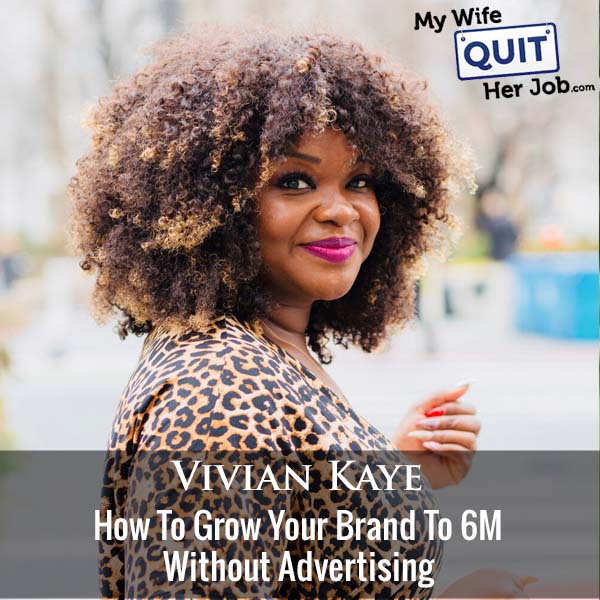
Podcast: Download (Duration: 45:17 — 52.1MB)
Growing a brand without paid ads works when you solve a problem you personally have, build genuine standing in the community that shares it, and hand product to micro influencers who are building something rather than collecting freebies. Vivian Kaye reached her first million with no ads and no email list at all, then scaled to $6 million doing more of the same.
In this episode I sat down with Vivian Kaye, founder of Kinky Curly Yaki, a premium textured hair extension brand for Black women that she bootstrapped entirely from a Rubbermaid drawer.
Below is the full story: how she sourced from Chinese factories with no volume, why being outed as the owner tripled her business, how she picks influencers, and why she stopped at $6 million on purpose.
Get My Free Mini Course On How To Start A Successful Ecommerce Store
If you are interested in starting an ecommerce business, I put together a comprehensive package of resources that will help you launch your own online store from complete scratch. Be sure to grab it before you leave!
Table of Contents
Key takeaways
- She hit $1 million with no ads and no email list. Word of mouth and repeat customers only.
- Solve your own problem. She was her own customer, so she knew every complaint before it arrived.
- Being exposed as the owner grew the business. A troll’s attack turned into her biggest advantage.
- Pick micro influencers building a brand, not big accounts collecting free product.
- Organic search is her primary channel today, from blog content published in 2017.
- She created the niche. Nobody sold only kinky textures before her.
- She refuses Amazon for premium products. A $25 knockoff ponytail cannot be competed with on price.
- Niche down hard, then expand. Get known for one thing first.
Why she started with a problem she personally had
Vivian was a wedding decorator in Toronto who needed to look presentable at client events, and could not find hair extensions that matched her own texture.
The context matters. Tightly textured Afro hair has historically been treated as unprofessional, to the point that US laws now exist prohibiting hair-based discrimination. That pressure pushed many Black women toward chemical relaxers, which carry documented health concerns including elevated fibroid rates.
Protective styles are the alternative: braids, wigs, and weaves that shield hair from a climate it is not suited to. Beyoncé, Oprah, and Michelle Obama all wear them.
What she found in stores was either nothing at all, or her texture buried beneath silkier “exotic” options. Even beauty supply stores did not carry it.
The brand name encodes the category. Kinky refers to the coarse curl of Afro hair, curly is self-explanatory, and yaki is an industry term for straightened Black hair, originally derived from yak hair before synthetics could mimic the texture.
How she sourced from factories with no order volume
She found Chinese factory contacts posted openly in Black haircare forums, where women shared them to solve their own sourcing problems rather than to run businesses.
The supply chain explains why China. Human hair is largely collected in India, then shipped to China where textures are created by hand: wrapped around rods, treated in water, then baked in an oven to set the curl. It is labor-intensive enough that it is not done in North America.
Her testing method was persistent and slightly sneaky. She ordered samples repeatedly under different email addresses, requesting the same texture each time, specifically to check whether quality held consistent.
Communication was simpler than expected because rods are measured in millimeters. Rather than describing a curl, she could ask for a two-millimeter curl and be understood.
Minimum order quantities did not exist at the time, so she bought one unit for herself. When a customer ordered two, she took that money and bought two.
How the business accidentally started
A woman at a networking event pulled her aside to ask about her hair regimen and hairdresser, and Vivian told her it was a weave. The woman said she would buy it.
That was the entire market validation. Vivian already knew forums and Facebook groups full of women with the same problem, and one stranger confirming demand was enough.
She launched Kinky Curly Yaki on Big Cartel in December 2012, during the slow season of her wedding business, and moved to Shopify in 2015.
How she used community without being salesy
She was already a genuine member of those groups, answering questions and being helpful on topics unrelated to hair, long before anyone knew she owned a company.
Nobody knew the brand was hers. She never announced it, never posted promotions, and simply sent product to a few women and let them do what they wanted with it.
The demonstration that broke it open came from a woman who created a spectacular large Afro with the hair. Kinky textures were notorious for falling apart after one wear, so proving it could be washed and managed was the credibility moment.
Vivian’s product differentiation came directly from being the customer. She knew the complaints, so she addressed them specifically: showing herself running fingers through untangled hair, and photographing the hair washed rather than fresh off the rods, because how it looks after washing is what buyers actually get.
Why getting exposed as the owner made the business explode
Someone created a fake Facebook profile to out her as the owner through a WHOIS lookup, and the attempted attack became the turning point.
She had not paid for WHOIS privacy, so her name was attached to the domain. The person put her on blast across the Facebook groups.
The reaction inverted the intent. The community response was that if this belonged to Vivian, it was Black-owned, she genuinely knew the subject, and they were supporting someone from their own community. Business skyrocketed.
Her retrospective view is unambiguous: she would be overt about ownership from day one. People do not buy hair, they buy her.
Her initial reason for hiding was comparison. Other hair extension company owners presented with long silky hair, Gucci, and Lamborghinis, and she was the opposite of that. Being herself turned out to be the differentiator.
How to choose influencers who actually deliver
Work with people building a brand rather than people collecting free product, which you determine by watching how they behave before you contact them.
Vivian has a marketing and branding background and simply observed. She got burned by larger influencers who took product and either did nothing or posted without tagging her.
The micro influencers she chose in 2014 and 2015 had around 3,000 followers and would produce ten pieces of content from a single set of clip-ins. Those same women now have over 100,000 followers and charge $1,500 per post.
Her current definition of a micro influencer is 30,000 followers and under.
The reason smaller accounts outperform is engagement. They know their regulars, they read their DMs, and they respond. Large accounts are too flooded to check.
She used FameBit successfully to launch her clip-in line before YouTube acquired it, and has since paused influencer work entirely because Instagram became pay-to-play. Paying $1,500 for content nobody sees is not a strategy.
What actually drove the first million dollars
Word of mouth and repeat customers, with no advertising, no email list, and no retention program of any kind.
Customers simply came back, which Vivian attributes to product quality in a market that had not yet been flooded with competitors.
The structural advantage was that she created the niche. No company sold only kinky textures before hers, and she deliberately refused to add the silkier, more commercial textures that would have broadened her market and diluted her position.
Her customer was specific: the woman working a nine-to-five where nobody realizes she is wearing extensions, because it looks like her own hair.
Scaling from one million to six was doing the same things at larger volume, with continuous testing of what worked and what did not.
What drives her sales today
Organic search is now the primary channel, built on blog content published around 2017 and manual on-page SEO she did herself.
Searching “kinky hair extensions” puts Kinky Curly Yaki at or near the top of the first page.
Her advantage in doing the SEO personally was knowing the actual search language. She knew what Black women type into Google because she is one of them.
The timeline is the honest part. SEO is a long-term strategy, and content published in 2017 is what carries the business now with no ads running.
Email is the only active channel beyond search. SMS remains untouched and on her list.
Instagram has become branding rather than sales, and she posts rarely because the algorithm makes it discouraging.
Why she refuses to sell on Amazon
A $25 knockoff ponytail cannot be competed with on price, so putting premium products on Amazon would dilute a brand she spent years building.
The surface problem is that cheap versions look identical in a photo. The difference appears in how the hair behaves, washes, and holds up, which no listing image communicates.
Her own site does what Amazon cannot: thousands of reviews, education content, and the full context of the brand.
She concedes Amazon has value for brand recognition, meaning someone searching her name should find her. That would be a different, non-premium product line rather than her actual catalog.
How Chinese competitors copied the category
Competitors watch the content Black creators produce on YouTube, build products from it, and hire Black women to front the companies.
Vivian returned from a short maternity leave in 2014 to find these companies had appeared throughout her market.
Her answer to competing with them is the thing they cannot replicate. They do not share her experiences or skill set, and they do not know what a failed twist out feels like at six in the morning before a job interview.
The economics still hurt. They flood the market and pay creators who do not care about product quality, produce one video, and move on. The offsetting factor is that a bad product is a one-time purchase.
How she scaled a business built on personal interaction
She stayed small deliberately, hiring people already connected to the community rather than building a large team.
For the first four years, through June 2016, she did everything herself: customer service, fulfillment, and packaging.
Her first hire came from walking into a beauty supply store, liking how a clerk helped her, and offering her a job on the spot. A business partner had pushed her to post on job boards, and she wanted to see someone interact first.
Her customer service lead was her second-ever customer, someone who knew her from the forums, who offered to help while on maternity leave because customer service was her profession.
Her definition of scale is a small lean team that genuinely cares about the mission rather than a team of a hundred.
Why she stopped growing on purpose
Vivian scaled to $6 million, decided she did not like being there, and stepped back from growth intentionally.
Her assessment of herself is that she is a better marketer and brander than CEO, and that customer acquisition cost and return on ad spend are not what motivate her.
Her stated purpose is giving Black women confidence, and selling hair extensions is the vehicle rather than the reason.
The pandemic redirected her. Supply chain problems began for her in November 2019, before anyone understood why China had stopped shipping, and her son moved to virtual school.
She responded by teaching what she knew, running Shopify Prep School to get brick-and-mortar sellers online quickly, and coaching people who used lockdown to reconsider their careers.
Her advice for bootstrapping a brand
Three things: solve a problem that genuinely matters to you, be visibly yourself, and niche down hard before expanding.
Solve a real problem you have. Outside of parenthood this is the hardest thing you will do, and without genuine investment in the problem the journey is brutal.
Be yourself publicly. Hiding cost Vivian years, and community support arrived the moment people knew who she was.
Niche down. Study competitors and do something different. If everyone sells black mugs, sell only red mugs. Get known for one thing done extremely well, then go wider or deeper from there.
My own business followed the same pattern. We became known specifically for handkerchiefs, and I developed a passion for the business mechanics rather than for the product itself.
Frequently asked questions
Can you grow a brand without paid advertising?
Yes. Vivian Kaye reached her first million dollars with no ads, no email list, and no retention program, relying entirely on word of mouth and repeat customers. She scaled to $6 million doing more of the same, and her primary channel today is organic search.
How do you market in online communities without being salesy?
Be a genuine member first. Vivian participated in Black haircare forums answering questions on unrelated topics for a long time before anyone knew she owned a company, and she never announced the brand or posted promotions.
What size influencer should a small brand work with?
Micro influencers with 30,000 followers or fewer, chosen because they are building something rather than collecting free product. Smaller accounts read their DMs and know their regulars, while large accounts are too flooded to engage.
How do you source products from factories with no order volume?
Vivian found factory contacts in community forums and ordered single units for herself, then reinvested each sale into slightly more inventory. She requested samples repeatedly under different email addresses to verify quality stayed consistent.
Should you put your face on your brand?
Yes. Vivian hid her ownership initially and a troll exposed her through a WHOIS lookup. The community’s response was overwhelmingly supportive and business skyrocketed. Her conclusion is that people buy the person rather than the product.
Should a premium brand sell on Amazon?
Not the premium products. A $25 knockoff looks identical in a photo, and the quality difference only appears in use. Amazon can serve brand recognition for people searching your name, ideally with a separate product line.
How do you compete with cheap overseas copycats?
Compete on the thing they cannot replicate, which is genuine understanding of the customer’s experience. Copycats study creator content and build products from it, and they cannot speak to the problem from the inside the way a founder who lives it can.

