
Podcast: Download (Duration: 51:45 — 59.5MB)
High ticket dropshipping means selling products with an average order value above $200 by opening dropship accounts directly with US manufacturers rather than sourcing from China. Margins run 20% to 30% after advertising, and the model works because domestic suppliers handle returns, warranties, and quality control the way a normal retail relationship does.
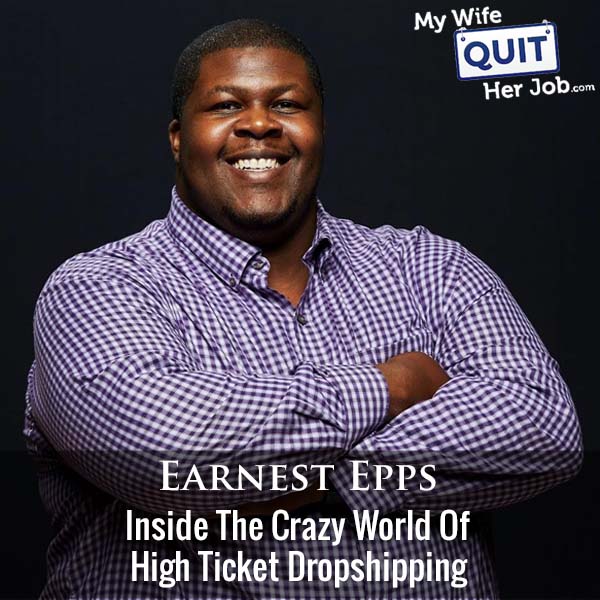
In this episode I sat down with Earnest Epps, founder of HighTicketEcomSecrets.com, who runs a wine cooler store carrying over 5,000 products with a $700 average order value on some lines.
Below is the whole model: how to research a niche, why Google Shopping beats Facebook here, how to open supplier accounts with no track record, and how returns and warranties actually work.
Get My Free Mini Course On How To Start A Successful Ecommerce Store
If you are interested in starting an ecommerce business, I put together a comprehensive package of resources that will help you launch your own online store from complete scratch. Be sure to grab it before you leave!
Table of Contents
Key takeaways
- High ticket means $200+ average order value. Earnest runs a $700 AOV on some supplier lines.
- Margins run 20% to 30% after advertising. One supplier nets 25% with $20 to $40 acquisition costs.
- Start for under $100. A DBA, a domain, and Shopify are the entire startup cost.
- Google Shopping returns 5x to 10x ROAS against roughly 3x on Facebook for beginners.
- Avoid niches with more than 20 sellers on a Shopping listing.
- Amazon skips Google Shopping on high ticket items and concentrates on products under $200.
- MAP pricing neutralizes Amazon and Walmart by forcing everyone to the same price.
- Compete on service, not price. White glove delivery and free gifts are decisions you make instantly.
Why high ticket dropshipping beats sourcing from China
Domestic supplier relationships solve the problems that make cheap dropshipping unsustainable: long fulfillment times, no quality control, and returns nobody will ship back to China.
Earnest’s framing is that dropshipping is a fulfillment method rather than a business model. It describes how a product reaches the consumer, and most people never do enough due diligence to understand that distinction.
The model he reverse-engineered comes from studying large retailers. Walmart, Home Depot, and Wayfair build relationships directly with manufacturers and set up accounts, exactly as traditional retail always worked.
US manufacturers are receptive to this. An established business with a website and an entity can call a brand like an electric fireplace manufacturer and open a dropship account.
His entry point was losing a corporate job in a restructure, which he describes as breaking his soul because he had planned to work there until he became CEO. The Warren Buffett line that redirected him: if you do not learn to make money while you sleep, you will work until you die.
What it costs to start a high ticket dropshipping business
Under $100 covers everything: a DBA registration, a domain, and a Shopify subscription.
Earnest’s actual numbers when he started: $12.50 to register a DBA in Virginia, about $10 for a domain, and $29 a month for Shopify, which at the time bundled a Google ads promotion giving $100 of spend for $25.
He puts a realistic working budget at $300 to $1,000 to launch properly, which is what separates a legitimate business from a get-rich-quick attempt.
The reason capital requirements stay low is that you buy inventory only after a sale. That was the specific attraction after losing his income.
What margins look like in high ticket dropshipping
Expect 20% to 30% after acquisition costs and advertising, which matches dropshipping generally and produces much larger dollar amounts at high price points.
Earnest’s Z-Line relationship nets 25% after everything, including shipping and product cost. Customer acquisition runs $20 to $40 on products with a $700 average order value.
That spread is the entire argument for high ticket. The same percentage margin on a $30 product cannot absorb a $30 acquisition cost.
How to research a high ticket dropshipping niche
Confirm demand with a keyword tool, check seasonality on Google Trends, then validate price points and competition directly on Google Shopping.
Demand. Earnest uses Keywords Everywhere, which costs about $10. Electric fireplaces show roughly 200,000 monthly searches.
Seasonality. Google Trends tells you whether you are entering on an upswing or at the bottom of a cycle, which matters enormously for a first product.
Price validation. Search the term on Google Shopping and read the left-hand price filters, which Google segments into three or four bands. The second and third bands typically reflect what people actually spend. Confirm by scanning the first three to five pages of results.
His point about the front-loaded work: doing genuine research early means your offers, pricing, and unique selling proposition are already determined by the time you build the store.
How to judge whether a niche is too competitive
Count how many stores are selling each product on Google Shopping and avoid niches averaging more than 20.
Google displays the number of stores carrying a given product when more than one seller lists it, which makes this directly measurable.
Juicers are his counterexample. Those listings routinely show 50 to 100 stores, averaging 50 to 80, which means far higher acquisition costs to break into the rotation.
Notably, he ignores organic search results entirely when assessing competition. Google Shopping is where the return is, so that is where he measures.
Why Google Shopping outperforms Facebook for high ticket
A beginner can expect 5x to 10x return on ad spend from Google Shopping against roughly 3x from Facebook.
The skill requirement is also lower. Google generates the creative itself once products are indexed in Merchant Center, controlling rotation and calls to action across YouTube, Gmail, and search. You never write ad copy.
What Google evaluates instead: product title, description, SKU, and barcode relevance, then click-through rate as a signal of whether serving your listing earns clicks.
It also weighs on-site behavior. Bounce rate, pages per session, add-to-cart rate, and conversion all feed back, which means a good customer experience improves your rotation without additional spend.
This differs from Amazon, where roughly 80% of winning the buy box comes down to price.
Why Amazon does not compete on high ticket Google Shopping
Amazon concentrates its Google Shopping spend on products under $200 and largely skips the high ticket listings.
The example Earnest gives: Amazon sells the Amantii electric fireplace line including FBA units, and does not run Shopping ads on the 60-inch $2,000 models.
This is genuinely counterintuitive, since higher ticket items make advertising math easier rather than harder. He has no explanation beyond Amazon knowing its own target customer.
Whatever the reason, it leaves the highest-margin Shopping placements available to small sellers.
Two Google Shopping features most sellers ignore
Product reviews and promotions can both appear on Shopping listings, and even billion-dollar retailers frequently skip them.
Reviews. You can feed your store’s reviews onto the Shopping network. Earnest notes that Walmart does not do this for many products. A buyer about to spend $1,500 checks reviews before entering a card, so six positive reviews out of ten can decide the sale.
Promotions. Merchant Center lets you attach promotions to listings, which differentiates you even when every seller shows an identical price. Home Depot frequently runs none.
How MAP pricing protects small sellers
Minimum advertised price policies force every seller including Amazon and Walmart to list at the same price, which removes price as a competitive weapon.
This is the direct answer to how a small store competes with Amazon on price. Work with MAP suppliers and Amazon cannot undercut you.
The enforcement is real. Earnest names Z-Line and Blaze as suppliers who police it strictly, and violations can be reported to your dedicated account manager, including violations by Amazon.
MAP sets a floor rather than a fixed price, so listing above it is permitted.
Earnest is candid that he sometimes prices below MAP with suppliers who enforce it loosely, since his margins allow it. That is a stated violation of his supplier agreements rather than a tactic worth copying, and the durable version of his advantage is everything in the next section.
How to compete when everyone has the same price
Compete on delivery service and gifts, because a small business can approve those instantly where a corporation cannot.
The freight tiers for LTL shipping, meaning anything too large or awkward for parcel:
- Curbside. Dropped at the curb, which is the default.
- Door to door. Delivered to the garage or front door.
- Inside delivery. Brought into a room of choice, with unpacking and setup left to the customer.
- White glove. The full-service tier customers expect on large purchases.
Wholesale freight rates are what make this work. Buying directly from the carrier or manufacturer means Earnest can beat Home Depot, Walmart, Overstock, and Wayfair on white glove pricing, or absorb it into margin and offer it free.
The gift lever works similarly. Spending over $400 in his wine store earns a free set of high-end wine glasses carrying a ten-year warranty, which no large retailer offers.
His framing of the structural advantage: at Walmart a custom offer moves from store manager to district to regional to VP and takes a week. In a small business it stops with you.
The strategy behind it is not chasing the top spot. Number one is the most expensive click, so Earnest targets the top ten and wins the comparison once buyers land on his site.
How to open dropship accounts with real manufacturers
Establish a niche-specific business entity, build a small demo store, then approach manufacturers as an existing business.
The setup checklist:
- Entity and EIN branded to the niche, such as ElectricFireplacesUSA.com.
- Domain from a registrar like Namecheap, which includes free WHOIS protection.
- Business email through Google Workspace at roughly $5 a month.
- Dedicated business phone through a VoIP service like Grasshopper.
The demo store needs a logo, an about page, a contact page, the two main collections for the niche, and roughly ten sample products. The pitch is that you have built a store so they can see how their products will look.
How to find which manufacturers already dropship
Identify online-only niche retailers, since a store with no physical location must be dropshipping everything it sells.
The test is straightforward. Any business with a warehouse or showroom advertises it, so a site that never mentions one is fulfilling through suppliers.
Earnest names Home Square as an example to study. Better still, ElectricFireplacesDirect.com publishes its full brand list, which hands you every manufacturer in that category that already dropships.
How returns and warranties work with domestic suppliers
Returns go directly back to the manufacturer’s warehouse under a prearranged agreement, which is the structural advantage over overseas sourcing.
Buyer’s remorse. The customer pays return shipping, which is standard for LTL freight across the industry including Amazon. Small parcel is easier, and suppliers often provide the label themselves.
Defective on arrival. The customer photographs the damage, you forward it to the supplier, and they replace the unit without a fight once it arrives.
Warranty claims. Domestic manufacturers maintain warranty programs, so a compressor failing at nine months is handled by the manufacturer. Give the customer the purchase order number you assigned and they call the supplier directly.
How to manage inventory across thousands of SKUs
Suppliers send inventory reports on their own cadence, and StockSync maps those spreadsheets onto your store automatically.
Frequency varies by supplier. SPT sends weekly, VinoTemp monthly, and Z-Line provides a portal for exporting on demand.
StockSync handles the formatting problem, since every supplier’s columns differ. You tell it which column holds pricing and which holds the SKU per brand, then it updates from there.
Earnest does not use EDI. Direct system integration is inconsistent across suppliers, and most smaller manufacturers do not support it.
Why you need a phone number on the site
A visible phone number gives buyers the confidence to spend thousands with a company they have never heard of.
Earnest’s expectation was that high ticket items would require deep product expertise on the phone. In practice, roughly 90% of questions are answered by information already on the landing page.
The reason is intent. Google Shopping only surfaces you for exactly what you sell or something very close, so callers already know what they want.
For the remaining 10%, his customer service script routes the question upward: tell the customer you will call your warehouse supervisor to get an exact answer, and ask whether they have other questions before a brief hold. The warehouse supervisor is your account manager at the supplier.
When to hold inventory as a dropshipper
Buying inventory makes sense for your top sellers when supply is constrained or when a supplier offers volume discounts.
During the pandemic Earnest bought out his best-selling SKUs into a Virginia warehouse, which meant nobody else in the country could access them while manufacturers were short-staffed and backed up.
The second case is supplier promotions. A manufacturer clearing freestanding fireplaces at an extra 20% off in ten-unit lots is only capturable if you have somewhere to put them.
Frequently asked questions
What is high ticket dropshipping?
Selling products with an average order value above $200 through dropship accounts opened directly with US manufacturers. Low ticket runs roughly $20 to $100 and mid ticket $100 to $200. Domestic relationships handle returns, warranties, and quality control properly.
What margins can you make on high ticket dropshipping?
Typically 20% to 30% after acquisition costs and advertising. Earnest nets 25% with one supplier on products averaging $700, at $20 to $40 customer acquisition cost. The percentage matches ordinary dropshipping while the dollar amounts are far larger.
How much does it cost to start?
Under $100 for the essentials: about $12.50 for a DBA, $10 for a domain, and $29 monthly for Shopify. A realistic working budget is $300 to $1,000, since inventory is only purchased after a sale.
Why use Google Shopping instead of Facebook ads?
Beginners see 5x to 10x return on Google Shopping against roughly 3x on Facebook, and Google generates the creative itself once products are in Merchant Center. It also rewards good on-site metrics like bounce rate and conversion without extra spend.
How do you know if a dropshipping niche is too competitive?
Google Shopping shows how many stores carry each product. Avoid niches averaging more than 20 sellers per listing. Juicers routinely show 50 to 100 stores, which drives acquisition costs beyond what a beginner can absorb.
How do you compete with Amazon on price?
Work with suppliers who enforce MAP pricing, which requires every seller including Amazon and Walmart to list at the same minimum. Then compete on service instead: white glove delivery, free gifts, and offers a corporation needs a week of approvals to match.
How do you find dropship suppliers?
Find online-only niche retailers, since a store with no warehouse or showroom must be dropshipping. ElectricFireplacesDirect.com publishes its full brand list. Then approach those manufacturers with a real entity, business email, phone number, and a small demo store.