
Podcast: Download (Duration: 1:00:07 — 69.1MB)
The marketing channels worth investing in now are the ones you own or that build genuine relationships: SMS, email, podcasting, in-person events, and a personal brand. Rented platform reach keeps getting taken away, which is why I keep getting burned by Facebook pages, then groups, then Messenger, each one working until the reach disappeared.
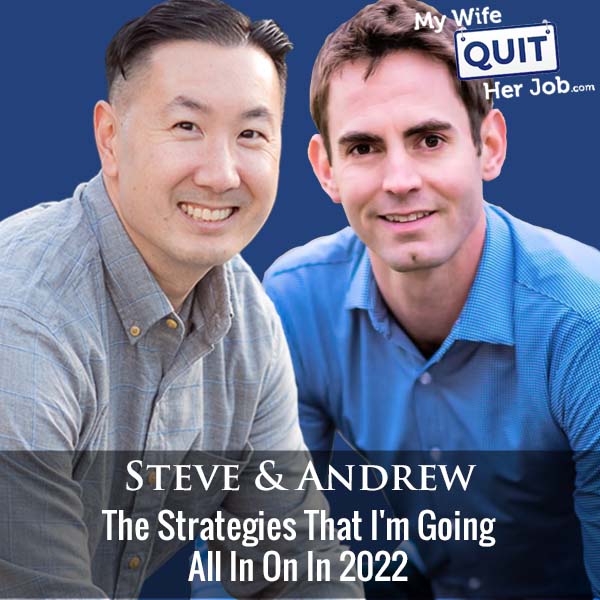
In this episode I sat down with Andrew Youderian, who runs the eCommerceFuel podcast and a community of seven and eight figure ecommerce entrepreneurs, to compare what we are each doubling down on.
Below is the full comparison: SMS list building, TikTok and short-form video, YouTube, Twitter threads, why Andrew is running ten events next year, and how SEO has changed.
Get My Free Mini Course On How To Start A Successful Ecommerce Store
If you are interested in starting an ecommerce business, I put together a comprehensive package of resources that will help you launch your own online store from complete scratch. Be sure to grab it before you leave!
Table of Contents
Key takeaways
- Owned marketing beats rented reach. Facebook pages, groups, and Messenger each worked until the reach was pulled.
- SMS outperforms email roughly 8x across both of my businesses.
- Give away a low-cost, high-perceived-value item for SMS opt-ins. A 15-cent handkerchief reads as $13.
- TikTok took me to 50,000 followers in seven months, with 20,000 arriving in the first six weeks.
- Posting URLs suppresses your reach. Interested people will search for you.
- Twitter threads convert. One thread produced 250 email subscribers a day for a week.
- Events have high barriers to entry, which is exactly why Andrew is investing in them.
- Long-tail keywords beat volume when a narrow audience is what you actually want.
Why owned marketing beats platform reach
Every platform channel I have invested in got taken away, which is why the channels I control now get the investment.
The sequence: I built a Facebook page and the reach was throttled. I moved to Facebook groups and grew one to about 20,000 people before that reach went too. Facebook Messenger made real money for a couple of years before it became pay-to-play and the audience effectively disappeared.
iOS 14 and 15 extended the same problem into advertising and email. The pattern is consistent enough to plan around.
Andrew’s framing is to ask what your unique advantages are and how you can play in ways others cannot. For him that means the podcast medium, proprietary data from the community, and in-person relationships that Facebook and Google cannot take from you.
Why SMS marketing outperforms email
SMS is running roughly 8x email performance across both of my businesses, and consumer resistance to it has dropped substantially in about a year.
The shift is normalization. Restaurants, hotels, and most brands now text, so a message from a company you actually care about no longer feels like an intrusion.
Andrew remains a holdout personally, which is a fair position. The data still points one direction.
How to build an SMS list
Offer a free product with high perceived value and low actual cost, redeemable only with a purchase.
The Bumblebee Linens version: ask your existing supplier what merchandise they want to clear cheaply. We give away a handkerchief that reads as $13 to $14 in value and costs us 15 cents.
The mechanic matters. Customers cannot get the free handkerchief without buying something, so they add it to a real order and check out feeling like they got something valuable.
Placement and friction both matter. The offer sits highlighted in yellow on every page, and it is a two-tap flow: tap opens the messaging app with the message prefilled, they hit send, and the link arrives instantly.
For My Wife Quit Her Job the approach differs. I capture email first, then offer a bonus lesson available only by text, and workshop bonuses require a text subscription.
What to send to an SMS list
Text about once a week, rotating through roughly six message types so the list never sees the same reason twice in a row.
Flash sales perform best. Every month we discount something 30% to 40%, usually inventory we want to move anyway.
New product releases work when the targeting is obvious. We launched daughter-doll matching aprons after already selling mother-daughter aprons, so the text goes to everyone who bought an apron for their daughter.
How to use TikTok as an ecommerce brand
Post about three times a week, entertain rather than advertise, and let people find you rather than pushing them off-platform.
My channel reached 20,000 followers in about six weeks and roughly 50,000 in seven months. Building an audience there is genuinely easier than on mature platforms.
Mentioning or displaying a URL appears to suppress reach. The handful of videos where I tested it were my worst performers. People who want to find you will search your name.
Production value is not the point. A warehouse tour performs fine, and authenticity outperforms polish.
The workflow keeps it cheap. I record on my phone, send it to my editor, and post. Anything under 30 seconds also goes to Instagram Reels, and I am considering a separate YouTube channel for Shorts so short-form subscribers do not distort my main channel’s audience.
Each video takes about 10 minutes, mostly because I can pull material from 600 existing blog posts.
Why Andrew is investing heavily in events
In-person events generate the most referrals and the most member value, which is why eCommerceFuel is going from one major event a year to around ten in 2022.
The mechanism is trust. Members connect most deeply in person, word-of-mouth referrals become the primary growth driver, and a referral from a trusted member makes vetting the new one straightforward.
The economics are not the reason. Events make money on a P&L and stop looking profitable once you account for the time, stress, and risk, including being on the hook for a signed venue contract if you have to cancel.
The barrier to entry is the strategic argument. COVID contingency planning and divided opinions on safety made events genuinely hard to run, which is precisely why braving it now creates an advantage.
The general principle: if your business has no hard part, you do not really have a business.
Why podcasting still works
Podcasting builds a depth of connection no other medium matches, because almost nobody in your life will listen to you for an hour and thousands of strangers will.
The strange effect is asymmetric familiarity. At events people know small personal details about me from stories I have told, and I know nothing about them.
Andrew’s estimate is that at least a third of the people who find his community come through the podcast, at roughly 450 episodes over eight years.
Two changes made it sustainable for him. He stopped batch-recording 14 episodes in a week, which made content stale and left him wrecked, and moved to a steadier cadence.
He also broadened the topics. Listener feedback showed people were less interested in deeply tactical content than he expected, because nobody listens to a podcast to set up a Facebook ad campaign. Unique stories and perspectives outperform tactics.
Why YouTube complements podcasting
YouTube solves podcasting’s discovery problem. Podcasts build deep connection and struggle to reach new listeners, and YouTube actively distributes you to people who have never heard of you.
The connection is slightly weaker than audio and viewers can see you, which cuts both ways.
I have taken it seriously for about 18 months and reached 50,000 subscribers, and it brings in a meaningful volume of leads and business.
The same off-platform rule applies. Pushing people away from YouTube hurts you, so keep them on the platform and let them find you through search or the description.
Something unexpected shows up in my course signups. People discover me in many places, and what closes the sale is frequently seeing me on a different platform than the one they normally use.
Titles work differently by platform. Blog titles have to serve keywords and humans simultaneously, which is genuinely hard. YouTube is less keyword-driven and recommendations carry a video far, so curiosity-driven titles win, with the caveat that leaning too hard on clickbait costs credibility.
How Twitter threads drive email subscribers
Twitter threads convert unusually well, and one thread produced about 250 email subscribers a day for a full week, entirely organic.
I was a skeptic until recently. Eric Siu told me to be on Twitter two years ago and I ignored it. Chase Diamond pushed again and connected me with someone who now runs my account.
The process is repurposing. He has listened to my podcasts, read my blog posts, and watched much of my YouTube, and turns that material into threads.
Andrew’s parallel experience is that Bill D’Alessandro’s threads get real traction, and Andrew’s own thread on the state of ecommerce took a couple of hours and drove significant discovery.
Twitter’s other strength is access. People who would never answer a cold email will reply to a DM.
The audience limit is worth knowing. Twitter works for B2B, marketing, startups, and news, and it is not where ecommerce customers are shopping.
Does Twitter advertising work?
Andrew’s promoted-tweet test was a failure. He spent a small budget expecting Twitter to reach people interested in ecommerce and direct-to-consumer, and got farmers in Nebraska, dog kennel owners in Florida, and heavily political accounts.
Whether that was poor targeting or fake accounts is unclear. Full advertising campaigns reportedly target better than promoted tweets.
The alternative that works better: pay someone with a large relevant following to tweet your content directly.
How SEO has changed
Topical authority can now substitute for backlinks. Structuring content into proper silos and directing internal link equity toward the right articles has ranked sites without link building.
Jeff Oxford of 180 Marketing has been my source on this, including work by a specialist producing case studies where new sites reach roughly 10,000 monthly visits within a month.
The uncomfortable part is the writing constraint. Ranking now requires writing the way Google wants, which raises a real question about whether to write for the algorithm or write what you actually want to say.
Andrew’s content strategy answers it differently by targeting hyper-long-tail keywords chosen for audience fit rather than volume. An article on choosing an ERP system has poor search volume, and 80% of the people searching it are perfect fits for his community.
How to repurpose content across channels
Start with the blog post and work outward, because going the other direction is much harder.
My chain: a blog post becomes a YouTube video, sometimes a podcast, then multiple TikToks, then a Twitter thread. One piece of research supports every channel.
Andrew tried the reverse, hiring services to turn podcast episodes into articles, and found it genuinely difficult to produce something good from conversational audio.
The threading insight explains why the chain works. Turning a blog post into a Twitter thread forces concision, and people want the top 5% of a 2,000-word post rather than the whole thing.
Does cold email outreach still work?
Cold outreach works when it is genuinely personalized, and it is a psychology and writing problem rather than a numbers game.
Andrew is testing it for the first time using GrowBots to build curated lists for specific cities where eCommerceFuel wants to grow its regional events, screening each contact individually rather than blasting a list.
What a good cold email requires: a strong value prop in one or two sentences, brevity, a good subject line, and something specific and true about the recipient.
The best one I ever received cited detailed facts about me from podcasts and videos, included a case study of my site with improvement suggestions, and came with a video. It was a lot of work and it got me on the phone.
Why personal branding is the underlying bet
A personal brand is the one asset no platform can take away, which is why it sits underneath everything else I am investing in.
The practical value is optionality. If I decide to do something other than selling handkerchiefs, the audience comes with me.
Andrew is running the opposite play, focusing less on personal brand and more on targeted content for his specific community that does not depend on other platforms. Both approaches solve the same problem of platform dependence.
Frequently asked questions
What are the best marketing channels for ecommerce?
Channels you own or that build direct relationships: SMS, email, podcasting, in-person events, and a personal brand. Platform reach on Facebook pages, groups, and Messenger each worked until it was throttled or made pay-to-play, which makes rented audiences a poor foundation.
Does SMS marketing work better than email?
SMS runs roughly 8x email performance across both of my businesses. Consumer resistance dropped substantially as restaurants, hotels, and most brands normalized texting. Send about once a week and rotate message types, with flash sales performing best.
How do you build an SMS subscriber list?
Offer a free product with high perceived value and low cost, redeemable only with a purchase. Ask your supplier what inventory they want to clear cheaply. Our free handkerchief reads as $13 in value and costs 15 cents, and a two-tap signup keeps friction near zero.
Should you put your website URL in social media posts?
No. Mentioning or displaying a URL appears to suppress reach on TikTok, and the same pattern holds on YouTube. Post content people want to see, and anyone interested will search your brand name and find you.
Do Twitter threads actually drive results?
Yes. One thread built from my existing content produced about 250 email subscribers a day for a week, entirely organic. Threads force concision, which is what makes them work. Twitter suits B2B, marketing, and startups rather than ecommerce customers.
Are in-person events worth running?
Only if they serve a community. Events make money on paper and stop looking profitable once you count the time, stress, and contract risk. Their value is trust, referrals, and connection, which is why eCommerceFuel is scaling from one event a year to around ten.
How should you repurpose content across channels?
Start with a blog post and work outward to YouTube, podcast, TikTok, and Twitter threads. Going the other direction is much harder, since turning conversational podcast audio into a strong article is difficult even with paid services.