

Podcast: Download (Duration: 54:51 — 100.7MB)
The people who retire early share four things: they lived below their means, they made mistakes with money early and corrected them fast, they built at least one income stream outside their job, and they had a specific situation they wanted to escape. Almost none of them came from money, and almost none learned about finance in school.
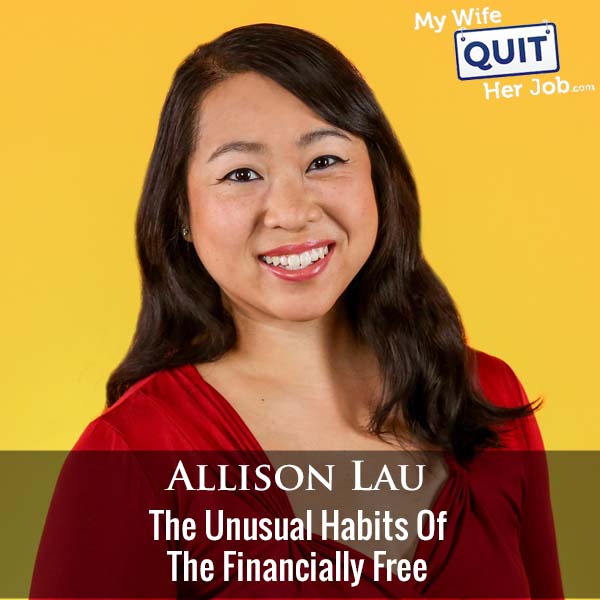
In this episode I sat down with Allison Lau, producer of CNBC’s Make It and Millennial Money series. She has interviewed hundreds of people across every income level, from under $20,000 a year to seven figures.
Below is what she has observed: how her subjects define retirement, where their money skills came from, what personality traits actually predict success, why so many move abroad, and how to get featured on the show.
Get My Free Mini Course On How To Start A Successful Ecommerce Store
If you are interested in starting an ecommerce business, I put together a comprehensive package of resources that will help you launch your own online store from complete scratch. Be sure to grab it before you leave!
Table of Contents
Key takeaways
- Retirement means leaving a job you felt trapped in, and half of her subjects still work on something.
- Almost none came from money. Allison deliberately seeks out people who started with nothing.
- Money skills came from mistakes. Overbuying a house, credit card debt, and student loans, then correcting hard.
- There is no consistent personality type. Charisma is a media skill, not a success predictor.
- Real estate winners bought whatever they could afford and did DIY renovations.
- Moving abroad is common. Portugal offers 1% mortgage rates with 40% down.
- Kids were the most cited motivator for retiring early.
- Nothing is beneath them. Dumpster diving for crates, driving Uber, selling plasma.
What retiring early actually means
Retirement in these stories means leaving a job you felt bound to for financial reasons rather than stopping work entirely.
The common profile is a standard corporate nine to five with no passion attached, held onto because of money and a sense that no alternative existed. Being told when you can take time off and which hours you work is the specific constraint people describe escaping.
About half of her subjects are fully retired, spending time on beaches or with new puppies. The other half started consulting businesses, frequently teaching other people how to reach financial independence.
What fully retired people do with their time
Nothing appears to be missing from their lives, and they stay genuinely busy.
One subject never finished her college degree and is now back in school working toward a master’s or PhD. Others are buying a first house or traveling extensively.
The travelers describe the appeal as learning rather than leisure. Experiencing different countries for the first time without money pressure is what makes it feel like an adventure instead of a vacation.
Where people who retired early learned about money
Their money skills came from expensive mistakes rather than education. Not one of Allison’s subjects credited school.
The recurring error is buying too much house, draining savings into a mortgage, then downgrading at the first opportunity after discovering FIRE. They traded the expensive house or apartment for something modest once a secure financial future outranked the luxury car.
Debt is the other teacher. Credit card balances and student loans taken because the government would provide money for education demonstrated concretely how crippling debt is to financial freedom.
The pattern is that living within your means became mandatory once debt payments consumed the surplus. The constraint taught the habit.
Allison deliberately seeks out subjects who did not come from money. Immigrant families where saving was constant, one of seven siblings on a dirt road, households living on a single father’s paycheck.
What personality traits predict financial success
No consistent personality type emerges, and charisma is a media skill rather than a predictor.
Allison’s description of interviewing them is that it felt like catching up with a friend. There was no visible spark or fire distinguishing them.
The variation she does see is media training. Some have told their story enough times to have a polished narrative and a camera persona, and others freeze the moment the camera turns on and read from their own notes.
Editing closes the gap. Stumbles and stutters get cut, so the audience never sees who was comfortable and who was sweating.
The one trait everyone actually shared
Every subject had a situation they wanted to leave and a specific picture of the future they wanted instead.
Most stumbled into the job they escaped. It came from a family expectation or a path they never actively chose, and the drive for something else was suppressed during those years.
Allison’s example is a 23-year-old in Texas living paycheck to paycheck at his parents’ place, working as a real estate assistant and at a fast food chain for $12 an hour.
He moved to Mexico, where part of his family lived, and found a studio for $300 a month. Being unemployed during the pandemic gave him time to study web development and leave minimum wage work behind.
How people who retired early made their money
Real estate, content businesses, and product sales are the three sustainable paths that recur, usually stacked rather than chosen.
Real estate. The buyers purchased whatever property they could get their hands on rather than anything impressive, then did DIY renovations to keep costs down and flipped or held.
Content and teaching. A pattern identical to how My Wife Quit Her Job started. People asked how they retired, informal calls became constant, a family newsletter or blog grew, and it turned into a business.
Selling products. Finding a lucrative product and selling it on eBay or a self-built platform. One subject reached multimillionaire status by 23 through dropshipping, testing categories until he found that women’s apparel worked and pet items did not, then finding domestic suppliers to cut shipment waits.
Service businesses show up throughout: luxury picnic planning, bachelor parties, wedding services, sheep herding, chicken coops. The common thread is identifying a personal strength and finding how to monetize it.
What people gave up to retire early
Health is the sacrifice that comes up most often, and it usually went unnoticed until it was reversed.
One couple working around the clock had back pain and chronic aches they had stopped registering as unusual. After moving abroad to $30 doctor visits without insurance, they lost weight and felt substantially better.
Their description is that the strain had been baked into daily life to the point they no longer felt it. Removing the context is what revealed it.
My own version of this is that stress does not stay in one lane. It produces binge eating and destroys sleep, which is why I now keep my schedule deliberately open and decline anything that will generate a lot of it.
Why so many people who retire early move abroad
Cost of living is the driver, and specific financial incentives make certain countries stand out.
Portugal comes up repeatedly. Buyers there described a 1% mortgage interest rate with roughly 40% down, which strongly incentivizes purchasing property, alongside affordable healthcare.
Mexico shows up for proximity and cost, with the $300 studio as one concrete data point.
Some destinations remove costs entirely rather than reducing them. A city where you need no car eliminates the expense rather than lowering it.
Why kids motivate early retirement
Children were the single most cited motivator among Allison’s subjects, usually as a fear of missing the important moments.
Several described having a child early and being frightened into living responsibly. The luxury car, the bigger house, and the expensive vacation stopped registering as priorities.
The structure this produces matches how my wife and I run our week: about 20 to 30 hours of work, with the rest of the time spent present with the kids.
Why nothing can feel beneath you
The people who made it treated no source of income as too small or too undignified, which is the closest thing to a universal behavior in these stories.
Amon and Christina, the Portugal couple, went dumpster diving for apple crates to build furniture. They flipped ordinary Bay Area houses with heavy DIY renovation, built a large YouTube following, teach a course on retiring early, and drove for Uber. Both were government workers earning under $100,000, and their FIRE number was around $2 million.
Another subject born to addicted parents and raised in foster care overspent when he first got a job, then calculated that he would never clear $75,000 in student loans that way. He moved into an $800 one-bedroom with rats and roaches to buy his later independence.
My own version is less dramatic and the same principle. I have driven to the office to plunge a toilet. Getting your hands dirty is not optional.
Why side hustles need legwork rather than automation
The skills that make a business work get built by doing unscalable things first, which is why sitting behind a computer waiting for money to arrive does not work.
Many of the side hustles Allison describes consume all of your time and cannot scale. That is acceptable early, because doing them teaches you what you need to know before deciding whether to grow the business.
Networking is the second requirement. My own businesses did not take off until I met other people doing the same thing and formed real relationships and mastermind groups.
Allison’s framing is that a personal network only takes you so far, so you have to actively find people with similar goals and mindsets.
How to get featured on CNBC Make It
Every Millennial Money video includes a form submission link for people to apply to be cast, and direct messages work too.
The requirements are transparency about salary and finances. Subjects must be willing to share a tax return for verification, which never gets published, and to discuss what they earn, what they spend, and what that buys them.
Journalistic practice rules out anyone with a political slant in either direction, which makes people working in politics complicated to feature. Everything else is open.
Allison found me through my YouTube and social media presence while looking for people who had achieved financial independence. Because my wife and I still choose to work, the angle shifted to side hustles leading to financial independence.
Her broader point about being found: put yourself out there and ask directly. People respond to a polite, specific request even when the answer is no.
Frequently asked questions
What does retiring early actually mean?
Leaving a job you felt financially trapped in rather than stopping work entirely. About half of CNBC’s subjects are fully retired and half started businesses, often teaching others how to reach financial independence. The escape is from mandated hours and permission-based time off.
Where do people who retire early learn about money?
From their own mistakes. Not one subject credited school. The recurring lessons came from buying too much house, accumulating credit card debt, and taking student loans, then correcting hard once they saw how much freedom the debt was costing them.
What personality traits do financially successful people share?
No consistent type. Allison describes interviews as feeling like catching up with a friend, with no visible spark. What varies is media training rather than character. The one universal is having a situation they wanted to escape and a clear picture of what they wanted instead.
How do people afford real estate to retire early?
They bought whatever property they could actually afford rather than anything impressive, then did DIY renovations to keep costs down. The Portugal couple flipped ordinary Bay Area houses this way while both earned under $100,000 in government jobs.
Why do people who retire early move abroad?
Cost of living, plus specific incentives. Portugal offers roughly 1% mortgage interest with about 40% down alongside affordable healthcare. Mexico offers proximity and low rent, including $300 monthly studios. Some destinations remove expenses entirely, like cities where no car is needed.
What side hustles do people use to retire early?
Real estate flipping with DIY renovation, content businesses that grew out of people asking how they did it, and product sales on eBay or self-built sites. Service businesses recur too, from wedding planning to luxury picnics, generally built around an existing personal strength.
How do you get featured on CNBC Make It?
Every Millennial Money video contains a form submission link, and direct messages are accepted. You must be willing to share salary details and a tax return for verification, which stays unpublished. Journalistic practice excludes people with a political slant in either direction.