

Podcast: Download (Duration: 22:25 — 25.9MB)
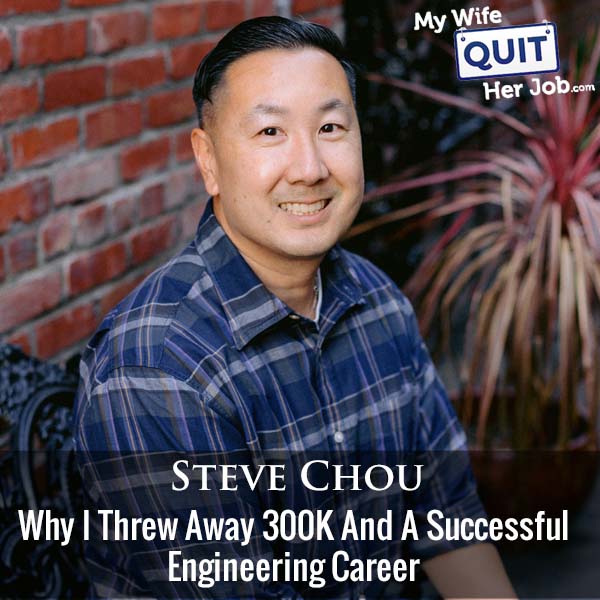
The right time to quit your job is when your priorities change, not when your side business hits a specific revenue number. I kept a $300,000 engineering job for years while my businesses generated eight times that, because I genuinely loved the work. What eventually pushed me out was realizing my kids were growing up fast and I did not want to miss it.
In this solo episode I tell the story of how I actually left after 17 years at the same company, including the gradual reduction from five days to one day a week and the conversation with a new boss that finally ended it.
Below are the eight lessons that mattered most across 21 years of engineering and building businesses alongside it: why easy paths fail, why you should never call yourself an expert, and why speaking your mind at work got me promoted.
Get My Free Mini Course On How To Start A Successful Ecommerce Store
If you are interested in starting an ecommerce business, I put together a comprehensive package of resources that will help you launch your own online store from complete scratch. Be sure to grab it before you leave!
Table of Contents
Key takeaways
- Priorities change before revenue does. I loved my job and would have stayed. My kids changed the calculation.
- Build the backup plan before you need it. I started my blog six years before I needed the income.
- You have 36 free hours a week. After sleep, work, and personal maintenance, the time exists.
- Easy business models are unsustainable. Low barriers to entry mean overwhelming competition.
- We deliberately chose a painful fulfillment model. Custom embroidery is hard, which is exactly why it defends us.
- Never call yourself an expert. The moment you believe it, you stop learning.
- Being bold at work got me promoted. Once I stopped caring about the job, I spoke up and it worked.
- Give yourself three to five years. My blog had zero readers for a year and took three to earn meaningfully.
Why I kept a $300K job while running 7-figure businesses
I stayed at my engineering job for years while my businesses generated roughly eight times my salary, because I genuinely loved the work. I was a director of engineering surrounded by colleagues with PhDs from Harvard, Yale, Stanford, MIT, Caltech, and Princeton.
For 17 years it was a dream job for an engineer, and I was consistently challenged. Money was never the reason to leave, which is why the usual “quit when your side income matches your salary” advice never applied.
At the Seller Summit I have repeatedly met people doing a million or several million dollars a year online who still work full time. One had just paid $200,000 for law school and was deciding whether to take a prestigious firm offer. Staying is a legitimate choice.
How I actually left: five days to one day to gone
I never formally quit in one step. I reduced from five days to four, then to three, then to two, then to one day a week over roughly two years, and my boss approved each step.
The leverage that made it possible was being one of three primary designers on the product driving most of the company’s sales. At one day a week I would come in on Thursdays, see friends I had worked with for 17 years, keep an office, and be available immediately if anything broke.
It ended when the company was acquired and a new executive came through reviewing what everyone did. He asked what exactly I did for the company, and I told him honestly that I did not do much, and that I was there to fix things because I knew the product intimately.
He gave me a choice: work at least four days a week or leave. I refused the hours, so technically I quit, and I could have stayed.
Lesson 1: Always have a backup plan
Build alternative income before you need it, because you cannot predict when your priorities will change. I was happy in my job and could realistically have worked there another 17 years. My kids changed the entire picture.
The math on available time: there are 168 hours in a week. Sleep takes about 56, work takes 40, and eating, showering, and personal maintenance take roughly 36. That leaves 36 hours to do whatever you want.
The timing that worked for us: I started mywifequitherjob.com six years before I needed the income. My wife and I started Bumblebee Linens a full year before she knew she was leaving her job.
Plant the seeds of wealth before you need the money, because building an income source under financial pressure is much harder than building it from a position of security.
Lesson 2: Anything easy will not lead to long-term success
The easier your business model, the less sustainable it is, because low barriers to entry guarantee overwhelming competition.
Blogging is the clearest example. Three dollars a month launches a WordPress site, which is why hundreds of thousands of people have tried it. The people succeeding today either started when it was less saturated or are doing something genuinely distinctive.
When my wife and I started Bumblebee Linens, we deliberately committed to products that are a pain to fulfill. Custom embroidery on demand requires expensive machines and real expertise to stitch designs at volume, and almost nobody wants that hassle. That difficulty is what lets a small shop stand out.
The most common question I get is what the fastest or easiest way to make money is. That question points in exactly the wrong direction.
Lesson 3: Design matters more than you think
Customers decide whether to buy from you within about five seconds of landing on your site, so the aesthetics and usability of your store directly determine your conversion rate.
A site redesign on my own store produced a 42% increase in conversions. Smaller tweaks to specific elements have driven substantial sales increases on their own.
This applies to product packaging as much as to web design. If you own a brand and a web property, neglecting how they look is neglecting revenue.
Lesson 4: Never call yourself an expert
The moment you accept the label of expert, your mind shuts off. You become less willing to learn because you believe you already know, and admitting gaps gets harder because everyone expects mastery.
When I launched my ecommerce course in 2011, people started calling me a guru and I fell into playing that role. It was not good for me.
The practical replacement: tell yourself daily that you do not know everything about your subject, that you can learn from anyone regardless of skill level, and that you are a student like everyone else. That framing keeps you current, which is what actually keeps you relevant.
Lesson 5: Do something different, do not follow
Following the standard playbook produces the standard result, which is selling the same products as everyone else. The common Amazon pattern (find a product on Alibaba with decent margin, import it unchanged, list it) works sometimes and is not a long-term strategy.
If you sell something without making it your own, it is only a matter of time before someone finds your exact supplier and copies you.
The same caution applies to how-to advice generally. If you follow identical niche research and sourcing rules to everyone else, you will arrive at identical products. Take the guidelines with a grain of salt and find your own path.
Lesson 6: The best way to succeed is to care about others
You cannot build a successful business in a vacuum. Your ability to reach your goals depends heavily on your network and your capacity to work with people.
I attend four to five events a year despite two kids and four businesses, because none of my businesses would have taken off without putting myself in front of other entrepreneurs.
Making contacts is only half of it. Caring means helping without expecting anything back, getting to know people personally rather than treating them as resources, and going deeper than small talk.
Start by helping others and let reciprocity work.
Lesson 7: Be bold and people will seek you out
I spent the first stretch of my blogging career completely unknown because my content was mediocre and I optimized for quantity over quality, writing middle-of-the-road pieces that repeated what other entrepreneurship blogs already said.
Things changed when I started writing personally, expressing real opinions, and letting my personality into the writing. I stopped trying to please everyone.
The same principle applies to outreach. When I contact people with much larger audiences, I take risks to be memorable.
For Tony Horton of P90X I sent a fake press release announcing a junk food scandal, complete with Photoshopped images of him eating fries and auditioning for a senior citizen Chippendales tour. He had a good sense of humor about it.
Why speaking your mind at work gets you promoted
For most of my career I rarely spoke up, focusing on being a good employee, and I rarely got promoted. Once my businesses were making real money and I stopped caring about the job, I started saying exactly what I thought in meetings.
I would tell the senior executive presenting that I did not like the idea, did not think it would work, and thought we should do something else. Colleagues warned me that was the big boss up there.
The counterintuitive result: once I started speaking my mind, I started getting promoted.
Lesson 8: The difference between success and failure is continuing
My blog had zero readers for over a year and took more than three years to generate meaningful income. Quitting early would have cost me a million dollars a year in profit.
Our online store had very few sales in the first month and my wife and I wanted to call it a day. We stayed with it and replaced her salary within a single year.
Give yourself a three to five year horizon and treat it as a marathon. The key is not giving up at the first roadblock, or the second, or the third.
Frequently asked questions
When should you quit your job to start a business?
When your priorities change, rather than at a specific revenue threshold. I ran two seven-figure businesses generating eight times my $300,000 salary and stayed for years because I loved the work. What finally moved me was wanting to be present while my kids were young.
Can you run a business while working full time?
Yes. After sleep, a 40-hour job, and personal maintenance, roughly 36 hours a week remain. I ran two seven-figure businesses, a podcast, and a conference while working full time and raising two young kids. Negotiating reduced days is also worth attempting if you have real leverage.
Should you start a business before you need the income?
Yes, because building under financial pressure is much harder. I started my blog six years before I needed it, and we launched our store a full year before my wife left her job. Plant the seeds while you still have security.
Why are easy business models a bad idea?
Low barriers to entry guarantee overwhelming competition. Anyone can start a blog for three dollars a month, which is why so few succeed. We deliberately chose custom embroidery for our store because it requires expensive machines and real expertise, which keeps competitors out.
Does website design actually affect sales?
Substantially. Customers decide whether to buy within roughly five seconds of arriving. One redesign of my store increased conversions by 42%, and smaller targeted tweaks have driven meaningful sales increases on their own.
Why should you avoid calling yourself an expert?
Because believing it shuts down your learning. You become unwilling to absorb new information and reluctant to admit gaps, since everyone expects mastery. Treating yourself as a permanent student keeps you current, which is what keeps you relevant.
How long does it take for a new business to make money?
Plan for three to five years. My blog had zero readers for over a year and took three years to produce meaningful income. Our store had almost no sales in month one and replaced my wife’s salary within a year. Different businesses ramp very differently.

