
Podcast: Download (Duration: 54:36 — 62.8MB)
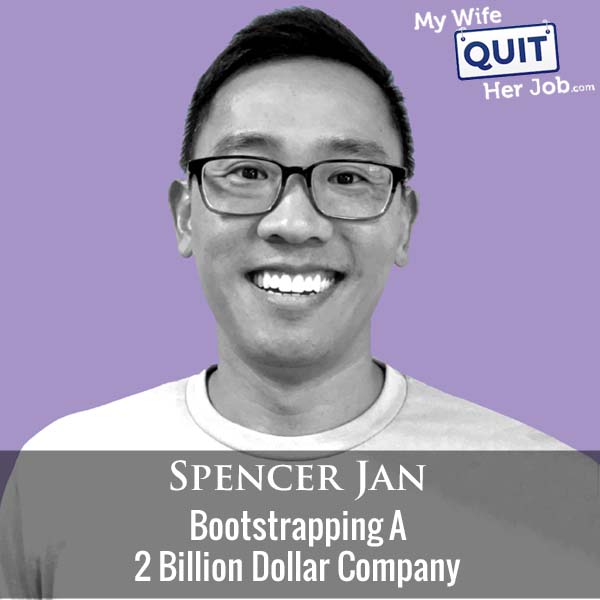
Solo Stove started with $15,000 in total capital, no outside funding, and roughly two years of failed manufacturing attempts before the first unit shipped. Spencer Jan and his brother bootstrapped it to a $2 billion valuation with multiple eight-figure exits, and along the way they killed a larger, more profitable Amazon brand to focus on it.
In this episode I sat down with Spencer Jan, co-founder of Solo Stove, to walk through the full arc: a failed travel blog, memory foam mattresses sold to expats in Shanghai, ten-plus Amazon brands running simultaneously, the painful partner split, and the decision to sell off their biggest revenue source for pennies on the dollar to double down on the smaller brand with better fundamentals.
Below is the whole story: the $15,000 launch budget, why a difficult-to-manufacture product turned out to be the moat, the tax bill that nearly killed the company, why they refused to hire, and how they knew which brand to keep.
Get My Free Mini Course On How To Start A Successful Ecommerce Store
If you are interested in starting an ecommerce business, I put together a comprehensive package of resources that will help you launch your own online store from complete scratch. Be sure to grab it before you leave!
Table of Contents
Key takeaways
- Solo Stove launched on $15,000 total. That covered tooling, first inventory, software, shipping, and freight.
- Two years from idea to first product. The manufacturing difficulty that delayed launch became the competitive moat.
- Finding a manufacturer is like dating. They needed someone who wanted the challenge, not just the order volume.
- They sold their biggest brand for pennies on the dollar. Fox Outfitters had more revenue and profit. Solo Stove had the better DTC story.
- Buyers wanted the DTC brand, not the Amazon revenue. Amazon-dependent brands were much harder to sell.
- A $400,000 surprise tax bill nearly dried out the company. Set aside 40% of monthly profit before you spend anything.
- They refused to hire for years and regret it. Avoiding employees to protect lifestyle produced the opposite outcome.
- Profit does not mean money in your pocket. Taxes take 40%, and inventory reinvestment takes most of the rest.
How Solo Stove started with $15,000
Solo Stove started with exactly $15,000 in total capital, which had to cover tooling, the first inventory order, shopping cart software, freight, and shipping. There was no outside funding and no second round.
That constraint shaped every early decision. Their first order was small enough that most manufacturers had no interest in the project, since tooling costs and production line training would not be recovered on a $5,000 purchase order.
The brothers had already proven to themselves that products sell. Spencer had launched dozens of SKUs across ten to twelve brands on Amazon by that point, and essentially none of them were duds.
The open question was never whether Solo Stove would sell. It was how much.
Why a hard-to-manufacture product is a competitive advantage
A hard-to-manufacture product is a competitive advantage because it is equally hard for your competitors, which is exactly why Solo Stove took two years to bring to market and then held its position.
The manufacturing process required specialized machinery, deep-draw metal stamping, and enormous tooling that had to be lifted with forklifts and chains. Dialing in the tools on a machine can take an entire day, generating substantial scrap and waste before the line produces a single sellable unit.
Then there is the training. Factory workers need extensive instruction to operate the machinery correctly on a new product, which is a real cost the manufacturer absorbs before your first order ships.
For a $5,000 first order, almost no factory will take that on. The ones that will are the ones that become genuine partners.
How to find a manufacturer for a difficult product
Finding a manufacturer for a difficult product works like dating: you need someone who likes you and wants the challenge, not just someone with the right machinery. Most suppliers said no, or said yes and then admitted they lacked the equipment and would not invest.
The manufacturer who eventually said yes appeared to be motivated by the challenge itself rather than the order value. It functioned as a hobby project for him, something harder than anything he had built before.
That rapport is what made it work, and it turned out extremely well for both companies. Spencer’s honest assessment is that a lot of stars had to align, and that luck played a genuine role in finding the right partner.
Why you should not overthink product-market fit for a first product
You should not overthink product-market fit for a first product because the only meaningful test is selling it. There is no research a two-person team can run that produces statistically significant evidence about a product nobody has bought yet.
The practical framework: do not sink much money in, then go sell it. If it sells well, double down and order more. If it fizzles, you are stuck with $5,000 of inventory that will clear out over a few years, and some of it becomes Christmas presents.
That reframes the risk. A modest first order with a real product in market beats months of survey research that tells you nothing reliable.
Why profit does not mean money in your pocket
Seven figures of profit does not mean seven figures in your pocket. Taxes take roughly 40% off the top, and inventory reinvestment consumes most of what remains, especially in a fast-growing business where you must order twice as much stock before you actually need it.
The compounding pressure: when a product is selling well, you can see the stockout coming months ahead, so you order aggressively. That capital comes out of profit that already had 40% removed for taxes.
Spencer’s team went years without meaningful salaries. Their conservatism was shaped by living through 2008, when their sourcing company went from around 20 employees down to five. The lesson they took was to avoid debt and reinvest everything, which meant the owners got paid last.
The $400,000 tax bill that nearly killed the company
A surprise $400,000 tax bill nearly dried out Solo Stove because Spencer was estimating tax obligations by gut feel rather than calculation. They barely had enough saved when it came due.
The rule he learned the hard way: set aside 40% of monthly profit for taxes before you touch anything else. Most new entrepreneurs do not internalize this until a bill arrives that they cannot pay.
His broader point is about knowing your weaknesses. He is genuinely bad at math and has stopped pretending otherwise, choosing instead to surround himself with analytical people. Double down on what you are good at and hire or partner for the rest.
Why they killed their biggest brand to focus on Solo Stove
They killed Fox Outfitters, their largest brand by revenue and profit, and sold it for pennies on the dollar so they could focus entirely on Solo Stove, which was smaller but had a real direct-to-consumer story.
The decision came out of a failed 2016 attempt to sell the whole business. What they learned in that process was decisive: buyers were not interested in the Amazon brand doing millions in revenue. They were interested in the smaller brand with momentum on its own .com, defensible IP, and a product development roadmap.
The sale itself was rough. No time for proper diligence, no time to market it correctly. Take it or leave it at pennies on the dollar, mostly to clear the books and the warehouse before the real transaction.
Spencer’s honest read: he could have turned Fox Outfitters into a multimillion-dollar business himself if he had the time, and someone else got a business that could change their life. The constraint was attention, not opportunity.
Why buyers want DTC brands over Amazon revenue
Buyers want direct-to-consumer brands over Amazon revenue because a DTC brand owns its traffic, its customer relationships, and its IP, while an Amazon brand’s entire value sits inside a platform that can change the rules at any time.
The 2016 sale attempt made this concrete. Fox Outfitters had more revenue and more profit, and the interest went to Solo Stove because of what buyers saw in the .com momentum, the intellectual property position, and the product development potential.
This is why Spencer and his brother always built their own websites alongside Amazon listings, even when Amazon drove the majority of sales. Buyers check whether a brand is legitimate, and a real site is part of that.
Why refusing to hire employees backfired
Refusing to hire employees backfired because the goal was a lifestyle business with freedom and flexibility, and the actual result was two founders working until the early hours, handling their own customer service, and eventually selling the company to escape.
Their resistance was mostly friction and unfamiliarity: how does payroll work, do we need benefits, where would they sit, who buys their equipment, who trains them, and what happens to our flexible schedule if we have staff expecting us in an office nine to five.
Every one of those questions has a straightforward answer. Not knowing the answers made hiring feel like it conflicted with everything they wanted, when in reality staying unstaffed is what destroyed the lifestyle.
Spencer’s retrospective: they probably could have hired earlier, built a smoothly running operation, and possibly never needed to sell at all.
The trap of launching more brands instead of going deeper
Launching more brands instead of going deeper on one is a trap, because each new brand multiplies operational load without multiplying freedom. The instinct that if one product works, ten products will produce ten times the business, is what produced the snowball.
At peak they were running Solo Stove, Fox Outfitters, a gardening brand, a garden cloche product line, and briefly a grow light business (started to smooth out gardening seasonality, abandoned once they realized the customers were growing marijuana).
Everything sold. That was the problem. Success across many brands meant more fires, more customer service, more inventory decisions, and less attention for each one.
The resolution was subtraction: exit one partnership, sell one brand cheap, kill the rest, and put everything into the single brand with the best long-term fundamentals.
What “controlling your growth” actually looks like
Controlling your growth means deliberately choosing not to place the large inventory bet, letting products go out of stock, or exiting partnerships that multiply your workload. It is the opposite of the default entrepreneurial instinct.
The emotional difficulty is real, and it is mostly ego. When something is working, you want to press the advantage while it lasts, and that creates the vicious cycle where each success generates more work.
Spencer’s version of throttling was leaving his Washington partner, which meant walking away from most of the Amazon brands and a substantial amount of money. He did not ask for a multiple on his equity, valued it at book value, gave a discount on top, and let them pay over years.
The hardest part was the relationship rather than the money. Twelve years of working together, and he made the call from his car in tears.
Frequently asked questions
How much money did it take to start Solo Stove?
Fifteen thousand dollars total. That covered tooling, the first inventory order, shopping cart software, freight, and shipping. There was no outside funding, and the company grew to a $2 billion valuation fully bootstrapped from that starting capital.
How long did it take to develop the first Solo Stove?
About two years from first playing with the idea to shipping product. The delay came from manufacturing difficulty: the product requires specialized machinery and deep-draw metal stamping, and most factories declined the project because the first order was only around $5,000.
Why did they sell their most profitable brand?
Because a 2016 attempt to sell the whole business revealed that buyers wanted the direct-to-consumer brand rather than the Amazon revenue. Fox Outfitters had more revenue and profit, and Solo Stove had .com momentum, defensible IP, and product development potential, so they sold Fox cheap and focused everything on Solo Stove.
How much should you set aside for taxes as an ecommerce seller?
Roughly 40% of monthly profit, set aside before you spend or reinvest anything. Spencer estimated by gut feel one year and was hit with a $400,000 bill that nearly dried out the company. Most new entrepreneurs learn this only when a bill arrives they cannot pay.
Should you validate a product before launching it?
For a small team, extensive validation research produces nothing statistically meaningful. The practical approach is to keep the first order small, put it in market, and let real sales answer the question. If it sells, double down. If it does not, you have a few thousand dollars of inventory that clears over time.
Is it better to launch many brands or focus on one?
Focus on one. Running many brands multiplies operational load, customer service, inventory decisions, and fires without multiplying freedom. Solo Stove only became a $2 billion company after the founders exited a partnership, sold their largest brand cheap, and killed everything else.
When should a bootstrapped ecommerce business hire employees?
Earlier than most founders do. Spencer and his brother avoided hiring for years to protect their lifestyle, and ended up working until the early hours handling their own customer service. His retrospective assessment is that hiring sooner might have meant never needing to sell the company at all.