
Podcast: Download (Duration: 45:44 — 52.6MB)
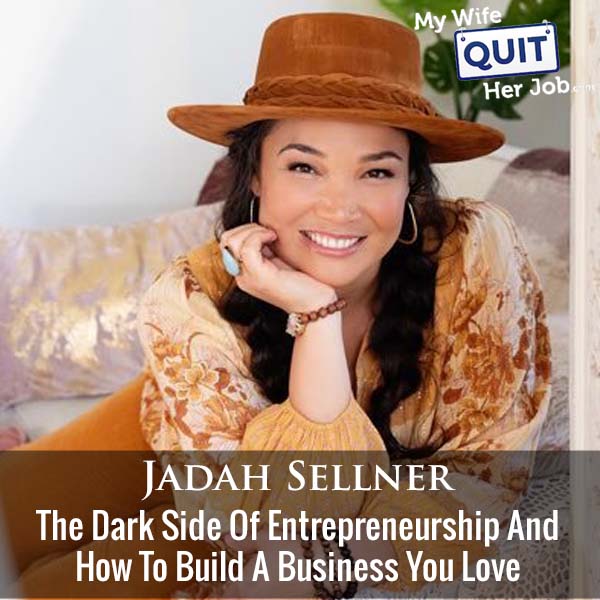
You build a business without burning out by refusing to move the goalpost every time you hit a number and by treating your health, your marriage, and your kids as non-negotiable constraints, not optional trade-offs. In this episode I sit down with my friend Jadah Sellner, cofounder of the seven figure Simple Green Smoothies brand, TED speaker, business coach, and author of the new book She Builds. Jadah walked away from a thriving business at its peak because the definition of success she had written down three years earlier no longer matched the life she was actually living.
We cover what she calls “entrepreneurial golden handcuffs,” why hustle culture keeps operators trapped, and the four-part love method she now teaches to founders who want growth without paying for it in their health, their relationships, or their identity. She has coached this framework to hundreds of women, and the underlying mental model applies to any founder, male or female, who is asking whether the finish line keeps moving on them.
Below is the full breakdown of her exit, the love method, and the specific mindset shifts that let a founder step off the hustle treadmill without giving up ambition.
Get My Free Mini Course On How To Start A Successful Ecommerce Store
If you are interested in starting an ecommerce business, I put together a comprehensive package of resources that will help you launch your own online store from complete scratch. Be sure to grab it before you leave!
Table of Contents
Key takeaways
- Entrepreneurial golden handcuffs are the trap founders build for themselves when the business grows into something bigger than the life they actually want.
- Jadah wrote a “future vision” in 2013 while running Simple Green Smoothies, then read it three years later and realized the numbers said “grow” but her soul said “leave.” She sold in 2016.
- Hustle culture pushes founders to compromise health and relationships to hit revenue milestones that turn out not to matter.
- Give yourself permission to be a slow cooker instead of a pressure cooker. The result is the same; the cost is lower.
- The love method (Lead, Optimize, Visualize, Expand) is a business framework that treats mental health, family, and personal capacity as inputs, not distractions.
- Most business blocks are emotional, not strategic. When you keep procrastinating, the missing piece is almost never the “right blueprint.”
What is the dark side of entrepreneurship most founders never talk about?
The dark side of entrepreneurship is the identity crisis, the guilt, and the health and relationship costs that pile up when a founder keeps chasing a bigger number instead of asking whether the current number is already enough. It is what Jadah calls “entrepreneurial golden handcuffs.”
Golden handcuffs at a nine to five job are easy to see: the salary, the benefits, the promotion track that keeps you from quitting the thing you no longer love. Founders build the same trap for themselves. The business becomes so profitable, so identified with who they are, and so tied to the people who depend on them that walking away feels irresponsible even when staying is quietly breaking them.
Jadah hit that wall in 2016. Simple Green Smoothies had over 400,000 Instagram followers, 355,000 email subscribers, a traditionally published book, and a second book deal on the table.
On paper, staying was obvious. In her chest, staying meant writing a second book about a topic she no longer wanted to be known for. She sold her half of the company.
Why Jadah Sellner sold Simple Green Smoothies at its peak
Jadah sold Simple Green Smoothies because a future vision she had written three years earlier told her she wanted to help women entrepreneurs build businesses without burning out, and the smoothie business no longer fit the vision. She read the document to her business partner Jen Hansard in early 2016 and everyone in the room understood.
The number that pushed her to notice the misalignment was $86,000 in ten days from a 2013 launch. It changed her life. Her husband quit his job.
It also made her aware she cared much more about teaching other founders the behind-the-scenes of that growth than about staying on brand as a “walking billboard for green smoothies.”
Her mentor Jonathan Fields, host of the Good Life Project, reframed her doubt with one question when she was second-guessing the exit. She had asked whether she was crazy to leave.
He said she was asking the wrong question. The real question was “can magic strike twice?” and the answer was yes.
How to write a future vision for your business (and actually use it)
Write a future vision by carving out structured time to answer specific prompts about what you actually want, then store the document somewhere you will read it every quarter or every year. Jadah wrote hers during a two-day mastermind with Jonathan Fields in 2013 and rediscovered it in early 2016 when the moment came to make a hard call.
You cannot read the label from inside the jar, as Jadah puts it. The daily grind of running a business narrows your view to whatever is on fire today. A written future vision is external, dated, and honest with you in a way your inner monologue no longer can be after two years in the weeds.
The prompts she uses in her book cover four buckets: the company, personal life, relationships, and the contribution you want to make in the world. Answer them once a year, in one sitting, away from your inbox. The document is only useful if it is specific enough to disagree with the decisions you are about to make.
Why chasing seven figures often leaves you unhappier than six
Chasing seven figures leaves many founders unhappier than six because the pursuit trades health, relationships, and capacity for a milestone that turns out to be ego, not fulfillment. Once you clear the number, the goalpost moves and the same trade-offs start again.
I told Jadah about the year we strained to hit our first seven figures at Bumblebee Linens. We did not have the fulfillment capacity, we stayed up packing boxes, and once we cleared the milestone the next question was “what is the next goal?”
It made no sense. My wife eventually pointed out we did not even spend the money we already made. That question ended the chase.
Jadah calls this the hustle culture trap. Founders think “six figures will be enough, then my wife can quit, then we will be happy,” but as soon as one number lands the target slides up.
The healthy move is to extend the timeline and refuse to buy the milestone with your health. As she says, give yourself permission to be a slow cooker instead of a pressure cooker; you get the same result in eight hours that a pressure cooker gets in one, and you do not blow up in the process.
What is the love method for building a business without burnout?
The love method is Jadah Sellner’s four-part framework for building and running a business without burning out: Lead, Optimize, Visualize, Expand. Every element treats the founder’s mental health, capacity, and relationships as inputs to the growth model, not obstacles to it.
L is for lead. Leading from the inside out, getting clear on what you want to create, and building from that place. Take care of yourself first, then loved ones, community, customers, and clients.
O is for optimize. Leverage your time, energy, and capacity against the actual number of hours in a day. Do the energizing work, offload the draining work, and put support in place so you can hold both.
V is for visualize. Bring your visions into implementation with a quarterly plan and visionary action. Ideas that stay in the notebook do not compound.
E is for expand. Next level growth from the inside out.
Sometimes the expansion is a bigger business. Sometimes it is deeper capacity so the current business stops draining you.
Why most business blocks are emotional, not strategic
Most business blocks are emotional, not strategic, which is why buying another course or hiring another consultant almost never unlocks the founder who has been stuck for six months. The missing piece is usually fear, overwhelm, or an old story about worthiness sitting in the driver’s seat.
Jadah puts a life coach or therapist into every program she runs because as many founders as she has coached, the block is almost always emotional. She names her own version: patronizing Polly, the inner voice that whispers “you are not doing it right” and paralyzes decisions. The trick is to notice it, name it, and let fear ride in the passenger seat instead of grabbing the wheel.
The support squad chapter in She Builds covers three tiers of help: peer masterminds, mentors and coaches (which can be as affordable as a podcast or a book), and a therapist or life coach for the emotional work most founders bypass. Skipping the emotional layer is why smart operators repeat the same self-sabotage cycle across three or four businesses in a row.
How to overcome the fear of comparing yourself to other founders
Overcome founder comparison by picking a peer group whose baseline you actually want and by understanding where your unique value lives. Comparison hurts most when the group you sit in is running a different race than the one you signed up for.
My version of this was an early entrepreneurship program full of VC-backed founders raising rounds and selling for hundreds of millions. I was selling handkerchiefs online.
At the yearly retreats they would announce nine figure exits and I would sit there thinking I did not belong. The fix was leaving that room and building a new one with peers running businesses that looked like mine.
Jadah’s version is looking for the value you can add rather than the value you can extract. She has been in masterminds with eight figure founders and asked one of them whether it matters to them how much other members make. His answer: no.
The story that “I do not belong here because my number is smaller” is a story we tell ourselves. The way out is to ask what you specifically can contribute; that is where belonging actually shows up.
Why She Builds is aimed at women entrepreneurs (and why men should read it too)
She Builds centers women’s stories because women have spent decades reading business books written mostly by Ivy League educated single white men, and Jadah wanted to see herself in a business book. The strategies in it apply to anyone who wants growth without burning down their life.
Jadah is Black, Chinese, and white, does not have a college degree, is a mother, and is a wife. Those identities almost never headline a business book. She wrote She Builds as proof of possibility for founders who look nothing like the standard archetype and who are still holding open the “50s housewife” mental tab of remembering the cookies for the class party while running a company.
The title made her pause. She worried the “she” would exclude readers. She landed on centering women anyway because those are the founders she most wants to serve and the audience whose stories the business shelf has under-told.
Any man who reads it gets the tools plus a much clearer view of the extra load his female cofounder, spouse, or team members are carrying.
Why writing a book is harder than launching a business
Writing a book is harder than launching a business because the book proposal alone forces you to know exactly what you want to say, and most founders do not, even after years of teaching the same material live. Jadah’s proposal took roughly a year and a half. The book that followed felt easier than the proposal that unlocked it.
She wrote her first “stinky first draft” (her daughter’s phrase) at an online writing retreat, banging out 32,000 words in three days off an outline. Volume gave her the confidence that she had something to say. From there she rebuilt the proposal with the outline that actually held.
Both of us wrote our books partly for our kids. She wants her 15-year-old daughter, an aspiring author, to see her mom did it.
I want mine to walk into a bookstore and see their dad’s name on a shelf. Legacy is a legitimate reason to write; hitting a bestseller list is a bad reason if it is the only reason.
How to make time for family when you run a business
Make time for family by treating family commitments as fixed calendar entries and everything else as negotiable, then hiring, systematizing, or dropping whatever no longer fits inside the time that remains. Founders in trouble usually have it reversed: work fills the whole calendar and family gets the leftovers.
Jadah’s marriage is 17 years in. Her husband runs his own music program business and shares school pickups, drop-offs, and the emotional labor of raising a teenager.
That balance took explicit negotiation as her business became the higher revenue contributor. It did not just happen.
My version is Fridays with my wife. I do not schedule anything on Fridays except thinking and lunch with her. It is my favorite day of the week and it is where the ideas that actually move the business get seeded.
How Jadah landed a keynote at the World Domination Summit and TED
Jadah landed her first big keynote at WDS by adding value to a mentor first, then telling him she would speak for free. She had attended Jonathan Fields’s two-day event, offered to share how she built the Simple Green Smoothies community, and made herself easy to say yes to. He invited her to a Q&A first, then to a keynote at his own event, then introduced her to Chris Guillebeau, and the WDS invitation followed a few months later.
She calls it “ten seconds of bravery.” The email or the introduction that unlocks the opportunity almost always feels bigger before you send it than after. Sometimes you need a friend standing behind your shoulder to hit send.
The same tactic sent her to Australia on Darren Rowse’s dime after ProBlogger saw the WDS talk, and it opened the door to a follow-on speaker circuit that included CreativeLive. The pattern is give first, deliver hard, and let word of mouth handle the rest.
Frequently asked questions
How do you know when to sell a successful business you built?
You know it is time to sell when the business no longer fits the future vision you actually want for your life, and when the pull toward the next chapter is stronger than the fear of leaving the current one. Write your vision down before you need it so the decision has an external reference point.
What are entrepreneurial golden handcuffs?
Entrepreneurial golden handcuffs are the trap founders build for themselves when the business grows into something bigger than the life they wanted. Salary, identity, team dependencies, and public expectation all make it feel irresponsible to leave, even when staying is quietly costing you your health or your relationships.
What is the love method in Jadah Sellner’s book She Builds?
The love method is a four-part framework: Lead (from the inside out), Optimize (your time and energy), Visualize (turn ideas into a quarterly plan), Expand (next level growth from the inside out). It treats mental health, family, and capacity as inputs to business growth rather than obstacles to it.
How do you build a business without burning out?
Build a business without burning out by extending the timeline on your goals, refusing to move the goalpost every time you hit a number, and treating health and relationships as fixed constraints. Give yourself permission to be a slow cooker instead of a pressure cooker: same result, lower cost.
Why do founders keep hitting revenue milestones and still feel unfulfilled?
Because most milestones are ego, not fulfillment. Once you clear the number, the goalpost slides and the same trade-offs start again. Fulfillment comes from alignment with a written vision of the life you want, not from the next zero on the revenue line.
Is She Builds only for women entrepreneurs?
No. The strategies in She Builds apply to any founder. It centers women’s stories and voices because business books have historically under-told them, but the frameworks work for men as well and give male readers a clearer picture of the extra load women founders often carry.
Where can I find Jadah Sellner and buy She Builds?
You can find Jadah at jadahsellner.com for her coaching, retreats, and masterminds, and at shebuilds.com for the book itself, which was released November 15, 2022. She also offers free companion resources for readers who are not yet ready to buy.