

Podcast: Download (Duration: 50:51 — 58.5MB)
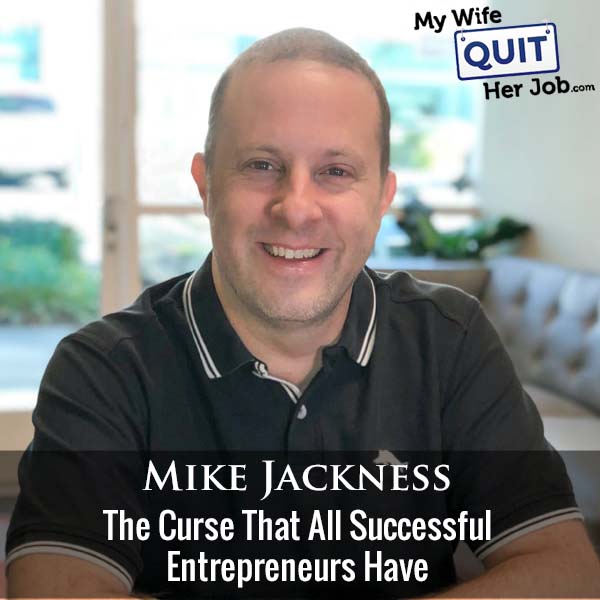
The four burner theory says your life has four burners (work, health, family, friends) that together add up to 100 percent, and to be very successful in any one of them you have to turn at least one of the others down. Crank the work burner and something else pays the price, whether that is your health, your marriage, or the friends who stop calling because you keep skipping dinner. In this episode I sit down with my friend Mike Jackness, a seven figure e-commerce operator and host of the EcomCrew podcast, to talk about how the four burner theory reshaped his life after years of running the work burner at full blast.
Mike and I have polar opposite personalities. He is the all-in, pedal-to-the-metal operator who admits he cranks the work burner and lets his health slide first.
I run a business, teach a course, host two podcasts, and try to be home for my kids every night. Both approaches have costs, and this conversation covers the ones nobody puts on stage at conferences.
Below is the full framework, the mental traps that keep smart founders trapped, and the specific changes Mike made to get his life back without giving up the business.
Get My Free Mini Course On How To Start A Successful Ecommerce Store
If you are interested in starting an ecommerce business, I put together a comprehensive package of resources that will help you launch your own online store from complete scratch. Be sure to grab it before you leave!
Table of Contents
Key takeaways
- The four burner theory: work, health, family, and friends add up to 100 percent. Turning one burner up forces you to turn another down.
- Most entrepreneurs sacrifice health first because it only hurts them, then family and friends when the pattern runs for years.
- Happiness stops scaling with income somewhere between $80,000 and $150,000 a year, so chasing bigger revenue rarely buys more life satisfaction.
- Revenue is vanity, profit is sanity. Seven and eight figure “seller” titles are cheap to buy with ad spend; real profit is what compounds.
- Fixing the four burners does not mean working less. It means hiring, delegating, and blocking off deep work time so every hour counts.
- Avoiding lifestyle creep (no fancy cars, no remodel, no second homes) protects the freedom entrepreneurship was supposed to buy in the first place.
What is the four burner theory for entrepreneurs?
The four burner theory is a life balance model that treats work, health, family, and friends as four stove burners whose settings must total 100 percent. Turn one up and you have to turn another down. The framework became popular after David Sedaris wrote about it in The New Yorker in 2009, and it maps almost every category a human being spends time on.
Mike first heard the model from me over beers at a five minute pitch event with Scott Voelker and Greg Mercer of Jungle Scout. He describes it as an aha moment. He had been cranking his work burner for years, could tell something in his life was off, and could not put his finger on why until the four burners gave him a picture.
The theory has a harder second half most people skip. To be successful in a single discipline you turn off at least one burner. To be very successful you turn off two.
To operate like Elon Musk you turn off three. That is why the most public “wins” you read about often come with a private cost no one puts in the press release.
Which burner do most successful entrepreneurs sacrifice first?
Most entrepreneurs sacrifice health first because the pain lands only on themselves. Mike is blunt about this. Health is the first thing he lets slide because his instinct is to keep tending to his wife, his kids, and his friends before he tends to himself.
The trouble is that “only hurts me” adds up. Ignore health long enough and you are sick, overweight, or worse.
Ignore family long enough and your spouse wants a divorce. Ignore friends long enough and they stop inviting you.
Any single week of neglect is invisible. A decade of the same pattern is not. That is the trap Mike watched hit high profile founders, and it is the trap the four burner theory is designed to name before it hits you.
Why does hustle culture keep entrepreneurs stuck at cranked-up work?
Hustle culture keeps founders stuck because society reads “working hard” as a badge of success and “resting” as laziness. That single reward loop makes it socially expensive to dial the work burner back, even when the operator knows it is costing them their marriage or their health.
Mike grew up in an entrepreneurial household where the message was “you win because you outwork them.” He did outwork people, and it produced early wins. It also produced a very stressful pattern he only unwound in his mid-40s once he had specific tools to unwind it with.
The other trap is the peer group. Mike and I have both been in masterminds where every founder was hitting bigger numbers than the last, which quietly triggers the imposter feeling that you are not achieving enough.
The fix is not to leave the room. The fix is to remember that the numbers people brag about are almost never the whole story.
Revenue is vanity, profit is sanity: why chasing big numbers hurts your business
“Revenue is vanity, profit is sanity” is a saying Mike’s business partner Dave repeats because e-commerce makes it trivially easy to put up big top-line numbers by overspending on ads. Any operator can call themselves a seven or eight figure seller by burning cash. Very few can call themselves a seven figure profit business.
Mike watched a founder in his mastermind hit $10 million in revenue by scaling hard, then read the celebratory article and think it looked amazing. Behind the scenes, that founder told the group it was the most stressful year of his life.
Net profit on the $10 million was about $90,000. He hit the number for the badge and swore he would never do it again.
I had a version of the same story. One year we stretched to hit seven figures because it would sound good. We did not have the fulfillment capacity, we stayed up packing orders, and once we cleared the milestone the next year’s question was “so what is our new goal?”
It was all ego. My wife eventually asked why we were stressing over more revenue when we did not even spend what we already made. The question ended the chase.
How much money actually buys happiness for a business owner?
Money buys happiness up to the point where basic bills stop being a source of stress, then extra income delivers sharply diminishing emotional returns. Research summarized in Morgan Housel’s book The Psychology of Money puts that threshold somewhere between $80,000 and $150,000 depending on where you live. Every dollar past it is worth much less in life satisfaction than the dollars before it.
Above that threshold, the game quietly shifts from “can we pay the mortgage” to “are we keeping up with our peers.” That is a much worse game to play, because there is always one richer person and the ceiling literally never comes down. Warren Buffett famously still lives in the modest Omaha house he bought in 1958. Elon Musk has publicly said he keeps a small place near the SpaceX facility.
Mike and I both watched this play out inside the affiliate marketing world in the early 2010s, where founders made hundreds of thousands or even a million a month and celebrated by driving Lamborghinis into pools. It looked exciting from the outside. Up close it was mostly people trying to feel like they belonged in the room by spending faster than the person next to them.
How to protect your marriage and family from your business
Protect your marriage and family from your business by making the goal explicit with your spouse before you crank the work burner, and by treating any long stretch of full-blast work as a temporary sacrifice with a clear end date. Founders get in trouble when they treat “working 80 hour weeks forever” as normal and expect the people around them to just adapt.
Mike is honest that his wife works in the business and does a great job, but she is not the intense entrepreneur he is. He cannot expect her to want to work 12 to 16 hour days for another year of revenue growth. That is his ambition, not hers.
The same applies to kids. They will never understand why you missed the game or the school event; they will only remember that you missed it.
If you are in the side hustle phase and juggling a day job with a new business, you may have to run hot for a stretch. The danger is running hot for a decade without ever renegotiating the terms with the people you love.
What systems replace hours when you dial the work burner down?
The systems that let Mike cut his hours without cutting his output are the standard delegation stack: hire the right people, write standard operating procedures, and only touch tasks that literally only he can do. Everything else goes to a team member, even if they only execute it at 80 or 90 percent of his level, because 80 percent done by someone else is dramatically better than 100 percent done by a bottleneck founder.
Mike also flips the math the other direction. Some hires do the job at 150 or 200 percent of his level because they are actual experts. A better graphic designer, a better accountant, a better numbers person.
The mental block for most founders is not the hire cost, it is letting go of the ego that says “no one can do this like I do.”
His most recent proof: a three week trip with a laptop he barely charged. He brought it only because his CPA needed a tax form signed. He came home with the battery still at 50 percent, the business still running, and revenue intact.
Why unscheduled time is the most productive time on the calendar
Unscheduled time is where the highest leverage business ideas actually get built, because innovation requires uninterrupted thinking, not another meeting. Mike references Cal Newport’s book Deep Work as the argument he wishes someone had handed him a decade earlier.
Every successful business Mike has built came out of a stretch of time where he was sitting with a notebook, tinkering, and doing research with nothing on the calendar. He has not had that kind of quiet space in years, and he is convinced it is what has capped his ceiling.
His plan starting in late October is to block every Friday. The goal is to leave room for lunch with his wife, foot massages with a friend, or just thinking.
That looks lazy from the outside. Sitting at a desk 14 hours a day being “busy” is what most people would applaud. Busy is not the same as productive, and nobody stays 100 percent focused in front of a screen for 14 straight hours.
For me the equivalent is Fridays. I do not schedule anything except thinking and lunch with my wife. It is easily my favorite day of the week, and it is where the ideas that matter get seeded.
How avoiding lifestyle creep protects your freedom as an entrepreneur
Avoiding lifestyle creep protects your freedom because every dollar you commit to a bigger house, a nicer car, or a fancier vacation is a dollar you have to earn again next year. The higher your fixed spending, the less optional your business becomes.
Mike and his wife have deliberately downsized. They share one car. He travels with a backpack.
They spent two years traveling the country in a van and found less stuff made them happier, not less happy. They sold rental properties because Airbnb turned out to be simpler when they actually wanted a vacation. He does not wear jewelry beyond his wedding ring and an Apple watch he barely uses.
My rule is I sleep better every time I spend less, because the “what if it all falls apart” scenario looms smaller. I do not fly first class even when I can.
When my wife once booked me domestic first class as a treat, I could see it was fine, but I was not going to make it a habit. Every luxury you get used to becomes the new floor you have to keep paying for.
The exception both of us have made is airline miles. Miles are effectively free once you run an e-commerce business at scale, and Mike will happily use points for a Singapore Airlines suite to Asia because it is a rare experience, not a monthly bill.
Why the people you spend time with become your baseline
The people you spend the most time with quietly reset your defaults. Hang out with founders who eat like garbage and you will eat like garbage. Hang out with an operator who is always shipping and you will feel the pressure to ship.
Mike watched this at Super Bowl parties in the affiliate era, where 20 people had to hit a six figure bar minimum and champagne bottles arrived with sparklers. Being a fly on the wall was interesting once. Wanting to live that life would have destroyed his finances and his mental health inside a year.
The counter move is deliberate. Pick a peer group whose default settings you actually want. Then keep those relationships strong so their baseline pulls you in the right direction, instead of dragging you toward a lifestyle that never satisfies.
How to know when to dial the work burner back
The signal to dial the work burner back is the moment your body, your marriage, or your friendships start sending complaints you have to actively ignore. Poor sleep. A spouse asking why you are always late.
Friends who used to text and now do not. The complaints are cheap to dismiss for a while. They are also the only feedback loop most founders will ever get.
Mike knew something was wrong for years before the four burner theory gave him language for it. Once he could name the problem, the fix was concrete: sell a business that was eating too much attention, hire out the tasks that were not his to do, block off Fridays, and turn the computer off at 6 or 7 pm instead of running a second shift with the overseas team.
Four years in, he says he is happier than he has been in a very long time, the business is doing better than when he was working more, and the delta came from spending on health, family, and friends what he used to spend on hours at a screen.
Frequently asked questions
What is the four burner theory in simple terms?
The four burner theory says your life has four burners (work, health, family, and friends) whose settings always add up to 100 percent. Turning one burner up forces at least one other burner down. To be very successful in one area, you usually have to turn at least one burner off.
Who came up with the four burner theory?
The four burner theory was popularized by David Sedaris in a 2009 New Yorker piece and has since been widely cited in business and productivity writing, notably by James Clear. Sedaris credited a friend who heard it at a management course.
Which burner should entrepreneurs turn off first?
Most entrepreneurs turn off the friends burner first because it hurts other people the least in the short term, then quietly let health slide. The healthiest approach is to run all four burners at a lower average setting rather than max out one and zero out another.
Is it possible to be successful without cranking the work burner all the way up?
Yes, especially past the early startup phase. The trick is hiring, systematizing, and protecting unscheduled thinking time so each hour of work compounds. Mike’s business ran fine during a three week trip where he barely opened his laptop, because the systems and the team could carry it.
How much money do you actually need to be happy as an entrepreneur?
Research summarized in The Psychology of Money puts the “no money stress” threshold somewhere between $80,000 and $150,000 a year depending on cost of living. Above that number, extra income delivers rapidly diminishing emotional returns, and most of the pull to earn more comes from ego and peer comparison rather than a real quality of life gain.
How do you tell your spouse the four burner theory is affecting your marriage?
Show them the model first, then name specifically which burner you have been running hot (usually work) and which one is paying the price. Agree on a small first step, such as one no-work evening a week or a shared Friday, and treat it as an experiment. Founders get in trouble when they assume their ambition is a shared plan; it usually is not.
Where can I find Mike Jackness after this episode?
Mike hosts the EcomCrew podcast, which covers Amazon and e-commerce operations in depth. His story here and on the podcast is the seven figure operator version of the same lesson: revenue is vanity, profit is sanity, and life is the thing that gets sacrificed if you stop paying attention.

