
Podcast: Download (Duration: 1:00:13 — 69.2MB)
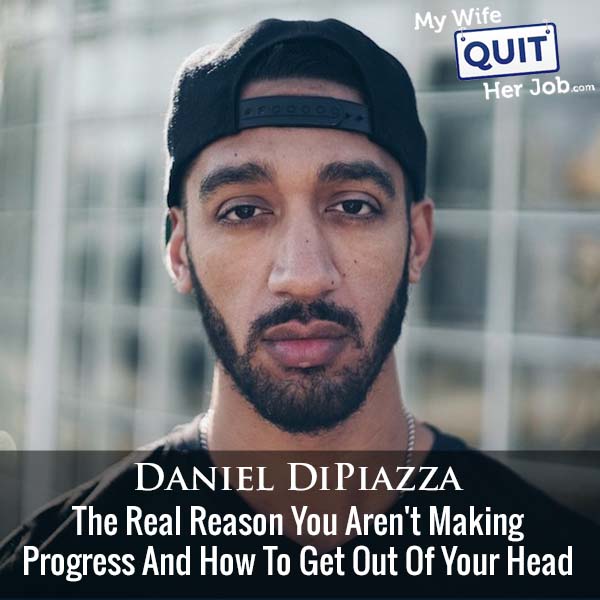
The reason most creative entrepreneurs stall out is not tactics. It is that they keep pulling the pot off the burner right before the water boils, and they measure their progress against someone else’s finish line instead of their own. On episode 441 of the My Wife Quit Her Job podcast, Daniel DiPiazza (author of Rich20Something, and now The True Artifact) laid out a mental model called the “slow boil of 3D” that reframes progress, plus a self-knowledge process for figuring out what you should actually be building.
Daniel spent the Rich20Something years writing to the SEO algorithm and hit a wall creatively. Since 2020 he has been building an owned catalog of books, merch, courses, and live shows, using his existing email list rather than chasing TikTok virality. This post pulls the operator lessons out of that conversation for anyone stuck between “what works” and “what feels alive,” with the exact playbook he is using now.
Get My Free Mini Course On How To Start A Successful Ecommerce Store
If you are interested in starting an ecommerce business, I put together a comprehensive package of resources that will help you launch your own online store from complete scratch. Be sure to grab it before you leave!
Table of Contents
Key takeaways
- The “slow boil of 3D” principle: change is chemical and cumulative, but you only see the visible bubble at the boiling point. Most people quit before the last few degrees.
- Modeling other successful people is a poor heuristic, because you can copy what they do but not who they are, their timing, or their context.
- Your real gifts are usually the things that come so naturally to you that you take them for granted (or that others ridiculed you for).
- Prioritize audience response over algorithmic response. Something that goes viral but does not create relationship is worth less than something that creates deep relationship and does not spread.
- Seth Godin’s virality question: write something so impactful that a person who reads it cannot go to sleep without telling at least one other person.
- Own your IP. Rich20Something’s traditional book paid $165K all-in over 2 years but Daniel does not own the publishing rights; his new self-published True Artifact cost ~$1,500 to produce and he owns everything.
- Missing New York Times bestseller by one spot on his first book (#11 vs. top 10) did not materially change his career; the ego metric is not the ROI metric.
Who is Daniel DiPiazza and what does he write about?
Daniel DiPiazza is a longtime writer and creative entrepreneur best known for founding Rich20Something, publishing a Penguin business book of the same name, and later acquiring Under30CEO.com (which he sold in 2019). He now runs Alpha Mentorship and just released The True Artifact, the first in a planned 11-book self-published series on creativity, purpose, and personal development. He has appeared on the My Wife Quit Her Job podcast three times, going back to episode 103.
The 34-year-old Daniel of today is a very different operator from the Rich20Something Daniel of 2015. Then he was writing every post for SEO and immediate feedback. Now he is deliberately building a fully-owned catalog of books, merchandise, courses, and live shows so that “every time you release a new work, your whole catalog gets a bump.”
The slow boil of 3D: why creative progress feels invisible until it explodes
The “slow boil of 3D” is Daniel’s framework for why creative and business progress usually feels invisible until it suddenly is not. Water heats through every degree between 0 and 100 Celsius, but you do not see the bubble until you hit boiling.
Every degree before that is a real chemical change; it just is not yet visible. If you turn the burner off at 99, you lose everything.
Most entrepreneurs are constantly checking the pot: launching, quitting, restarting, pivoting, letting all the heat out. The point of the model is that direct, sustained intention on one thing is what accumulates into a phase change, and there is no way to predict exactly when the change will show up on the surface.
I use a mirror version of the same idea with my students: melting an ice cube. All your effort goes into raising the temperature, but nothing visible happens until you cross the freezing point. Same physics, different direction.
What this looks like in practice
The slow boil applies to every creative business I have ever seen work. A YouTube channel that publishes for 18 months to 200 subscribers, then explodes in month 19.
A blog that grinds for 3 years, then one post lands and drags 40 old posts up with it. A book series that gets ignored for the first 3 releases, then compounds on book 4 because Amazon’s algorithm now sees a catalog.
Daniel’s honest take: “half the time I do not know what the hell is going on. I just know in the end, it works. And then in hindsight, you can figure out some of the things that you have done.”
Why modeling successful people is a poor heuristic
Daniel argues that the Tony Robbins mantra “if someone else has done it, you can do it” is only partially true, because you can copy what someone did but not who they are, when they did it, or the context they did it in. You can lift a playbook and still miss because your own life experience, timing, and personality do not match.
Daniel had a version of this early in his career learning copywriting from Ramit Sethi (I Will Teach You To Be Rich). He got real skills. He also spent too long trying to be Ramit, which flattened his own voice and stalled his growth.
The correction is to use other people’s work as reference material and best practices, then define success against your own current starting point (not theirs). A beginner should not measure their year-one output against a 10-year operator’s; a strength athlete moving into Olympic lifts should not judge their snatch weight against their deadlift PR.
How to find the natural gifts you have been taking for granted
Your real gifts are the things that come so naturally to you that you assume everyone can do them, or that others have even ridiculed you for. They are not the skills you consciously worked to build; they are the ones you already had and never noticed.
Daniel’s own inventory:
- Interpersonal: he was the fourth-grader who ran a 300-signature petition against the school-lunch hot dogs. That kind of behavior at age 9 is a signal, not an accident.
- Writing: his best grades and most enjoyment as a student came from writing. When he tried to stop writing between 2018 and 2020, his business and his happiness both dropped.
- Camera/interview presence: something he did not have to work at nearly as hard as most people.
His method for surfacing your own list has three parts. First, look at what you naturally enjoy that other people avoid (the accountant who genuinely likes numbers, the writer who loves editing).
Second, look back at childhood behavior for early indicators. Third, use personality assessments (Myers-Briggs, Enneagram, Human Design) as prompts, not identities.
The permission to write what you actually care about
The most concrete example from Daniel’s own life: for years his agent and publisher pushed him back toward business books because that is what sold, and warned him that self-publishing personal-development work would tank his next advance. He complied, and stopped writing personally for almost three years.
When he finally gave himself permission to write the deeper material, he unlocked 11 planned books at once. “All I can do is just produce them fast enough to be able to fulfill at this point.” The bottleneck was never talent. It was permission.
Algorithm vs relationship: which one to prioritize as a creator
Daniel’s ranking is unambiguous: prioritize audience response over algorithmic response. Something that goes viral to 100,000 strangers but produces zero deep relationships is worth less than something that goes to 500 people who cannot get it out of their heads and email you about it two years later. Viral spread and deep relationship are two different skill sets, and only one of them compounds into a career.
Seth Godin’s virality question
Daniel emailed Seth Godin in 2012 asking how to make a piece go viral again. Godin’s reply, paraphrased: “You are asking the wrong question. Ask: how do I write something so impactful that a person who reads it cannot go to sleep without telling at least one other person?”
The answer flows from the reframe. Write like you are talking to a friend, produce like you are talking to a friend, speak on video like you are talking to a friend. If the piece lands with one person that deeply, they will carry it further than any algorithm optimization ever will.
Where I disagree, and how I actually run it
My own view is a bit different from Daniel’s. If your work does not surface at all, no relationship can form; you need enough algorithmic distribution to give the resonance a chance.
So I run an equal balance: SEO and YouTube for discovery, an email list and podcast for depth. Get people in the front door algorithmically, then move them somewhere the algorithm cannot touch.
James Clear is the model here. His original scale strategy was syndication (getting the same essay onto Entrepreneur, Fortune, Forbes, and dozens of other platforms) rather than SEO.
He wrote what he actually wanted to write and used distribution to spread it. Both halves matter.
Why owning your IP matters more than getting a book deal
Owning your intellectual property matters more than the prestige of a traditional book deal, because a traditional deal usually leaves the publisher with the publishing rights while you only keep the copyright. That means you cannot give the book away, cannot easily reuse the words in your own promotions, and earn small royalties per sale forever after.
Daniel’s real numbers across three books
| Book | Path | Cost to produce | IP ownership |
|---|---|---|---|
| Rich20Something (2015) | Traditional (Penguin + Audible) | Publisher paid Daniel $165K advance over 2 years (minus 15% agent) | Publisher holds publishing rights; Daniel does not fully own it |
| Strength & Seduction (2020) | Assisted self-publishing via Scribe (formerly Book In A Box) | ~$40,000 to compile, illustrate, and produce | Daniel owns it |
| The True Artifact (2022) | Full DIY self-publishing | ~$1,500 to $2,000 (design, editing, layout, print) | Daniel owns everything |
The Rich20Something advance sounds large until you subtract the agent commission, spread the balance over two years, and remember that Daniel had to do all of his own marketing (Penguin came in with the platform expectation, not marketing support). The True Artifact economics are the opposite in every direction: he owns 100 percent, he can give the digital and audio away for free, and total production cost was two grand.
Why the New York Times bestseller list is an ego metric, not an ROI metric
Rich20Something missed the New York Times bestseller list by one spot (Daniel hit #11 in a top-10 year). He was mad at himself for years about the one call he did not make that could have pushed him into #10. Looking back, his answer now: it would have been a sticker on the cover, and it would not have materially changed his career trajectory.
The healthier metric is his current one: a multi-year rollout plan (digital in October, merch line in November, official Amazon paperback and Audible in December, digital course in January, coffee-table edition in February, next book in the series in May) treated like an album tour, not a launch-week sprint.
The True Artifact rollout: an owned-catalog blueprint
Daniel’s rollout plan for The True Artifact is a template any creator can copy for building an owned-catalog business. Instead of one launch week, treat a book (or course, or album) as the anchor for an 18-month rollout where every phase promotes the next.
His actual sequence, as described on the show:
- Pre-launch: Limited-edition signed hardcover pre-order, 250 units at $100 each, each includes 2 concert tickets to intimate live shows.
- October 25: Free digital and audio release. Audio also becomes its own podcast on Spotify and iTunes.
- November: Fall merch line (sweaters, jackets) built around imagery and words from the book.
- December: Official Amazon drop (Kindle, paperback, Audible). Yes, some people who could get it free will still buy Audible; format preference is a real segment.
- January: Digital course version of the book, teaching the concepts.
- February: Extended coffee-table hardcover edition with AI-generated artwork. Spring merch line.
- March–April: Pre-launch content for the next book in the series (OverSoul).
- May: OverSoul releases as book two in The True Artifact series.
The point is compounding. By the time book five in the series is out, Amazon offers “buy the series together,” each new drop lifts the whole catalog, and the merch line and courses share the same visual and verbal universe. That is what an owned catalog looks like.
Daniel’s three questions to know if you are on the right track
Daniel’s checklist for whether a creative project is worth continuing is three questions, in order.
- Does it feel good? If it does not, you will not sustain it long enough to hit the boil.
- Can you see yourself doing it for an extended period? The compounding requires years, not months. If you cannot picture doing it in five years, that is a red flag now.
- Are the people who engage responding meaningfully? Prioritize the quality of the response over the raw engagement count. A hundred likes with no reaction beats twenty likes plus a long email that changes someone’s life.
Combine those with the slow-boil patience, the willingness to stop copying other people, and a rollout plan you actually own, and you have Daniel’s version of getting out of your own way as a creative entrepreneur.
Frequently asked questions
Who is Daniel DiPiazza?
Daniel DiPiazza is a writer and creative entrepreneur best known for founding Rich20Something and publishing the Penguin book of the same name. He later acquired and sold Under30CEO.com, launched Alpha Mentorship covering Web3 and crypto, and now runs The True Artifact, a planned 11-book self-published series on creativity, purpose, and personal development.
What is Daniel DiPiazza’s “slow boil of 3D” principle?
The slow boil of 3D is Daniel’s framework for creative and business progress. Change happens continuously (like water heating through every degree from 0 to 100 Celsius), but only becomes visible at the boiling point. Most people quit before the last few degrees and lose all their accumulated progress. The takeaway: sustained direct intention on one thing produces phase changes you cannot predict the exact timing of.
Why does Daniel DiPiazza say modeling other successful people fails?
Because you can copy what someone did but not who they are, when they did it, or the context they did it in. Daniel used copywriting he learned from Ramit Sethi effectively, but says he stalled his own growth by trying too hard to fit that mold. He recommends using other people’s work as reference material and best practices while defining success against your own starting point.
Is self-publishing better than a traditional book deal?
For most independent creators today, yes. Daniel’s traditional Rich20Something deal paid $165K over 2 years minus 15% agent commission but left Penguin with the publishing rights, while his self-published The True Artifact cost roughly $1,500 to produce and he owns everything. Traditional publishers still have an edge on physical bookstore placement and first-week rankings, but the retail bookstore market has shrunk sharply and rankings rarely change a career materially.
What did Seth Godin tell Daniel about going viral?
When Daniel emailed Seth Godin in 2012 asking how to repeat a viral hit, Godin said he was asking the wrong question. The right question is: how do you write something so impactful that a person who reads it cannot go to sleep without telling at least one other person? Write like you are talking to a friend, and the person you reach that deeply will do the distribution for you.
How do I find my natural creative gifts?
Look at what comes naturally to you that other people avoid or struggle with, look at what you were doing as a child before anyone told you what to do (Daniel ran a 300-signature school-lunch petition in fourth grade, an early interpersonal signal), and use personality frameworks like Myers-Briggs or Enneagram as prompts rather than identities. The gifts you take for granted are usually the ones worth building on.
What is The True Artifact by Daniel DiPiazza?
The True Artifact is Daniel’s first self-published book (October 2022), subtitled “33 lessons on creativity, purpose, and life and love.” The digital and audio versions were released free, with a limited hardcover run and a multi-format Amazon release following. It is the first entry in a planned 11-book series, followed by OverSoul.