
Podcast: Download (Duration: 45:18 — 52.1MB)
The seven, eight, and nine figure ecommerce sellers at eCommerce Fuel Live in New Orleans are frustrated with Meta, frustrated with Klaviyo, and quietly moving budget toward affiliate-driven creators and organic social. That was the loudest shared signal across four days of hallway conversation, small “house” masterminds, and dinners with operators running real physical product businesses. Most of the sellers still doing well have a real moat, a real content operation, or both.
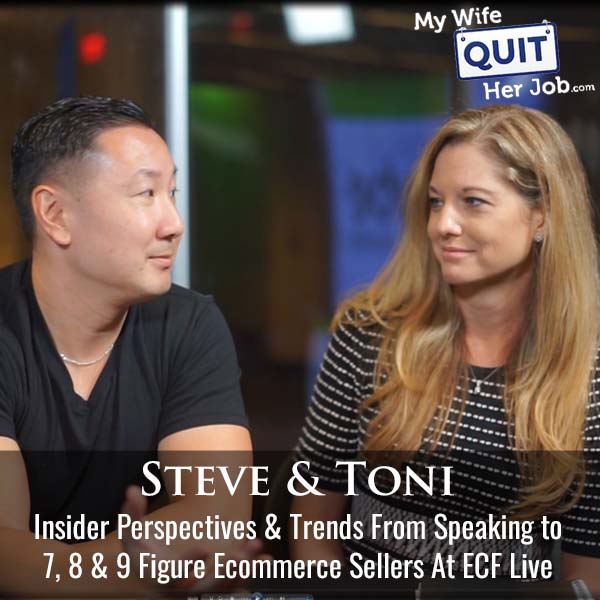
This is part one of my ECF Live 2024 recap with my co-host Toni Herrbach. Everything below is what real operators told us in person, not what LinkedIn is talking about.
Here is what actual seven and eight figure ecommerce sellers are complaining about, betting on, and switching to in 2024.
Get My Free Mini Course On How To Start A Successful Ecommerce Store
If you are interested in starting an ecommerce business, I put together a comprehensive package of resources that will help you launch your own online store from complete scratch. Be sure to grab it before you leave!
Table of Contents
Key takeaways
- Meta Ads sentiment is at a multi-year low across the room. The complaint is dependency, not deliverability. Sellers now realize their whole business dies if the iOS 14 style shock happens again.
- Klaviyo customers are frustrated with post-IPO pricing, slower support, and IP deliverability. SendLane pitched 30% to 50% cheaper for equivalent functionality at ECF.
- Influencers entertain, creators educate. Educational creators convert dramatically better for physical product brands than lifestyle influencers.
- Sellers with real moats (proprietary design, distribution, contractor relationships) are the ones still growing in a rough year.
- Roughly half of the sellers in the room run two or more separate ecommerce or content businesses. Single-brand focus is less common than the internet suggests.
- One reel, one comment, one product feature can change the trajectory of a physical product business. Real examples came up all week (collapsible dog crates, stylish compression socks, a viral nail-mixing reel).
Why is every ecommerce seller frustrated with Meta Ads right now?
The frustration is not that Meta Ads stopped working, it is that operators just realized how completely dependent they are on a single unstable channel. In our ocean-themed “house” of 25 sellers, almost every introduction turned into a complaint about Meta, and every complaint got collective nods from the rest of the room.
The trigger for a lot of the anger is older than 2024. Apple’s iOS 14 privacy changes broke attribution and conversion tracking for a lot of small-to-mid direct-to-consumer brands, and the recovery has been uneven. One high-fashion seller in the room described a business that was fantastic on Meta two years ago and has been fighting for stability ever since.
The deeper issue is structural. Sellers realized their business would not exist without Meta. That is the same story we saw with Amazon sellers five years ago, and the takeaway is the same: you need a second channel that can actually pay the bills, not just supplement them.
What sellers are moving budget to instead
The channels getting the extra attention at ECF this year are affiliate-driven creator relationships (especially on TikTok Shop) and owned organic social. Patrick’s wife runs a nail polish brand and a single Facebook reel of her mixing polish went viral over the holidays and drove a huge chunk of Q4 revenue. That is not a paid ad, and it did not depend on iOS attribution.
Why sellers are unhappy with Klaviyo after the IPO
Klaviyo customers at ECF are unhappy with the pricing, the slower support, and the deliverability. Klaviyo has sponsored ECF and my podcast for years, and this is the first year Andrew Youderian let a competing email platform (SendLane) sponsor ECF. That is a meaningful signal about how the room is feeling.
The pricing complaint is loudest for sellers spending $2,000 to $5,000 per month on the platform. The perception is that Klaviyo’s focus shifted toward enterprise after going public and the seven-figure customer no longer feels like a priority. Support that used to be human is now gated by an AI chatbot for the first ten minutes of any interaction, which is fine for tier-one questions and painful for anyone past that.
The deliverability issue nobody talks about
The deliverability story surfaced at my lunch table. I ran quarterly deliverability tests using GlockApps (which tests inbox placement across major providers) right after Gmail and Yahoo tightened DMARC, DKIM, and SPF enforcement. On two of three test runs, my Klaviyo account was sent from an IP that was on a spam blacklist. My students in the class ran the same test and got the same result.
An operator running very high email volume explained why. Klaviyo has internal tiers (bronze, silver, gold) that determine which IP pool sends your mail. Gold-tier senders get the clean pool and Klaviyo aggressively kicks anyone off it who trips a spam threshold (roughly 0.1% complaint rate). Bronze-tier senders sit on shared pools that include weaker sender reputations. There is no way to know which tier you are on, and you cannot buy your way in.
For context, the same test on Drip (which I use for my blog) came back clean on all three runs. If email is a serious channel for you and you send under 5-10 million per month (the threshold where a dedicated IP starts to make sense), the platform’s shared-pool reputation matters and it is worth testing.
SendLane’s pitch: 30% to 50% cheaper than Klaviyo
SendLane’s booth pitch at ECF was 30% to 50% cheaper than Klaviyo for equivalent ecommerce email functionality, plus white-glove migration for anyone switching off Klaviyo. Migration is the real friction with any email platform switch (rebuilding flows, re-tagging subscribers, warming a new sender reputation), which is why most frustrated Klaviyo customers stay put. If the migration is done for you, the math starts working.
Influencers entertain, creators educate: the framing that changed the room
The single biggest “aha” moment in my house was the distinction between influencers and creators. Most physical product sellers who tried influencer marketing and got nothing back were actually paying influencers, not creators. Those are two different audiences with two different purchase intents.
| Influencer | Creator | |
|---|---|---|
| Purpose | Entertains | Educates |
| Content | Lifestyle, outfits, brunch, travel photos | How-to, tutorials, deep-dive reviews, in-niche expertise |
| Audience | Follows for entertainment | Follows to learn a specific skill or make a specific purchase |
| Conversion for physical product brands | Low. Even Kim Kardashian placements have produced disappointing sales. | High. Audience is already in “solve my problem” mode. |
| Example | Lifestyle Instagram accounts | Jamerill (large family cooking, drives real cookware sales) |
The concrete test: if a creator you are evaluating mentioned a pot or a bowl in a video and their audience actually bought it, they are a creator worth paying. If they post their outfit and their brunch and their vacations, they are an influencer, and their audience will not convert on your physical product.
Why my YouTube channel converts for BigCommerce and Shopify
The example I used at the table was my own YouTube channel. It exists to educate people on starting an ecommerce business. When I make a video about BigCommerce or Shopify, the viewer is already actively evaluating platforms and my conversion rate as an affiliate is much higher than a general “tech lifestyle” channel would be. Same product, same commission rate, different audience intent, dramatically different results.
The right way to run creator outreach
Most sellers who say “influencer marketing failed for me” reached out to three or four people. That is not a campaign, that is a test with a sample size of zero. The realistic hit rate on cold outreach to educational creators is low, so you need to run it at volume (dozens to hundreds of reaches) and then invest in the one or two relationships that do land. For most brands, running that outreach through an established platform like ShareASale or Refersion is more efficient than one-off DMs.
The sellers who are still growing all have a moat
The ECF operators who are having a good 2024 all share one thing: a real defensible moat. One seller in my house sells electrical outlets that install inside a bathroom drawer so you can plug in a hair dryer and keep the counter clean. His moat is a proprietary design, a base of contractors who install his product in new builds, and a repeat-purchase relationship with those contractors on every job.
That is three moats stacked (product IP, distribution, and repeat customer channel), and it is why his business is growing while others are flat. Compare that to a seller running a commodity product on Meta Ads. When one channel wobbles, the commodity seller has nothing to fall back on.
The lesson we heard repeatedly: your moat can be a design patent, an exclusive distribution channel, a first-party audience (email list, YouTube, podcast), or an operating capability (customer service, unboxing, community). Something has to make you hard to replace.
How many businesses do 7 figure ecommerce sellers actually run?
Roughly half of the sellers in my breakfast and dinner conversations at ECF run two or more separate ecommerce or content businesses. That surprised me because the online narrative for focused operators is “one brand, one focus, one moat.”
Examples from the week: one seller runs compression socks plus a data business. Our friend Blake sells face paint and decorative flags and two other stores. Heidi and her husband run a main brand plus a separate odds-and-ends store. One seller who sells collapsible dog crates runs another business on the side.
The pattern is not what you would guess. These are not lifestyle-brand-plus-course stacks. Most are two or more real physical-product operations, run in parallel, often as a hedge against a single-channel or single-brand collapse. That is worth thinking about if the “focus on one thing” advice has kept you from a second product line that would materially de-risk the whole business.
The content gap: most ecommerce sellers still cannot make content about their own products
Most sellers at ECF do not make content around their products, and it is the biggest gap in the room. Everything on Amazon is outsourceable (listing, PPC, creative). Once you get a product idea, you can hire good agencies to run every operational piece. But brand and content are the opposite: there are very few good outsource shops, the good ones are expensive, and it is very hard to hand off “our story” to someone who does not live inside the business.
The content mistake almost everyone makes
The mistake is making the content about the product. Nobody wants to watch a video about how cotton balls are different from each other. What actually converts is content about the customer’s life around the product.
Anja, a Seller Summit attendee, sells fashionable first aid kits for moms. Her content strategy is spring break travel tips, playground packing lists, and seasonal parenting content, with the first aid kit woven in as part of the pack. Her audience finds her through “spring break travel ideas,” not through “how to put on a band-aid.” The kit is the product, but it is never the subject of the content.
The same rule holds for a Shopify keepsake store. You do not talk about the keepsake, you talk about the people who buy keepsakes. You share the day-to-day of the business, funny things that happen, the founder’s story. Over time the audience trusts you, and when they need a keepsake, your brand is the one they think of.
One comment, one product, one reel: how physical product businesses actually get born
Two founder-origin stories from the ECF women’s breakfast landed hard: the collapsible dog crate and the stylish compression socks. Both businesses started with a single offhand comment that reframed a problem, and both are now real physical product companies.
The collapsible dog crate founder was trying to collapse her existing crate, smashed her finger, and someone said “you should design one that actually collapses easily.” Five years later, that is her business. The compression socks founder was a driver who complained about long hours in the car, was told by a friend to wear compression socks, thought they were ugly, and decided to build stylish ones. Same pattern.
The takeaway: your next product idea is probably sitting in a conversation you had this week. Physical product businesses that scale usually solve one specific irritation with a real design change, not a general “here is another version of the thing everyone sells.”
ECF vs Amazon-focused events: two different rooms
The rooms at ECF and at Amazon-focused events feel almost opposite. Most ECF attendees run Shopify or BigCommerce stores and think they should be on Amazon. Most Amazon-focused event attendees run Amazon and think they should be on Shopify. Nobody is ever fully happy.
The honest read: Amazon is a search engine and it captures demand that is not on your website. If real customers are typing your product category into Amazon search, you should be there in some form (even if it starts as merchant fulfilled and grows into FBA). And direct-to-consumer stores need Amazon less than they think, but they still probably need it a little.
Frequently asked questions
Are ecommerce sellers really moving off Meta Ads in 2024?
Sellers at ECF are not moving off Meta Ads. They are reducing their dependency on Meta by building a second or third channel (organic social, TikTok Shop, creator partnerships, email) that can carry meaningful revenue if Meta wobbles. The pain is dependency, not the platform itself.
Is Klaviyo still worth it for a 7 figure ecommerce store?
Klaviyo is still the most feature-complete ecommerce email platform, and for stores generating meaningful email revenue it is usually still worth the cost. But post-IPO pricing pushed a lot of seven-figure operators to evaluate SendLane or return to Drip or Omnisend. If Klaviyo is costing more than 3% of email revenue, run a real bake-off before renewing.
What is the difference between an influencer and a creator?
Influencers entertain. Creators educate. Influencers post lifestyle content (outfits, travel, brunch) to an audience that follows for entertainment. Creators post tutorials, how-tos, and deep expertise to an audience actively looking to learn or buy in that niche. Creators convert dramatically better for most physical product brands.
How do I know if I am building a real moat?
You have a real moat if a well-funded competitor could not clone your business in six months. Real moats include a proprietary design (patent or hard-to-replicate manufacturing), an exclusive distribution channel (contractors, retail relationships), a first-party audience (email, YouTube, podcast), or a repeat-purchase relationship your competitors cannot buy. If your only moat is your Meta ad account, you do not have a moat.
Should a 7 figure seller run one brand or multiple brands?
Both work at ECF, but the honest read from the room is that operators running multiple brands are usually hedging against single-channel risk, not chasing more upside. If your primary business is stable and you have real bandwidth, a second product line can materially de-risk the whole operation. If you are still fighting to make the first brand work, focus.
How do I make content about a boring product?
You do not make content about the product. You make content about the customer’s life around the product. A first aid kit brand posts about travel and playgrounds. A keepsake store posts about the moments that produce keepsakes. A tarp brand posts about renovation projects. The product appears as part of the story, never as the subject.