
Podcast: Download (Duration: 45:06 — 51.9MB)
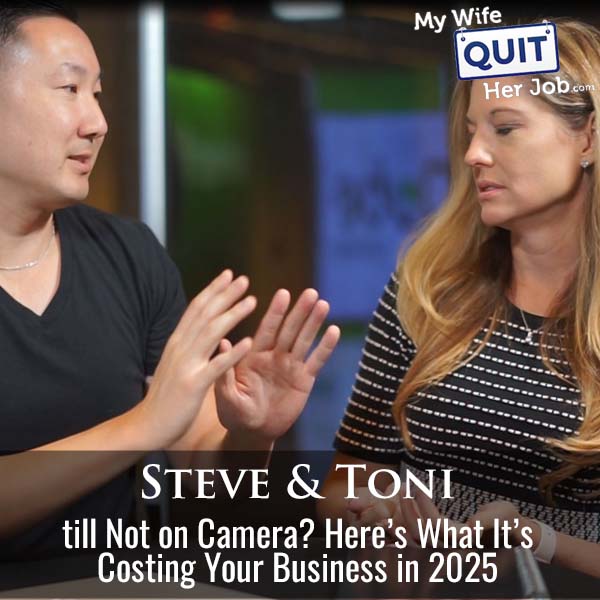
If you sell online and you are still not making video, you are handing your brand-affinity margin to competitors who are. Toni Herrbach and I recorded this episode on YouTube’s 20-year anniversary to walk through why an ecommerce YouTube channel is now a core growth channel in 2025, what a realistic timeline looks like, how to get on camera when you feel like the wrong face for the brand, and how to convert viewers into email subscribers and buyers.
The through-line: YouTube’s algorithm is now merit-based (watch time trumps subscribers), so a new channel can catch up faster than it could a decade ago, but you still need to commit to a multi-year timeline. My biggest regret in business is walking away from my YouTube channel in 2008 when almost anything posted got traction.
Below we cover the growth patterns we have watched in our own channels and our students’, on-camera angles for founders who feel awkward on video, editing shortcuts, and the specific email-capture and webinar tactics that turn views into revenue.
Get My Free Mini Course On How To Start A Successful Ecommerce Store
If you are interested in starting an ecommerce business, I put together a comprehensive package of resources that will help you launch your own online store from complete scratch. Be sure to grab it before you leave!
Table of Contents
Key takeaways on YouTube for ecommerce brands
- YouTube is now merit-based: watch time outweighs subscriber count, so a new brand channel can break through faster than it could a decade ago.
- Realistic timeline: expect 12-18 months of low-view consistency before a video pops; give any new channel a three-year runway before judging it.
- Repurpose your existing blog posts into YouTube scripts with AI (we use Claude), which is how Toni’s client got to 1,000-2,000 views per video within three months.
- You do not need Gen Z energy; middle-aged founders sell effectively on YouTube by picking an angle that fits their audience (storytelling, behind-the-scenes, spouse dynamics, on-camera product use).
- Long-form webinars on YouTube can pull average view time from ~4 minutes to 15-20 minutes and boost the whole channel because the algorithm favors live.
- Lead magnets tied to specific videos are the most reliable way to convert YouTube views into email subscribers who eventually buy.
- Call out real customers by name in videos: they share the video with everyone they know, and other customers buy specifically hoping to get called out next.
Why ecommerce brands need a YouTube channel in 2025
Ecommerce brands need a YouTube channel in 2025 because product listings and ads alone no longer create brand loyalty; buyers now decide based on who is behind the store. My wife regularly buys products she does not even love just because she wants to support the creator, which is now the norm rather than the exception.
The Chinese-knockoff problem makes this worse. If your only differentiation is packaging, images, and ads, a lookalike will undercut you.
Video builds the “know, like, and trust” signal that pricing and product photography no longer can, and it is currently the fastest way to build it. Anything digital (courses, memberships, coaching) is video-mandatory at this point; physical-product brands are catching up quickly.
How the YouTube algorithm changed (and why that helps a new brand)
The YouTube algorithm shifted from a subscriber-weighted model to a watch-time-weighted model, and TikTok pushed that shift faster. In the old model, if you had a big subscriber base, almost anything you posted would perform; today a great video can outperform a channel with 10x your subscribers.
That is good news for new channels. You do not need to accumulate a huge audience before you can compete; you need videos people actually finish.
The pattern we see is that YouTube runs a proving period. You will get modest views for a year to 18 months, then one video pops, and once that happens the algorithm gives your next uploads a lift because it now trusts the channel.
What that looks like in real numbers
On my own channel, I sat at 1,000 views per video or less for nearly a year, then one hit 20,000, then the next one after I crossed the 100,000-view mark hit a million. Kevin, one of our students, put out consistent content for 18 months on his tech channel, then a long-form video went viral a few weeks ago and doubled his subscriber count off that single video.
Toni’s client channel (only 3.5 months old at recording) is already doing 1,000-2,000 views per video, which is well ahead of where most first-year channels sit. The difference: they built the channel on top of an existing blog with a real content strategy from day one.
The realistic timeline for a new YouTube channel
The realistic timeline for a new YouTube channel is 12-18 months of consistent uploading before you should expect a video to pop, and three years before you should judge whether the channel is working. Anyone who tells you they went viral in 90 days is the outlier your algorithm feeds you because outliers get clicks.
99% of channels grow slowly, and the ones that quit in month six never find out what would have happened in month 12. My rule for anything I start: give it a three-year timeframe before I evaluate.
Tay from Financial Tortoise says the same thing publicly. His first 12-18 months were 100 to 500 views per video, then it broke.
How to repurpose your blog into YouTube scripts (with AI)
If you already have a blog, the fastest way to fill a new YouTube channel is to turn your top-performing blog posts into video scripts with AI. Toni’s client channel does exactly this: they feed her most popular blog posts into Claude, generate scripts, and film them.
Do not try to script from scratch. You already have the ideas that resonated with your audience in writing, so use AI to compress them into a spoken format.
When I started, I did the truly lazy version: I literally read my blog posts on camera. It got me on the consistent posting cadence, and I refined the intros and pacing over time.
How to get on camera when you feel like the wrong face for your brand
The founder-face problem (a middle-aged man selling women’s linens, hair accessories, or homeschool curriculum) is solvable with the right angle, not by hiring a face. Hiring a spokesperson is genuinely risky: Ezra Firestone’s brand ambassador passed away suddenly and he was scrambling for a replacement, and Tiffany Ivanovsky at Houseoffleming has repeatedly trained live-sellers who then quit to start their own competing stores.
Pick an angle that fits your audience instead. Below are the angles we have seen work for founders who did not think they belonged on camera.
Angle 1: Customer stories
For Bumblebee Linens, I reach out to customers who ordered commemorative handkerchiefs and linens and turn their stories (weddings, friendships, memorials) into content. Customers fill out a story form; AI fills in the gaps and produces a polished narrative I can voice over.
This works for any brand that sells for special occasions. The customer is the star; the founder is the narrator.
Angle 2: Behind-the-scenes and spouse dynamics
Real-life-running-a-business content is trending, and the audience-avatar match matters less than authenticity. Short-form “what is it like working with your spouse in this business” answers, off-the-cuff, edit-light, are perfect for founders who do not want to script.
Bumblebee’s plan: I will ask a question, my wife will answer, and we will publish the exchange with minimal editing.
Angle 3: Wear the product / use the product on camera
Paul Ivanovsky (Tiffany’s husband) sells women’s clothing on live video by literally putting on the dresses and cardigans and being funny about it. It works because it is entertaining first and product-adjacent second, so lonely late-night viewers stayed on the stream the way they would stay on a TV show.
Paul figured out something else that mattered: he calls viewers by name, compliments them, and treats the stream like a companion moment. Some of his customers have spent six figures on their non-luxury clothing because of that dynamic.
Angle 4: Call out real customers by name
Bring up a specific order on video with the customer’s permission and shout them out. “This one is an embroidered handkerchief for Rachel’s wedding, best of luck.”
Called-out customers share the video with everyone they know, which boosts virality. Other customers place orders specifically hoping to get called out in a future video, which is a self-sustaining flywheel.
Angle 5: Watch the process
If you have production equipment (embroidery machine, packing line, bottling line), people will watch it work. Toni went to the Yuengling bottling factory tour and could have watched the bottling line all day; you can capture your version at your workshop with a phone.
The equipment and editing hurdle (and how to skip it)
The single biggest excuse for not starting a YouTube channel is “I do not know what camera to buy or how to edit,” and the fix is to hire someone once, set up a permanent studio in your office, and never touch the gear again. Toni’s client hired Leslie Samuel for a two-day in-person YouTube bootcamp; he installed the studio, set the camera exactly where it needed to be, and taught her the AI-scripting workflow.
Her studio is now permanent. She walks in, hits record, and walks out.
For editing, there are three real options:
- Edit yourself until you are ready to pay someone to take it over (the honest path most creators walk).
- Hire an editor from day one if you can afford it.
- Do the Rob Berger method: barely edit at all. Rob has ~300k views per video without traditional editing, but this works best for talking-head channels rather than product brands.
For your own workflow: I have Brian set up my shoots. Can I do it myself? Yes.
Do I want to? No. Delegating the tech is often the difference between shipping and not shipping.
How to get emails and sales from your ecommerce YouTube channel
The most reliable way to convert YouTube viewers into email subscribers is a lead magnet tied to the specific topic of each video. Toni’s client made a video about phonics and teaching kids to read, then paired it with a downloadable sight-word game as the lead magnet, which puts the viewer directly on the email list.
For impulse-purchase products, link straight to the product from the video description (Beardbrand’s Eric Bandholz has done this for years). For considered purchases (curriculum, coaching, high-ticket physical goods), the lead-magnet route works better because buyers need multiple touchpoints before purchasing.
Segment your YouTube-sourced subscribers separately from your other list sources. A lot of YouTube traffic comes from recommended-video views by people who have never heard of your brand, so they need a different intro email sequence that establishes credibility (credentials, why-us, what-makes-this-different).
Use long-form webinars to boost watch time on YouTube
Running live webinars on your YouTube channel is one of the fastest ways to lift the whole channel’s watch time. When Toni’s client ran a one-hour homeschool-through-high-school webinar with about 100 live attendees, the average view time on that video was 15-20 minutes, versus a normal channel average of about 4.5 minutes, and it pulled the channel’s overall averages up.
YouTube favors live streams, so a webinar helps you twice: the algorithm boost during the live event, and the tail from the recorded version.
If you decide to unlist the recording afterwards (my usual play, so I can give the same presentation again next month), you get the algorithm benefit without the archive competing with your next live. Do not unlist too quickly if the video is still pulling views; the client’s homeschooling-high-school webinar is still driving traffic weeks later because the topic has broad, evergreen concern behind it.
Webinar topics that work for ecommerce
Any product that requires instruction is a webinar candidate. Meg at Sunburst Bottle sells hermit crab food; a webinar on “how to set up a hermit crab tank” would keep viewers engaged for the full hour and naturally reference her products.
Toni’s client already speaks at 10 homeschool conventions a year and delivers the same talks each time, so we mapped those talks into a webinar every two months with almost zero incremental prep. If you or a subject-matter expert on your team already has speaking material, that is your webinar backlog.
Frequently asked questions
Does my ecommerce brand really need a YouTube channel?
An ecommerce brand needs a YouTube channel in 2025 because loyalty and repeat purchases now depend on customers connecting to a person, not a product page or ad. Ads and packaging alone can no longer differentiate you from Chinese knockoffs, and video is currently the fastest way to build the know-like-trust factor that drives repeat buying.
How long does it take to grow a new YouTube channel?
Expect 12-18 months of consistent uploading before a video pops, and give the channel three years before judging whether it is working. Steve Chou’s channel sat at 1,000 views per video for nearly a year before its first breakout, and student Kevin uploaded for 18 months before a long-form video doubled his subscriber count in a single upload.
What if I do not want to be on camera as the founder?
You have several proven angles: tell customer stories, do behind-the-scenes with your spouse or team, use or wear the product on camera, call out real customers by name, or film your production process. Hiring a spokesperson is risky (ambassadors leave or pass away and the brand is stranded), so pick an on-camera angle that fits your audience instead.
Can I turn my existing blog posts into YouTube videos with AI?
Yes, and this is the fastest way to fill a new channel if you already have a blog: feed your top-performing posts into an AI tool like Claude, have it generate a spoken-style script, and film. Toni’s client channel is built almost entirely from repurposed blog content, and it hit 1,000-2,000 views per video within 3.5 months of launch.
How do I get emails from my YouTube viewers?
Attach a topical lead magnet to each video (a checklist, mini-guide, game, or worksheet directly related to the video’s subject) and offer it in the description and pinned comment. Segment YouTube-sourced subscribers so you can send them a credential-heavy intro sequence, since most YouTube viewers arrive via recommended videos with no prior brand awareness.
Should I do long-form or short-form video for ecommerce?
Long-form YouTube is still the strongest single lever because it builds watch time and durable search traffic, and short-form supplements it well. If you are starting from zero, prioritize weekly long-form videos and layer in shorts as a low-effort awareness channel.
Do YouTube live streams and webinars help ecommerce brands?
Live streams and webinars help ecommerce brands because YouTube’s algorithm favors live content and because the recorded version boosts your channel’s average view time (from ~4 minutes to 15-20 minutes on one client’s webinar). Pair them with instructional topics tied to your products (setup guides, buying guides, education) so the audience has a reason to stay for the full hour.