
Podcast: Download (Duration: 48:26 — 55.7MB)
The short answer to “how do I do SEO in the age of ChatGPT” is that the fundamentals still work, but the payoff has moved. Google still drives roughly 98% of search share in 2025 and most of the organic revenue for e-commerce, so classic optimization on category pages, backlinks, and topical authority still pays. What has changed is that informational blog traffic has collapsed under AI Overviews (down 34-36% per Ahrefs and TechCrunch), and a new prize has opened up: getting your products and brand cited inside ChatGPT, Perplexity, and Google AI mode.
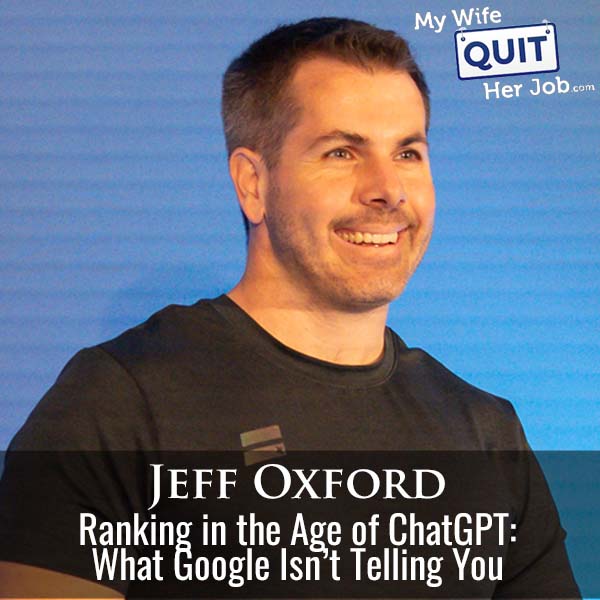
I got into this on the podcast with Jeff Oxford, who runs the e-commerce SEO agency 180 Marketing and spoke at my Sellers Summit conference this year. Jeff has been auditing what actually gets cited by LLMs across his e-commerce client base, and his answer is not what most SEO blogs are telling you. The rest of this post walks through what still works, what to stop doing, the specific content formats that get pulled into AI answers, and how to future-proof an e-commerce site for a search world that no longer runs on 10 blue links.
Below is the full breakdown from the episode, plus the tactical playbook for ranking a product page today.
Get My Free Mini Course On How To Start A Successful Ecommerce Store
If you are interested in starting an ecommerce business, I put together a comprehensive package of resources that will help you launch your own online store from complete scratch. Be sure to grab it before you leave!
Table of Contents
Key takeaways
- Google search is still the dominant traffic driver for e-commerce as of 2025. ChatGPT is taking maybe 1-2% of query share but growing fast.
- Informational SEO is effectively dead for standalone bloggers. 99% of keywords that trigger AI Overviews are informational, and click-through on those pages is down 34-36%.
- Transactional and commercial keywords (buy linen napkins, best protein powder for beginners) still convert. AI Overviews rarely appear on them.
- The two content types worth creating on an e-commerce site today are a buyer’s guide (best-of roundup) and a glossary. Both feed topical authority and get cited by LLMs.
- Backlinks still correlate strongly with Google rankings. For LLM citations, the signal shifts from links to brand mentions on sources ChatGPT already trusts.
- LLMs favor Wikipedia-style writing: matter-of-fact, definitional, one idea per section. Storytelling reads great for humans and gets skipped by extractors.
- Author entities matter more. Links from a real named person with a Google knowledge panel carry more weight than links from faceless blogs.
What is the current state of SEO in 2025?
The current state of SEO is that Google is still the 800-pound gorilla for e-commerce traffic, but AI Overviews and ChatGPT have gutted the informational side of the funnel. Jeff has looked at analytics across dozens of e-commerce accounts and organic search is still the number one driver by a large margin. Referrals from AI assistants are growing, but from a tiny base.
The split matters. Google itself is fine for transactional queries. The category that got killed is standalone content publishing, where a blog would rank for “how to X” and monetize with AdSense or affiliate links.
Directionally, ChatGPT usage keeps rising, referral traffic from LLMs is trending up, and Google is publicly testing AI mode. The question is not whether search changes, it is how much and how fast.
How much traffic have AI Overviews killed for publishers?
AI Overviews have cut click-through to publisher pages by 34-36% on affected queries. Ahrefs measured a 34% drop when an AI Overview appears on a results page, and a TechCrunch report cited a 36% overall traffic decline for publishers driven by Google AI features. Those two numbers are the same story from two directions.
The damage is concentrated. In an Ahrefs study of roughly one million keywords, 99% of the queries that trigger AI Overviews were informational (how does X work, what is X). Transactional queries like “buy linen napkins” almost never trigger an AI Overview.
Practical read for an e-commerce site: your product and category pages are largely safe. Your top-of-funnel blog posts probably are not.
Should e-commerce stores still blog?
Most e-commerce stores should stop blogging for traffic and instead publish two things: a buyer’s guide and a glossary. Jeff estimates that on 80% of the e-commerce sites he audits, blogging is not a positive-ROI exercise anymore.
The exception is content that sits in the research phase of the funnel. “Best protein powder for beginners” or “linen vs cotton napkins for a dinner party” still converts because the searcher is close to a purchase. Even those get AI Overviews sometimes, so you want the content to double as citation bait for LLMs.
Top-of-funnel definitional content (“what is protein powder”) is dead weight. If nobody clicks and nobody buys, ranking number one for it is worth zero.
What content formats get cited by ChatGPT and AI Overviews?
Three content formats consistently get pulled into ChatGPT answers and Google AI Overviews: specific “best of” roundups, glossaries, and Wikipedia-style definitional pages. All three share the same trait, which is that they are easy for a language model to extract cleanly.
Jeff’s case study on glossaries is the most striking one from the episode. His SEO director in Maine built a website for a kids’ dance studio with a deeply detailed glossary covering positions, styles, tempo, rhythm, and dance terminology. The site has a domain rating under 1 and zero backlinks.
Within seven days of launch, that glossary was cited in Google AI Overviews and pulled as a ChatGPT source for dance terms. Comprehensive, well-structured, matter-of-fact content beat pure domain authority.
For a product roundup, the same rule applies with a specificity twist. “Best protein powder” is a battle you lose. “Best protein powder for beginner male age 37” is the shape of a real ChatGPT prompt, and that is what gets pulled.
How should I write content so LLMs will cite it?
To get cited by LLMs, write in Wikipedia style: definitional, one fact per sentence, tightly structured, easy to chunk. LLMs are not evaluating writing quality the way a human editor does. They are looking for cleanly extractable claims that pair a subject with a specific attribute.
That means storytelling and anecdote-heavy writing, which reads well for humans and builds brand affinity, actually hurts extraction. If your product review starts with a 400-word origin story before it gets to the specs, an LLM will skip the story and often skip the review.
The trick is to layer both. Lead each section with the extractable answer in one clean sentence, then add the narrative context underneath for the reader. That way the machine gets its chunk and the human gets your voice.
Do backlinks still matter for Google in 2025?
Backlinks still matter a great deal for Google rankings in 2025. A recent Ahrefs study found that backlinks to a page remain one of the highest-correlated ranking factors, and Jeff sees the same pattern across every competitive e-commerce niche he audits.
The nuance is where the link points and where it lives. Relevance beats domain rating: a link from a real weightlifting blog to a protein-powder page outperforms a link from a high-DR generic site. And user-experience signals like time on site and bounce rate only kick in after you already rank on page one.
The order of operations is unchanged. Links get you into the competition. UX, price, and product win among the competitors.
Do backlinks matter for ChatGPT and AI Overviews?
Backlinks matter far less for ChatGPT and AI Overviews than they do for Google. LLMs weight the thoroughness and structure of content much more heavily than the link graph. The dance-studio glossary that ranked in AI Overviews within seven days had zero backlinks.
What replaces the backlink for AI is the brand mention. If your product name appears in a source that ChatGPT already trusts (Forbes, Bodybuilding.com, a well-known niche publication), the mention itself feeds the citation. The sentiment and context around the mention matter more than whether it is hyperlinked.
The practical move is to reverse-engineer the sources. Search your target query in ChatGPT, note which publications get cited, and pitch those specific publications to include your product.
Google SEO vs LLM citation: how the tactics differ
| Element | Google SEO | LLM citation (ChatGPT, Perplexity, AI Overviews) |
|---|---|---|
| Primary signal | Backlinks, on-page keyword optimization, technical health | Thoroughness, structure, brand mentions on trusted sources |
| Winning content type | Category pages, product pages, transactional keywords | Specific buyer’s guides, glossaries, definitional roundups |
| Ideal writing style | Reads for humans, well-optimized | Wikipedia-style, one clean fact per sentence |
| Link value | High. Backlinks are still a top-correlated ranking factor | Low. Brand mentions and content depth outweigh links |
| Author signal | Growing. Google trusts named authors with knowledge panels | Meaningful. Named entities help models recognize expertise |
| Measurability | Search Console, rank trackers, referral traffic | Manual prompt audits. Same prompt returns different answers each time |
| Where the money is (2025) | Still the vast majority of e-commerce organic revenue | 1-2% of search share and growing. Long-term bet |
Step-by-step: how to rank a product category page in 2025
The playbook below is the one Jeff walks new e-commerce clients through when they want to rank a competitive category term. Using “protein powder” as the example, here is the sequence.
Step 1: Pick the right page type by looking at what Google already ranks
Search the target keyword in Google and inspect the top 10 results. If Google is showing category pages, push a category page. If it is showing product pages, push a product page. Do not fight the intent.
For “protein powder,” Google mostly ranks category pages, so a category page is what to optimize.
Step 2: Put the keyword in the title tag, meta description, and H1
Lead the title tag with the keyword phrase because Google weights the first words most heavily. The meta description is not a direct ranking factor, treat it as ad copy: mention the keyword once (Google bolds it), include a unique selling point, and add a call to action to lift click-through.
The H1 on the page should contain the keyword in a natural, readable phrase.
Step 3: Add a few hundred words of user-first content to the category page
Write two to three paragraphs that answer the real questions a buyer would have before purchasing. Jeff’s prompt for this in ChatGPT is: “What are common questions someone might have before purchasing protein powder? Now create a category description that answers all these questions in an easy way a beginner would understand.”
Keep it above the fold as a two- or three-line preview with a “read more” link, then expand to the full text. That preserves the visual space for products.
Step 4: Include related keywords Google associates with the term
Search the target keyword in Google Image Search and note the pill filters at the top. For protein powder those are muscle, whey, chocolate, weight gain, nutrition, body, vanilla, gym. Weave the applicable ones into the category copy so Google sees full topical coverage.
Step 5: Interlink homepage, blog posts, and products to the category page
Add an internal link from the homepage to the category. Any blog posts (past or future) that are relevant should link in with descriptive anchor text. Product pages should link back up to the category through breadcrumbs.
Internal linking is one of the most under-used levers in e-commerce SEO. It is free and it works.
Step 6: Build backlinks from real, relevant, non-spam sites
Send free product to real bloggers in your niche for review. Guest-post on sites where the top pages and top keywords in Ahrefs match the site’s stated topic (a common test to catch fake-authority sites that inflate traffic with spam queries).
Jeff’s agency built an internal tool that pulls domain rating, year-over-year traffic (to catch Google penalties), takes a screenshot, feeds it to AI for a visual scam check, and compares top pages against the site’s declared focus. Most agencies skip this screening and buy garbage links.
Step 7: Add a buyer’s guide and a glossary elsewhere on the site
Once the category page is optimized, publish one or two specific buyer’s guides (“Best protein powders for beginners,” “Best whey protein for cutting”) and a glossary of industry terms. These build topical authority for Google and function as citation bait for LLMs.
This is the only content besides category and product pages Jeff recommends creating today.
Should I hire a PR firm for brand mentions instead of backlinks?
Hiring a PR firm can be worth it for e-commerce brands in high-search-volume niches where the sources cited by ChatGPT are large publications (Forbes, Bodybuilding.com, major consumer sites) that SEO agencies cannot access. Most SEO shops do not have the pitching relationships to land placements on top-tier publications, and PR firms do.
The economics only work when your keyword volume is real. If your top terms get a few thousand searches a month, PR pays back. If your terms get a few hundred, the math does not.
The upside is that a placement earned through PR feeds both games at once: Google still values the backlink, and ChatGPT reads the brand mention as a trust signal.
Google AI mode: how will it change SEO?
Google AI mode is currently a rollout test that turns the Google homepage into a ChatGPT-style conversational interface. It is not yet the default and Google has not committed to whether it will be. The next 12 months are the tell.
The catch nobody talks about is cost. Serving an AI-generated result reportedly takes about 10 times the processing cost of serving a traditional 10-blue-link result. Google’s ad revenue model, which contributes over half of the company’s income, has no proven monetization path in AI mode yet.
Google is not going to eat that gap forever. Expect shopping ads and sponsored placements to appear inside AI mode long before it becomes the default.
The role of video content and YouTube in SEO and AI
Video’s direct effect on traditional SEO is minimal. Embedding a video on a page can lift time on site and drop bounce rate, which are secondary ranking signals, and that is about the extent of the SEO benefit.
The bigger role for video is as training and retrieval fodder for AI. Google trains Gemini heavily on the YouTube corpus, and ChatGPT pulls transcripts and captions when they are indexed. A YouTube video with a clean transcript can end up cited in an LLM answer.
If you already produce video, transcribe it, publish the transcript on your site, and let it double as extractable content.
How to future-proof an e-commerce site for AI-driven search
Future-proofing an e-commerce site for AI-driven search comes down to four moves. Invest in UI/UX because Google is weighing engagement signals more heavily every year. Build brand: press mentions, named authors, a real About page, and a Google knowledge panel for the founder if possible.
Publish the two content types LLMs cite (buyer’s guides and a glossary) instead of general blog posts. Pursue mentions on the specific publications that get quoted in ChatGPT for your target queries, not generic outreach.
The through-line is that the work looks like SEO but the payoff is bigger. Every one of these moves also feeds LLM citations, which is where the traffic is heading.
Frequently asked questions
Is SEO dead in the age of ChatGPT?
SEO is alive for e-commerce and largely dead for standalone informational bloggers. Google still drives the vast majority of e-commerce organic traffic, and transactional keywords (buy X, best X for Y) rarely trigger AI Overviews. The parts of SEO that convert are still healthy.
How much do AI Overviews reduce click-through rate?
AI Overviews reduce click-through to organic results by about 34-36% on the affected queries. Ahrefs measured a 34% drop and TechCrunch reported a 36% overall traffic decline for publishers. Roughly 99% of the affected queries are informational, not transactional.
What content should an e-commerce store publish in 2025?
An e-commerce store should publish optimized category and product pages, one or two specific buyer’s guides (best X for Y), and a glossary of industry terms. General blog content is no longer worth the effort for most e-commerce sites, per Jeff Oxford’s audits of 80% of his client base.
Do backlinks still matter for ranking in Google?
Backlinks still matter and remain one of the highest-correlated ranking factors in Ahrefs’ 2025 studies. The nuance is relevance: a link from a niche-relevant site outweighs a link from a higher-authority generic site. UX signals like time on site only kick in after you rank on page one.
How do I get my products cited in ChatGPT?
Search your target query in ChatGPT, note which publications and roundups get cited, and pitch your product to those specific sources. Publishing your own specific buyer’s guide and a glossary on your site also increases the chance of direct citation. Wikipedia-style, definitional writing gets extracted more reliably than storytelling.
Is a glossary really worth building for SEO?
A glossary is worth building because it feeds topical authority for Google and gets cited by LLMs at a disproportionately high rate. Jeff’s example of a brand-new dance-studio site with a domain rating under 1 that appeared in AI Overviews within seven days of launching a glossary illustrates how strong the signal is. AI is very good at defining terms, so a glossary is a low-risk use of AI-assisted content creation.
How do I track whether my content is cited by ChatGPT?
Tracking LLM citations is genuinely hard because the same prompt returns different answers each time, and answers are personalized to the user’s chat history. Tools claiming to measure “LLM visibility” exist, but the honest method is a manual prompt audit: run 20-50 priority prompts across ChatGPT, Perplexity, Claude, and Google AI Overviews on a schedule and log what shows up.
Where can I get help from Jeff Oxford?
Jeff runs 180 Marketing, an SEO agency specializing in e-commerce, at 180marketing.com. He can also be reached directly at jeff@180marketing.com. He spoke at the 2025 Sellers Summit and works with e-commerce brands on both traditional SEO and LLM citation strategy.