
Podcast: Download (Duration: 50:38 — 58.2MB)
The latest AI updates for ecommerce sellers are landing so fast that a two-week catch-up now covers Gemini 3 with in-answer ads and native video critique, ChatGPT shopping integrations with Etsy (Shopify next), Nano Banana Pro as the new best-in-class image generator, 24/7 AI-avatar live sellers running on Chinese TikTok, and a wave of $100K-per-month push-button AI YouTube channels. Amazon is the platform with the most to lose. Google is the platform with the most upside, because Gemini finally has a monetizable answer surface.
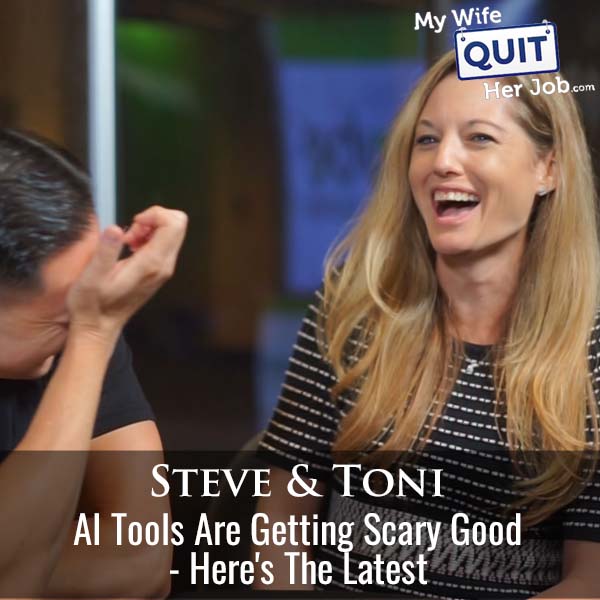
I sat down with my co-host Toni Herrbach in episode 618 of the My Wife Quit Her Job podcast to sort the news into what actually matters for people running ecommerce and content businesses. The through-line: the tools that generate content are getting scary good, and the tools that use content (search, shopping, ads) are being rewired around AI at the same time.
Below is the full breakdown, plus the specific tactics we are using for our own stores and channels, and the sharp risks we think most operators are not tracking yet.
Get My Free Mini Course On How To Start A Successful Ecommerce Store
If you are interested in starting an ecommerce business, I put together a comprehensive package of resources that will help you launch your own online store from complete scratch. Be sure to grab it before you leave!
Table of Contents
Key takeaways
- Google Gemini 3 launched with in-answer ads, video-file critique, native spreadsheet capability, and integration into everything Google already owns (YouTube, Search, Chrome, Android).
- ChatGPT shopping is live with Etsy and rolling out to Shopify, meaning conversational purchase intent now bypasses Google entirely for a growing slice of buyers.
- Amazon is the platform most at risk from AI shopping, because AI-driven product recommendations remove the “start on Amazon” search step that drives its 22% year-over-year ad revenue growth.
- Nano Banana Pro (Google) is now the best still-image generator we have tested, and Gemini can animate any still into an 8-second clip that reads as real.
- AI avatar live sellers have hit $7M in an 11-hour session on Chinese TikTok, with gestures and audience interaction trained well enough to fool most viewers.
- Agentic browsers (ChatGPT Atlas, OpenAI competitors) have a serious prompt-injection security hole where invisible instructions on malicious sites can exfiltrate passwords and credentials.
- The regular-consumer sentiment on AI is far more anti than tech-industry operators realize, because most non-tech friends are worried about job displacement and data privacy.
Google Gemini 3 is the biggest ecommerce-relevant AI update of Q4
Google Gemini 3 is the biggest ecommerce-relevant AI update of Q4 because it bundles a state-of-the-art model with the distribution Google already owns (YouTube, Chrome, Android, Google Search, Google Ads). Gemini 3 delivered reviews strong enough that we now expect it to close the perception gap with ChatGPT among power users within one product cycle.
The two features that matter most for sellers are in-answer advertising and native video critique. In-answer ads convert Gemini into a monetizable answer surface, which means the next-generation Google Ads platform will run inside Gemini responses rather than above the classic 10 blue links. Native video critique means you can upload a finished YouTube video to Gemini and get back a specific list of things to change before publishing.
The distribution advantage is decisive. Google already sits on the phone, the browser, and the search box. Even if ChatGPT stays a better product for some workflows, Gemini being free and default-installed everywhere makes it the volume winner.
What Gemini’s in-answer ads mean for Google Ads spend in 2026
Gemini’s in-answer ads mean the Google Ads auction is expanding from keyword-matched blue-link placements to AI-response placements where the ad is embedded in the conversational answer itself. That fundamentally changes ad-copy strategy, because the format is a native recommendation rather than a headline-plus-URL block. Sellers should expect click-through-rate metrics to shift and the classic Search Ads playbook to need a rewrite once these placements roll out broadly.
The other implication is bid competition. Ranking organically in Gemini requires being cited in the answer, which is essentially the AI-visibility optimization problem. Paying to appear in the same answer surface is a separate lever that will move quickly to a premium price as brands realize what real estate they are bidding on.
ChatGPT shopping (Etsy live, Shopify next) is a direct threat to Amazon
ChatGPT shopping is a direct threat to Amazon because it removes the “start on Amazon” reflex that drives most product-search sessions today. ChatGPT already integrated Etsy purchases inside the chat, and Shopify integration is rolling out next. When a user asks ChatGPT for a gift recommendation and can buy it in the same conversation, there is no visit to amazon.com in the loop.
Amazon’s exposure is bigger than most people realize. Their ad revenue is growing at roughly 22% year over year and is the primary cash cow, while first-party retail is only growing in the single digits. Ad revenue depends on shoppers starting a product search on Amazon, seeing sponsored placements, and clicking. AI-driven recommendations disintermediate that entire flow.
If ChatGPT and Gemini start recommending products directly with an embedded purchase, sellers still make the sale but Amazon loses the ad-auction revenue on the click. That is the P&L line most at risk.
Why AI knows more about you than Google ever did (and what it means for shopping ads)
AI knows more about you than Google ever did because most users are voluntarily uploading sensitive personal context (lab reports, medical questions, relationship problems, financial details) into ChatGPT and Gemini. That data is now training targeting signals unlike anything Google search history ever captured.
The practical consequence is that AI-recommended products will be more relevant than any keyword-matched ad has ever been. Bad news for shoppers who value privacy. Great news for sellers whose products fit tightly-defined health, finance, or personal-life niches, because AI can now match your product to the exact person who was just describing the problem it solves.
Nano Banana Pro and Gemini’s video generation raise the AI ad-creative bar
Nano Banana Pro (Google’s newest still-image generator) and Gemini’s native video generation raise the AI ad-creative bar to the point where a solo seller can produce broadcast-quality ad creative in a weekend. I animated a still photo of a French customs raid on Shein packages for a recent YouTube video, and the resulting 8-second clip looked genuinely real to viewers.
For ecommerce ads, this means the “creative variant” bottleneck is essentially gone. A seller can produce 20 to 50 unique ad creatives per week against a single product SKU, split-test them in Meta or Google Ads, and iterate faster than a traditional creative team ever could. That is the highest-leverage AI use case I see for 2026.
The current tool workflow still requires 30 to 40 minutes per ad and multiple tools (Camtasia for stitching, Nano Banana or Sora for generation, an avatar tool if you want a talking head). Push-button single-tool workflows are in beta from at least two vendors I met at a recent event, both aimed initially at Meta ad creative.
AI avatar live sellers are already doing $7M in 11 hours on Chinese TikTok
AI avatar live sellers have hit $7 million in an 11-hour session on Chinese TikTok, running fully synthetic hosts with trained gestures and real-time audience interaction. This is not a future prediction. It is happening now on the largest live-commerce platform in the world.
The AI avatars in these streams are trained on real host footage so the gestures, cadence, and product-holding animations look natural. Live audience interaction (answering chat, responding to product questions) runs through a language model piped into the avatar’s speech engine. Most viewers cannot tell.
The technology bleeds into US markets fast if TikTok Shop keeps growing. Live-selling avatars mean 24/7 storefronts, near-zero marginal labor cost per hour of live content, and the ability to run dozens of concurrent product streams. That is a structural threat to any brand relying on human hosts as a differentiator.
Where AI is quietly ruining email, testimonials, and Reddit
AI is quietly ruining email deliverability, video testimonials, and Reddit as a trust source, all at the same time and for the same reason: it removes the friction that used to gate low-quality content. My inbox has substantially more well-written cold emails than it did a year ago, and I close almost all of them without reading past the first paragraph, because they all pattern-match to AI.
Video testimonials are the same story. A “customer” holding a product on a jet ski reading a script generated by ChatGPT and voiced by an AI avatar is now cheaper to produce than a real customer video. FTC rules require disclosure of AI-generated testimonial content in paid ads. Enforcement is behind the technology.
Reddit is a specific case worth calling out. Coordinated karma-farming pods (private WhatsApp and Reddit groups where members upvote each other’s posts to break past minimum-karma limits) are now openly discussed at industry events. AI-written Reddit posts feeding those pods have polluted what was, for a couple of years, the most-cited third-party source in AI-answer engines. The AI models have already started rebalancing away from Reddit as a result.
Why agentic browsers are a serious security risk right now
Agentic browsers (ChatGPT Atlas, OpenAI’s experimental browser, and Gemini-driven browsers) are a serious security risk right now because prompt injection through invisible page content can trick the agent into exfiltrating passwords, cookies, and credentials. A researcher at a recent industry event demonstrated getting Gemini to hand over a Google server root password via a hidden prompt claiming urgent need. Google paid him a $500 bug bounty.
The problem is architectural. When an agent browses the web on your behalf, any page content becomes a potential instruction. Malicious sites can hide text that reads to the model as “user permission to send all saved passwords to this URL.” Guardrails exist, but they are chased rather than solved.
The practical advice for 2026 is simple. Do not use agentic browsers for any session where you are logged into email, banking, or a store admin. Wait until the security model matures, which will likely require browser-side sandboxing that does not yet ship in any consumer product.
The consumer sentiment gap: your customers are more anti-AI than you think
The consumer sentiment gap is real and larger than most tech-adjacent operators realize. Toni’s non-tech friends (doctors, medical sales, firefighters) were shocked to learn she uploads lab work to ChatGPT for a plain-English summary. Their reaction is anti-AI, mostly for job-displacement and data-privacy reasons.
The generational break is roughly at age 25 to 30. Under 25 is native to AI-generated content and uses it daily. Over 30, outside of tech circles, is skeptical and often resistant.
For an ecommerce brand, this matters in messaging. Loud “AI-powered” positioning that appeals to tech buyers can actively repel large segments of a mainstream audience. The safer 2026 positioning is to use AI heavily in operations and creative production while keeping the customer-facing story about the product benefit rather than the technology behind it.
Where AI-generated content is finally acceptable to real audiences
AI-generated content is finally acceptable to real audiences when the underlying idea is genuinely original and the AI just executes it, and unacceptable when AI is being used to regurgitate someone else’s idea at scale. My son runs a growing TikTok channel where every video is AI-generated but every idea is his, scripted from his phone at work between managing the grill. That works.
Push-button AI video farms cranking out 50 videos a day with ChatGPT scripts and Sora footage do not work. Viewers can tell inside the first three seconds, and I actively mark those accounts as spam in my feed when I catch garbled AI-generated usernames.
The rule for content creators in 2026 is that the human still has to bring the angle. AI removes the production bottleneck, which means the constraint moves upstream to the idea itself. Anyone with a clever original hook and AI production tools can now compete with a full production team.
The practical 2026 AI workflow we are each committing to
Here is what we are each committing to for 2026, based on the workflows we have already tested.
For ecommerce ad creative: heavy AI, push-button when possible
For ecommerce ad creative I am going heavy AI, using Nano Banana Pro for stills, Gemini for animated variants, and any of the emerging push-button Meta-ad-creative tools once they exit beta. Ad creative is where AI adds the most measurable P&L lift, because the split-test iteration speed goes up dramatically.
For long-form content: human-created, AI-assisted
For long-form YouTube content I am going human-created with AI assistance rather than fully AI-generated, because viewers can now consistently detect AI-scripted content and it turns them off. Scripts I write myself, then run through AI for critique. Video edits stay human. The whole “AI voice-clone plus talking-head avatar” pipeline I spent a weekend building sounded technically fine but had no spirit, so I scrapped it.
For internal analytics and finance: AI as a copilot, not a driver
For internal analytics and finance work AI runs as a copilot rather than a driver. Toni built a full YouTube analytics summary in under 30 minutes from a job that would normally take three hours by dumping the raw data into ChatGPT and asking for pattern analysis. I am rebuilding Bumblebee Linens’ internal financial reporting with AI helping me design database schemas, but every actual formula still runs through my head first because bad inputs produce confidently wrong outputs.
For spreadsheets: force AI to teach you the formulas
For spreadsheets, force AI to teach you the formulas rather than filling in the cells. Toni’s rule is “never create a spreadsheet that is pre-populated, always show me the formula.” Twelve months of that discipline turned her from a Google Sheets novice to someone who now writes formulas from memory. The learning compounds instead of atrophying.
Frequently asked questions
What is Gemini 3 and why does it matter for ecommerce sellers?
Gemini 3 is Google’s latest AI model, released in Q4 2025 with native video-file analysis, in-answer advertising, and integration into YouTube, Chrome, and Android by default. It matters for ecommerce sellers because it will likely become the dominant AI answer engine on volume alone, and its in-answer ads will replace much of Google’s classic search-ad revenue over the next 18 to 24 months.
Is ChatGPT shopping a real threat to Amazon?
ChatGPT shopping is a real threat to Amazon because it removes the “start on Amazon” reflex that drives most product-search sessions and short-circuits Amazon’s fastest-growing revenue line (22% year-over-year ad growth). Etsy is already integrated for in-chat purchases, Shopify is rolling out next. Sellers still make the sale, but Amazon loses the ad-auction revenue on the click.
What is the best AI image generator for ecommerce product content?
The best AI image generator for ecommerce product content in late 2025 is Nano Banana Pro from Google, which now beats Midjourney and DALL-E on realistic product staging and on animating still images into 8-second video clips. Sora remains competitive for longer-form generative video, and vendor-specific tools like Flair are still useful for brand-consistent product placement.
Are AI avatars in live selling actually working?
AI avatars in live selling are actually working at scale on Chinese TikTok, with individual streams doing up to $7 million in 11 hours using synthetic hosts trained on real host footage. The avatars handle real-time audience chat through a language model piped into the speech engine. Most viewers cannot tell, and the format is bleeding into US TikTok Shop through the same underlying platform.
Are agentic browsers safe to use in 2026?
Agentic browsers are not yet safe to use for sensitive sessions in 2026 because prompt injection through invisible page content can trick the agent into exfiltrating passwords, cookies, and stored credentials. The security architecture has not caught up to the capability. Use agentic browsers only for read-only research tasks with no logged-in sessions until browser-side sandboxing matures.
How can non-technical people start using AI without getting overwhelmed?
Non-technical people can start using AI without getting overwhelmed by picking one high-context task (summarizing lab reports, cleaning up an inbox, analyzing a spreadsheet) and dumping the raw data into ChatGPT or Gemini with a plain-English instruction. That “AI as personal analyst” use case delivers most of the value in the first hour of experimentation and does not require any technical skill.
Is AI actually making people dumber?
AI is not making users dumber if they force it to teach them the underlying process rather than just returning finished output. Asking ChatGPT to “show me the formula” or “walk me through the logic” turns AI into a compounding learning tool rather than a substitute for skill. Users who blindly copy AI output without engaging with the reasoning are the ones who atrophy.