Podcast: Download (Duration: 44:55 — 51.8MB)
Robin Hall built Town Hall, a sustainable kids outdoor apparel brand out of Steamboat Springs, Colorado, from a $50,000 three-founder investment to REI shelves and a How I Built This appearance, with zero dollars spent on paid ads. The playbook is not a Meta funnel. It is 84 event days a year, personally driving a car full of jackets to 74 specialty ski shops, kid consumer panels on picnic blankets, and a public benefit corporation charter that keeps mission front and center on the website.
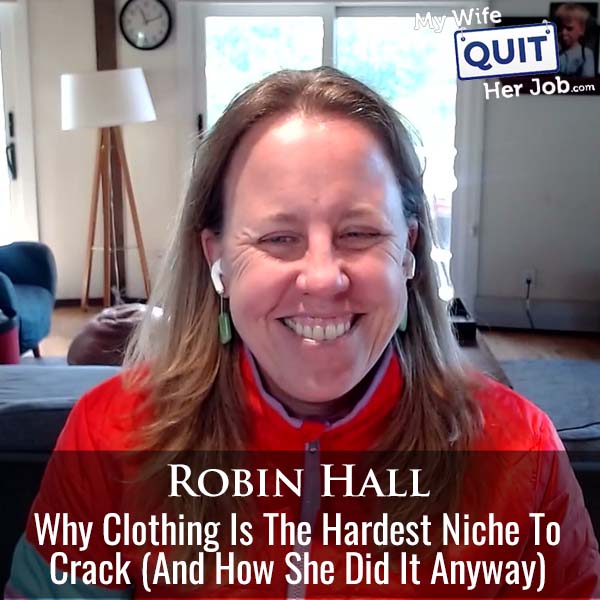
I sat down with Robin, my wife Jen’s college friend from UC Davis, in episode 619 of the My Wife Quit Her Job podcast. She founded Town Hall in 2020 with Jay Lambert and Joe Solomon after an 11-year career at SmartWool. Apparel is the niche I have always warned listeners away from, so I wanted the unedited story of exactly how she did it anyway.
Below is her full playbook: how the brand was funded, how the first product line was built, how she closed the first REI purchase order, and the specific reason she is now raising a friends-and-family SAFE to finally start spending on paid growth.
Get My Free Mini Course On How To Start A Successful Ecommerce Store
If you are interested in starting an ecommerce business, I put together a comprehensive package of resources that will help you launch your own online store from complete scratch. Be sure to grab it before you leave!
Table of Contents
Key takeaways
- Town Hall launched in 2020 with $50K split across three founders, plus a home equity line of credit, and is only now raising a friends-and-family SAFE round in 2025 to start funding paid marketing.
- The founding team had 25 combined years of outdoor apparel experience (SmartWool, Gap Inc, Vail Resorts), which is what let them place a 200-unit initial order below the factory’s normal minimum.
- The first product line was four SKUs designed around Steamboat kids: a technical ski jacket, matching ski pant, a 100% down puffy, and a warmer “around town” jacket for city kids.
- Robin closed the first wholesale account by walking into a Leadville, Colorado ski shop with jackets over her arm after five failed cold walk-ins with no product on her.
- Town Hall runs at roughly 40% wholesale, 60% DTC, has zero paid-ad spend, and grew 50% year-over-year through 84 event days annually and grassroots retail partnerships.
- Robin pitched REI for exactly three doors (Colorado only) instead of asking for the full national footprint, and that “start small” pitch is what got the buyer to say yes.
- Town Hall got on NPR’s How I Built This via a cold voicemail to the show’s public tip line, followed by an email from a producer eight months later.
How Town Hall was funded to launch (and how it is funded now)
Town Hall was funded to launch with $50,000 pooled across the three co-founders (Robin Hall, Jay Lambert, Joe Solomon) plus a home equity line of credit on Robin’s house to cover cash-flow gaps as the business scaled. That is it. No angel round, no institutional check, and no venture debt for the first five years.
The initial $50K covered logo and branding, legal setup, and a small down payment on the first production run. Everything after that was reinvested revenue and personal cash-flow bridging. Robin is candid that the home equity line was “brutal” and that they are still working their way out of it.
The current 2025 round is a small friends-and-family SAFE, closing within a few weeks of recording. Most investors are joining the advisory board rather than passively holding shares, which changes the incentive alignment sharply. The capital is earmarked for the paid marketing spend (SEO, AIO, Meta ads) that Town Hall has never done before.
How the first product line was designed and manufactured
The first Town Hall product line was four SKUs designed specifically for Steamboat Springs kids ages 5 to 14: a technical waterproof ski jacket, a matching ski pant, a 100% down puffy jacket, and a warmer “around town” jacket for kids in cities like Chicago who walk to school in cold weather. All four were manufactured in Asia by a reputable factory partner, at a first batch of 200 units per SKU.
The reason for going overseas was blunt. Co-founder Jay Lambert, the supply-chain expert of the trio, told Joe (the non-apparel founder) that $900 ski jackets are made in Asia for a reason: the factories have access to the best technical materials, the best production machines, and the skilled labor. Making waterproof, seam-sealed, kids-specific gear in Colorado at any reasonable price was not realistic.
Kid consumer panels drove the design specs
Kid consumer panels drove the design specs, which Robin calls “kidsumer insights.” The team gathers real kids ages 5 to 14 on picnic blankets in the park with trail mix and lemonade and asks them dozens of questions: what colors they want, where they want their pockets, what they keep in their pockets, how their mom shops, what they watch on social. The kids are treated as the actual consumer, not a proxy for their parents.
That is the answer to the “shrink it and pink it” problem in outdoor kids apparel. Most brands take an adult jacket, scale it down, and add unicorns. Town Hall designs for the kid’s real hand size, glove-compatible pocket depth, and durability zones (knees, elbows) where kids actually wear through fabric.
Tech packs, sampling, and 2 to 3 prototype rounds per SKU
Every SKU went through 2 to 3 prototype rounds with a professional apparel designer sourced through Robin’s Gap Inc network (specifically a contact from her 2003 Gap job who had later moved to North Face Kids). Formal tech packs, CAD drawings, and bills of materials were prepared before any sampling started. The founder team then blended kid-panel input with competitive teardowns of North Face and Patagonia gear to lock features.
Sampling is not free. Town Hall paid the factory’s sample-room premium for the below-minimum production run, which is standard when you are asking for smaller volumes than the factory normally accepts. That premium gets baked into the final unit cost, which is one reason technical kids jackets are not cheap.
How Robin closed the first wholesale account (and it took six tries)
Robin closed the first wholesale account by walking into a ski shop in Leadville, Colorado with jackets draped over her arm, after five straight failed cold walk-ins where she had brought only a flyer and no product. The first five stores’ staff barely looked up. The Leadville buyer said “people ask for kids stuff all the time” and asked to buy a size run of the red puffy on the spot.
The lesson is uncomfortable and correct. Wholesale buyers do not buy from a flyer or a website. They buy from a physical sample they can touch, hold, and hang on the rack while they think about it.
Robin loaded her car with the initial 800-unit production run and drove around Colorado hitting 74 stores in one winter. Five said yes. That is a 6.7% conversion rate on cold walk-ins, which is a strong number for outbound wholesale.
The “just give us a shot” wholesale trial offer
The offer that opened doors was “just give us a shot for 20 pieces, and if they do not sell by end of season I take them back.” Robin would invoice the store, they would pay, and any unsold units returned at season end got refunded in full. That is a full consignment-style risk transfer to Town Hall in exchange for shelf placement.
That kind of offer is only sustainable at low volumes with a founder-driven brand. Once the wholesale channel scaled it became normal wholesale terms. In year one, the goal was to get the product on shelves at any cost, because a jacket seen in a Jackson Hole ski shop does more brand-building than any Meta ad ever could.
How Town Hall gets into REI (and why she asked for 3 doors, not 300)
Town Hall got into REI through a warm intro from another entrepreneur in Robin’s network, then a cold pitch to the REI kids buyer that asked for exactly three Colorado doors, not a national rollout. That “start small” ask is what got the buyer to say yes. Her exact reaction: “That is what drew me to you. You get that we are not shooting for the moon here.”
The buyer approved the Denver flagship plus online for year one. Year two expanded to four doors. The internal roadmap targets 10, then 50, then 100 doors over the following three years, entirely on sell-through data rather than a pitched-in commitment.
The specific reason a small-first pitch worked is inventory risk on the retailer’s side. A national rollout of an unproven brand risks 200 cartons sitting dead at a New Jersey store while a small pilot risks maybe 20 units at one location. Buyers preferentially say yes to the small ask, because the downside is bounded.
Why Town Hall runs 84 event days a year with zero paid ads
Town Hall runs about 84 event days a year (farmers markets, Kids Adventure Games, Warren Miller tour stops, Outside Festival) because at their scale, in-person events beat paid ads on both cost per relationship and quality of relationship. Robin measures event ROI by a physical hand clicker. At the Outside Festival in Denver in June 2025 she talked to 370 people in one day.
The metric is not same-day revenue. It is conversations started, stickers distributed, newsletter signups collected, and web traffic in the days after. Handing out a sticker to someone who says “I do not need a jacket today” is a legitimate win when that person tells three friends in Steamboat about the brand next weekend.
Being physically parked next to Fjallraven and The North Face at a major outdoor festival is a positioning signal in itself. Retailers, buyers, and press notice which brands are showing up in person. That is a “brand halo” effect a Meta ad cannot buy at any price.
Retailer co-marketing at events is the multiplier
Retailer co-marketing at events is the multiplier that turns event days into wholesale sell-through. When Robin does an event in Jackson Hole, she directs foot traffic to Jackson Hole Sports, Mountain Sports, and Skinny Skis, which stock Town Hall. The retailers see the traffic uptick and buy more inventory next season.
That is the one-two punch: brand-awareness at the event, and hard revenue at the retail door. Doing either alone is much weaker than doing both together.
How Town Hall got on NPR’s How I Built This
Town Hall got on How I Built This through a cold voicemail Robin left on the show’s public tip line, followed eight months later by an email from a producer and a recorded episode three months after that. She did not tell her co-founders she was leaving the voicemail, and there was no PR agency involved.
The show has a “reach out if you have a story” call to action on its site. Almost nobody actually does it. Robin did. That is a low-effort, high-upside play any founder can copy for any podcast with a submission form.
The pitch worked because Town Hall had a real, specific story with three founding partners, a defined mission (kids, community, planet), a public benefit corporation charter, and a five-year track record of grassroots growth. The show has an established preference for founders with an operator narrative rather than pure fundraising theater.
Why Town Hall is a public benefit corporation and B Corp certified
Town Hall is a public benefit corporation and B Corp certified because Robin wanted the founding mission (giving back to Northwest Colorado and to the planet) legally binding on the company through any future ownership change, including an acquisition. A B Corp charter says the board must weigh mission alongside profit in every major decision.
The day-to-day operational difference between a B Corp and a C Corp is minimal. Same bylaws, same annual meetings, same shareholder structure. The difference kicks in at strategic inflection points: a potential sale, a major capital raise, or a founder exit, where the mission clause forces the board to reject deals that would abandon it.
For consumer brands whose primary buyer is values-motivated, the B Corp stamp is also a marketing asset. Town Hall puts it front and center on the site.
The core financial reality of a bootstrapped apparel brand
The core financial reality of a bootstrapped apparel brand is that wholesale cash flow is brutal, because you fund inventory 6 to 12 months before wholesale revenue lands. Town Hall might pay $50,000 to a factory in January for inventory that ships to REI in September, invoices in October on net-60 terms, and collects in December. That is 11 months of negative cash flow on one production cycle.
DTC helps because it collects at time of order, which is why Town Hall’s 60% DTC / 40% wholesale mix is structurally sustainable. A pure wholesale apparel brand at the same scale would need either factoring, a line of credit, or outside equity to survive.
The path Robin chose to bridge that cash gap was the home equity line, plus keeping the team lean (three founders, one part-time customer experience hire, one leased warehouse in Steamboat) for the first five years. Only now, with proof of product-market fit and a raise closing, is the brand hiring into growth.
Frequently asked questions
How much money do you need to start a kids apparel brand?
You need roughly $50,000 to $100,000 to start a kids apparel brand at a professional quality level, based on Town Hall’s real numbers: $50K across three founders covered branding, legal, and a first 200-unit-per-SKU production run for four SKUs. A single-founder version would likely need closer to $75K to $100K because you would need to outsource the supply-chain expertise Town Hall got for free from a co-founder.
Where do you manufacture technical kids apparel?
You manufacture technical kids apparel in Asia (typically Vietnam, China, or Bangladesh) because that is where the seam-sealing machines, waterproof-fabric mills, and skilled apparel labor are concentrated. US manufacturing is possible for basic cut-and-sew garments (t-shirts, hats) but not for waterproof insulated outerwear at any consumer-accessible price point.
Is a public benefit corporation better than a C Corp for a mission-driven brand?
A public benefit corporation is better than a plain C Corp for a mission-driven brand because it legally binds the board to consider the stated mission alongside shareholder profit, which protects the mission through acquisitions, capital raises, and founder exits. Day-to-day operations are essentially identical to a C Corp, so there is very little downside to filing as a PBC from day one.
How do you get your product into REI?
You get your product into REI by getting a warm introduction to the category buyer (through an existing REI vendor or an industry mutual contact) and pitching a small, low-risk pilot in three to five doors rather than a national rollout. REI buyers preferentially approve small pilots because the inventory risk is bounded and the sell-through data justifies expansion.
Should a new apparel brand run paid ads or focus on events and wholesale?
A new apparel brand should focus on events and wholesale first if the target audience concentrates geographically (mountain towns, surf communities, sports leagues), because in-person events and physical retail placement build brand credibility faster and cheaper than paid ads at low scale. Paid ads become worth funding once you have product-market fit, real reviews, and enough margin to sustain a customer-acquisition-cost cycle.
How did Town Hall get on the How I Built This podcast?
Town Hall got on the How I Built This podcast by leaving a cold voicemail on the show’s public tip line, which most founders never bother to use. A producer responded eight months later and the episode recorded three months after that. Any podcast with an open submission form is worth pitching if you have a real founder narrative with a specific hook.
What is the average unit margin on kids outdoor apparel?
The average unit margin on kids outdoor apparel is typically 55% to 70% at DTC retail and 40% to 50% at wholesale after retailer margin, for technical outerwear priced $80 to $250. Below-minimum production runs (like Town Hall’s initial 200 units per SKU) compress those margins because the factory charges a sample-room premium that gets baked into cost.