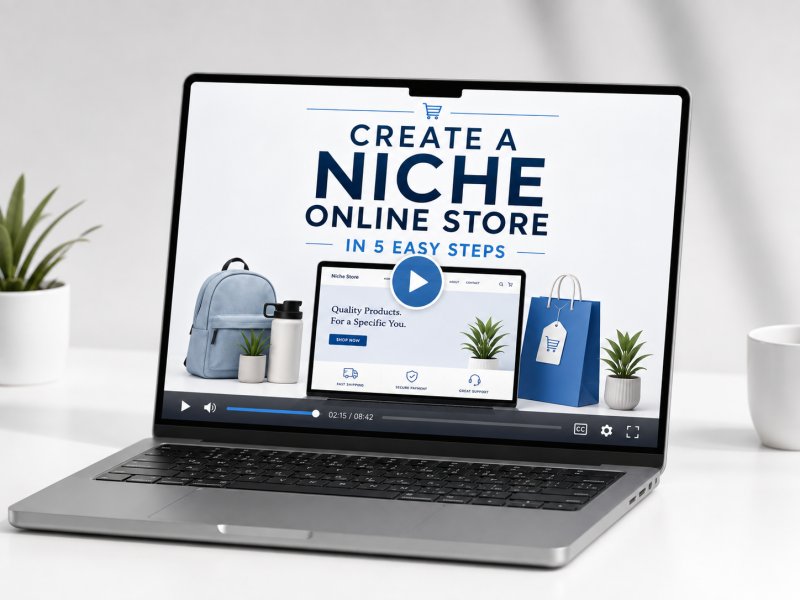

If I had to start an ecommerce business from scratch today, I would build a private-label brand I actually own, and I would do it in a specific order: find a product that solves a real problem, source it at a healthy margin, validate demand with a small batch before ordering in bulk, launch on Amazon for fast momentum, then move customers to my own website and let automated email and SMS do the selling.
My name is Steve Chou. I have run a 7-figure ecommerce store for 18 years, taught over 6,000 students, and host the Sellers Summit conference. Most stores die within six months because people follow broken advice. This is the exact roadmap that actually works, with no hacks and no shortcuts.
Get My Free Mini Course On How To Start A Successful Ecommerce Store
If you are interested in starting an ecommerce business, I put together a comprehensive package of resources that will help you launch your own online store from complete scratch. Be sure to grab it before you leave!
Table of Contents
Key takeaways
- Build something you own. Skip dropshipping, arbitrage, and wholesale. Private label is the only model worth starting today.
- Start with a problem, not a trend. The best product ideas come from pain you or someone else has felt.
- Target a 66% gross margin. If you sell at $30, aim for a manufacturing cost of $10 or less, and always order samples first.
- Validate before you buy in bulk. A small test batch sold in niche groups beats a garage full of unsold inventory.
- Amazon is a launchpad, not the destination. Use it for momentum, then build your own site and let email and SMS (about 30% of my revenue) convert on autopilot.
Why should you skip dropshipping, arbitrage, and wholesale?
If you are thinking about dropshipping, retail arbitrage, or selling wholesale on Amazon, stop. Those models are built on borrowed time. They might work for a few months or even a year, and they will not last. I tried dropshipping back in 2008. It worked until my supplier ran out of stock without telling us over the holidays and I had to refund dozens of angry customers. That is when I learned that if you do not control the product, you do not control the business.
Today, Amazon owns over half of ecommerce, any brand can launch in minutes, and nobody needs middlemen. When you sell someone else’s product, you are one of a hundred sellers on the same listing racing to the bottom on price, with no business of your own. The reason my store is still strong after 18 years is that I own the brand, the product, and the entire customer experience. That is why the only model I recommend is private label. You do not need to invent the next iPhone. You just need a product that solves a problem, ideally one you understand.
How do you find an ecommerce product that solves a problem?
To find an ecommerce product that sells, start with a real problem you or someone else has felt, not a trending product on TikTok or a copy of what is already on Amazon. We started selling handkerchiefs because we needed them for our wedding and could not find anything decent online. My student Amanda built a seven-figure party-supply business by solving her own planning headaches. My friend Rob sells a clip-on attachment for drone remotes because the cheap ones kept breaking. The best ideas come from pain, not product trends.
If you are not sure where to start, tools help:
- Jungle Scout shows what is selling on Amazon.
- Ahrefs reveals what people search for on Google but cannot find.
- Terapeak shows what is moving on eBay.
- ShopHunter shows how much any Shopify store is making.
Find what is missing and make it better.
How do you source a private-label product the right way?
To source a private-label product the right way, find a supplier through Alibaba, a trade show, or a sourcing agent who can make it at a 66% gross margin or better, with samples in your hands before any bulk order. So a product you sell for $30 should cost $10 or less to make. I have sourced from over 20 factories worldwide and attended the Canton Fair in China many times, and the three reliable paths are:
- Alibaba. Search your product, filter by region, and compare minimum order quantities, pricing, and how long each factory has been in business. It is no longer China-only.
- A trade show. Nothing beats meeting suppliers face to face, feeling the products, and building real relationships, which gives you an edge over sellers who just click “message supplier.”
- A sourcing agent. This is how I find suppliers today. A good agent finds factories, negotiates, and handles communication for around 5% of your cost of goods, which is well worth it when starting out.
Whatever route you take, always ask for samples and hold the product in your hands before ordering in bulk. Get everything in writing: pricing, minimum order quantities, turnaround, payment terms, and quality guarantees. For our linens, we specify under a 3% defect rate up front. Then stay in close contact, often on WhatsApp and WeChat, so nothing slips through the cracks.
How do you validate a product before ordering inventory in bulk?
Before you order in bulk, validate the product by selling a small sample batch on eBay, Etsy, Facebook Marketplace, or in niche Facebook and Discord groups to confirm people actually pay for it. Do not order 1,000 units yet. I knew a guy who ordered 1,000 fidget spinners because they were trending. They arrived late, the quality was bad, and they are still collecting dust in his garage.
Order a small batch of samples, just enough to test demand, then sell them on eBay, Etsy, or Facebook Marketplace, or in Facebook and Discord groups in your niche. That is how we validated our wedding handkerchiefs. I posted in bridal groups asking, “Anyone know where I can find a hanky with initials on it?” A week later I followed up: “I found a supplier but had to buy a bunch. If anyone wants one of my extras, let me know.” That led to our first sales and, even better, feedback on what people liked and what they would pay. I still remember the first PayPal notification for $24.99. The real goal of validation is to learn what works before you go all in, not to get rich.
How do you launch a private-label product on Amazon for momentum?
Once you have proven the product, the fastest way to get real customers is to launch on Amazon. I always preach owning your brand, but when you are starting out and need momentum, Amazon gives you instant traffic, instant trust, and low-friction first sales.
- Create a Seller Central account. You need a business name, a bank account, and your tax ID.
- List your product with a keyword-rich title, benefit-driven bullets, and clean, professional photos. The listing has to sell before anyone clicks.
- Turn on Amazon PPC ads so your product appears at the top of search even before anyone knows you, then let early sales build organic rankings.
Treat Amazon like a launchpad, not the final destination. Use the momentum and early reviews to establish credibility, then take the next step.
How do you build your own ecommerce website after Amazon?
Building your own site is where you stop relying on platforms you do not control and start owning the margins, the brand, the customer experience, and the data. You do not need to be a developer. If you want something that works out of the box, use Shopify. On a tighter budget with a little setup, WooCommerce gives you more control.
The platform is just the starting point. What matters is how the site communicates. The moment someone lands on your homepage, they should know what you sell, who it is for, and why it is better, without scrolling. Clarity always beats cleverness. The experience should feel effortless: clean navigation, fast load times, and mobile-friendly design. And buyers want reassurance, so social proof is required, not optional. Show real reviews, customer photos, a clear return policy, and answers to the questions they are already asking. Every piece of reassurance chips away at hesitation until they click “Add to Cart.”
How do you set up email and SMS flows to convert ecommerce traffic?
Email and SMS convert browsers into buyers on autopilot, because only about 2% of visitors buy on the first visit and four automated flows recover the other 98%. Most people launch, then immediately ask “how do I get traffic?” That is the wrong question, because traffic does not matter if you cannot convert it. Every store needs these four flows from day one:
- Abandoned cart: a reminder, maybe with a small discount, can recover up to 30% of lost sales.
- Pre-purchase: for people who joined but have not bought, share your story and build trust.
- Post-purchase: the sale is the start of the relationship. Say thank you, confirm shipping, then recommend something else. I once wrote a handwritten note for a bride who rush-ordered 10 hankies, and she replied with a photo saying it made her cry as much as the wedding.
- Win-back: if a customer has gone quiet, check in with a limited-time offer.
Give people a reason to join the list, like 10% off or free shipping. I use Klaviyo for email and Postscript for SMS, but the tools matter less than having the systems in place. Email alone accounts for about 30% of my revenue.
How do you drive traffic to an ecommerce store with content and paid ads?
With the backend built to convert, drive traffic two ways: content for long-term organic growth and paid ads for fast sales. The most powerful free channel right now is short-form video on TikTok, Instagram Reels, and YouTube Shorts. You do not need fancy gear or to be on camera. You need clarity: show the product, solve a problem, tell a story.
Here is what most people miss. Short-form video and written content are now indexed by Google, TikTok Search, ChatGPT, and Perplexity. So when someone searches “best gifts for new moms” or “eco-friendly wedding favors,” your content can show up even if they have never heard of you. Blogging still works, and the game changed: write short, structured posts like “Best personalized gifts under $30” that are easy to scan, easy to quote, and easy for AI to pull into an answer. When an AI platform features your content, those visitors are far more likely to buy.
Once content is working, layer on paid ads. Start with Facebook and Instagram, which are still excellent for visual or emotional products, and you can often run your best organic short-form videos as ads. If your product solves a clear need, add Google Search and Shopping ads to reach people at the moment they are ready to buy. The mindset shift most beginners miss: with paid ads, aim to break even up front rather than chase a big profit. Your email and SMS flows are already recovering carts and generating repeat purchases, so even breaking even on the first sale means you acquired a customer for free. Aim to win on day 30, not day one.
How do you grow an ecommerce store by focusing on your best customers?
Focus on your best customers, because in my store about 12% of buyers drive over 36% of revenue, and you grow that group by treating repeat buyers like VIPs with personal contact, a reusable discount code, and priority service. I am in the wedding industry, so most customers buy once, yet that small group of repeats sustains the business. They are wedding planners, event coordinators, and bulk buyers who order regularly and refer new clients. Take Robin, a planner who has ordered from us 252 times and sends photos from the events she decorates. That relationship does not happen on Amazon. When people feel valued, they come back and bring others with them.
This all started with one frustrated Google search: “where to buy a wedding handkerchief.” If I can turn that into a 7-figure business, you can do this too.
Frequently asked questions
What is the best ecommerce business model to start with?
Private label, where you put your own brand on a product you control. Dropshipping, retail arbitrage, and wholesale can work briefly, but they leave you competing on someone else’s listing with no business you actually own.
How do I find a product to sell online?
Start with a real problem you or someone else has, rather than a trend. Then use tools like Jungle Scout (Amazon demand), Ahrefs (Google searches with no good answer), Terapeak (eBay), and ShopHunter (Shopify revenue) to find what is missing and make it better.
What profit margin should I target for private label?
Aim for at least a 66% gross margin, which means your manufacturing cost should be roughly one-third of your selling price or less. If you sell at $30, target a cost of $10 or less, and always order samples before buying in bulk.
How do I validate a product before ordering inventory?
Order a small sample batch and sell it on eBay, Etsy, Facebook Marketplace, or in niche Facebook and Discord groups. The goal is to learn what buyers want and what they will pay before you spend thousands on inventory.
Should I start on Amazon or my own website?
Start on Amazon for instant traffic, trust, and early sales, then move to your own Shopify or WooCommerce site to own the margins, brand, customer experience, and data. Treat Amazon as a launchpad, not the final home.
How important is email for an ecommerce store?
Very. Only about 2% of visitors buy on the first visit, so automated email and SMS flows (abandoned cart, pre-purchase, post-purchase, win-back) recover the rest. Email alone accounts for about 30% of my revenue.