
Podcast: Download (Duration: 31:49 — 36.7MB)
Every physical products business hits the same wall: you have to spend a large amount of cash up front on inventory before you make any money back. When sales spike, that problem gets worse rather than better, because growth demands even more capital than you currently have.
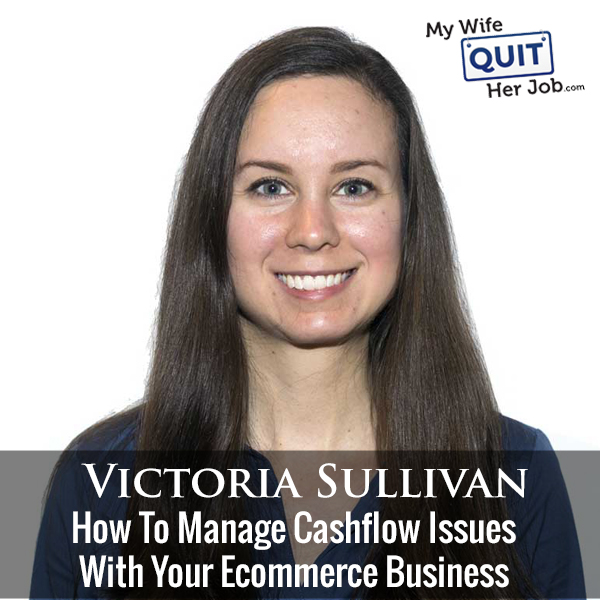
Victoria Sullivan is a marketing manager at Payability, a financing company built specifically for Amazon and ecommerce sellers. She joined me to compare the actual financing options available to sellers and the tradeoffs behind each one.
Below is how daily payout factoring works, what it costs against a bank loan, when speed beats cost, and which sellers each option genuinely suits.
Get My Free Mini Course On How To Start A Successful Ecommerce Store
If you are interested in starting an ecommerce business, I put together a comprehensive package of resources that will help you launch your own online store from complete scratch. Be sure to grab it before you leave!
Table of Contents
Key takeaways
- Payability charges a flat 2% of gross sales for daily payouts, with no interest rate because it is factoring rather than a loan.
- Qualification requires roughly 90 days of selling history and an average of about $2,000 a month in sales, with no credit check.
- Only 80% of each day’s payout is advanced, with the remaining 20% released after Amazon’s 14-day period, covering returns and chargebacks.
- A bank loan is almost always cheaper. Factoring buys speed and flexibility instead.
- Roughly 40% of Payability’s customers also carry Amazon loans, and the two can be used together.
- Banks struggle to lend against FBA inventory because it sits across many warehouses and cannot easily serve as collateral.
- Retail arbitrage benefits most from daily payouts, since inventory buying is a daily activity rather than a quarterly one.
- A Marketplace Pulse study found Payability customers grew rank 26.4% over six months while non-customers declined 22.1%.
Why ecommerce has a structural cash flow problem
Marketplaces like Amazon and Walmart have created effectively unlimited consumer demand, and capturing it requires inventory you must buy before you earn.
This is our own experience running Bumble Bee Linens. Every container order is an enormous cash outlay, often placed before we have sold through existing inventory, so profit gets piped straight back into more inventory.
A growing business needs progressively more money to sustain the same growth. That is the trap.
Stockouts compound it. Running out does not just cost you today’s sales, it costs tomorrow’s too, because you lose Amazon rank and have to climb back.
How daily payout factoring works
Payability’s Instant Access product pays you daily instead of every 14-plus days on Amazon. The mechanism is that you swap the bank account on your Amazon seller account for Payability’s account.
Payability advances you money daily based on what they see in your Amazon account, then Amazon pays them on the normal schedule. You never write a check.
The cost is a flat 2% fee on gross sales. Because it is a factoring product rather than a loan, there is no interest rate.
Victoria’s framing is that this is financing your business with your own money rather than someone else’s, which means substantially less risk. It also scales up and down with your sales.
What it takes to qualify
Qualification requires roughly 90 days of consistent selling history and an average of about $2,000 a month in sales. The $2,000 threshold exists because you need around $100 available to cash out each day.
The distinguishing feature is what they do not check. No credit pull, no tax documents, no bank statements. Approval rests on Amazon account health and sales performance, using data Amazon provides.
Approval can happen in under 24 hours.
How refunds and suspensions are handled
Payability advances only 80% of your daily payout, holding back 20% to cover returns and chargebacks. That 20% is released when they recoup funds from Amazon, typically at the end of the 14-day period.
An Amazon suspension suspends you from Payability too. They stop advancing funds and place a hold on the money owed from Amazon, so they can recover advances if the account is never reinstated.
They do not demand immediate repayment from the seller.
Fraud detection runs on roughly two years of machine learning trained on past defrauding behavior. The system flags accounts around the clock, and advances pause until they can reach the seller, since flagged behavior often has a legitimate explanation.
Factoring vs bank loans vs credit cards vs Amazon loans
| Option | Cost | Speed | Best for |
|---|---|---|---|
| Daily payout factoring | 2% of gross sales | Under 24 hours to approve | Smoothing bursty cash needs, avoiding stockouts |
| Bank loan | Cheapest available | Weeks, heavy paperwork | Planned large inventory buys when you have time and qualify |
| Credit cards | Varies | Immediate | Small gaps, with real risk if you max out |
| Amazon loans | Varies | Offered proactively | Funding inventory; roughly 40% of Payability customers use both |
Victoria is straightforward that Payability is not the cheapest way to fund a business. Amortized across a year, 2% of every sale is meaningfully more expensive than a loan.
What it buys is speed and flexibility. Her comparison point is a payment processor fee, similar in magnitude to the 2.9% Stripe charges on credit card transactions.
Her argument against simply maxing credit cards is that it creates real risk, and sellers with a genuinely hot product frequently sell beyond their credit limit anyway, so they need to cash out often enough to pay cards down and keep reordering.
Why banks struggle with FBA businesses
Banks want to hold inventory as collateral and do not understand FBA. Telling a loan officer your inventory is distributed across 18 different fulfillment centers tends to end the conversation.
Qualification is also difficult without a long track record. A six-figure seller two years in may simply not qualify, which matches my own experience.
Payability looks directly at the Amazon account instead, sees the sales and the growth potential, and funds against that.
When speed is the deciding factor
Victoria’s clearest example is a Walmart seller whose supplier ran a warehouse sale. He called Friday morning needing $15,000, was approved for an Instant Advance that day, received funds that afternoon, and bought the inventory Saturday.
A bank would have taken at least two weeks plus substantial paperwork, by which point someone else owns the inventory.
Instant Advance is Payability’s second product, functioning like a merchant cash advance built for ecommerce sellers.
Which sellers benefit most from daily payouts
Retail arbitrage is the strongest fit, because inventory buying happens daily rather than quarterly. Even at $100 a day, that buys a meaningful amount of inventory at Walmart.
Private label is the weaker fit, which is worth saying plainly. When orders are placed two to three months in advance, getting paid a week or two sooner rarely changes what you can buy.
Larger sellers use it differently. Sellers with hundreds or thousands of SKUs face many suppliers wanting payment at different times on different terms, and daily access removes the juggling between credit cards and borrowed money.
Victoria describes a customer in Atlanta selling a private label allergy test product for pets and people who finances the entire operation on daily payments alone, with no loans and no investors. Their pain point was holiday season spikes requiring shipping materials at short notice.
Customers range from roughly $2,000 a month to well over $1 million a month.
The growth data
Marketplace Pulse ran a six-month study comparing Payability customers to non-customers. Payability customers increased their marketplace rank by an average of 26.4%, while non-customers declined by an average of 22.1%.
The mechanism was avoiding stockouts. Beyond catalog growth, positive reviews and overall Amazon rank both improved, because sellers were not repeatedly playing catch-up after running out of stock.
This is a vendor-commissioned figure, so weigh it accordingly. The underlying logic that stockouts damage rank is well established regardless.
Which platforms and how flexible is it
Payability supports Amazon, Walmart, Shopify, Etsy, Tophatter, Newegg, and Jet, with more marketplaces planned.
Shopify works differently. Since Shopify already pays every day or every other day, only Instant Advance is offered there rather than daily payments.
Cancellation runs on a 30-day policy with no fees or penalties. You cannot toggle it off week to week, and many sellers use it seasonally, canceling December 1 to exit by January 1.
The 2% rate has some flexibility. Sellers doing $50,000 a month or more can often negotiate it down.
How to think about financing your ecommerce business
If you have time and you qualify, a bank loan is the cheaper choice. That is the honest summary.
Running a business is rarely that smooth. Demand spikes are unpredictable, suppliers want payment on their own schedules, and opportunity cost in ecommerce is significant when you miss sales you could have made.
The two are not mutually exclusive, and many sellers run both, using loans for large planned inventory buys and daily payouts to smooth everything in between.
The other benefit Victoria emphasizes is the absence of debt hanging over you. Customers describe going from hours a week figuring out how to cover expenses to a couple of minutes cashing out.
You can find more about Payability at payability.com.
Frequently asked questions
What is invoice factoring for ecommerce sellers?
Factoring advances you money you have already earned rather than lending you new money. Payability replaces your Amazon deposit account with theirs, pays you daily, and collects from Amazon on the normal 14-day schedule.
How much does Payability cost?
A flat 2% of gross sales for daily payouts, with no interest rate since it is factoring rather than a loan. Sellers doing $50,000 a month or more can often negotiate a lower rate.
What do you need to qualify for daily payouts?
Roughly 90 days of consistent selling history and an average of about $2,000 a month in sales. There is no credit check, no tax documents, and no bank statements, since approval is based on Amazon account health and sales performance.
Is factoring cheaper than a bank loan?
No. A bank loan is almost always cheaper when you qualify and have time to wait. Factoring buys speed, with approval possible in under 24 hours versus weeks of paperwork at a bank.
Why won’t banks lend against FBA inventory?
Banks typically want inventory as collateral and do not understand FBA, where stock is distributed across many fulfillment centers. Sellers without a multi-year track record also frequently fail to qualify.
Can you use Amazon loans and factoring together?
Yes. Roughly 40% of Payability’s customers also carry Amazon loans, using loans for large inventory purchases and daily payouts for ongoing operating expenses.
What happens if your Amazon account gets suspended?
Payability suspends further advances and places a hold on funds owed from Amazon so they can recover what they have advanced. They do not demand immediate repayment from the seller.
Which sellers benefit most from daily payouts?
Retail arbitrage sellers, who buy inventory daily, and larger sellers juggling many suppliers on different payment terms. Private label sellers ordering two to three months ahead benefit less, since a week’s earlier access rarely changes what they can buy.