
Podcast: Download (Duration: 44:25 — 51.1MB)
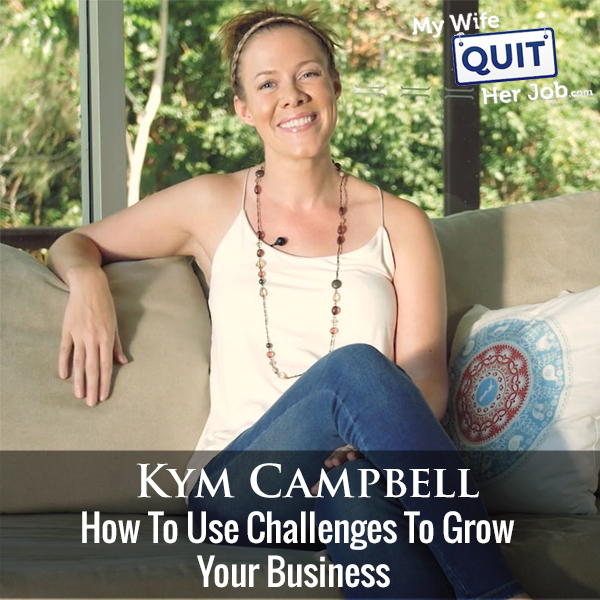
A free challenge funnel works by giving away something valuable enough to charge for, then selling a paid program to people already in motion. Kym Campbell runs a free 30-day diet challenge that drives 90% to 95% of all her email signups, and she converts those subscribers into a 10-week paid program that took her business past $400,000 in revenue.
Kym is a student in my Create A Profitable Online Store course, and her business sells no physical products at all. She runs Smartfertilitychoices.com and Beatpcos.com, helping women manage polycystic ovarian syndrome through diet and lifestyle changes.
Below is the whole system: how she ranks 6,000 to 11,000 word blog posts without building backlinks, the AdWords trick that accelerated her rankings, the pricing launch that failed with four sales, and the discount structure that fixed it.
Get My Free Mini Course On How To Start A Successful Ecommerce Store
If you are interested in starting an ecommerce business, I put together a comprehensive package of resources that will help you launch your own online store from complete scratch. Be sure to grab it before you leave!
Table of Contents
Key takeaways
- Kym’s free 30-day challenge generates 90% to 95% of her email list signups and runs once per quarter.
- Her blog posts run 6,000 to 11,000 words with 25 to 50 scientific citations, and every 2018 post ranked between positions one and four in Google.
- She has built zero backlinks deliberately, and backlinks now accumulate naturally from ranking.
- She ran Google AdWords to her blog posts purely to feed Google engagement data and accelerate organic ranking, at 30 cents to $3 per click.
- Her first commercial launch at full price produced four sales. Surveying non-buyers revealed price sensitivity.
- The fix was early bird discounts: 50% off the first 100 spots, 35% off the next 100, then full price.
- Her Facebook group has over 30,000 members and produces about 15% of program purchases.
- Alumni can repeat the program for $29, which seeds the community with experienced members who answer other women’s questions.
How Kym Campbell started Smart Fertility Choices
Kym started the blog in mid-2015 while struggling with infertility and a PCOS diagnosis. She had been a working musician, signed to a small label with a deal in Japan, handling her own publicity, marketing, and tour booking during the day and playing gigs at night.
The money was thin because the internet had broken the music industry, and the lifestyle stopped fitting once she met her husband in her late 20s. Her own mother was a single working mom and Kym grew up in daycare, so she wanted something different for her kids.
Researching alternatives led her to Pat Flynn’s podcast and The 4-Hour Workweek, and lifestyle design resonated immediately. Writing about the infertility she was living through was the natural starting point.
What PCOS is and why the niche was underserved
Polycystic ovarian syndrome is a hormone disorder affecting roughly 15% to 20% of women, causing irregular periods, acne, weight gain, and frequently infertility. It is the condition Kym was diagnosed with in her late 20s.
The number one treatment is diet and lifestyle change, and most women who see a doctor get prescribed the pill or Metformin instead. A 15-minute appointment cannot support someone through a total dietary overhaul.
That gap is the business. Women needed someone to hold their hand through massive lifestyle changes, and nobody was doing it.
How Kym found the topic her audience actually wanted
Kym’s second autoresponder email asked one question: what are you struggling with most? That single email revealed that diet changes were the dominant request.
She built a fertility checklist as a lead magnet to start collecting addresses, ran the standard autoresponder sequence, and let the replies define the product. The free 30-day diet challenge idea came from an episode of this podcast about Simple Green Smoothies.
How to rank long-form blog posts without building backlinks
Kym’s SEO strategy is to write one definitively better post per keyword and skip link building entirely. Every blog post she published in 2018 ranks between positions one and four for its target keyword, with no backlink outreach at all.
Her posts run 6,000 words minimum and up to 11,000, co-written with her husband, who holds a postgraduate degree in food science. Each one takes about a month.
She targets a single keyword set per post rather than splitting a long article into several. Her PCOS diet post runs about 9,000 words against a keyword with roughly 18,000 US searches a month.
The primary keyword goes in the URL, the title, the meta description, several section headings, and throughout the body. She then adds five or six close variants like “best diet for PCOS.”
Ranking for the main keyword pulls in rankings for dozens of terms she never targeted. That is the payoff for covering a topic exhaustively.
Why scientific citations help long-form content rank
Kym includes 25 to 50 scientific references in each major post, linking out to the sources. She picked up the citation idea from a podcast discussion about how to signal expertise to Google.
She and her husband do this naturally because the content is science-based. The theory is that outbound links to legitimate research signal to Google that the author knows the field.
Her keyword research runs mostly on Google Keyword Planner plus spreadsheets, watching which questions readers ask repeatedly in different phrasings. She used a free Ahrefs subscription to check competition and found her PCOS diet keyword sat around difficulty 20.
She has since ranked for a keyword at difficulty 40 with about 20,000 monthly searches. That one took considerably longer.
Using Google Ads to accelerate organic rankings
Kym ran Google AdWords campaigns to her blog posts specifically to feed Google engagement data and accelerate organic ranking. The idea came from her cousin, an Amazon developer who worked on Amazon’s search algorithm and had studied Google’s.
Her site was new with low domain authority and nothing was ranking. So she set up manual CPC campaigns bid at $20 to guarantee top placement, wrote highly clickable how-to and listicle titles, and sent traffic to the posts.
Actual costs came in at 30 cents to $3 per click because her quality scores ran eight to 10. Click-through rates landed between 12% and 30%, and bounce rates stayed low.
Her explanation for the unusual metrics is that these ads sell nothing. They promise a genuinely useful article and deliver it, so people click, stay, and browse further into the site.
How Kym’s free 30-day challenge funnel works
The free 30-day challenge drives 90% to 95% of Kym’s email signups, and it succeeds because she gives away something she could legitimately charge for. It runs once per quarter, timed so each challenge feeds directly into a paid program launch.
| Element | What challengers get |
|---|---|
| Meal plans | Weekly plans plus matching shopping lists, tailored to PCOS |
| Video lessons | Nutritional lessons through the first half of the challenge |
| Mindset videos | Growth mindset content, because dietary change is genuinely hard |
| Daily emails throughout | |
| Community | Daily posts in the Facebook group and on Instagram |
The meal plans took two months to build and are engineered so leftover ingredients from one dinner get used in the next meal. That level of detail is why the challenge sells itself.
The challenge content stays identical every quarter. Kym did not expect this, and many women complete the same challenge repeatedly before they are ready for the paid program.
Why the free challenge does not cannibalize the paid program
The challenge covers diet only, while the paid 10-week program adds stress management, exercise, intuitive eating, and a sugar rehab module. Kym’s view is that the challenge prepares people rather than substituting for the program.
Thirty days is also not enough time to change a lifestyle. The free challenge proves the approach works and demonstrates how much more there is to cover.
When to introduce the paid offer during a free challenge
Kym starts selling on day seven of the challenge, not at the end. Moving the pitch earlier worked substantially better.
The reason is motivation timing. Challengers are most excited about making changes at the beginning, so an early bird offer lands when enthusiasm peaks.
Emails start three days before the challenge begins and run daily. The paid program is promoted through those emails and through banners on the challenge video pages.
She does not sell on social media at all, because it did not work. The pitch stays in email and on the challenge pages.
The pricing launch that failed and the discount structure that fixed it
Kym’s first commercial launch at full price produced four sales after a presale of the same program had produced $25,000. The difference was price.
She presold the program twice before building it, converting at about 5% both times, which convinced her the demand was real. Her husband then took three months off, they hired a developer and staff, and built it over nine months.
The beta cohort loved it. Then she launched commercially at higher prices and got crickets.
She pulled the program, canceled the cohort, and surveyed everyone who had not bought. The overwhelming answer was that it cost too much.
Why discounting beat lowering the price
Kym kept the full price and layered early bird discounts on top rather than cutting the list price. Lowering the price permanently would have signaled a cheap product, and she believed the program was genuinely worth the higher number.
Her structure runs 50% off for the first 100 spots, then 35% off for the next 100 spots, then full price. Nearly all spots sell through the early bird tiers.
The discount preserves the perceived value of the program while meeting the price buyers will actually pay. She arrived at 50% after testing several levels.
How Kym structures her three pricing tiers
The program sells at three tiers: a Kickstarter at $147, a lifestyle membership at $247, and a premium at $347. Sales distribute fairly evenly, with premium taking the largest share.
Premium buyers get a customizable meal plan where they can swap recipes, add snacks and drinks, and auto-generate a shopping list. That feature is the main reason people upgrade.
The tiers also let women self-select scope. Some want to focus only on diet, which is what Kickstarter offers, and others want to add exercise and stress management too.
I ran three tiers on my own course years ago and eventually killed them, because students missing the top-tier material were noticeably less successful and that became a moral problem. I upgraded everyone to the highest tier instead.
Why the program stays live instead of evergreen
Kym runs the program live and does not plan to make it evergreen, because the live cohort is the most valuable part of it. Women going through the same changes at the same time is what makes it work.
Removing the live element would strip out most of the value. It also creates real scarcity around each launch.
The 10-week program length is what sets the quarterly cadence: four programs a year, each preceded by a challenge.
How a 30,000 member Facebook group generates sales
Kym’s Facebook group has over 30,000 members and produces roughly 15% of her program purchases and signups. It also drives significant traffic to her website.
The group exists because she needed somewhere to host the challenge socially, and it grew alongside the challenge itself. Early on she seeded it with blog posts through Meet Edgar, discussion topics, lead magnets like diet cheat sheets, and weekly giveaways.
Its biggest value is social proof. Members post success stories daily, which demonstrates that the method works and gives struggling women visible proof that change is possible.
The group does not reset between challenges. It carries forward, accumulating members and stories.
The $29 alumni repeat offer
Anyone who has completed the program can buy it again for $29 at their original tier. Kym created this after noticing women repeating the program on their own.
The economics work because all content is downloadable, so repeat buyers are really paying for the live cohort experience. Premium alumni also retain the customizable meal plan.
The strategic value is larger than the revenue. Alumni in the Facebook group answer questions, provide inspiration, and support new members, which reduces the load on Kym’s team.
She had been considering building a membership site and found the alumni repeat special solved the same problem more simply.
Where Kym’s traffic actually comes from
Google search now drives about 60% of Kym’s signups, up from a start that was almost entirely social media. Instagram was the original driver, then Pinterest overtook it, and blogging overtook both.
Instagram still accounts for roughly 15% of signups. Facebook pages and Twitter produced essentially nothing for her.
The shift happened after she bought my course at the end of 2017 and worked through the SEO section. Before that she was writing about her journey without a keyword strategy and seeing almost no traffic.
Every blog post mentions the challenge repeatedly and includes challenge success stories. That is the mechanism converting search traffic into email subscribers.
Why Kym has not launched physical products
Kym explored physical products to diversify beyond her program and eBooks, and concluded the work outweighed the return for now. She bought my course specifically to learn physical products and ended up applying the SEO and Facebook advertising material to her digital business instead.
The one product she is seriously considering is a printed accountability journal or workbook to accompany the 10-week program. It is simple to source and low risk.
The strategic reason is price laddering. Her program converts at 2% to 3%, which leaves a large number of challenge participants who cannot afford it or are not ready, and a low-priced physical product would serve them.
Should you move your blog to a new domain?
Kym runs two sites, Smartfertilitychoices.com for the blog and Beatpcos.com for the challenge and program, and has considered consolidating onto the newer name. My advice was to leave it alone.
Domain migrations are unpredictable. One colleague of mine lost 85% of his traffic, has been paying SEOs since, and is considering reverting.
Others see a 30% drop that recovers in a couple of months. Most people cannot stomach more than four months of significantly reduced traffic, and there is no way to know in advance which outcome you will get.
You can find Kym at Smartfertilitychoices.com and Beatpcos.com.
Frequently asked questions
How does a free challenge funnel work?
You run a time-boxed free program valuable enough that you could charge for it, collect email signups from people entering it, and sell a paid program to those participants while they are actively motivated. Kym Campbell’s 30-day challenge produces 90% to 95% of her email list.
When should you pitch your paid offer during a free challenge?
Kym pitches on day seven rather than at the end, because participants are most excited about making changes at the start. Moving the offer earlier converted noticeably better than waiting.
Do you need backlinks to rank a blog post?
Not always. Kym Campbell ranked every 2018 blog post in the top four positions with no link building, using 6,000 to 11,000 word posts backed by 25 to 50 scientific citations, and backlinks accumulated naturally afterward.
Can Google Ads help your organic rankings?
Kym ran AdWords to her blog posts to generate engagement signals on a new low-authority site, achieving 12% to 30% click-through rates and low bounce rates at 30 cents to $3 per click. She credits it with accelerating her organic rankings.
Should you lower your price if a launch fails?
Kym kept her list price and added early bird discounts instead: 50% off the first 100 spots, 35% off the next 100, then full price. That preserved the program’s perceived value while meeting what buyers would actually pay.
How much does Kym Campbell’s PCOS program cost?
Three tiers: $147 for Kickstarter, $247 for lifestyle membership, and $347 for premium, which includes a customizable meal plan and auto-generated shopping list. Alumni can repeat the program for $29 at their original tier.
Should you run an online course live or evergreen?
Kym runs hers live because the shared cohort experience is what participants value most and what creates scarcity around each launch. Evergreen would strip out the community element that makes the program work.
Is it risky to move your blog to a new domain?
Yes. Outcomes range from a 30% traffic drop that recovers in months to an 85% drop that persists for years, and there is no reliable way to predict which you will get.