
Podcast: Download (Duration: 56:25 — 64.9MB)
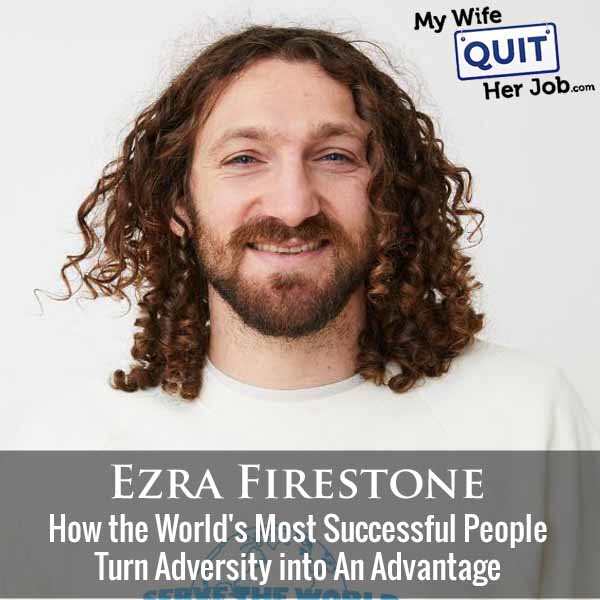
On this episode of the podcast I sat down with my good friend Ezra Firestone, founder of Boom by Cindy Joseph, Zipify, and Smart Marketer, to talk about how he turned the worst year of his business career into his best. Ezra’s on-camera brand ambassador and business partner, Cindy Joseph, went from a clean bill of health to gone in about seven days, and Cindy was the face of every product page, every email, and every top-of-funnel Facebook ad Boom ran.
The company was mid-way through selling to a buyer when Cindy passed, the deal collapsed, the team of 30 thought the business was going under, and Ezra had to rebuild the entire customer-facing brand while grieving. Twelve months later Boom is having its best year ever. This post lays out the specific operational moves that turned that adversity into advantage.
Below is the full playbook Ezra shared: how he restructured the brand off a single person, how he raised prices without losing customers, how he doubled product-launch conversion with a two-week anticipation funnel, and the wealth-creation lens he uses to decide what businesses are worth building in the first place.
Get My Free Mini Course On How To Start A Successful Ecommerce Store
If you are interested in starting an ecommerce business, I put together a comprehensive package of resources that will help you launch your own online store from complete scratch. Be sure to grab it before you leave!
Table of Contents
Key takeaways
- The single most important skill for running an internet business is what Ezra calls “eternal vigilance”: setting real work-life boundaries the same way you show up to a diet or a workout, because the job is available to you 24/7.
- Diversifying Boom’s brand ambassadors off a single spokesperson opened up new customer segments. Women in their 60s were experiencing reverse ageism and did not want a woman in her 40s or 50s selling to them.
- Boom raised front-end product prices by split-testing three price points ($10 raise was too aggressive; a medium raise won). Back-end skincare prices were raised a flat 10% with no test and no measurable drop-off.
- A single “prices are going up in a week” sale generated $500K in two days from Boom’s existing email list.
- Adding a two-week anticipation funnel before every product launch doubled launch conversion. Excitement, built through email and ads, beats “hey, here is a new product.”
- Boom sends three to four content emails a week (not sale emails) that generate ~$40K/week in revenue on their own. The company invests roughly $1M/year in non-branded content marketing.
- Cash-flow businesses (like a personality-driven education brand) do not build sellable equity. SaaS multiples on revenue are higher than e-commerce multiples on profit, which is why Zipify exists inside Ezra’s portfolio.
What happened to Boom by Cindy Joseph in the last year
Boom’s on-camera face and 50% owner, Cindy Joseph, was diagnosed with a cancer recurrence and passed away within seven days, roughly a year before this recording. Cindy had beaten cancer three years earlier and made a full recovery, so the second diagnosis and the speed of the decline caught everyone off guard.
Cindy was not deeply involved in day-to-day operations. She was, however, the face of every product page, every email newsletter, and every front-end Facebook ad Boom ran. That is the more disruptive kind of loss for a direct-response brand.
At the moment Cindy passed, Boom was in due diligence with a buyer who was about to acquire the company. The deal fell through when the acquisition target lost its co-founder, and Ezra shifted from “sell the company” to “keep the company alive through the next six months.”
Why Ezra rebuilt Boom without a single spokesperson
Ezra rebuilt Boom around a rotating cast of women rather than replacing Cindy with one new face, and it opened the funnel to customer segments Cindy could never reach. The community was used to hearing from Cindy directly. Every email came from her. Every ad led with her doing product demos.
The rewrite was operationally huge. Every email sequence had to be rewritten. Every Facebook ad had to be re-shot. Every product page had to be modified. From July through January was pure triage.
The unexpected upside was reverse ageism. Boom discovered that women in their 60s did not particularly want a woman in her 40s or 50s telling them about aging. Rotating spokespeople across different age brackets pulled in prospects that never resonated with Cindy in the first place.
The “eternal vigilance” rule for staying sane running a business
Ezra’s core mental-health rule is what he calls eternal vigilance: setting hard work-life boundaries and showing up to them the same way you show up to a diet or a workout program. An internet business is available to you at all times, so the mental game of “what can I do to improve this today?” will fill every waking moment if you let it.
His practical version: wake up, move his body, meditate, have breakfast with his family until 10 a.m. Start work at 10 a.m. Stop at 5 p.m. and then engage the social life, hobbies, and family.
The rule is not that you never work a late night. Launch weeks happen. The rule is that in normal operating mode you must be able to pick the business up and set it down deliberately, or you will burn out over the long run.
I told Ezra on the show that setting aggressive growth targets was actually damaging my marriage a few years ago. My wife and I were fighting because we kept missing them. We agreed to grow Bumblebee Linens whatever pace it wanted to grow at, and the marriage got better immediately.
Why obsessing over growth kills good companies
Ezra thinks the fascination with growth is misguided because growth brings a whole set of new problems: more inventory to fund, more overhead, more stress, more pressure on the entrepreneur who is ultimately responsible for the whole operation. His stated priorities are enjoyment first, great products second, and profitability third.
His frame is that if you are having a good time, making things that genuinely serve people, and generating profit at any level, you have already won the game. Size is not the win.
A lot of founders get big and then find themselves shackled to operations that make them miserable, take them away from their families, and eventually push them into a sale they did not really want. That is losing the game while looking like you are winning.
How Boom raised prices without losing customers
Boom raised prices by split-testing three price points on the two front-end products and by applying a flat 10% raise across the 14 back-end skincare products with no test at all. The front-end test compared a low raise, a medium raise, and a $10 raise. The $10 raise generated the most profit per order but cut customer acquisition volume too much, so Boom went with the medium raise.
The back-end price raise required no testing because those customers are not price-sensitive. They already know Boom, engage with the content, and buy because they like the brand.
Before pushing the new prices live, Ezra ran a “prices are going up in a week” sale to the existing list. Customers could lock in current pricing at a 10% discount before the raise hit. Boom did $500K in revenue in two days from that sale alone.
The rule of thumb Ezra uses: split-test front-end acquisition prices carefully, because they directly affect how many new customers you can afford to buy. Back-end cross-sell prices can usually take a 5-10% raise with no measurable drop-off.
How adding a two-week anticipation funnel doubled product-launch conversion
Boom doubled its product-launch conversion by adding a two-week anticipation funnel in front of every launch instead of just announcing new products the day they went live. During the two weeks, Boom runs ads and emails saying “this product is coming, here is what it does, here is why we made it.”
Then the launch itself has a built-in audience of prospects who already know the product is coming and want it. Apple and Amazon run this playbook for a reason. Excitement converts.
The lift shows up in the numbers. Same product, same audience, same offer. The only thing that changed was the two weeks of anticipation content before the drop.
How Boom uses content marketing to drive $40K/week without selling anything
Boom sends three to four content emails a week (not sale emails) that generate roughly $40,000 in weekly revenue just from readers clicking through to product pages. The content is not SEO-driven. Ezra explicitly does not keyword-research before publishing.
The topics are experiences the community is actually having: eight skincare tips for aging skin, overcoming perfectionism, my battle with anorexia, dating after divorce, hair graying, menopause, hormone changes. Every four to six weeks Boom mixes in a product launch or a sale, and the content-primed audience buys at a much higher rate than a cold list would.
Ezra invests about $1 million a year in non-branded content marketing. The company amplifies its best-performing posts with paid ads, turns top posts into front-end pre-sell articles for new prospects, and reuses winners in email automation sequences.
How to run cheaper Facebook ads in a more expensive market
Facebook advertising costs have risen roughly 15% year over year for as long as Ezra has been buying ads, and the two biggest levers for keeping costs down are creative diversity and campaign-objective diversity. Most advertisers only run one type of creative (usually video) and only one objective (usually conversion), which caps the total audience Facebook is willing to serve.
Creative diversity means mixing short-form sub-15-second video ads (Instagram stories, Facebook mid-roll) with longer-form videos, image ads, GIF ads, and carousels. Facebook only shows any given user a limited number of a specific creative type, so more creative types equal more impressions to the same targeted audience.
Objective diversity means putting 10% of budget into brand awareness, dynamic product ads, catalog sales, and Messenger ads instead of running conversion-only campaigns. Non-conversion objectives have much lower CPMs, so a small slice of budget reaches many more people than the same budget in conversion mode.
Short-form video specifically is where the cheap Facebook inventory sits right now. If you are not running sub-15-second placements, you are leaving low-cost impressions on the table.
How to run Facebook ads with a small team and one designer
You do not need a big creative team to run Facebook ads well. Ezra runs five core Boom videos that have been in rotation for two years, mixed and edited into different variations. Boom has one full-time video editor and one designer, and that is enough because good creative outlasts a lot of new creative.
If you are spending less than $400-$500 a day on ads, you do not need to refresh creative constantly. The rule to refresh weekly kicks in at much higher spend.
For very small operations, freelance the two roles. One freelance video editor plus one freelance designer, hired on an as-needed basis, can support most seven-figure e-commerce brands. You can also shoot video on an iPhone; the platform does not care.
Why Ezra runs a SaaS company alongside his e-commerce brand
Ezra runs Zipify (a Shopify app suite) alongside Boom because SaaS creates a sellable asset in a way that a personality-driven cash-flow business cannot. Smart Marketer, his education brand, is built around Ezra himself and could never be sold. Boom could be sold, and would be valued as a multiple of profit. Zipify could be sold, and would be valued as a multiple of revenue, which is a much higher multiple.
His mental model is what he calls permaculture. Everything he learns building Boom becomes content on Smart Marketer, which becomes courses that fund back into Boom, and every conversion tool he wants inside Boom gets built and shipped as a Zipify app that other Shopify merchants pay for on a subscription.
SaaS is the hardest business he has ever run, by a factor of 15. Front-end engineers, back-end engineers, QAs, project managers, constant Shopify platform changes. A physical-product business is comparatively simple: more tubs, more goop, more labels, ship them.
The payoff is on exit. Even a small SaaS app doing $100K a year can be worth $500K to $1M in liquid cash on sale, which is capital you can deploy into other appreciating assets. Cash-flow businesses do not compound into that kind of wealth.
How Ezra decides which projects to work on across three companies
Ezra allocates his time reactively rather than on a fixed schedule, because each of his three companies has a project manager (essentially a COO) responsible for ongoing operations. He might spend two weeks working only on Boom, then two weeks only on Smart Marketer, then a day where he touches all three.
Each business is out of the startup phase. Ongoing operations, direction, and team leadership run without him. That is what freed him to become the navigator instead of the driver.
On the Smart Marketer side, Ezra transitioned out of being the lead educator when he no longer had time to keep courses updated. Molly Pittman now teaches the flagship advertising course. Colleen Taylor and Brett Curry teach others. Ezra generates awareness by speaking on stages, which is what he does better than anyone else on his team.
The wealth-creation game most entrepreneurs are not playing
Ezra frames the entire game as resource generation, and cash-flow alone will not get you to serious wealth. What gets you there is building or buying assets, growing them, liquidating them, then deploying that capital into more assets. Real estate has been the traditional vehicle. Businesses are the other one.
The math looks like this. A small SaaS doing $100K a year in revenue could sell for $500K-$1M. A million liquid dollars can put $100-$200K down on the acquisition of another asset with financing. That opens doors that cash-flow income never opens, no matter how much you make.
Ezra plans his own timeline at roughly 20 more years of working at his current pace before slowing down in his early 50s. Knowing the horizon changes the math on what businesses are worth starting. A project you will spend two years building and can sell for $2M is a fundamentally different bet than the same effort into a cash-flow operation that pays you $200K a year forever but has no exit.
Frequently asked questions
Who is Ezra Firestone?
Ezra Firestone is the founder of Boom by Cindy Joseph (an eight-figure cosmetics brand for women over 50), Zipify (a suite of Shopify apps including OneClickUpsell and Zipify Pages), and Smart Marketer (an e-commerce education company). He has been building online businesses since 2005 and speaks widely on paid advertising and Shopify direct-response strategy.
What happened to Cindy Joseph of Boom by Cindy Joseph?
Cindy Joseph, the co-founder and on-camera brand ambassador of Boom, passed away in July 2018 after her cancer returned. She had beaten cancer three years earlier and made a full recovery, but the recurrence progressed within about seven days from diagnosis to her passing. Boom continues to operate and is now larger than it was during her lifetime.
How did Boom raise prices without losing customers?
Boom split-tested three front-end price points ($10 raise, medium raise, small raise) and ran the winning medium raise. Back-end skincare prices were raised a flat 10% with no test. Before pushing the new prices live, Boom ran a “prices going up in a week” sale that let customers lock in the old pricing with a 10% discount, generating $500K in two days.
How much does a two-week anticipation funnel improve product launches?
Boom doubled product-launch conversion by adding a two-week anticipation funnel of ads and emails before every launch, instead of just announcing the product the day it went live. Same product, same audience, same offer, twice the conversion.
Should e-commerce brands optimize content for SEO or for the community?
Boom’s content strategy is community-first, not search-first. Ezra writes about experiences his customers are having (menopause, dating after divorce, skincare for aging skin) with no keyword research. The company amplifies its best posts with paid ads and email, generating ~$40K/week in revenue on content emails alone. Search rankings happen as a byproduct.
Is starting a SaaS business worth it as an add-on to an e-commerce brand?
Ezra thinks yes, if you already have the community and the domain expertise, because SaaS generates a sellable asset with a higher revenue multiple than an e-commerce business’s profit multiple. Even a small SaaS doing $100K/year can sell for $500K-$1M. The downside: SaaS is the hardest business model he has ever operated, by a factor of about 15.
How much should I spend on Facebook ads before I need to refresh creative?
At under $400-$500 in daily ad spend, you can typically run the same creative for months. Boom runs five core videos that have been in rotation for two years. Refresh cadence scales with spend, not with the calendar.
Where can I find Ezra Firestone online?
Ezra is most active on Instagram at @ezrafirestone. He also runs the education brand at smartmarketer.com and the Shopify app suite at zipify.com (search Zipify in the Shopify App Store).