
Podcast: Download (Duration: 43:20 — 49.9MB)
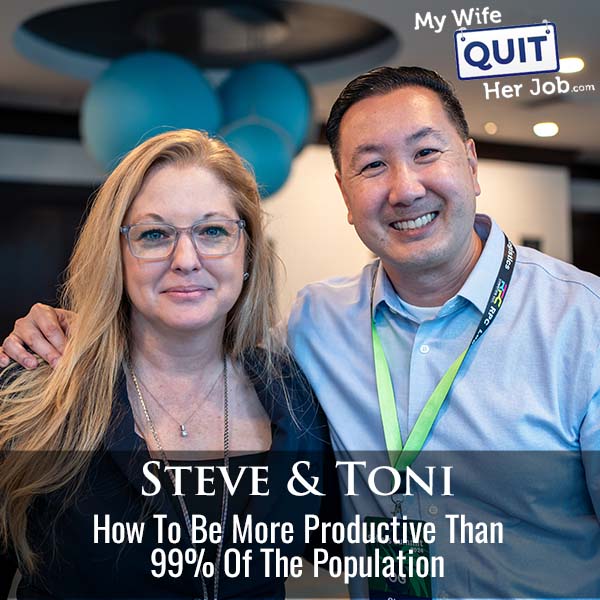
The productivity hacks that make the biggest difference are free, do not require software, and take zero setup. My co-host Toni Herrbach and I ran through the ones we actually use every day on the podcast, and the through-line is the same as what productivity researchers keep finding: a consistent daily routine, a small daily priority list, ruthless focus on high-impact work, physical movement, and knowing your own peak hours will out-perform any app you can download.
If you are staring at a to-do list that never shrinks, most of these are things you can implement before the end of today.
Below we cover the routine that runs the whole thing, why one daily priority beats a list of fifteen, the tiny-experiment habit that keeps big projects moving, how to protect your peak hours, and the batching and boundary-setting rules that let us actually finish our weeks.
Get My Free Mini Course On How To Start A Successful Ecommerce Store
If you are interested in starting an ecommerce business, I put together a comprehensive package of resources that will help you launch your own online store from complete scratch. Be sure to grab it before you leave!
Table of Contents
Key takeaways
- A daily routine is the highest-leverage productivity hack. Same time, same task, same order, five days a week. It removes decision fatigue and forces you to start.
- Procrastination is usually fear or self-doubt in disguise, not laziness. A routine forces the work to happen even on the days you do not feel like it.
- Set one priority for tomorrow before you go to bed. Not fifteen. One. Doing this the night before saves 20 to 40 minutes every morning.
- Focus on activities that actually move the needle. Bank accounts, LLCs, and business cards are procrastination dressed up as progress.
- Get off the computer on purpose. A 10-minute walk after lunch or hitting tennis balls for 30 minutes resets your brain better than more screen time.
- Minimize distractions with a lights-off, phone-away, single-tab work block. Most people lose 2+ hours a day to social media without noticing.
- Make everything one-switch to start. If it takes 5 to 10 minutes to set up your recording rig, you will not record. Pre-stage everything.
- Learn to say no by default. Every yes eats mental bandwidth even when the task itself is small.
- Batch similar tasks. Edit all your podcast episodes in one sitting. Film 10 videos in a row. Cut every context switch you can.
- Know your peak hours and defend them. Toni does deep work 7 to 10 a.m. Others peak from 6 p.m. to 2 a.m. Working at the wrong time doubles the effort.
Why a daily routine is the single best productivity hack
A daily routine is the highest-leverage productivity hack because it removes the “should I start now” decision every morning and replaces it with autopilot. Toni’s insight was that having to drive one of her kids to school again this year, after a year without that anchor, has made her dramatically more productive because it forces her out of bed and into a scripted first hour.
The mechanism is simple. Procrastination is almost never about being lazy. It is about an unrealized fear or self-doubt about the task itself. A routine sidesteps the internal debate because the routine does not care how you feel.
My own version is that I write YouTube scripts at my son’s volleyball practice three nights a week. I do not decide whether to write. I show up at practice, I open my laptop, and I write. That is it.
Why one daily priority beats a list of fifteen
Setting one priority for the next day is more productive than a list of fifteen because a list of fifteen guarantees you will feel like you failed no matter what you finish. Pick one, do it first, and everything after that is a bonus.
The best time to pick that one priority is the night before. I keep a running Google Doc of everything I need to do, and each night I move one item to the top for tomorrow. When I wake up, there is zero decision cost. I already know what I am doing.
Toni disagrees on one edge case. If you are in a slump, recovering from illness, or coming back from a life transition, knocking out a few easy list items can give you the psychological wins you need to build momentum. That is fair, but as a default operating mode a single priority beats a long list every time.
Focus on high-impact activities, not busywork
The highest-leverage productivity hack after “have a routine” is to spend your best hours on the one activity that actually moves the needle, even when the results take weeks to show. Everything else is negotiable.
The classic trap is that new entrepreneurs default to easy, familiar tasks the moment they feel stuck. They open a bank account. They form an LLC. They design business cards. They tweak a logo. None of those things sell a product or write a piece of content or ship a feature, but all of them feel productive because they were completed.
My rule is that if a project might take a week or a month to show results, that is fine. The app I wrote for my ecommerce store took a full week with zero visible progress during that week, and by the end it moved the entire business. Time on the highest-impact thing pays out even when it looks like nothing is happening.
Why getting off your computer makes you more productive
Stepping away from the screen for 10 to 30 minutes in the middle of the day usually produces more output for the rest of the day than working straight through does. That is Toni’s rule and it lines up with the research on cognitive fatigue.
For her it is a walk around the block after lunch or playing with the dogs. For me, it is hitting a tennis ball or a volleyball for 30 minutes, which for some reason recharges me even though I get physically tired. The common denominator is real physical movement and no phone.
The pattern most people fall into is opposite: they leave the desk, and immediately open a screen (phone, TV, TikTok), which does not reset anything. If you cannot get outside, YouTube has free 10-minute breathing and stretching videos that work just as well as a walk. The point is to break the screen loop, not fill it with different content.
How to eliminate distractions and get 2 hours a day back
Most knowledge workers lose two or more hours every day to social media and email context-switching, and eliminating those hours is often the single biggest productivity unlock available. When Toni used to coach moms building online businesses, she made every client install a time-tracking app on the first call. The numbers came back and universally shocked them.
The lever is not willpower. It is friction. Lock yourself in a room. Turn the overhead light off. Keep only the keyboard light on. Close every tab that is not the task. Put the phone in another room.
Darren Rowse, the founder of ProBlogger, wrote his first ebook 30 minutes a day before the rest of his house woke up, and the launch did around $30,000 on a $5.99 book. The whole book got written in around three months. The lesson is not “you need three months,” it is “you need 30 uninterrupted minutes.”
The Pomodoro technique: when it works and when it does not
The Pomodoro technique works because it gives your brain a defined finish line, which makes any overwhelming task feel finite. You work in 25 or 30 minute increments, then take a short break, then repeat.
Toni’s analogy for why it works is a 5K. If someone tells you to run until they say stop, you quit. If they tell you to run 3.2 miles, you complete it, because your brain can plan against a fixed endpoint.
For me, the technique breaks flow state. If I am mid-script or mid-code and a 25-minute timer goes off, I lose the thread. My alternative is time-blocking in bigger chunks. I work two hours in the morning before anyone in the house is up, on the one hard thing. Our friend Erin Chase from $5 Dinners used to block three-hour chunks. Pick the block size that matches your personality, then defend it.
Comparison: Pomodoro vs. long time-blocking
| Approach | Block length | Best for | Worst for |
|---|---|---|---|
| Pomodoro | 25 to 30 minutes | People who struggle to start, admin tasks, email, learners | Deep coding, long-form writing, editing that needs flow |
| Medium blocks | 60 to 90 minutes | Most creative work, meetings-heavy days | Multi-hour deep-work projects |
| Long time-blocks | 2 to 3 hours | Deep work, coding, writing, video editing, flow state | People who cannot sustain focus past 45 minutes without practice |
Start with whichever block matches your current focus stamina, then extend as you get stronger.
Make everything one-switch to start
If your recording rig, workout setup, or writing environment takes 5 to 10 minutes to boot, you will skip it on the days that matter most. Pre-stage every recurring task so starting is a single flip of a switch.
My video setup is exactly one switch. I walk into the room and I hit record. If it took me 10 minutes to set up lighting, mic, and camera every time, I would find a reason to not record. The friction adds up.
This also works in life. Toni has her kids sleep in the next day’s clothes when they struggle to wake up. She has her kitchen laid out so a knife and a cutting board are within arm’s reach of each other. Zero-friction starts turn “will I do it” into “how much will I get done.”
How to say no and protect your calendar
The default answer to new commitments should be no, and you only flip it to yes when the ask clearly serves the top one or two priorities of your business. Every yes eats mental bandwidth even when the task itself is small.
The temptation is loudest when the ask looks like a cool opportunity: speak at this event, join this podcast, be on this trip, sign up for this affiliate program. The question is always the same. Does it directly help my business, and is the payoff worth the calendar and mental cost?
Speaking at an event whose entire audience is your ideal customer is usually a yes. Speaking on a topic that has nothing to do with your brand is a no even if it flatters you. Signing up for a thousand affiliate programs you will never promote is a no because their emails will clog your inbox for years.
The smaller ones matter too. “Sure, I will promote this for you” and “yeah, I can jump on that call” and “I will take a look at your document” all cost real mental cycles. Say no by default.
Batching similar tasks: why it saves hours a week
Batching means doing many instances of the same task in one sitting, and it saves hours a week because it eliminates the mental cost of switching between different modes of work. If I am already editing a podcast, I edit three of them in a row. If I am filming YouTube videos, I film ten.
Toni does the same with her Amazon videos: ten at a time, once she is set up in filming mode. It works because setup is expensive. Once you are in a mode, staying in it is nearly free. Switching modes is where the time goes.
The rule extends beyond content. Batch cook meals. Batch grocery runs. Batch errands on one afternoon. The productivity gain shows up everywhere.
Know your peak hours and defend them
Everyone has 3 to 4 hours a day when their brain works dramatically better than it does the rest of the day, and defending that window from meetings and busywork is the highest-return time-management move you can make.
Toni peaks 7 to 10 a.m. and can effectively call it a day for deep work by lunch. Her old editor did her best work 6 p.m. to 2 a.m. My deep-thinking window is early morning before the house is up, and I am basically a vegetable after lunch for anything cognitively heavy. Workshops and webinars are fine after lunch, but coding, writing, or strategy is not.
The same principle applies to days of the week. I try to get most of my week done on Monday. Our friend Andrea treats Monday as part of her weekend and peaks mid-week. There is no universal answer. Learn yours, then schedule your hardest work into it and your admin into everything else.
Frequently asked questions
What is the single best productivity hack?
The single best productivity hack is a consistent daily routine that runs your first two to three hours on autopilot. It removes the “will I start” decision, which is where most procrastinators lose their morning, and it works even on days you do not feel motivated.
How many priorities should I set for the day?
Set one clear priority for the day, and do it before anything else. A list of fifteen guarantees you feel like you failed no matter how much you finish, and it tends to reward crossing off easy busywork instead of doing the one thing that actually moves the business.
Does the Pomodoro technique actually work?
The Pomodoro technique works well for people who struggle to start a task, because the 25-minute timer gives the brain a defined finish line. It works less well for deep-flow work like coding, long-form writing, or editing, because the alarm breaks concentration. Pick the block length that matches the work, not the fad.
How do I stop wasting time on social media?
Track the time first, because most people underestimate their social media use by half. Then work in a room with the phone out of reach, close every browser tab that is not the task, and reserve social media for one or two scheduled windows per day rather than an always-open background app.
What is time blocking?
Time blocking is the practice of assigning specific tasks to specific chunks of the day (say, 7 to 9 a.m. for writing, 9 to 10 for email, 10 to 12 for a project) and defending those blocks from interruption. It works because the calendar makes the decision for you and reduces context switching.
How do I know when my most productive time of day is?
Track your energy and output for two weeks. Note when you naturally get the most done, when you feel sharpest, and when tasks feel like a slog. The pattern usually reveals a 3 to 4 hour peak window per day, and once you find it, you schedule your hardest work into it and your low-value work into the rest.
Should I say yes or no to new opportunities?
Default to no, and only flip to yes when the opportunity clearly moves one of your top one or two current business priorities. Every yes costs mental bandwidth even when the task itself is small, and unrelated opportunities pile up until they crowd out the work that actually matters.