
Podcast: Download (Duration: 42:41 — 49.1MB)
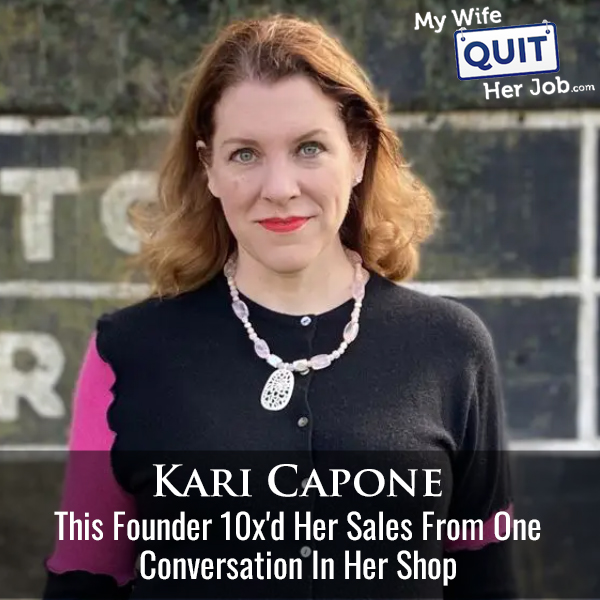
The fastest way to get featured in Wirecutter is to be genuinely useful to the reviewer covering your category, in person, without a pitch. On this episode of the My Wife Quit Her Job podcast I sat down with Kari Capone, founder of The Spinning Hand, whose learn-to-knit kit landed in Wirecutter after a single conversation with a stranger who walked into her pop-up shop. That mention lifted her sales at least 10x, and Wirecutter’s picks got syndicated as an Etsy Editors’ Pick soon after.
The playbook underneath the lucky moment is repeatable. Put yourself in physical proximity to journalists in your niche, treat every visitor like a potential press contact, give a real product away with no strings, and make sure the product on the shelf is legitimately the best in its category. This post walks through exactly how Kari did it, plus the sourcing, pricing, and channel decisions that made her business ready for the traffic when it arrived.
Get My Free Mini Course On How To Start A Successful Ecommerce Store
If you are interested in starting an ecommerce business, I put together a comprehensive package of resources that will help you launch your own online store from complete scratch. Be sure to grab it before you leave!
Table of Contents
Key takeaways from episode 649 with Kari Capone
- Wirecutter picks lifted The Spinning Hand’s kit sales at least 10x, and the same pick was later syndicated as an Etsy Editors’ Pick.
- The Wirecutter mention started as a walk-in conversation at a $1,500-a-month pop-up shop that otherwise broke even.
- Kari runs a 3-SKU product line at roughly $12 cost of goods on a $39 kit, shipped through a 3PL.
- Her yarn is sourced through a North Carolina distributor that manufactures in Turkey, chosen for a supply-chain “workhorse” she can reorder for years.
- Revenue mix is roughly 80% Shopify, 10% Amazon, 10% Faire, with Meta ads driving most Shopify sales at a starting ROAS of 5 to 6.
- She shut down her brick-and-mortar yarn shop after six months because kits, not yarn, are the profitable product.
How to get featured in Wirecutter (Kari’s real story)
Kari got featured in Wirecutter because the site’s arts-and-crafts reviewer walked into her downtown pop-up shop, Kari chatted with her the way she chatted with every visitor, and Kari handed her a free kit with no pitch attached. Wirecutter’s licensing company emailed her three months later with the news.
The mechanics of the conversation matter. Kari asked what the woman did for a living, learned she was Wirecutter’s arts-and-crafts reviewer, and said “I would love for you to pick out any kit in the store. There’s no pressure, but I would like you to have it.” She did not follow up, she did not send a media kit, and she genuinely forgot about it until the email arrived in November.
The lesson is not “hope a reviewer wanders into your store.” The lesson is that physical proximity to your niche’s journalists is a leverage point most e-commerce founders never touch, and it costs less than a single retargeting campaign. Kari’s shop was in Maplewood, New Jersey, a short train ride from a lot of New York City writers and creatives.
Why the pop-up shop paid for itself even at break-even
Kari’s six-month lease cost $9,000 in rent and the shop itself only broke even on retail sales. She still calls it the best money she spent that year because it produced the Wirecutter pick, which drove at least 10x more kit sales than she had before.
Break-even retail is a bad business by itself. Break-even retail that puts you in the physical path of national reviewers, boutique buyers, and local press is closer to a marketing budget than a store, and it should be underwritten the same way.
How to make your product Wirecutter-ready before you pitch
Wirecutter only picks products it can defend as best-in-class after independent testing, so the pre-work is making sure the product on the shelf actually deserves the pick. Kari’s kit had four things going for it that most beginner knitting kits do not.
- A 130-page illustrated ebook with more than 75 step-by-step photos, currently in its third edition.
- Companion video tutorials for learners who prefer to watch.
- A “workhorse” yarn her distributor guarantees for reorder, so a Wirecutter pick will not sell out and go dark when the yarn is discontinued.
- Custom-sourced packaging from China that a reviewer would open and immediately trust.
The yarn detail is the one most e-commerce founders miss. Kari’s first hit product on Amazon sold more than 500 kits before the yarn was discontinued and she had to rebuild the SKU.
The second time she went to her distributor and asked for a yarn they would carry for years. Wirecutter picks that go out of stock get pulled, so a stable supply chain is a prerequisite for any press-driven business.
The Spinning Hand’s product and margin structure
Kari sells three learn-to-knit kits at roughly $12 cost of goods on a $39 retail price, which puts her Shopify gross margin near 69%. Amazon net is closer to $32 after fees, or about 63% gross margin. She ships from a third-party logistics provider so she never touches an order.
Her three-SKU catalog is deliberately small. Level one is the beginner scarf, level three is the learn-to-knit socks kit (the fall and winter best-seller), and level two is a rotating seasonal product, currently a summer shawl. A hand-dyed premium kit and quarterly special editions get paused when she wants to focus on scale.
Why 3 SKUs beats a rotating monthly catalog
Kari ran a kit-of-the-month and kit-of-the-quarter subscription in the early years. Repeat purchase rates were “outstanding,” but designing a new product every month is not sustainable, and it makes forecasting, packaging, and yarn sourcing nearly impossible. Cutting down to three always-on kits let her negotiate a bulk discount on yarn and gave the 3PL a stable SKU set to ship.
The Spinning Hand’s revenue channel mix
The Spinning Hand’s revenue splits roughly 80% Shopify, 10% Amazon, and 10% Faire, with Meta ads driving most Shopify sales and Google Ads and Klaviyo email filling in the rest. Kari is targeting a 30% email-driven revenue share against a 70% paid-ads share.
Meta is the flywheel. New-campaign ROAS lands at 5 to 6 out of the gate, and Kari refreshes creative when it drifts down to 2.
The best-performing creative is a selfie video of Kari trying on the finished piece and explaining where she would wear it. The second best is an unboxing where she opens the kit on camera and reveals the finished item at the end.
Why her audience of women over 60 converts on Facebook
Kari’s customers are largely women over 60 who came online during and after COVID, and Facebook is the platform they already live on. Her return rate is roughly one return a month across the whole business, which tells you the audience is comfortable buying knitting kits sight unseen once the creative is honest about what is in the box.
How Faire wholesale fits into a niche craft business
Faire is roughly 10% of The Spinning Hand’s revenue at 30 to 35% wholesale margins, and Kari treats it as a distribution channel rather than a discount channel. A typical Faire order runs 10 to 15 kits shipped in a single box from her 3PL, so shipping economics stay reasonable even at the lower price.
She is hiring a boutique-outreach person to scale it deliberately, and she has bought targeted Faire email lists of buyers who have previously purchased yarn and fiber products. She runs Faire’s own paid ads too, though she calls the interface “a little bit opaque.”
Comparison: Kari’s three main sales channels
| Channel | Share of revenue | Margin profile | Primary driver | Best use |
|---|---|---|---|---|
| Shopify (thespinninghand.com) | ~80% | ~69% gross on $39 kits at $12 COGS | Meta ads (ROAS 5-6 on launch), Klaviyo flows, Google Ads | Main brand channel and repeat-buyer engine |
| Amazon | ~10% | ~63% gross after fees ($32 net on $39) | Amazon PPC on beginner-knitting and crochet-adjacent keywords | Discovery for shoppers who already trust Amazon |
| Faire (wholesale) | ~10% | ~30-35% margin at wholesale | Targeted email lists of yarn/fiber buyers, Faire ads, outreach | Boutique placement and brand-halo distribution |
Sourcing and packaging decisions that supported the Wirecutter feature
Kari’s yarn ships from a North Carolina distributor whose manufacturing is in Turkey, chosen for supply-chain stability, hand-feel, and machine-washability at a lower price than the previous China-sourced yarn. Her bamboo knitting needles are made in China through a Chinese-American company, and her packaging is custom-sourced in China because “the quality is so much better.”
The knitting community is quality-sensitive to the point of skepticism, and Kari says there is “a lot of distrust” driven by cheap cashmere-labeled acrylic on marketplaces like Temu. A grandma buying a kit for a grandchild is comparing it to what she remembers from her own local yarn shop, and cheap-feeling components fail that test on the first touch.
Buying inventory from closing yarn shops
Kari has bought closing local yarn shops’ entire inventories for 11 to 20 cents on the dollar, though she treats this as an opportunistic side stream rather than a business plan. The math is a reminder that roughly 80% of local yarn shops are not consistently profitable, which is part of why she stopped selling loose yarn and refocused on kits.
How to build a niche email list from scratch (Kari’s early playbook)
Kari built her first 5,000-subscriber email list by buying pattern-hungry knitter emails at 6 cents apiece from a niche giveaway site called AllFreeKnitting.com, plus banner ads and Sumo pop-ups on her early WordPress site. She would purchase roughly 150 to 200 emails a week.
That list is what made her Shopify launch work. She started on MailChimp and later moved to Klaviyo, and the same audience she had nurtured with free patterns for years was the audience that bought her first kits at scale. Meta ads only compounded on top of an already-warm list.
What most founders should copy from Kari’s launch
Copy the sequencing, not the timeline. Kari worked a full-time publishing job for 14 years while she taught herself web development, email marketing, and Facebook ads on nights and weekends, then quit her day job in the year after COVID. Most first-time founders under-invest in the pre-launch skill stack and blame the launch when the funnel is not the thing that is broken.
Copy the small daily ad experiments. Kari spent $10 a day on Facebook ads for months in the early days, testing five creatives at a time. The point was not the ROAS on those $10, it was the compounding creative library and the customer-message library she built by watching what actually converted.
Copy the anti-guru instinct. Kari’s advice to new founders is to trust yourself and not treat any single course or system as “the magic pill.” She still takes courses, including B-School with Marie Forleo, Amy Porterfield’s list-building material, and Meta ads training, and she treats all of it as inputs rather than answers.
Frequently asked questions
How do you actually get featured in Wirecutter?
Wirecutter’s reviewers test products independently and only pick what they judge best-in-class in a category, so the practical path is to put your product in front of the specific category reviewer and let it earn the pick on its merits. Kari Capone did it by giving Wirecutter’s arts-and-crafts reviewer a free kit when she walked into Kari’s shop, with no pitch and no follow-up. Wirecutter does not accept pay-for-play submissions, so proximity, product quality, and patience are the real levers.
How much can a Wirecutter mention grow a small e-commerce business?
Kari’s Spinning Hand kit sales lifted at least 10x after the Wirecutter mention, and Etsy syndicated the pick as an Editors’ Pick, which drove hundreds of additional kit orders a month. The size of the lift depends on how commercial the query is that the Wirecutter guide ranks for and how well your site converts the traffic once it arrives.
What are typical margins on a learn-to-knit kit?
The Spinning Hand’s beginner kit costs roughly $12 in cost of goods and retails at $39 on Shopify, which is close to a 69% gross margin, and lands near $32 net on Amazon after fees for a roughly 63% gross margin. Wholesale margins on Faire run 30 to 35% at a $20-ish wholesale price on the same kit.
Is a brick-and-mortar shop worth it for an online store?
A brick-and-mortar shop is worth it if you treat it as a marketing and press channel rather than a retail P&L, because retail rent for a small independent shop often only breaks even. Kari’s $9,000 pop-up lease broke even on retail sales but produced the Wirecutter feature that lifted her online business 10x, which made the entire lease pay off many times over.
Which ad platform works best for a craft or fiber-arts business?
Meta ads are typically the strongest paid channel for craft and fiber-arts businesses because the audience skews female and older and already lives on Facebook. Kari’s fresh-campaign ROAS starts at 5 to 6 on Meta, versus a smaller but growing contribution from Google Ads and about 10% of total revenue from Amazon PPC.
How do you source yarn or textiles for a physical product business?
Source through a distributor who can guarantee reorder availability of the specific SKU for years, so a viral moment does not force you to reformulate the product. Kari sources her main yarn through a North Carolina distributor manufacturing in Turkey, chose it for machine-washability and hand-feel, and negotiated a bulk-buy discount once she committed to keeping the SKU stable.
How big should a niche e-commerce product catalog be?
A catalog of three to five always-on SKUs plus one rotating seasonal product is enough to run a seven-figure niche business if the SKUs are high-margin and repeat-purchasable. Kari runs The Spinning Hand on exactly that structure and says her monthly kit-of-the-month subscription era, though it drove strong repeat-purchase rates, was not sustainable to design or forecast.