
Podcast: Download (Duration: 48:21 — 55.6MB)
The highest-leverage conversion work on a modern store is replacing clunky mobile navigation and site search with guided conversation, because roughly 70% of live help questions can be answered instantly by a bot. Linda Bustos treats chatbots as a merchandising tool rather than a support tool, letting a shopper tap through three or four options instead of fighting a hamburger menu.
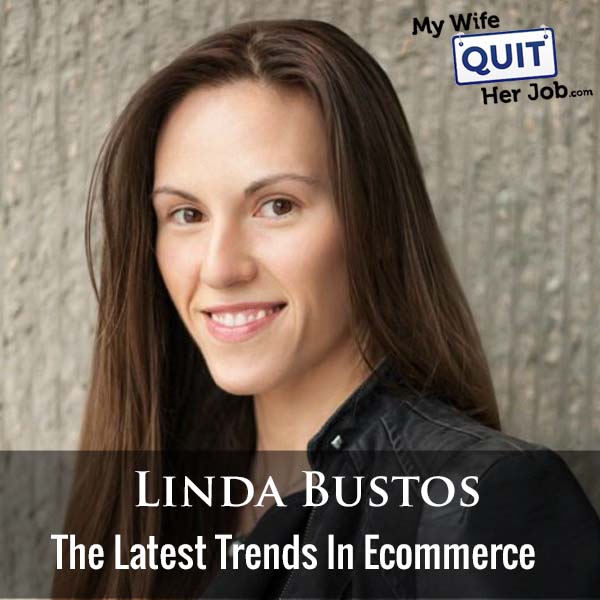
Linda grew the Get Elastic ecommerce blog from 200 to over 20,000 daily readers, earning Wall Street Journal recognition as one of 15 entrepreneur blogs worth reading. Her articles are what got my own store through its early years.
This episode covers chatbots for merchandising, the reality of voice search, free shipping threshold testing, mobile wallets, and how to stay flexible through the holiday season.
Get My Free Mini Course On How To Start A Successful Ecommerce Store
If you are interested in starting an ecommerce business, I put together a comprehensive package of resources that will help you launch your own online store from complete scratch. Be sure to grab it before you leave!
Table of Contents
Key takeaways
- About 70% of live help questions can be automated, with handoff to a person when the bot runs out.
- Chatbots bypass mobile navigation, which is where deep menus and autocorrected searches lose shoppers.
- Voice purchasing adoption is roughly 2% of Alexa users making more than one purchase.
- Voice search is speech-to-text plus text-to-speech, still rules-based rather than genuinely cognitive.
- Test your free shipping threshold. The sweet spot between revenue and conversion varies by market.
- Messenger engagement is high because it is not yet saturated, so test now to learn before it becomes email.
- Apple Pay data is often overstated, and some case-study retailers quietly removed it.
- Lock code before the holidays and reserve capacity for real-time merchandising instead.
What chatbots actually solve for ecommerce
The entry-level use is customer service, where the numbers are straightforward.
LivePerson’s data on ecommerce inquiries suggests roughly 70% of live help questions could be handled instantly by a bot.
The value is threefold. Speed comes first, because nobody waits for an agent finishing another conversation.
Availability around the clock is second, and reduced load on your human team is third.
My own store matches that. Roughly 70% of our pre-bot questions were about delivery times and order status, and automating those cut phone volume substantially.
Why chatbots beat mobile navigation
Linda’s more interesting argument is that chatbots are a merchandising tool.
Mobile navigation degrades quickly. More categories mean three or four layers of slider menus to work through.
Site search on mobile is worse. The phone autocorrects product and brand names that do not exist in its dictionary, producing failed searches, while the keyboard covers half the screen and autosuggestions cover more.
A bot sidesteps both. It asks what you are looking for, offers three or four pre-built options, and one tap moves the conversation forward toward a department, a product set, or gift recommendations.
The model is the in-store salesperson who knows the entire inventory, asks probing questions, and offers opinions.
Some bots already integrate with review platforms like Yotpo to surface product reviews inside the conversation.
What is blocking better conversational commerce
The constraint is product data quality and consistency.
Linda’s example is asking for top-rated toddler boots in green and expecting an accurate refined set.
The same problem already exists in site search. Search for olive green boots today and you will miss items because the merchant used a different colour keyword.
Until product data is consistent, the conversation cannot be smarter than the catalog behind it.
Which chatbot approach to choose
There are two categories.
Software-as-a-service platforms hosted by the provider, where you build dialogue flows yourself. Some ship templates for basic inquiries you can customize.
Custom builds using AI and machine learning frameworks like Microsoft’s LUIS or Google’s Dialogflow, which require actual coding.
The SaaS route is marketer friendly, and some are hybrid, integrating with those frameworks while remaining builder-based.
Either way, the real work is not the tooling. It is planning the dialogues and deciding the bot’s personality, whether it uses your market’s slang or stays professional, and whether branding needs to be involved.
Linda’s advice for getting started is to get good at free and easy first, ship a minimum viable version, gather data, and invest in a heavier build afterward.
What voice search actually does today
Adoption of voice purchasing is low. The figure Linda keeps seeing is about 2% of Alexa users making more than one purchase by voice.
The mechanism explains the ceiling. Voice search is speech-to-text on the back end, running a text query, picking a result, then text-to-speech back to you.
The common perception is fully baked cognitive computing understanding what you said. In practice it remains programmatic and rules-based, effectively a voice version of search.
Linda expects change to come through retailer chatbots and growing comfort talking to phones rather than through smart speakers.
How to prepare for voice and card-based results
Google has moved toward card-based results, answering questions without requiring a click.
That is bad for publishers and it is the direction of travel, and Amazon is likely to follow through Alexa.
Optimizing for product results specifically is difficult, since most of what surfaces is information about products rather than products themselves. Writing extensive Q&A content attached to product pages is significant work to answer a question that never produces a click.
The prerequisites are more tractable. Genuinely fast mobile page speed, since the index is mobile first, checked through PageSpeed Insights.
Avoid pop-ups that interrupt the experience, and control image and page load size.
Then get your semantic markup in: prices, stock availability, and local product data. Linda expects local results next, where someone asks for specific headphones near them and Google resolves it to a retailer from feed data.
Why to test Messenger marketing now
Messenger engagement running five to ten times better than email is real and, in Linda’s view, temporary.
Her reasoning is saturation. Facebook Messenger will become a spam feed once everyone arrives, because many retargeting campaigns require no opt-in at all, only site engagement with the pixel running.
Her own first abandoned cart Messenger message felt spammy enough that she opted out and formed a negative impression of the brand, though she notes she had added the item only to test checkout.
The reason to act now is learning. Smart marketers are testing timing, cadence, which visitor segments to remarket to, and under what conditions, so they hold that insight when the channel gets harder.
The distinction that matters is relevance. An abandoned cart message beats a random unsolicited offer, and whether to attach a discount is worth testing rather than assuming.
Whether to collect SMS alongside email
Linda’s position is that push notifications and SMS are strong opportunities provided they are opt-in.
The missed opportunity is at the pop-up. Nearly every store now offers 10% off for an email address, and far fewer offer an SMS option alongside it.
The behavioral support is real. Somewhere around 69% to 70% of online shoppers would rather interact by messaging than pick up the phone or deal with email.
Managing it is a testing discipline. Watch unsubscribe rates and STOP replies against frequency, offer type, and segment.
Segmentation options include area code, whether they also opted into email, and device detection mapping back to on-site behavior including categories browsed and visit frequency. You probably would not send weekly pushes to someone visiting quarterly, unless encouraging more visits is the goal.
How to compete with Amazon as a retailer
The position that suffers most is a retailer carrying national brands alongside many other channel partners for those brands.
That is where physical stores become showrooms for Amazon, and where Amazon obtaining product through third-party distributors undercuts minimum advertised price and controls the buy box.
The best position is a digitally native vertical brand that puts its own products on Amazon, controlling both distribution and the merchant account.
The defensible advantage for everyone else is merchandising. Amazon is a haystack that does not support guided selling or bundle building well, relying on customers-also-bought derived from billions of SKUs.
With a tighter SKU set you can build genuinely navigable categories, bundles, look books, and decorated pages, plus email promotions. Linda’s framing is that Amazon is a spearfishing engine rather than a product discovery engine.
How to test your free shipping threshold
Free two-day shipping is now an expectation rather than a perk, and there are real levers on your own site.
Linda has run threshold tests at $50, $75, and $100 free shipping to find the sweet spot for both revenue and conversion rate, and the answer differs by retailer and market.
The second lever is placement. Put the free shipping incentive on the product page, telling shoppers that this product already qualifies because it is over the threshold.
The third is cart feedback. Telling someone they have qualified, rather than displaying a generic free shipping over $100 banner, reinforces the behavior.
My own cart shows dollars remaining to free shipping and changes colour on qualification, which is the same principle.
Why dropshipping got harder
Margins are thin, and overseas dropshipping means no control over shipping time while competing against Prime.
Acquisition cost is the other squeeze. Advertising costs can inflate past the point of profitability.
The structural problem is that the manufacturer is frequently selling the same item on Amazon at a lower price.
Where it still works is where comparison shopping does not happen. A site with substantial authoritative content that guides the purchase, then offers three or four products directly, functions as a closed system.
The other viable path is discovery through Instagram or Pinterest, where the customer found you by serendipity rather than arriving in a comparison mindset.
Etsy works partly for the same reason, attracting buyers who want to stay within that marketplace even when similar items are cheaper elsewhere.
What to know about mobile wallets
Apple Pay has more friction than its reputation suggests. Newer devices require Face ID, everything must be set up in advance, and the Apple Pay sheet injected into checkout is limited.
You cannot add custom fields for gift options, split shipments, or store pickup inside it.
The audience math also compounds against it. A subset of visitors use iPhones, a subset of those have Apple Pay enabled, and a subset of those prefer to use it.
Linda’s skepticism comes from following up on Apple’s own case studies. She has visited poster-child retailers claiming large revenue-per-visitor lifts and found Apple Pay no longer in their checkout.
Amazon Pay benefits from a possible halo effect, since some shoppers may associate it with Prime, though that cuts both ways when Prime shipping does not follow.
Button placement is the real risk. Apple’s guidance is placing Apple Pay first at the top of checkout, and on mobile that means a full-width black button above everything else, which is a genuine paradox-of-choice problem worth testing rather than accepting.
How to prepare a store for the holiday season
Feature delivery should stop. Lock the code down, and have the promotional calendar finalized well in advance.
Linda’s argument is for building in flexibility rather than fixing everything months ahead, since last year’s data is not especially predictive of this year.
Stop running long A/B tests that would extend into the season. Instead, plan hypotheses in advance and use the traffic spike to get results fast enough to apply within the same period.
Behavior shifts week to week through the season. Urgency rises, stock availability falls, and competitors get more aggressive and start promoting earlier.
On advertising, communicate with your agencies, since click rates rise and impression share can fall as competitors bid harder.
Turn off ads for non-seasonal products so budget concentrates on what actually sells, and make sure ads pause automatically when products go out of stock.
Adjust your recommendation engine for out-of-stock items to show similar products rather than customers-also-bought, which can pull from entirely different departments.
Frequently asked questions
How much customer service can a chatbot handle?
Roughly 70% of live help questions, based on LivePerson’s ecommerce data. The remainder should hand off to a person once the bot exhausts its dialogue.
Are chatbots useful for anything beyond support?
Yes, for merchandising. On mobile, a bot bypasses deep hamburger menus and autocorrected site search by offering tappable options that guide shoppers toward products.
Is voice shopping worth optimizing for?
Not yet directly. Only about 2% of Alexa users make repeat purchases by voice, and voice search remains speech-to-text over conventional results rather than genuine understanding.
Should you collect SMS numbers alongside emails?
Linda Bustos considers it a large missed opportunity, since around 70% of shoppers prefer messaging to phone or email. Keep it opt-in and monitor STOP replies against frequency.
What free shipping threshold should you use?
Test it. Linda Bustos has run $50, $75, and $100 thresholds and found the revenue and conversion sweet spot varies by retailer and market.
Does Apple Pay increase conversions?
Less reliably than the case studies suggest. Friction from Face ID and setup, plus a limited checkout sheet, means several publicized adopters later removed it.
How do you compete with Amazon on merchandising?
Amazon is a spearfishing engine rather than a discovery engine. A tighter SKU set lets you build navigable categories, bundles, look books, and email promotions that Amazon cannot match.
How should you prepare a store for the holidays?
Lock down code and the promotional calendar in advance, stop long-running A/B tests, plan fast tests to run during the traffic spike, and pause ads on non-seasonal or out-of-stock products.