

Podcast: Download (Duration: 54:52 — 63.1MB)
Sellers Summit 2020 was the first year we ran our annual ecommerce conference virtually, pivoting the entire event in about a month when covid hit. The theme was owned marketing, meaning the channels you actually control, and the recurring message across nearly every talk was that successful sellers pick one or two channels and go deep rather than spreading themselves thin.
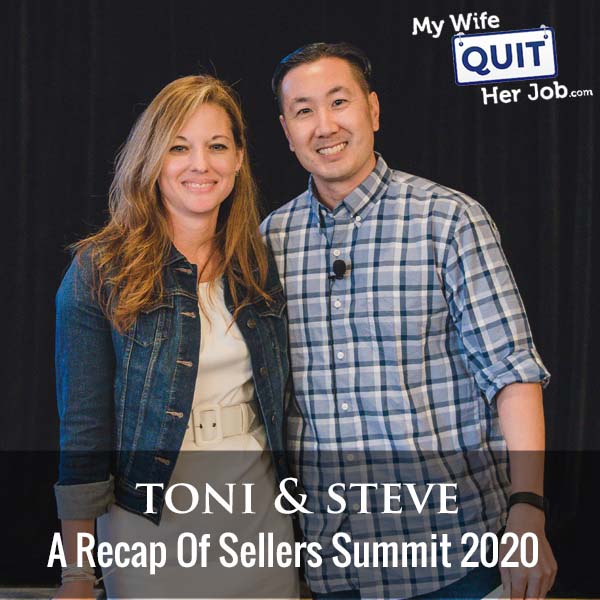
My partner Toni Anderson and I run Sellers Summit every year to bring ecommerce entrepreneurs together and teach strategies for selling physical products online. This was our fifth year, and we both thought the content was the strongest we have ever had.
This recap covers the key takeaway from every session, organized across owned marketing, paid advertising, earned marketing, Amazon, and operations.
Get My Free Mini Course On How To Start A Successful Ecommerce Store
If you are interested in starting an ecommerce business, I put together a comprehensive package of resources that will help you launch your own online store from complete scratch. Be sure to grab it before you leave!
Table of Contents
Key takeaways
- Every day in April 2020 looked like Black Friday in Shopify’s global traffic numbers.
- Ecommerce was up 20% to 30% across Klaviyo and Gorgias customer data, and Facebook CPMs were down about 25%.
- The most successful founders use one or two channels, not ten. Austin Brawner’s clients scale on two.
- Drew Sanocki grew a dropship business 30% during covid by pivoting, without owning a single brand.
- Brad Moss, former head of Seller Central, told everyone to sell off Amazon and build their own brand.
- Amazon sponsored brand video ads convert best of any Amazon ad format right now.
- Mike Jackness would lose roughly 20% if his Philippines team were hired in the US instead.
- Do not over-polish a business before selling. Buyers need to see remaining opportunity.
What the covid ecommerce statistics actually showed
Nearly every ecommerce category was up sharply in spring 2020, and only a narrow set was down.
The losers were men’s formal wear, bridal wear, party and event supplies, and luggage. Everything else grew substantially.
Klaviyo’s customer data showed merchants up 20% to 30%, and Gorgias reported similar numbers.
The most striking figure came from Shopify’s global traffic. Comparing Black Friday against April showed every single day in April matching Black Friday volume.
Facebook advertising costs fell alongside that demand. My contacts at MuteSix measured CPMs down roughly 25%, which made it an unusually good moment to be running ads.
Why some sellers struggled while the data went up
Aggregate growth hides a real split, and the deciding factor was the ability to pivot.
Our own event business was down at the start, and we pivoted our linens store to quarantine gifts with funny sayings printed on them. That is what turned it around.
Amanda Wittenborn, who sells birthday invitations, pivoted into teacher thank-you postcards. She also went merchant-fulfilled when she could no longer ship inventory into Amazon.
Sellers without that flexibility are the ones posting about struggling. Amazon-only sellers with specific SKUs cannot import a different product or control their supply lines quickly.
Large companies without their own fulfillment infrastructure faced the same constraint.
Why new online shoppers are the real opportunity
Multiple speakers converged on the same point: shelter-in-place converted people who had never shopped online into regular online shoppers.
Online sales surpassed brick and mortar in April, and the behavior change looks durable.
Toni’s framing was that customers who were previously wary of buying online became comfortable with it, and comfort turns into habit.
My own mother, who is nearly 80, started using Instacart for the first time and now uses Zoom as a verb.
How SMS marketing fits into owned marketing
Andrea’s talk covered using SMS to grow your business, and the core argument is ownership.
Once you have someone’s cell phone number, that channel is yours. It functions like email except people actually open texts.
The objection is that people will resent being marketed to by text, and the evidence says otherwise. Unsubscribing is trivially easy, and text from brands you chose to hear from is welcome.
Both Toni and I are on retail SMS lists that genuinely drive our purchase decisions. Chipotle runs its coupons through SMS specifically because recipients expect an offer.
If you already use Klaviyo, adding SMS is straightforward since your sales data is already there.
What Jeff Oxford covered on ecommerce SEO
Jeff Oxford compressed nearly all of ecommerce SEO into about an hour and drew one of the largest question volumes of the event.
Toni ranked it in her top three talks and had already started implementing his outreach strategies by the time we recorded.
Organic traffic matters most for sellers leaving Amazon to build their own store, where it will make up a meaningful share of total sales.
Why Facebook Messenger marketing is worth setting up
Natasha Takahashi covered using chatbots to grow an ecommerce store.
I have been running chatbots for three or four years, and Messenger now drives close to 40% of MyWifeQuitHerJob.com sales.
The economics are the reason to look at it. Messenger costs far less than email right now and engagement runs roughly four times higher.
The counterweight came from a later talk. Adding a new channel when your existing ones are working is exactly the overextension that stalls businesses, which is why Toni put it high on her list without starting it immediately.
How Drew Sanocki made a dropship business recession-proof
Drew Sanocki runs AutoAnything, a nine-figure primarily dropship business, and grew roughly 30% during covid.
That matters because dropshipping means selling other people’s products, so brand differentiation is normally unavailable to you.
His comparison point was the 2008 recession, where he did not pivot and the outcome was very different. The talk contrasted what he did twelve years ago against what he did in 2020.
The takeaway is that pivoting is available even without owning your own branded products.
What Austin Brawner found in businesses that scale
Austin Brawner runs the Ecommerce Influence podcast and Brand Growth Experts, and works with enough companies to see patterns.
His central finding is that successful businesses do one thing exceptionally well and concentrate their effort there.
If the channel is influencer marketing, they master influencer marketing rather than adding a YouTube channel and chatbots alongside it. Other things still happen, and the time, energy, and training go to one place.
His most successful clients scale on two channels total. Our own ecommerce store reached six figures on one channel, and one is usually enough to pass seven.
The other takeaway is about burnout. Founders who last protect themselves from it, and feeling stuck is usually a symptom of doing too much rather than too little.
How Nick Shackelford scales Facebook ads with hidden audiences
Nick Shackelford spends millions per month on Facebook and opened his actual ad account on screen during the talk.
The hidden audiences concept was new to most of the room. The second half, walking through live campaigns and real numbers, is something no speaker had done at our event before.
His starting budgets illustrate the gap in how people operate. I typically start a campaign at $20 to $30 a day to feel things out, and Nick will open at $500 or $1,000 a day.
He also covered strategies for people without that budget, since most sellers starting out do not have a thousand dollars a day for Facebook. The approach scales down to whatever level you are at.
What Brett Curry covered on Google and Amazon ads
Brett Curry’s talk on Google ads for Amazon introduced something I did not know existed.
Amazon now supports conversion attribution, so a Google or Facebook ad sending traffic to Amazon can receive credit for the resulting sale and report the conversion back.
The program was in beta at the time, and it changes what external traffic to Amazon is worth measuring.
His second point was that sponsored brand video ads are the highest converting Amazon ad format currently available.
How Ed Ruffin structures Amazon advertising funnels
Ed Ruffin, who prefers PPC Ed, covered using sales funnels to maximize Amazon advertising.
His approach is holistic rather than tactical, treating Amazon as a complete advertising system that can target cold customers at the top of the funnel down to sponsored product ads at the bottom.
Toni ranked it as her favorite of the event, because he starts with the big picture and then narrows to strategies you can execute in your account the same day.
Ilana Wechsler’s framework for choosing paid channels
Ilana Wechsler covered the paid traffic puzzle and YouTube ads, aimed at sellers who have no idea where to start advertising.
Her strategy begins with retargeting and gradually expands the audiences outward, filling in pieces of an advertising puzzle.
What distinguishes it from typical webinar content is that she walks through the actual execution rather than describing the concept.
How Michael Jamin uses storytelling to build a brand
Michael Jamin sells girls’ dresses with his wife and covered using storytelling to boost a brand.
The video examples he showed made it immediately obvious why that store is a multimillion dollar company.
His customer service and shipping emails were the surprise. People forward and share his shipping emails, which is free distribution on a message most brands send as boilerplate.
The live exercise was the highlight. He took volunteers from the audience and rebuilt their brand stories on the spot using his framework.
Dana and Wesley Steyer presented a DIY solar panel kit company. Michael’s reframe was that they sell freedom rather than solar kits, aimed at small house owners, and he constructed the whole pitch in about two minutes.
Dale presented cleaning products and Jesse presented skin products, and both got the same treatment. His framing question is what you are selling versus what you are really selling.
What Eric Bandholz covered on YouTube marketing
Eric Bandholz of Beardbrand drives 40% of his sales through YouTube marketing.
He opened his YouTube analytics on screen and showed how the team decides which videos to film and what benchmarks they use.
He runs three channels and used all three as worked examples for running YouTube marketing for a physical products business.
Derek Halpern on 250,000 orders in two years
Derek Halpern’s talk ran an hour and 45 minutes, on captivating customers with story.
The theme overlapped Michael Jamin’s while the content went a different direction, both landing on the need for an underlying message people fall in love with.
One example covered a Black Friday where they generated a large sales increase without discounting anything, using a completely different mechanism.
He is blunt to a degree that is rare at conferences, and he covered what failed alongside what worked. Closing the event with someone who does not sugarcoat anything worked well.
Why the former head of Seller Central says to sell off Amazon
Brad Moss, formerly head of Seller Central, covered what was working on Amazon in 2020 and spent much of it telling people to build off Amazon.
His reasoning connects to Amazon using seller data to launch competing products, which the Wall Street Journal had reported on.
His recommendation was thinking in terms of brand creation rather than running 200 independent SKUs.
Coming from someone with direct knowledge of how Amazon operates internally, rather than speculation, that carried weight with the room.
Greg Mercer on getting Amazon reviews in 2020
Greg Mercer of Jungle Scout covered review generation, including one free tactic that surprised most of the audience.
Many people in the chat assumed that particular method cost around two thousand dollars.
Greg operates strictly white hat, which produced the running joke of the session when audience questions drifted toward tactics he could not endorse.
Steven Weigler on protecting against Chinese knockoffs
Steven Weigler covered a low-cost strategy for protecting products against counterfeits, and it landed hard with an audience that is actively getting knocked off.
Patents are not the answer, which is the first thing most sellers get wrong.
His strategy maps out steps you can execute yourself for a couple hundred dollars without hiring an attorney.
He demonstrated it by dissecting a straw gardening hat, breaking it into its component parts to show the multiple ways you can protect a product, its design elements, and your photos.
Liz Mercer on managing an ecommerce supply chain
Liz Mercer sells oversized furniture on Amazon, where storage costs make supply chain discipline mandatory.
The takeaway for both Toni and me was how much she communicates with her vendors.
Most sellers contact their vendor only when something has already gone wrong, at which point it is too late to fix.
Her Q&A was as valuable as the presentation, since she answered every supply chain question in the room regardless of whether it touched her own operation.
How Mike Jackness runs operations from the Philippines
Mike Jackness covered building his Philippines team, and brought the person who runs that office on to present alongside him.
His cost slides were the blunt part. Hiring the same team in the US would eliminate his profit entirely and put him roughly 20% in the red.
His manager covered the cultural side, which is where most overseas hiring fails. People hire without understanding the cultural differences and then wonder why it does not work.
She also covered building company culture overseas and the specifics of pay, vacation, and sick leave policies, which get murky outside the US when you are not using an agency.
Her exact hiring process was part of the talk, and it differs from a US process for the same cultural reasons.
Scott Voelker on prioritizing what actually matters
Scott Voelker covered getting massive results by doing what truly matters, and closed out an evening at high enough energy that Toni could not fall asleep for hours afterward.
The value of the talk is the counterweight to a conference. You leave an event with dozens of tactics, and prioritizing among them is the actual problem.
He used his own 2019 as the example, walking through how much he had going on and the burnout that followed.
That candor matters coming from someone with a popular podcast and an active Facebook group, where the outside view is that everything is going well all the time.
Chuck Mullins on increasing the value of your business
Chuck Mullins of Quiet Light covered boosting business value with math and logic, including how to calculate what your business is currently worth.
These are decisions to make well ahead of any sale, since they take time to affect valuation.
His counterintuitive point was about polish. Making a business look too perfect on the outside removes the visible opportunity a buyer wants to see.
The comparison is a fixer-upper. Sellers instinctively clean everything up and hide the problems, while buyers are shopping for the upside that remains.
Add-backs were the other substantial section, with detailed spreadsheets behind them.
What made the virtual format work better than expected
Two things made the content stronger than previous years, and both came from the virtual format.
The first was live chat during every session. In a ballroom you read the crowd from their faces, and in chat you read their actual commentary as the talk progresses.
It also removed the barrier to asking questions. Standing up in front of 200 people with a microphone stops many people from ever asking, and typing does not.
The second was extended Q&A. A live event needs 15 minute blocks for room changes and breaks, and a virtual one does not, so each speaker got roughly 10 to 18 minutes of Q&A and some ran far longer.
That extended Q&A effectively replaced the roundtables we normally run, letting speakers go deeper on points from their talks in front of everyone rather than at a table with a few people.
Frequently asked questions
What is Sellers Summit?
An annual ecommerce conference run by Steve Chou and Toni Anderson that brings entrepreneurs together to learn strategies for selling physical products online. 2020 was its fifth year and the first held virtually.
What was the theme of Sellers Summit 2020?
Owned marketing, meaning channels you control rather than rent. The event covered three categories: owned marketing, earned marketing like word of mouth and reviews, and paid advertising.
How much did ecommerce grow during covid?
Klaviyo and Gorgias both reported customers up 20% to 30%, and Shopify’s global traffic showed every day in April 2020 matching Black Friday volume.
How many marketing channels should an ecommerce business use?
One or two. Austin Brawner’s most successful clients scale on two channels, and going deep on a single channel is enough to reach six or seven figures.
Should Amazon sellers build their own store?
Yes, according to Brad Moss, the former head of Seller Central. His advice was to focus on brand creation rather than running independent SKUs entirely dependent on Amazon.
What is the highest converting Amazon ad type?
Sponsored brand video ads, per Brett Curry. Amazon also supports conversion attribution now, so external Google and Facebook traffic can get credit for Amazon sales.
How do you protect a product from Chinese counterfeits?
Patents are not the answer. Steven Weigler’s approach layers cheaper protections across a product’s design elements and photography, executable yourself for a couple hundred dollars.
Should you polish your business before selling it?
Only up to a point. Chuck Mullins advises against making it look too perfect, because buyers want to see remaining opportunity they can capture.

